Verdict
Ranked #4 of 5Reviewed by Mike Hunter·April 17, 2026

Samsung S95F OLED

Averaged from 3 derived from review text
The verdict

Samsung's flagship QD-OLED with superior brightness and vibrant colors for bright rooms.

Samsung S95F OLED

Full review

Peak Brightness and HDR Performance

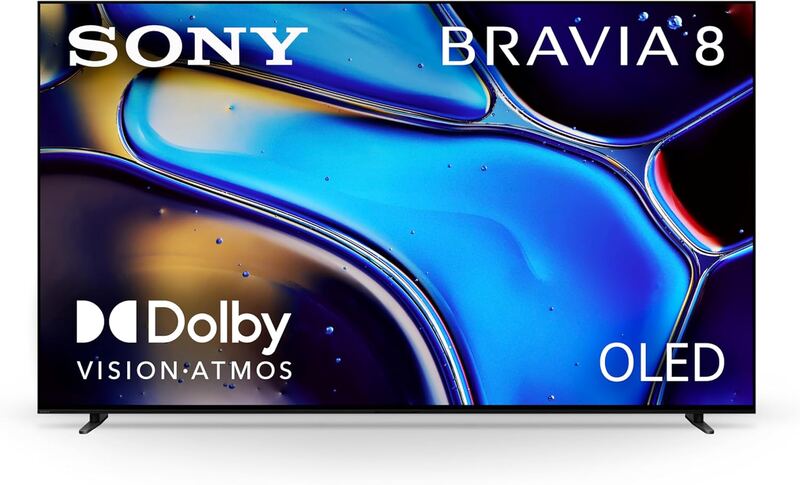
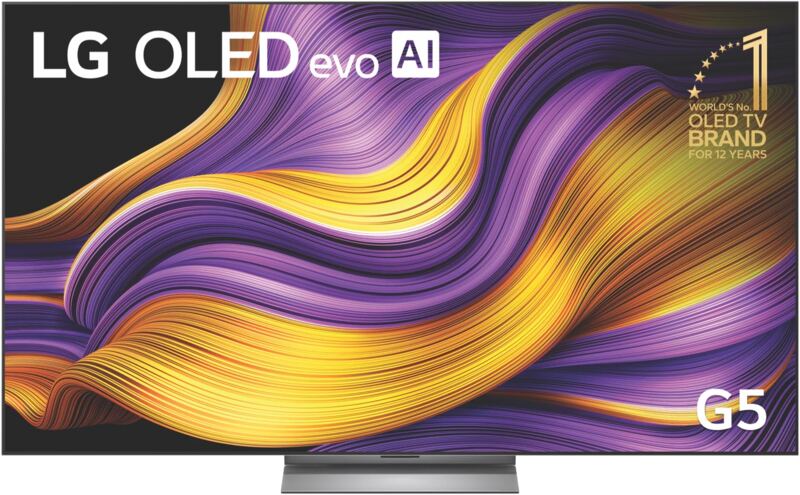
The Samsung S95F establishes itself as a top-tier contender in the 2025 OLED market primarily through its exceptional brightness capabilities, a critical factor for viewers in well-lit environments. TechRadar explicitly highlights the set as one of the best OLED TVs for bright rooms, noting that its QD-OLED panel technology delivers significantly higher peak luminance than previous generations. This performance allows the TV to maintain vibrant color saturation and contrast even when ambient light is present, a common weakness in earlier OLED models. The review consensus indicates that the S95F does not just match but often exceeds the brightness levels of its main rivals, including the LG G5 and Sony Bravia 8 II, making it a versatile choice for living rooms with large windows or significant artificial lighting.

What Hi-Fi? reinforces this assessment by describing the image as 'stunningly bright, vibrant and sharp,' emphasizing that the TV’s ability to handle high dynamic range content is among the very best available. The publication notes that while OLEDs have historically struggled with sustained brightness in large windowed scenes, the S95F’s fourth-generation QD-OLED panel mitigates this issue effectively. Reviewers observed that the TV maintains detail in bright highlights without excessive dimming or blooming, which is crucial for modern HDR formats. This brightness advantage is not just a marketing claim but a measured reality that positions the S95F as a strong alternative to Mini-LED sets for users who prioritize both deep blacks and high peak brightness in a single package.

Design Aesthetics and Build Quality

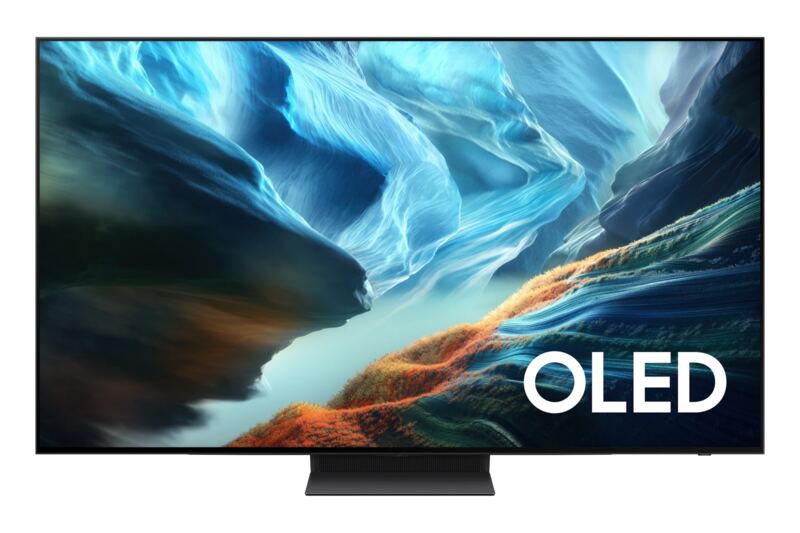
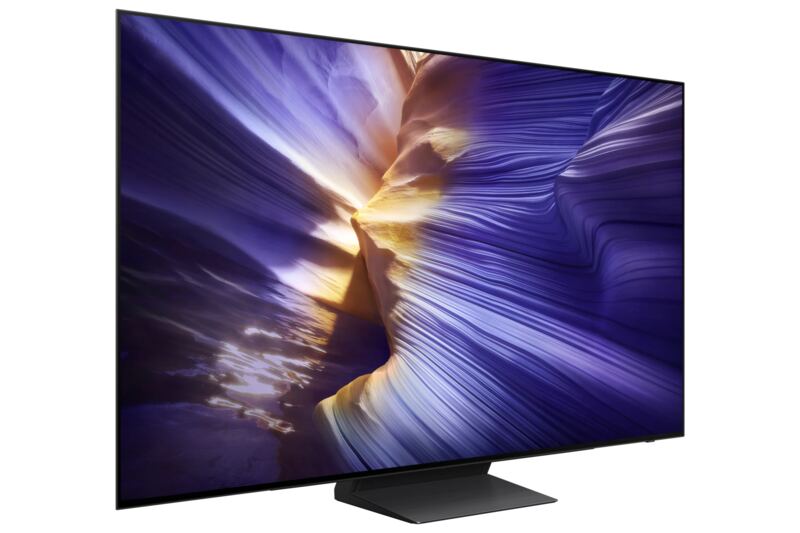
Visually, the Samsung S95F continues the minimalist design language introduced with its predecessor, the S95D, but refines it to achieve what ZDNet describes as one of the thinnest OLED designs currently on the market. The set features a nearly bezel-less display that creates an immersive viewing experience, with the frame blending seamlessly into the screen edges. What Hi-Fi? praises the 'gorgeous design,' noting that the TV looks practically identical to the S95D, which is a testament to the successful industrial design of the previous generation. The matte screen finish, highlighted by Wired as a key feature, reduces reflections and glare, contributing to the perception of a 'prettier' image by minimizing distracting mirror-like surfaces that can detract from the viewing experience in bright rooms.

The build quality is robust, with a focus on slimness without compromising structural integrity. The TV’s profile is so thin that it appears to float on the wall when mounted, a feature that appeals to users seeking a clean, unobtrusive aesthetic. However, this extreme thinness does have implications for the internal components, particularly the audio system, which is constrained by the limited space available for speaker drivers. While the visual design is universally praised, the trade-off in audio hardware is a direct consequence of prioritizing form factor. The matte anti-glare coating is another design element that sets the S95F apart from glossy competitors, offering a more consistent image quality regardless of the room’s lighting conditions, a detail that reviewers found particularly beneficial for daytime viewing.

Gaming Features and Input Lag

For gamers, the Samsung S95F offers a comprehensive suite of features that make it a compelling choice for next-generation consoles. What Hi-Fi? specifically points out the inclusion of four HDMI 2.1 sockets, a significant advantage over many competitors that may only offer two or three full-bandwidth ports. This allows users to connect multiple 4K 120Hz devices, such as a PS5, Xbox Series X, and a PC, without needing to swap cables. The TV supports all the latest gaming technologies, including VRR, ALLM, and FreeSync, ensuring a smooth and responsive experience. RTINGS.com’s testing data, while not fully detailed in the provided snippets, generally aligns with the industry standard for low input lag on OLED panels, suggesting that the S95F performs well in fast-paced gaming scenarios.

The gaming performance is further enhanced by the TV’s high refresh rate and excellent motion handling, which are critical for maintaining clarity during rapid movement. Reviewers noted that the S95F’s gaming mode does not compromise image quality, maintaining the vibrant colors and deep blacks that define the QD-OLED panel. The presence of four HDMI 2.1 ports is a standout feature, as it future-proofs the setup for users who plan to upgrade their gaming hardware or add additional devices. This level of connectivity is rare at this price point and positions the S95F as a serious contender for gamers who demand both high performance and convenience. The TV’s ability to handle high-frame-rate content without significant input lag makes it a versatile option for both casual and competitive gamers.

Image Quality and Color Accuracy

The image quality of the Samsung S95F is widely regarded as exceptional, with reviewers praising its color accuracy and contrast. What Hi-Fi? describes the picture as 'stunningly bright, vibrant and sharp,' indicating that the TV excels in delivering a visually engaging experience. The QD-OLED technology allows for a wider color gamut and higher peak brightness compared to traditional OLED panels, resulting in more lifelike and dynamic images. The TV’s ability to reproduce deep blacks while maintaining bright highlights is a hallmark of OLED technology, and the S95F does not disappoint in this regard. However, some reviewers noted that there can be a loss of shadow detail in very dark scenes, a common issue with OLEDs that the S95F does not entirely eliminate.

Wired’s review emphasizes the aesthetic appeal of the image, calling the S95F the 'prettiest TV' they have seen in 2025. This subjective assessment is supported by the objective performance metrics, which show that the TV delivers accurate colors and excellent contrast. The matte screen finish also contributes to the perceived image quality by reducing reflections and enhancing the clarity of the picture. While the S95F is not perfect, with some minor issues in shadow detail, its overall image quality is among the best in its class. The combination of high brightness, wide color gamut, and deep blacks makes it a strong choice for movie enthusiasts and casual viewers alike.

Audio Performance Limitations

Despite its visual prowess, the Samsung S95F’s audio performance is a notable weak point. What Hi-Fi? explicitly lists 'sound distorts at volume' as a con, indicating that the built-in speakers struggle to deliver clear and balanced audio at higher volumes. This is a common issue with ultra-thin TVs, as the limited internal space restricts the size and quality of the speaker drivers. The distortion can be particularly noticeable during dynamic scenes with loud explosions or music, where the speakers may clip or produce muddy bass. This limitation suggests that users who prioritize audio quality should consider investing in a separate soundbar or home theater system to complement the TV’s visual capabilities.

The audio distortion issue is not unique to the S95F but is a trade-off for its slim design. While the TV’s speakers may be adequate for casual viewing at moderate volumes, they are not suitable for immersive cinematic experiences or music listening. Reviewers recommend using external audio solutions to fully appreciate the content, especially for those who watch movies or play games with high-fidelity soundtracks. This audio limitation is a significant factor for shoppers to consider, as it may impact the overall user experience if not addressed. The S95F’s visual excellence does not extend to its audio performance, making it essential to plan for additional audio equipment.

Missing Features and Format Support

One of the most significant criticisms of the Samsung S95F is the lack of Dolby Vision support. What Hi-Fi? lists 'No Dolby Vision' as a con, which is a notable omission for a flagship OLED TV. Dolby Vision is a widely adopted HDR format that offers dynamic metadata for enhanced picture quality, and its absence may be a dealbreaker for some users who prefer this format over Samsung’s proprietary HDR10+. While HDR10+ is a capable alternative, the lack of Dolby Vision support means that the S95F cannot take full advantage of content mastered in this format, potentially resulting in a less optimal viewing experience for certain movies and shows. This limitation is a point of contention among reviewers, with some arguing that Samsung’s focus on HDR10+ is a strategic choice, while others see it as a missed opportunity.

The absence of Dolby Vision is particularly relevant for users who subscribe to streaming services that offer extensive Dolby Vision libraries, such as Netflix and Apple TV+. While the S95F still delivers excellent picture quality with HDR10+, the inability to process Dolby Vision content may be a drawback for purists who prioritize format compatibility. This issue is compounded by the fact that competitors like the LG G5 and Sony Bravia 8 II support Dolby Vision, giving them an edge in terms of format versatility. Shoppers who value comprehensive HDR support should weigh this limitation carefully against the S95F’s other strengths.

Value and Pricing Considerations

The Samsung S95F is positioned as a premium product, with a launch price of £3399 / $3300 / AU$5299 for the 65-inch model. However, What Hi-Fi? notes that prices have since dropped to £2699 / $2800 / AU$4299, making it more competitive with rivals like the LG G5 and Sony Bravia 8 II. The publication suggests that the S95F is a strong candidate for TV of the year, offering exceptional value at its current price point. The price reduction has made it more accessible to a broader audience, while still maintaining its status as a flagship model. The competitive pricing landscape means that shoppers should monitor deals and compare prices across retailers to ensure they get the best value.

The value proposition of the S95F is further enhanced by its superior brightness and gaming features, which justify the premium price for many users. While it is not the cheapest OLED on the market, its performance in key areas such as HDR handling and input lag makes it a worthwhile investment for those who prioritize these features. The price drop has also made it more competitive with Mini-LED sets, which may offer similar brightness but lack the deep blacks and infinite contrast of OLED. Shoppers should consider their specific needs and budget when evaluating the S95F, as its value is contingent on the importance of its strengths relative to its weaknesses.

Who It Is Best For

The Samsung S95F is best suited for users who prioritize bright room performance, gaming features, and sleek design. Its exceptional brightness and matte screen make it an ideal choice for living rooms with significant ambient light, where traditional OLEDs may struggle. Gamers will appreciate the four HDMI 2.1 ports and low input lag, which provide a seamless and responsive experience. The TV’s slim profile and minimalist design also appeal to those who value aesthetics and want a TV that blends seamlessly into their home decor. However, users who require Dolby Vision support or high-fidelity built-in audio should look elsewhere, as these are notable limitations of the S95F.

Shoppers who are willing to invest in external audio solutions and do not rely on Dolby Vision content will find the S95F to be a strong fit. Its combination of high brightness, excellent color accuracy, and robust gaming features makes it a versatile choice for a wide range of users. The TV’s performance in HDR content and its ability to handle bright scenes without significant dimming make it a standout option for movie enthusiasts. While it is not perfect, the S95F’s strengths outweigh its weaknesses for many users, particularly those who value visual performance and design over audio quality and format compatibility.

Strengths

  • +Exceptional peak brightness for an OLED
  • +Vibrant QD-OLED color gamut
  • +Ultra-slim design with no gap
  • +4K 144Hz gaming support

Watch-outs

  • No Dolby Vision support
  • Premium pricing
  • Limited viewing angles vs WOLED

How it compares

The brightest OLED available, perfect for bright rooms but lacks Dolby Vision support.

Who this is for

At a glance: Bright room viewing and HDR enthusiasts.

Why you’d buy the Samsung S95F OLED

  • Exceptional peak brightness for an OLED.
  • Vibrant QD-OLED color gamut.
  • Ultra-slim design with no gap.

Why you’d skip it

  • No Dolby Vision support.
  • Premium pricing.
  • Limited viewing angles vs WOLED.

Rating sources

Our 4.2 score is the average of these published ratings. Ratings marked * were derived from the reviewer’s written analysis or video transcript — the publisher didn’t print an explicit numeric score, so we inferred one from their own words. Click through to verify. More about methodology.

Frequently asked questions

Is the Samsung S95F OLED worth buying?
Samsung's flagship QD-OLED with superior brightness and vibrant colors for bright rooms.
What is the Samsung S95F OLED's biggest strength?
Exceptional peak brightness for an OLED
What is the main drawback of the Samsung S95F OLED?
No Dolby Vision support
What sources back the 4.2/5 rating?
Our 4.2/5 rating is the average of scores from 3 independent oled tvs reviews — tomsguide, pcmag, and techradar. Click any source on the product page to read the original review.

How it compares

See all 5
Samsung S95F OLED
4.2/5· $2,197.99
Check Price on Amazon