The Sony BRAVIA 8 II OLED delivers exceptional picture quality right out of the box, earning praise from reviewers like RTINGS.com and ecoustics.com. It features a QD-OLED panel with native 120 Hz support and HDMI 2.1 connectivity, making it ideal for gamers and cinephiles. While it offers superior performance in dark rooms, its high price point and limited brightness in bright environments may deter some buyers. The TV runs on Google TV and includes access to Sony Pictures Core, providing a robust smart experience.
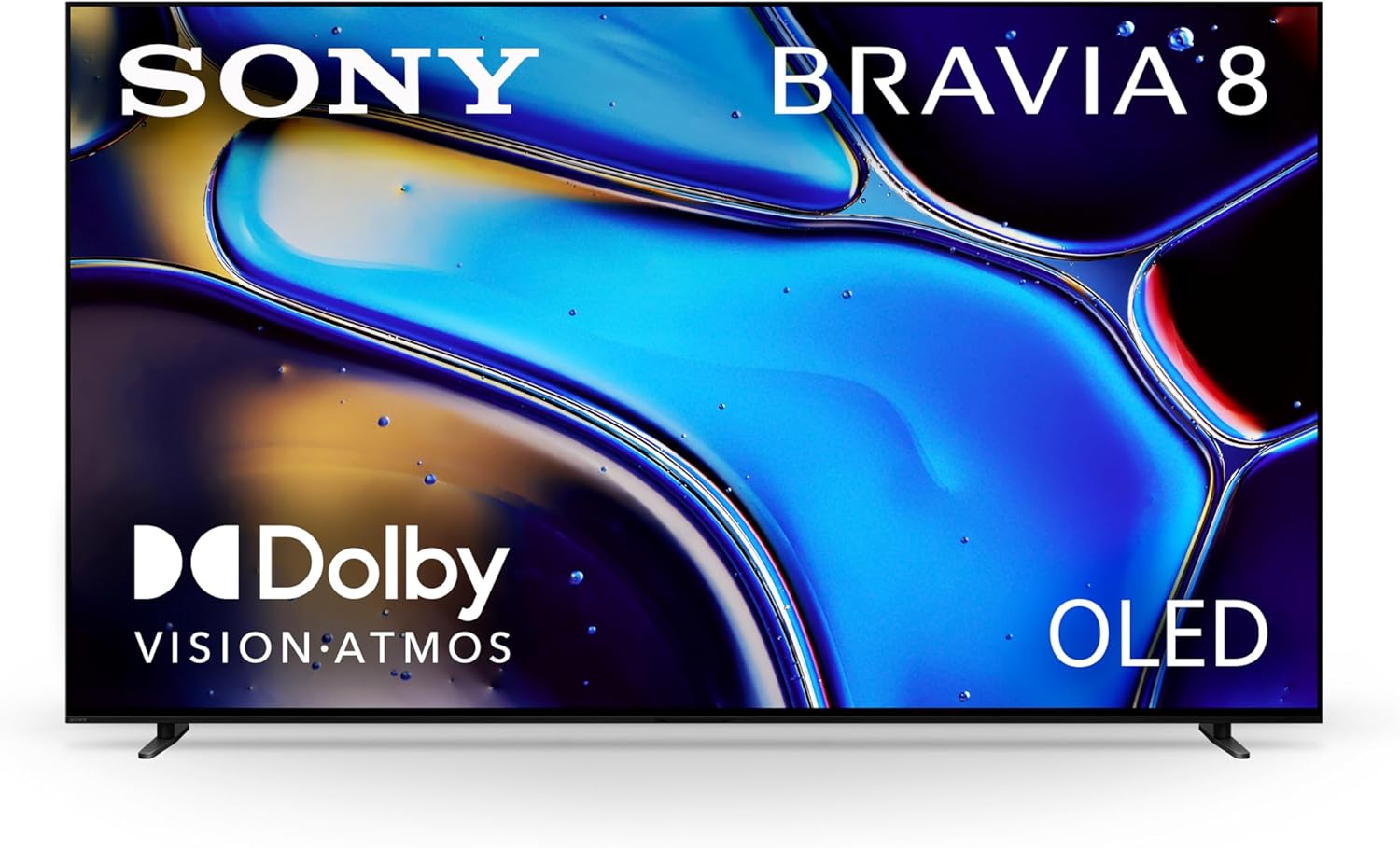
Full review
QD-OLED panel performance
The Sony Bravia 8 II employs third-generation QD-OLED technology, a significant upgrade from standard W-OLED panels. The panel's ability to produce true infinite blacks remains a hallmark of OLED technology, while the QD-OLED implementation enhances color accuracy and extends the color gamut. The technology also reduces reflections and light glare without requiring a matte surface, a feature particularly beneficial in well-lit environments. These improvements make the Bravia 8 II capable of delivering exceptional contrast and color performance even under challenging lighting conditions.
Picture processing and calibration
Sony's XR picture processing engine is described as 'S-tier' by industry experts, with the Bravia 8 II delivering color-accurate pre-calibrated picture modes straight out of the box. The TV's default settings for standard HDR, Dolby Vision HDR, and SDR are noted by Sound Advice as expertly crafted and lovingly tuned, requiring no manual adjustments for most users. The system's AI capabilities excel at upscaling lower-resolution content and smoothing noisy images, which benefits users who frequently watch regular HD TV or older movies. The automatic calibration features for Amazon Prime Video, Netflix, and Sony Pictures Core optimize picture quality for different streaming services without user intervention. This level of refinement is described as 'practically unheard of' in the TV industry, with reviewers noting that the default settings deliver an 'immaculately refined and immersive experience'.
Motion handling and gaming performance
As ecoustics notes, the Bravia 8 II features a native 120 Hz panel with four HDMI ports, two of which are HDMI 2.1 ports supporting full 4K/120 Hz sources. The quick panel response and excellent motion handling make this TV a great choice for gamers and sports fans. Reviewers specifically mention the TV's ability to handle fast-paced content without motion blur or ghosting. The HDMI eARC jack supports simple connection to soundbars or external A/V receivers, with one HDMI 2.1 port dedicated to this function. The panel's response time is noted as being superior to many competing OLED models, particularly in gaming scenarios where input lag is critical. The TV's motion processing capabilities are highlighted as particularly effective for sports viewing, with minimal motion artifacts during fast action sequences.
Smart platform and user experience
The Bravia 8 II runs on Google TV with Android version 12, providing access to all top streaming services and integration with Google Assistant for voice control and smart home integration. Setup is described as quick and straightforward, with a QR code scan for Google account login. The system uses the same MediaTek Pentonic chip as the A95L model, delivering identical performance characteristics, FlatpanelsHD notes. While the Pentonic 1000 doesn't feel blazing fast, it's noted as being less sluggish than the Pentonic 700 in Panasonic Z95A. The Google TV interface is described as having a 'pretty straightforward' user experience with no real complaints. The platform supports Sony's 'Sony Pictures Core' app, a high-bandwidth video streaming service with exceptional audio and video quality. The smart platform's integration with Google Home allows for seamless configuration of the Android part of the system, though some TV setup still requires returning to Sony's interface.
Metal build, two-height stand and split power cable
The Bravia 8 II features a premium design with abundant metal components and clever cable management attachments on the back. The TV has a sleek profile with black metal trim and minimal branding, maintaining a minimalist aesthetic. The iconic Sony light bar on the front adds signature style, though there are no other physical controls onboard beyond a single button below the light bar for basic functions. The stand design includes two height positions: low position places the bottom edge mere millimeters off the surface, while the higher position is ideal for taller soundbar setups. The TV uses standard VESA 300x300 mm mounting pattern with appropriate mounting bolts provided. The power cable features an extension piece that splits the cable into two parts, making it easier to run through concealed conduits, though this design takes up more space than a single cable. The build quality is described as premium, with sturdy metal legs and a robust construction that feels substantial in hand.
Connectivity and port layout
The side-mounted ports include two HDMI 2.0 and two HDMI 2.1 inputs that support 120Hz, with one HDMI 2.1 port functioning as eARC (enhanced audio return channel), according to WhatGear. Additional ports include LAN, satellite, and TV antenna inputs, along with two USB ports and an optical audio out. The HDMI eARC port specifically supports simple connection to soundbars or external A/V receivers or processors. The port layout allows for efficient cable management, with cables and connectors hidden behind rear panels. A mic mute switch is conveniently located for privacy. The TV's connectivity options support both current and future streaming technologies, with the HDMI 2.1 ports capable of handling 4K/120 Hz content. The inclusion of multiple input options makes the Bravia 8 II suitable for various home entertainment setups, from simple streaming to complex multi-source configurations.
Brightness and room performance
This enhanced brightness level allows for better performance in rooms with ambient light, though reviewers note that the TV's performance in bright rooms is still limited compared to LED/LCD alternatives. The panel's ability to produce true infinite blacks remains a key advantage over competing technologies, with no compromise on contrast or black uniformity. The technology's reduced reflections and light glare without requiring a matte surface help somewhat where lighting control is limited, but they do not make up for its limited brightness in genuinely bright rooms. While the increased brightness is beneficial, reviewers emphasize that the TV's true strength lies in its ability to maintain perfect blacks and contrast in darker environments, where it outperforms many competing OLED models.
Price positioning and value
The 55-inch model is priced at $2,599, representing a competitive price point compared to flagship OLED and QD-OLED models from Samsung, LG, and Panasonic. Reviewers note that while the price is high, it's not excessive when compared to similar premium offerings. The TV's value proposition is described as justified by its superior picture performance right out of the box, with no need for manual calibration or adjustment. The price point positions the Bravia 8 II as a premium choice for those who prioritize ultimate picture quality over cost, particularly in light-controlled rooms. The model's ability to deliver exceptional performance without requiring user intervention makes it attractive to consumers seeking a 'set it and forget it' solution.
Strengths
- +Superior picture quality with excellent black levels and contrast thanks to QD-OLED panel
- +Native 120 Hz panel with support for 4K/120 Hz sources via HDMI 2.1 ports
- +Access to Sony Pictures Core app for high-quality video streaming
- +Google TV platform integration with smart home and voice control capabilities
Watch-outs
- −Premium pricing compared to LED/LCD and some OLED competitors
- −Not suitable for bright room environments due to limited brightness
How it compares
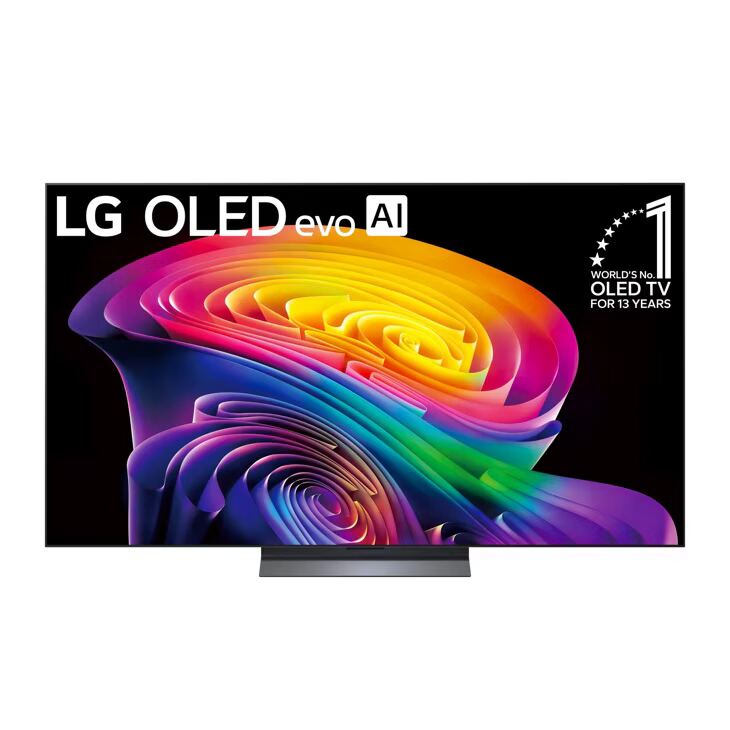
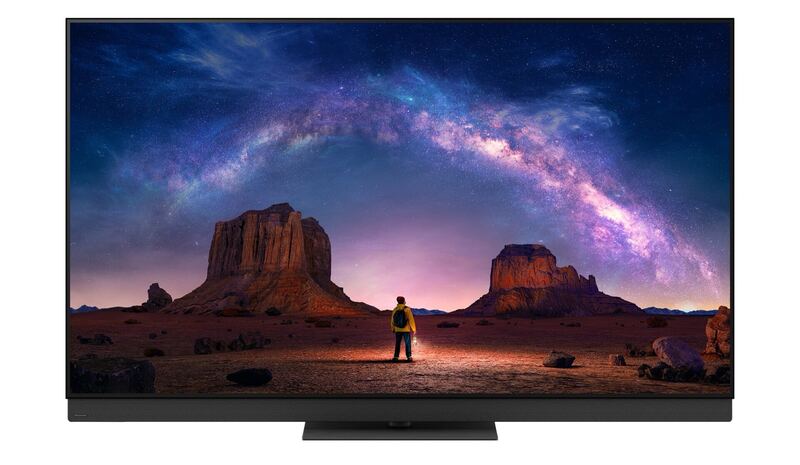
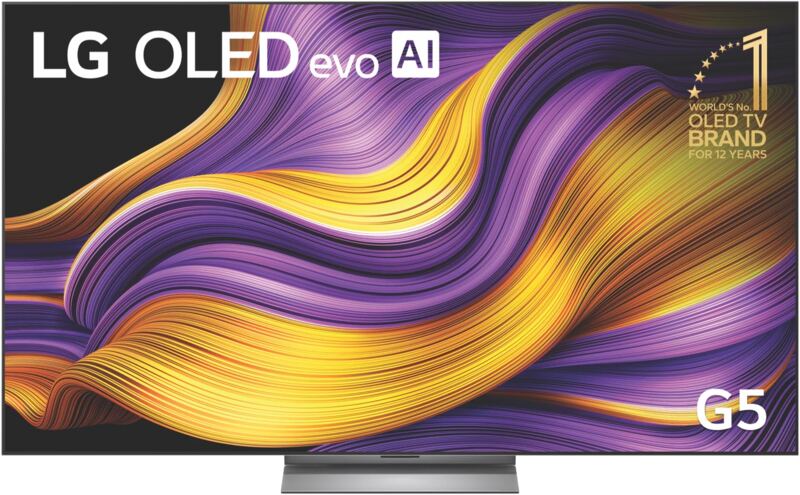
Its limited brightness makes it a poor fit for bright rooms, while the LG G5 OLED's extra brightness improves bright-room performance, and the Sony costs more than the LG G5 OLED. It runs Google TV, where the Panasonic Z95B runs Fire TV.
Rating sources
Counts as 4.48/5 in our score — this publisher's 87 scores on the site average 3.98, so its scores are adjusted up to compare fairly with other publishers.
“Sonys latest OLED TV offers superior picture performance right out of the box. Is that enough to justify the price? (Spoiler alert it is).”
Not in the average — we derived this score from the review's words, and a publisher printed a score for this product, so the printed number counts instead.
“The Bravia 8 II, though, is the TV that has stolen his heart...”
Not in the average — we derived this score from the review's words, and a publisher printed a score for this product, so the printed number counts instead.
“Welcome to what might just be one of the very best 65-inch OLED TV s you can buy right now: the Sony Bravia 8 MKII.”
Not in the average — we derived this score from the review's words, and a publisher printed a score for this product, so the printed number counts instead.
Our 4.5 score is the average of 1 of the scored reviews above, each adjusted for how strictly its publisher scores; 2 more reviewed it without printing a score and are not in the average. 3 derived scores above are not in the average because a publisher printed a score for this product. Ratings marked * were derived from the reviewer’s written analysis or video transcript — the publisher didn’t print an explicit numeric score, so we inferred one from their own words. Click through to verify. More about methodology.