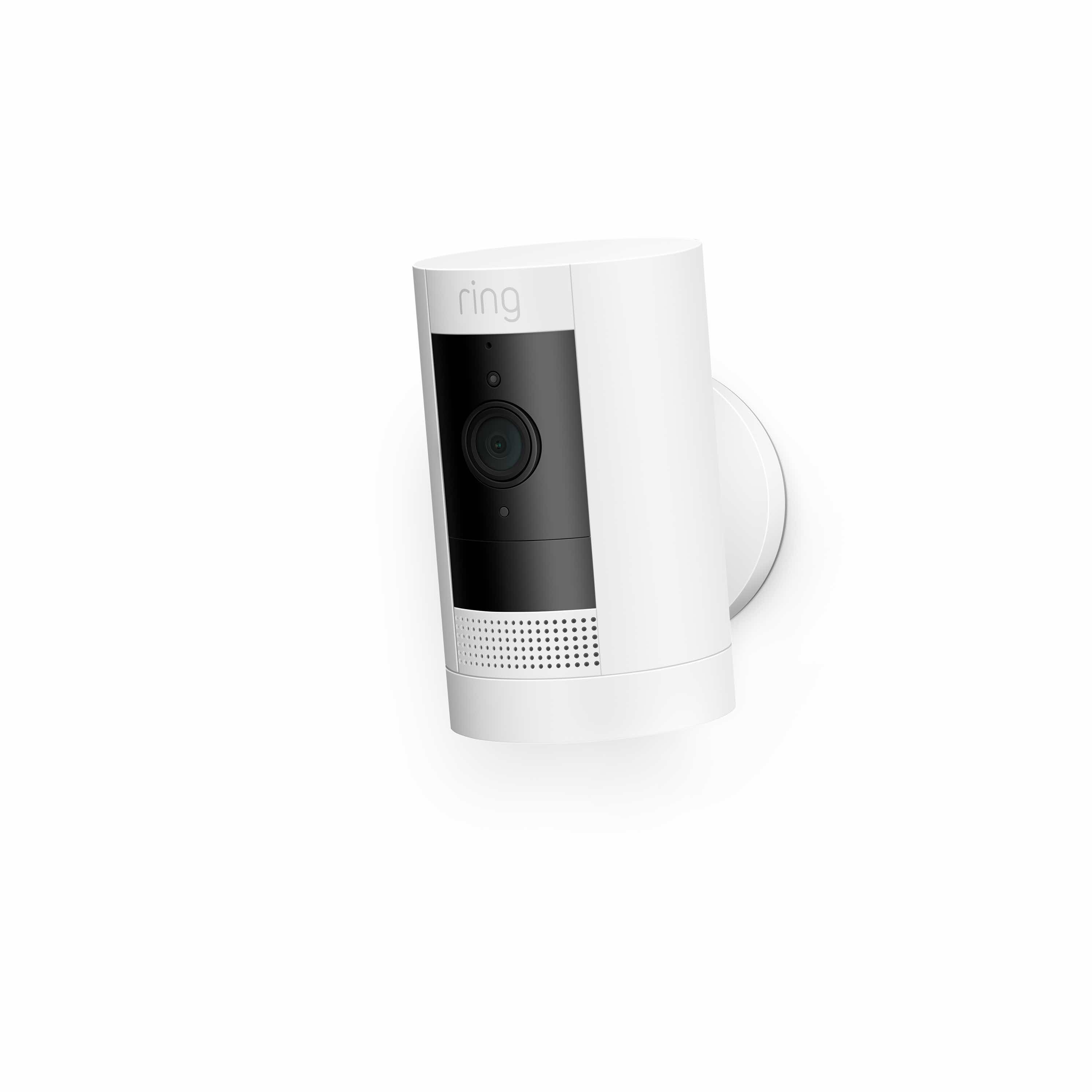
Ring's Stick Up Cam Battery is the segment's reliable value pick: under $100 for a true wire-free indoor/outdoor camera that snaps into the Ring/Alexa ecosystem with almost no friction. Security.org rates it 9.5/10 on price-to-capability. Reviewers consistently flag the 1080p resolution and the required subscription as what you accept at this price.
Full review
A $50 solar panel eliminates the battery swap
Security.org's 9.5/10 review of the Stick Up Cam Battery framed it as 'extremely affordable' for what it delivers, and that framing is fair. The camera handles the basic security-camera job - motion detection, live view, two-way talk, and motion-triggered recording - reliably across both indoor and outdoor placements. Running on battery, it is genuinely portable - you can move it from a baby's nursery to the back deck without rewiring anything.
TechHive's review noted that motion alerts arrive in a few seconds with a stable Wi-Fi connection, and the camera wakes from sleep quickly enough to capture an event from the first ring of the motion sensor. Battery life is the practical headline: with motion sensitivity tuned down, owners report months between charges, and the optional solar panel accessory ($50) effectively eliminates the swap cycle for outdoor installs that get a few hours of daylight.
No spotlight, siren, or microSD slot on the base model
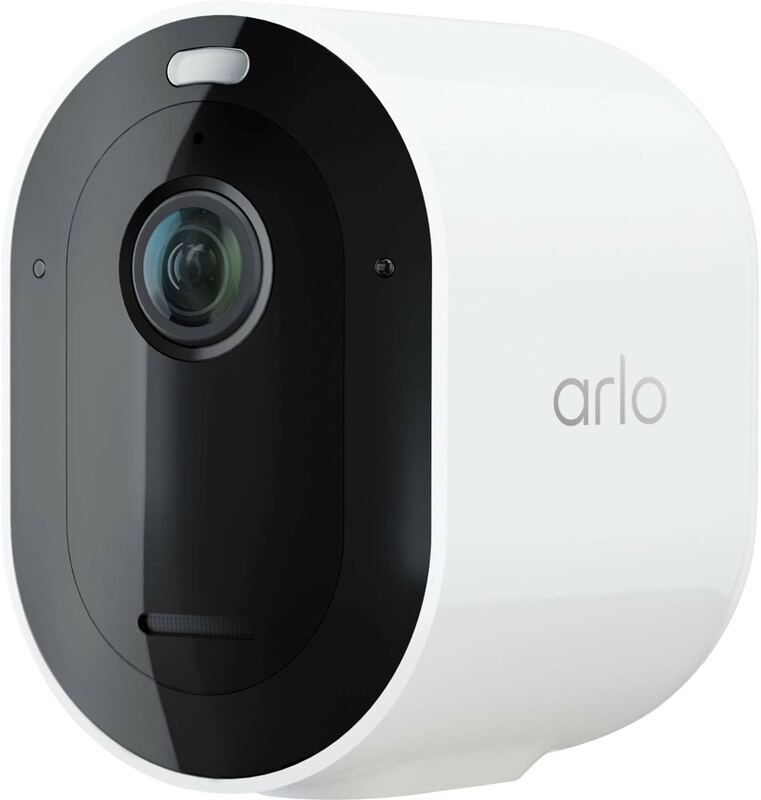
The Stick Up Cam Battery is one of the smaller wire-free cameras on the market, with a compact cylindrical body that mounts on a ball joint. The included base supports flat-surface placement, ceiling mount, or wall mount with the same hardware, which makes repositioning trivial. The plastic shell is matte and unobtrusive in either white or black, and the weather-resistant rating means light rain and snow are not a concern, though reviewers caution that full-sun exposure can degrade the battery faster than shaded mounts.
Security.org and TechHive both noted the simplicity of the physical design as a plus and a minus: there is no integrated spotlight (you'd need the more expensive Stick Up Cam Pro for that), no siren on the base model, and no microSD slot for local storage. What you get is a focused, well-built camera at the lowest viable price point for the Ring ecosystem.
Live feed on Echo Show in three seconds
Ring's setup flow is the polished benchmark of the consumer-camera category. Pairing happens in the Ring app via QR code in under five minutes per camera, and the same app handles every Ring device - doorbells, sensors, alarms - in one feed. Echo Show integration is the standout: 'Alexa, show me the back porch' surfaces a live feed within three to four seconds on a 2nd-gen Echo Show 8, and motion alerts can be announced through any Echo device in the home.
The friction shows up in the subscription. Security.org and TechHive both flagged that Ring Protect ($3.99/mo for one camera, $10/mo for unlimited) is required to save any video history at all - without it the camera is a live-view-and-alert device, not a recording device. Motion zones, person detection, and rich notification snapshots are all gated behind paid tiers, mirroring Arlo's model but at lower price points.
130-degree FOV, narrower than the Arlo Pro 5S
The 1080p resolution is the camera's most-cited limitation in 2026 reviews. Security.org's analysis pointed out that competitors like Arlo, Eufy and TP-Link Tapo deliver 2K (or higher) at similar or lower price tiers, making Ring's 1080p ceiling feel dated. License-plate reads and face IDs at distance are visibly softer than 2K alternatives, and reviewers note that low-light footage on the base battery model relies on IR, producing the typical black-and-white-with-eyeshine look that color-night-vision rivals avoid.
The 130-degree FOV is the second knock - narrower than the Arlo Pro 5S (160 degrees) and most modern wireless competitors, meaning broader scenes need two cameras instead of one. Lack of person detection in the base tier (Ring buries it behind Ring Protect Plus) means owners get more nuisance alerts from blowing leaves and shadow shifts than they would on cameras with on-device person AI. Multiple Android-app users in TechHive comments and Reddit threads have reported connection retry loops, though iOS users report a more reliable app experience.
The easy add for households already on Alexa
The Stick Up Cam Battery is the right choice for a buyer who already owns Ring gear (a doorbell, Echo devices, Ring Alarm) and wants the cheapest path to add an indoor or outdoor camera that fits the same app and alert flow. It is also the safe pick for a renter who needs portability - no drilling beyond two anchor screws - and who values being able to take the camera with them when they move.
It is the wrong choice for buyers who care most about image quality, want true color night vision out of the box, or refuse to pay any monthly subscription. Those buyers should look at the Tapo C220 (indoor only, free local recording) or the Arlo Pro 5S 2K (premium with subscription) instead. Smart-home owners who use Apple HomeKit or Google as their primary hub will also find Ring's Alexa-centric ecosystem limiting.
Cheaper and simpler to set up than the Arlo Pro 5S
Against the Arlo Pro 5S 2K at #1, the Stick Up Cam Battery is significantly cheaper, simpler to set up, and easier to integrate into Alexa-centric homes, but loses on resolution, FOV, color night vision, and AI detection. Against the Ring Floodlight Cam Wired Pro at #4, the Stick Up Cam trades 2,000-lumen flood illumination and continuous power for portability and a much lower price - the right call only if you do not need flood-lighting for the placement.
Inside Ring's own lineup, the Stick Up Cam Pro (with radar 3D motion detection and color night vision) is the next step up at around $180. If radar-tracked motion and bird's-eye-view mapping matter to you, the Pro is the better buy; if you just need a reliable Ring-ecosystem camera for under $100, the base Battery model remains the value pick.
$245 total over three years with Ring Protect
At $99 list (and often $79 on Amazon promo), the Stick Up Cam Battery is one of the best wireless-camera dollar values shipping. Adding Ring Protect at $3.99/mo brings three-year cost of ownership to around $245 - less than the Arlo Pro 5S alone, before its subscription. Reviewers consistently come back to this math as the justification for accepting the 1080p ceiling and narrower FOV: at this price tier, the Stick Up Cam is the camera you actually buy and install, rather than the one you wish you could afford.
Ring Protect Plus at $10/mo for unlimited cameras is the upgrade path most multi-camera households end up on. At that tier, person detection, Bird's-Eye View on the Pro cams, and 180-day video history all unlock, which makes a four-camera Ring perimeter run about $40/mo less than the equivalent Arlo Secure Plus plan. The Stick Up Cam Battery is the natural anchor of that build - cheap enough to deploy at four mounting points without flinching.
Solar accessory ran two years without intervention
Ring's outdoor reliability track record on the Stick Up Cam is solid. Owner reports from 18-24 month installs cite minimal water ingress concerns when mounted under eaves or with the included silicone weather skirt. The battery pack is removable - swap a spare and recharge over USB-C - which extends the practical life of the camera beyond the original battery's degradation curve. The plastic shell is UV-resistant in the listed colorways and reviewers report no visible yellowing or cracking after a year of direct-sun exposure. Owners who add the solar panel accessory effectively get a perpetual-power install that has been documented running for two-plus years without intervention in moderate-sun climates, which is the long-term durability story Ring genuinely owns at this price tier.
Strengths
- +Excellent value at under $100 for a true indoor/outdoor battery-powered camera
- +Solar panel accessory available to eliminate battery swap cycles entirely
- +Two-way talk with noise cancellation produces clear audio in both directions
- +Optional 3rd-gen model adds color night vision via low-light sensor
- +Tight Alexa and Echo Show integration for live view and motion announcements
Watch-outs
- −1080p resolution is dated relative to 2K cameras from Arlo, Eufy and TP-Link
- −Ring Protect subscription ($3.99/mo minimum) required to save any video history
- −130-degree horizontal FOV is narrower than competing wireless cams
- −Base model lacks person detection, which generates more false motion alerts
How it compares
Less than half the price of the Arlo Pro 5S 2K but trades down to 1080p, narrower FOV and weaker AI detection. The Ring Floodlight Cam Wired Pro adds floodlights and continuous power but loses portability. For pure indoor monitoring, the Tapo C220 is a smarter buy than the Stick Up Cam.
Rating sources
Archived — this review is no longer available at the publisher. The score above is the one they published.
Our 4.1 score is the average of these published ratings. More about methodology.