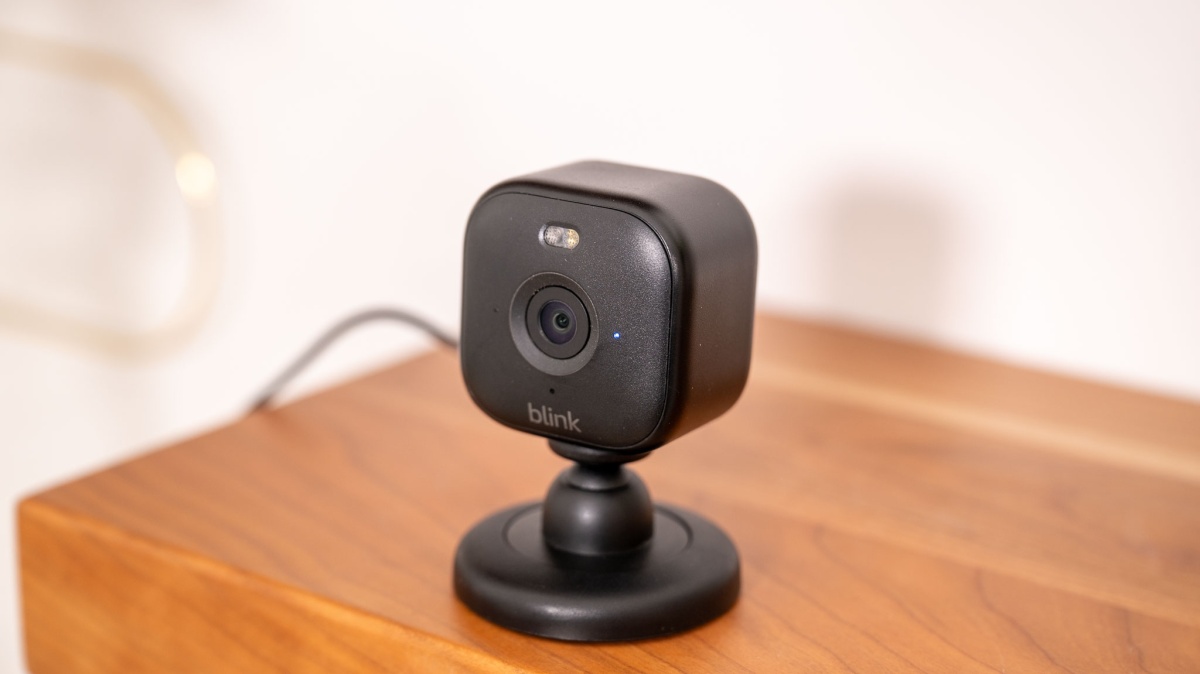
The Blink Mini 2 in a 2-pack is the bulk-coverage budget play: two indoor (or accessory-adapter outdoor) cameras for the price of one premium one. Security.org rates it 7.9/10 for solid budget value with seamless Alexa integration; TechGearLab is harsher at 61/100, flagging clarity issues. The honest read: this is the camera you buy to cover three or four rooms cheaply, not the one you buy for image quality.
Full review
Real-World Performance
The Blink Mini 2 is the cheapest-route-to-indoor-coverage camera in this category, and the 2-pack at around $65 doubles down on the value pitch. Security.org's 7.9/10 review framed it correctly: 'solid value for budget-conscious buyers seeking affordable indoor security' - the operative word being affordable. The camera works, it pairs quickly with Alexa, and motion alerts arrive within a few seconds with stable Wi-Fi.
TechGearLab's 61/100 score, by contrast, focused on clarity and called the video 'very pixelated' with poor color accuracy compared to similarly priced competitors. TechRadar similarly noted 'unimpressive performance might make you think twice.' The reality is somewhere between: the Blink Mini 2 is fine for confirming a delivery, watching a pet, or seeing whether a kid is in the kitchen, but it is not the camera you choose if image quality is the top priority. The 143-degree FOV is its strongest practical advantage - one camera per room is genuinely enough.
Image Quality in Detail
Blink markets the Mini 2 as having 'HD' resolution, with Amazon-affiliated marketing in some retail channels claiming 2K. Independent testing from TechGearLab and TechRadar consistently treats it as a 1080p-class sensor and judges it accordingly. Daytime footage is acceptable - faces are identifiable across a small room, motion is tracked smoothly at 30 fps - but it visibly trails the Tapo C220's 2K output in side-by-side tests.
Color night vision via the built-in spotlight is the standout image-quality feature at this price. Security.org noted that the spotlight kicks in automatically and produces usable color footage at night, which is rare in the sub-$50 single-camera tier. TechGearLab agreed the spotlight feature was useful, while still calling out that overall low-light clarity trails the original Blink Mini in some lighting conditions - an unusual regression that some reviewers attribute to a more aggressive denoise pipeline in firmware.
Setup and Software
Blink is an Amazon brand and the setup experience reflects it: pairing happens through the Blink app, with Alexa integration assumed and prominently surfaced. Voice commands ('Alexa, show me the kitchen') work natively on Echo Show devices, typically surfacing the live feed within three to five seconds. The app handles all Blink products in a single feed, including the Mini, Outdoor 4, Wired Floodlight, and the Sync Module bridge. Notification customization is granular enough that you can mute one camera while keeping others active - useful for late-night kitchen monitoring without waking yourself up.
The subscription friction is the recurring theme. Without a Blink Subscription Plan ($3/mo for one camera, $10/mo for unlimited), there is no cloud storage and no person-vs-motion AI - just live view and motion notifications. Owners who want to avoid the subscription can buy a Sync Module 2 ($35-50) and plug a USB stick into it for local storage, which works but adds another device to the install. Security.org's review flagged this as a 'mandatory Sync Module purchase' for buyers who want local storage without paying monthly.
Where It Falls Short
Image clarity is the headline weakness. TechGearLab's blunt 'lackluster clarity' assessment is fair - at typical indoor distances of 8-15 feet, facial features are softer than competitors like the Tapo C220, and reading print or fine detail off a surface is harder. TechRadar's 'unimpressive performance' framing reinforces that this is not a camera you choose for image quality - it is a camera you choose for price and Amazon-ecosystem fit.
The subscription model is the secondary frustration. Without a Blink Subscription Plan, the Mini 2 cannot do person detection (it cannot distinguish a person from a curtain blowing), cannot save video to the cloud, and cannot send rich notifications. The Sync Module 2 workaround for local storage costs another $35-50 and adds a USB stick to the bill of materials, which erodes the cheap-camera value proposition. Outdoor use requires the separately sold Weather Resistant Power Adapter - listed at around $15 - which is another small but real friction. And there is no 24/7 professional monitoring option.
Who It's Best For
The Blink Mini 2 2-pack is the right buy for an Alexa household that wants cheap indoor coverage across multiple rooms - say, a living room and a kitchen, or a baby's nursery and a hallway. It is also the right buy for someone who needs a couple of low-stakes indoor cameras (checking on pets, watching for a package via interior window, monitoring an entryway) and refuses to pay more than $35 per camera.
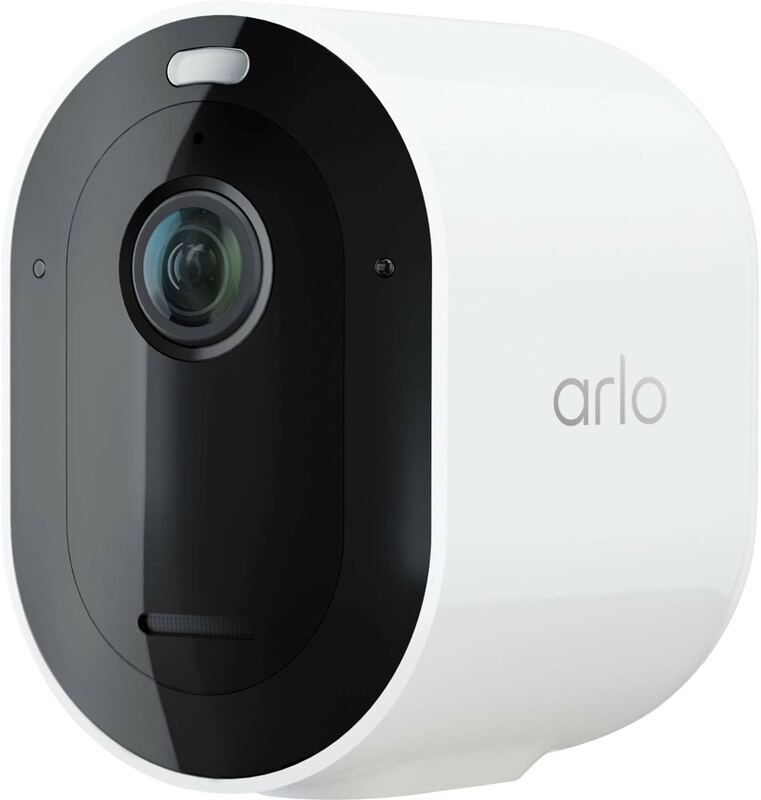
It is not the right camera for image-quality-first buyers, who should look at the Tapo C220 at #3 for indoor work or the Arlo Pro 5S 2K at #1 for outdoor. It is also not the right buy for buyers who refuse any subscription, since the camera's most useful features (person detection, cloud history) are subscription-gated. Google or Apple HomeKit households will find Blink's Amazon-only integration limiting.
How It Compares to Alternatives
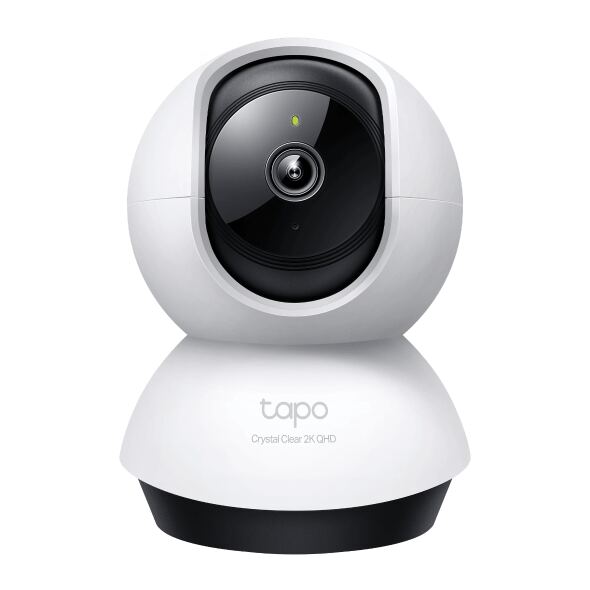
Against the Tapo C220 at #3, two Blink Mini 2s cost about the same as one Tapo C220 plus a 128GB microSD. The Tapo wins on resolution (2K vs 1080p), AI detection (on-device vs subscription-gated), pan/tilt (vs fixed FOV), and free local recording. The Blink wins on cameras-per-dollar and Alexa-native simplicity. Both are valid choices depending on whether breadth or depth matters more.
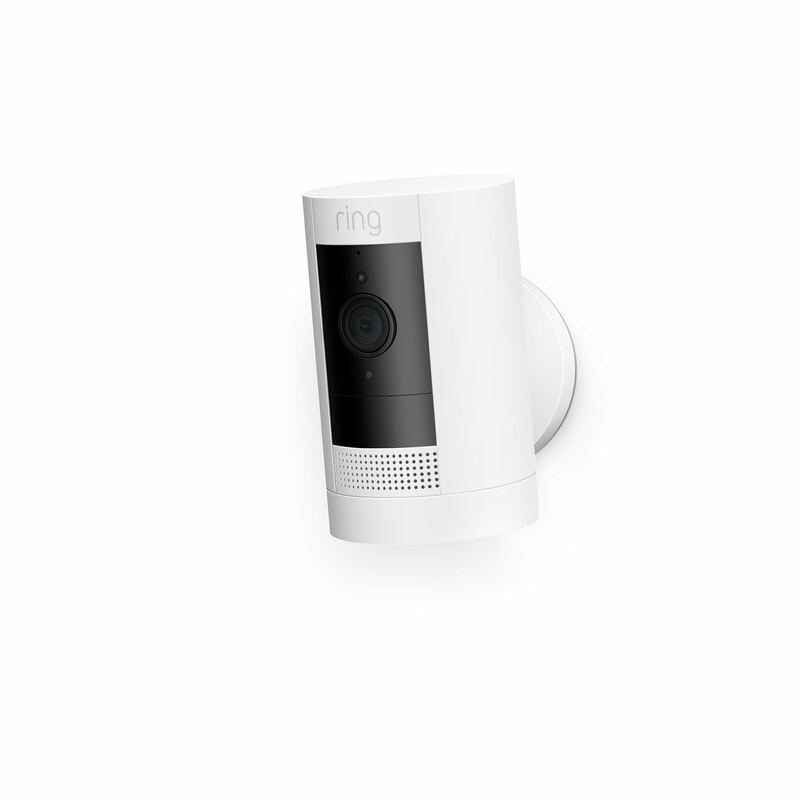
Against the Ring Stick Up Cam Battery at #2, the Blink 2-pack is cheaper for two cameras but plug-in only (the Stick Up Cam is battery-powered with full outdoor support out of the box). Against the Wyze Cam v4 at the same price tier, Wyze has slightly better image quality but a weaker subscription model and worse Alexa integration. Inside Amazon's own portfolio, the next step up is the Blink Outdoor 4 - significantly better imaging at roughly double the per-camera price.
Value at This Price
At $65 for the 2-pack (often $50 on Amazon promo events), the Blink Mini 2 delivers the lowest cost per camera in this entire roundup. Three-year cost with a Blink Subscription Plus plan ($10/mo unlimited cameras) lands around $425, which feels expensive against the no-subscription Tapo C220 path but reasonable against Ring Protect when you need multiple cameras. Buyers who skip the subscription and use a Sync Module 2 with a USB stick can run the cameras for under $115 total over three years - the cheapest viable multi-camera coverage in this lineup.
Amazon's Prime Day and Black Friday Blink promos historically discount the 2-pack to $35-45, which is the moment most buyers actually pull the trigger. At those prices, the Blink Mini 2 becomes the obvious gift-and-stocking-stuffer indoor camera and the cheapest way to dip a toe in the Alexa-smart-home pool. Security.org's 'solid value for budget-conscious buyers' framing applies even more cleanly during sale windows than at the standard $65 price.
Long-Term Durability
Indoor plug-in cameras are not stressed by weather, and the Mini 2 inherits the original Blink Mini's reliable mechanical reputation. The plastic body and stand are not premium-feeling but they survive being knocked off a shelf or repositioned dozens of times without obvious wear. Power delivery is via a standard USB-A cable plus wall adapter, so a failed cable is a $5 replacement rather than a whole-camera issue. The main long-term concern reviewers raise is firmware updates: Amazon has been slower to roll updates than competitors, and some advertised features (notably the rumored 2K firmware) have lagged behind marketing claims. Owners who add the outdoor weather-resistant adapter for porch or carport placements report 1-2 year survival in moderate climates - acceptable but not the multi-year outdoor reliability of cameras actually designed for outside duty.
Strengths
- +Two cameras for around $65 makes per-room indoor coverage genuinely affordable
- +Compact plug-in form factor disappears on a shelf or end table
- +Built-in spotlight enables color night vision, unusual at this price
- +Wider 143-degree FOV captures whole rooms from one corner
- +Indoor/outdoor capable with the optional weather-resistant power adapter accessory
Watch-outs
- −1080p resolution looks dated against 2K competitors like the Tapo C220
- −Person detection requires a Blink Subscription Plan ($3+/mo)
- −Cloud storage requires either the subscription or a separately purchased Sync Module 2 for local USB storage
- −Video clarity is described by TechGearLab as 'very pixelated' versus class leaders
How it compares
Two Blink Mini 2 cameras cost about what one Tapo C220 plus a microSD costs, but the Tapo C220 wins on resolution, AI detection, and free local recording. Against the Ring Stick Up Cam Battery or Arlo Pro 5S 2K, the Blink 2-pack trades single-camera quality for double the coverage and Alexa-native polish.
Who this is for
At a glance: Alexa households who want cheap multi-room indoor coverage and don't need 2K resolution or AI smarts - or who want a starter pair with optional accessory for outdoor use.
Why you’d buy the Blink Mini 2 (2-Pack)
- Two cameras for around $65 makes per-room indoor coverage genuinely affordable.
- Compact plug-in form factor disappears on a shelf or end table.
- Built-in spotlight enables color night vision, unusual at this price.
Why you’d skip it
- 1080p resolution looks dated against 2K competitors like the Tapo C220.
- Person detection requires a Blink Subscription Plan ($3+/mo).
- Cloud storage requires either the subscription or a separately purchased Sync Module 2 for local USB storage.
Rating sources
“Solid value for budget-conscious buyers seeking affordable indoor security. Essential capabilities without unnecessary complexity, though it lacks advanced features.”
“An affordable, very mediocre camera with lackluster clarity, but consistent motion tracking and a useful nighttime spotlight.”
“A good price, but unimpressive performance might make you think twice.”
Our 4.0 score is the average of these published ratings. Ratings marked * were derived from the reviewer’s written analysis or video transcript — the publisher didn’t print an explicit numeric score, so we inferred one from their own words. Click through to verify. More about methodology.