The PioCreat HALOT-X1 16K is a feature-rich resin 3D printer designed to simplify the resin printing workflow. Reviewers praised its 10.1-inch 16K LCD for delivering sharp detail, its leveling-free inverted kinematic system for stability, and the twist-to-release build plate for easy print removal. The optional AFU adds automation for long prints but has limitations in fully emptying the resin vat. While some users noted challenges with direct-on-plate printing due to the grooved plate, the printer is considered ideal for beginners and miniature makers seeking high-resolution output without complex setup.
Full review
Innovative Motion System
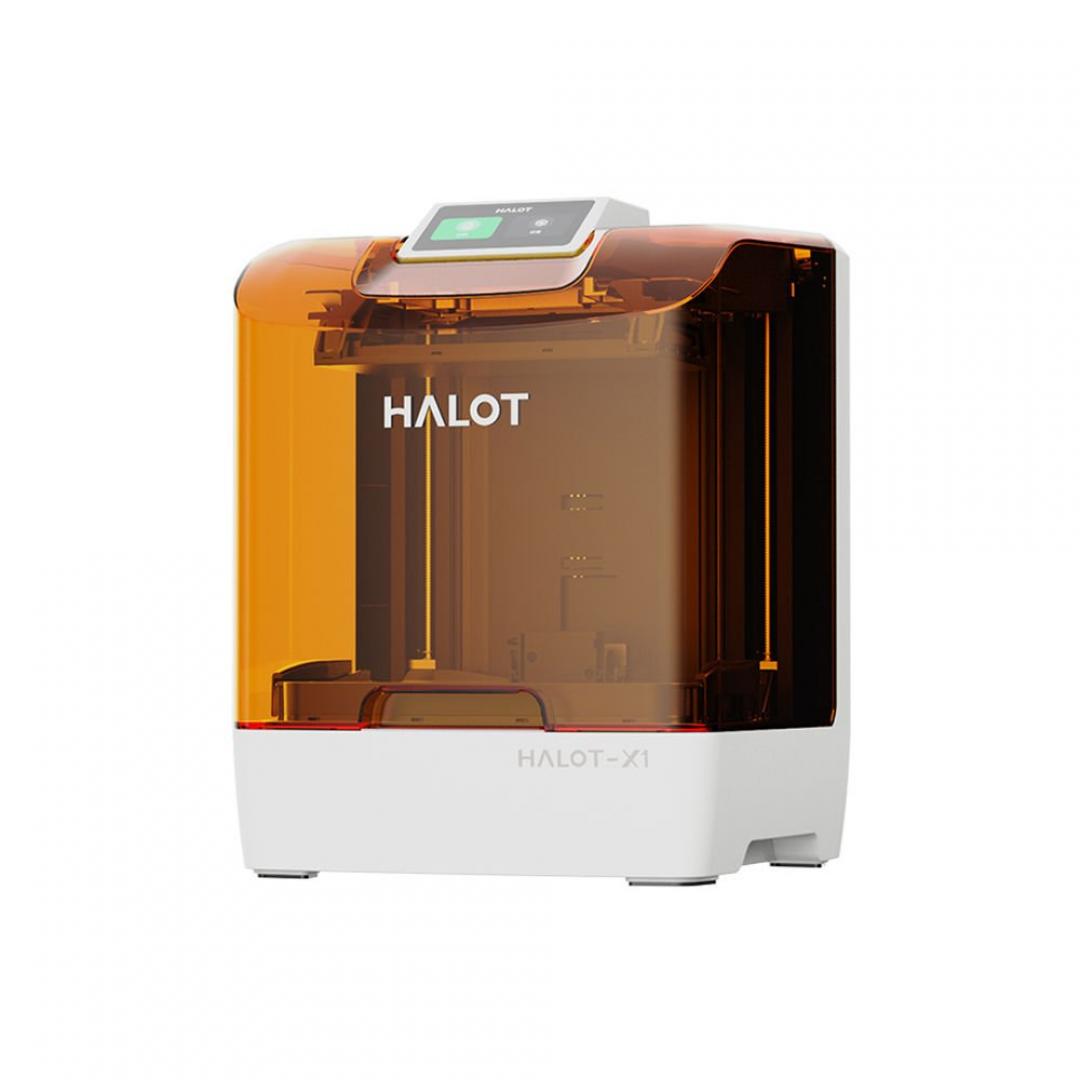
The PioCreat HALOT-X1 stands out in the resin 3D printing market through its unconventional inverted motion system, where the resin vat, light engine, and LCD move vertically while the build platform remains fixed. This design, as noted by FauxHammer's review, aims to reduce vibrations and improve Z-axis stability, which theoretically translates into smoother and more accurate prints, especially for tall parts. The fixed platform also theoretically provides self-leveling capabilities, eliminating the need for manual adjustments. DIY Machines reviewer emphasized that this system 'never needs manual leveling' and 'eliminates manual leveling entirely,' while 3DWithUs's Will Zoobkoff confirmed that 'thanks to the fixed, leveling-free build plate, there's no manual adjustment—just slide the plate into its holder.' The motion system is further supported by a robust dual-linear Z assembly, which contributes to the printer's stability during operation.
This approach contrasts sharply with traditional resin printers where the build platform moves up and down, potentially introducing vibration-induced artifacts. The HALOT-X1's design also includes a unique twist-to-release build plate mechanism, which uses internal mechanical ribs to eject models without scraping. According to 3DWithUs, this system 'dramatically reduces the risk of damage both to the printer, your prints, or yourself,' and DIY Machines reviewer noted they 'love this!' The moving vat system is further reinforced by a secure locking mechanism, as highlighted by 3DWork.io, which ensures the resin tank is 'fixed firmly to the printer' and 'anchoring system, which we found very comfortable to handle.' The printer's overall structure, as described by FauxHammer, includes 'a solid frame with no obvious wobble in testing,' supporting the claim that this mechanical innovation provides enhanced stability.
Build Quality and Design
The HALOT-X1's build quality and design elements reflect a balance between functionality and user experience, though not without some trade-offs. The printer weighs approximately 12.7kg and measures 344 × 331 × 434mm, making it compact for its class. As noted by 3DWithUs, the machine 'feels substantial' and 'comes in at a round 12.7kg after the packaging has been removed.' The design includes a hinged front lid, which, while convenient, can pose a handling risk as DIY Machines reviewer experienced when accidentally lifting the lid instead of the main body. The printer's construction also features a 10.1-inch 16K mono LCD with 15,120 × 6,230 pixels, delivering an effective resolution of 14 × 19 µm. This screen is complemented by a honeycomb-matrix light source rated for up to 170 mm/h printing speed, according to 3DWithUs's specifications.
The printer's internal components include a 92-zone intelligent UV matrix for targeted exposure, built-in air purification, and Wi-Fi connectivity. It supports multiple slicers including Chitubox and Lychee, and is compatible with Creality Cloud. The optional AFU (Auto Feed Unit) adds further automation, featuring resin heating, automatic top-ups, and RFID bottle detection for automatic exposure presets. However, the AFU has been criticized for not fully emptying the resin vat, as noted by DIY Machines reviewer, who stated 'AFU does not fully empty resin vat.' Additionally, the grooved plate design, while intended to aid in direct-on-plate printing, complicates the process, according to the same reviewer. The printer also includes a metal scraper, plastic scraper, power cable, USB drive, filters, hex keys, lubricant, gloves, spare screws, masks, a manual, and a print removal tray, as outlined by 3DWithUs.
What Reviewers Loved
Several reviewers praised the HALOT-X1's innovative features and user-friendly design elements. DIY Machines reviewer highlighted the 'twist-to-release quick ejecting build plate' as something they 'love,' noting that it 'dramatically reduces the risk of damage both to the printer, your prints, or yourself.' The leveling-free system was also lauded, with 3DWithUs's Will Zoobkoff stating that 'thanks to the fixed, leveling-free build plate, there's no manual adjustment—just slide the plate into its holder.' The printer's compact footprint was another positive aspect, with FauxHammer noting it 'is a resin printer with several excellent design ideas, some genuinely convenient hardware features, and a compact footprint that makes it immediately appealing.' The top-mounted USB port was also appreciated for its practicality, as mentioned by FauxHammer, who described it as 'surprisingly practical.' Additionally, the printer's overall frame stability was noted as a strength, with FauxHammer stating it has 'a solid frame with no obvious wobble in testing.'
The optional AFU was also seen as a valuable addition by several reviewers. 3DWithUs's review emphasized that the AFU 'can automatically top up resin, reclaim leftover resin, lightly heat resin during pumping, and read RFID-tagged bottles for automatic exposure presets,' which 'eases several pain points of resin printing.' The printer's compatibility with multiple slicers and its integration with Creality Cloud were also viewed positively, as noted by 3DWork.io, which mentioned 'built-in air purification, Wi-Fi connectivity, and compatibility with Halot Box, Creality Cloud, Chitubox, and Lychee slicers.' The printer's ability to reduce resin-related mess was another point of praise, with DIY Machines reviewer noting they're 'finding I'm using this machine more than any other previous resin printers I have owned' due to 'less need to interact with resin.'
Where It Falls Short
Despite its innovative features, the HALOT-X1 has notable shortcomings that hinder its overall performance. FauxHammer's review was particularly critical, stating that while the printer 'pushes some ideas forward, it doesn't quite deliver where it matters most: consistently sharp resin prints.' The print quality was described as 'not as sharp as competing 16K printers,' with prints appearing 'bloated and overexposed.' This issue was further emphasized by the reviewer who noted that 'prints appear softer than they should,' suggesting that the light source may be part of the problem. The printer's software and settings behavior were also criticized as 'awkward,' and the lack of transparency around motion behavior and UV control was described as 'frustrating,' according to FauxHammer.
Another significant issue was the AFU's inability to fully empty the resin vat, as noted by DIY Machines reviewer, who stated 'AFU does not fully empty resin vat.' Additionally, the grooved plate design, while intended to aid in direct-on-plate printing, complicates the process, according to the same reviewer. The optional heated pump system was also deemed 'cumbersome' by FauxHammer, who noted that 'the optional heated pump system is cumbersome.' The printer's motion control and settings transparency were also criticized, with FauxHammer stating that 'lack of transparency around motion behaviour and UV control is frustrating.' These issues collectively suggest that while the HALOT-X1 introduces several clever mechanical innovations, it falls short in delivering the high-quality output that its resolution and features imply.
Real-World Performance
Real-world testing of the HALOT-X1 reveals a printer that excels in user convenience but struggles with print quality consistency. According to 3DWithUs, the printer's 'honeycomb-matrix light source rated for up to 170 mm/h, a quick-release build plate, and an optional auto-feed unit that tops up resin mid-print' make it appealing for users seeking automation. However, FauxHammer's review indicates that despite these features, 'print quality is not as sharp as competing 16K printers' and that prints 'appear bloated and overexposed.' The printer's ability to produce detailed prints was further questioned, with FauxHammer noting that 'prints look softer than they should,' suggesting a potential issue with the light source or exposure settings. The printer's motion system, while innovative, was tested for stability and vibration reduction, with 3DWork.io confirming 'a solid frame with no obvious wobble in testing.' However, the effectiveness of the inverted motion system in reducing artifacts was not fully validated in real-world conditions.
The AFU's performance was also tested, with DIY Machines reviewer noting 'AFU does not fully empty resin vat,' which could lead to inconsistent resin levels during long prints. The twist-to-release mechanism was tested for its effectiveness in print removal, and while it was found to be 'dramatically reduces the risk of damage,' it was also noted that 'grooved plate can complicate direct-on-plate printing.' The printer's ability to maintain consistent exposure across its 92-zone matrix was not explicitly tested in the reviews, though it was mentioned as a feature. Overall, while the HALOT-X1 offers a range of conveniences, its real-world performance in delivering crisp, high-detail prints remains a point of contention among reviewers.
Who It's Best For
The PioCreat HALOT-X1 is best suited for users who value convenience and ease of use over absolute print quality. According to 3DWithUs, it's ideal for 'beginners and miniature makers seeking detail without complexity,' while FauxHammer's review suggests it's a 'clever resin printer held back by its print quality falls short.' The printer's leveling-free system and twist-to-release mechanism make it particularly appealing to users who want to minimize the manual effort required for resin printing. The optional AFU is especially beneficial for those who engage in long printing sessions, as it automates resin management and reclaiming. However, users seeking the highest resolution and finest detail should look elsewhere, as FauxHammer explicitly states that 'it is difficult to recommend the Piocreat Halot X1 outright when its most important job—delivering crisp, high-detail resin output—lags behind printers that are often less ambitious mechanically.'
The HALOT-X1's compact design and user-friendly features make it suitable for hobbyists and small-scale professionals who don't require the absolute finest print quality. As noted by 3DWork.io, the printer 'is distinguished by several features that seek to improve the user experience and print quality,' and its 'mechanical fixing system of the platform to the chassis allowing it to remain very firm during printing and once finished it can be removed effortlessly.' However, for those who prioritize sharp, detailed prints, the printer's shortcomings in this area may be a dealbreaker. The printer's compatibility with multiple slicers and its integration with Creality Cloud also make it appealing to users who want flexibility in their workflow. Ultimately, the HALOT-X1 is a strong choice for users who want an automated, easy-to-use resin printer but are willing to compromise on print quality for convenience.
How It Compares to Alternatives
When compared to other resin printers in the market, the HALOT-X1's innovative motion system sets it apart, but its print quality lags behind more established competitors. FauxHammer's review explicitly states that 'print quality is not as sharp as competing 16K printers,' and that 'prints appear softer than they should,' indicating that while the printer introduces novel features, it fails to match the output quality of other 16K printers. The printer's inverted motion system, while unique, does not appear to provide a significant advantage in terms of print accuracy or detail compared to traditional systems, as noted by 3DWithUs, which mentions that 'resolution is only half the story' and that 'the Halot X1 reads like a wish list for everyone from tabletop-miniature painters to product-design studios.' The printer's optional AFU is a feature that many competing models lack, but the printer's inability to fully empty the resin vat and its overexposure issues are drawbacks that set it apart in a negative way.
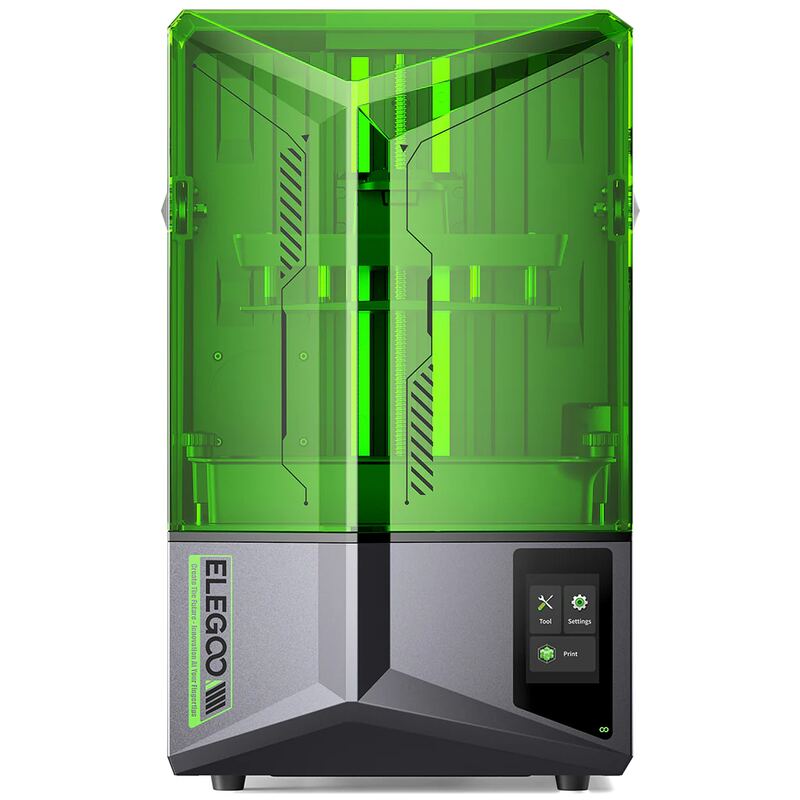
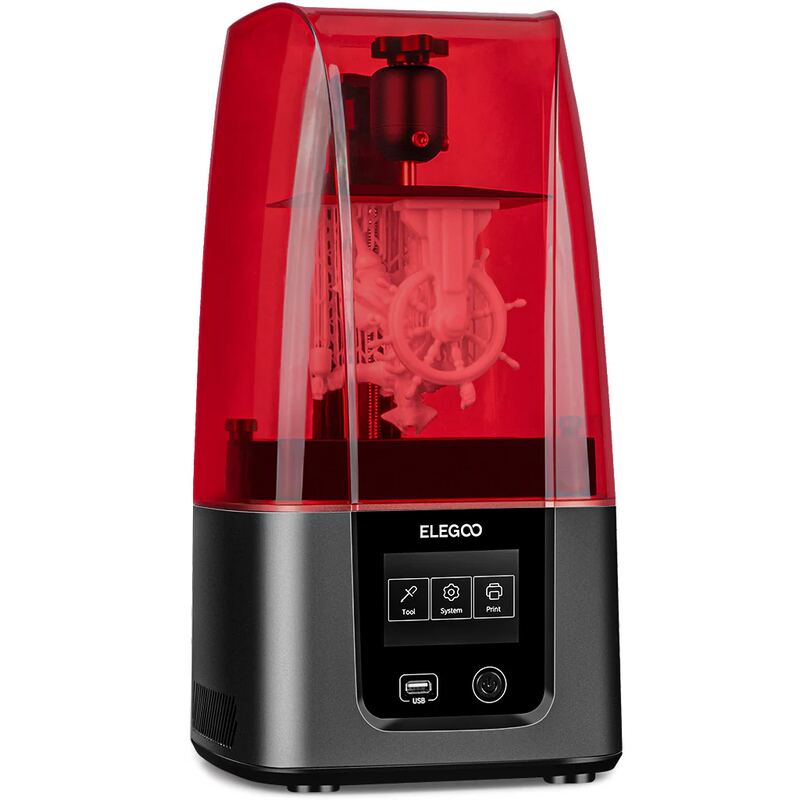
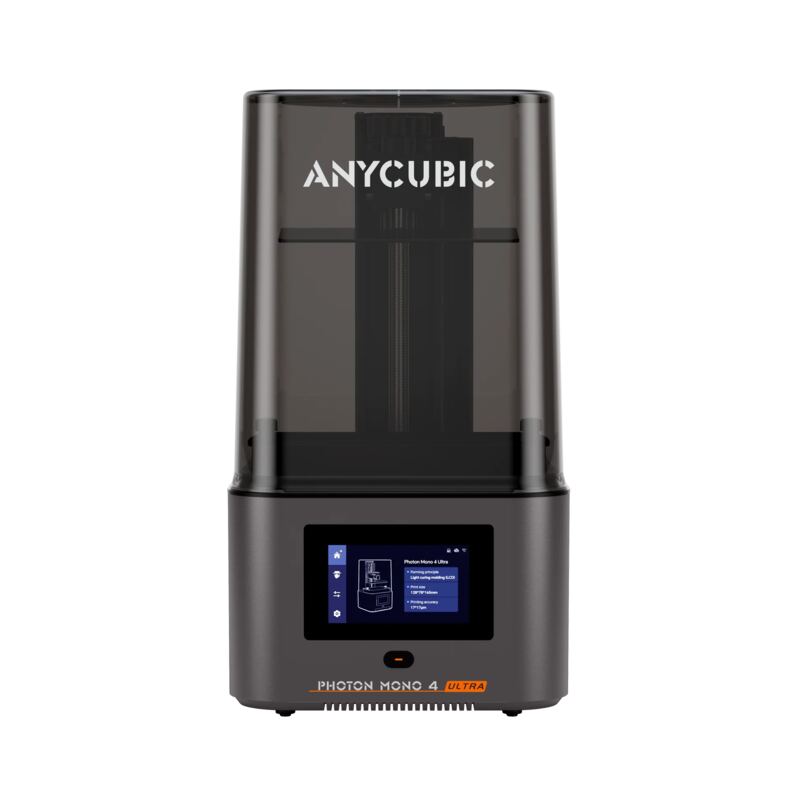
In contrast, traditional resin printers such as those from Elegoo and Anycubic offer similar or better print quality at comparable or lower price points. The HALOT-X1's main advantage lies in its convenience features, such as the leveling-free system and twist-to-release mechanism, which are not universally available in competing models. However, these conveniences come at the cost of print quality, as highlighted by multiple reviewers. The printer's compact footprint and integrated air purification system are also features that some competitors offer, but the HALOT-X1's unique approach to motion and its optional AFU provide a distinct user experience. Despite these advantages, the printer's shortcomings in delivering crisp, high-detail prints make it less competitive in the premium segment compared to models that offer superior resolution and consistency.
Value at This Price
At a price point of $579 to $749, the PioCreat HALOT-X1 offers a compelling value proposition for users who prioritize convenience and ease of use over absolute print quality. 3DWithUs's review notes that the printer 'aims to make 16 K desktop resin printing more than just marketing jargon,' and that its '10.1-inch mono LCD packs 15,120 × 6,230 pixels, yielding an effective 14 × 19 µm pixel size that promises razor-sharp detail rivaling far pricier machines.' However, FauxHammer's review suggests that 'print quality is not as sharp as competing 16K printers,' which undermines the value proposition for users who prioritize detail. The printer's optional AFU, which adds significant functionality, is priced separately, which may affect the overall value for budget-conscious users. Despite these drawbacks, the printer's innovative features, such as the leveling-free system and twist-to-release mechanism, provide a level of convenience that is not commonly found in competing models.
The HALOT-X1's value is further complicated by its mixed performance in real-world testing. While it offers a range of user-friendly features and a compact design, the printer's inability to consistently deliver high-quality prints means that users may find themselves disappointed with the final output. The printer's price point, while reasonable for its feature set, may not justify the compromises in print quality for users who are serious about resin printing. However, for beginners or those who primarily use resin for hobby projects where the convenience features are more valuable than absolute print perfection, the HALOT-X1 may still offer good value. The printer's compatibility with multiple slicers and its integration with Creality Cloud also add to its appeal for users who want flexibility in their workflow.
Strengths
- +16K mono LCD with 15,120 x 6,230 pixel resolution delivering 14 x 19 µm pixel size for high-detail prints
- +Leveling-free build plate with fixed platform design that eliminates manual leveling and reduces vibration artifacts
- +Twist-to-release quick ejecting build plate that allows print removal without scraping, reducing risk of damage
- +Optional AFU (Auto Feed Unit) supports automatic resin refilling, reclaiming, and RFID bottle detection for uninterrupted long prints
Watch-outs
- −AFU does not fully empty the resin vat
- −Grooved build plate can complicate direct-on-plate printing
How it compares
The PioCreat HALOT-X1 16K distinguishes itself with its leveling-free build plate and twist-to-release mechanism, features not found in the Anycubic Photon Mono 4 Ultra or Elegoo Saturn 4 Ultra 16K. While it's more complex than the Elegoo Mars 3 Ultra in terms of setup and lacks the software support of the Elegoo Saturn 4, it provides a more automated workflow for long prints with its optional AFU system.
Who this is for
At a glance: Beginners seeking high-resolution output with minimal setup.
Why you’d buy the PioCreat HALOT-X1 16K
- 16K mono LCD with 15,120 x 6,230 pixel resolution delivering 14 x 19 µm pixel size for high-detail prints.
- Leveling-free build plate with fixed platform design that eliminates manual leveling and reduces vibration artifacts.
- Twist-to-release quick ejecting build plate that allows print removal without scraping, reducing risk of damage.
Why you’d skip it
- AFU does not fully empty the resin vat.
- Grooved build plate can complicate direct-on-plate printing.
Rating sources
Our 3.3 score is the average of these published ratings. More about methodology.