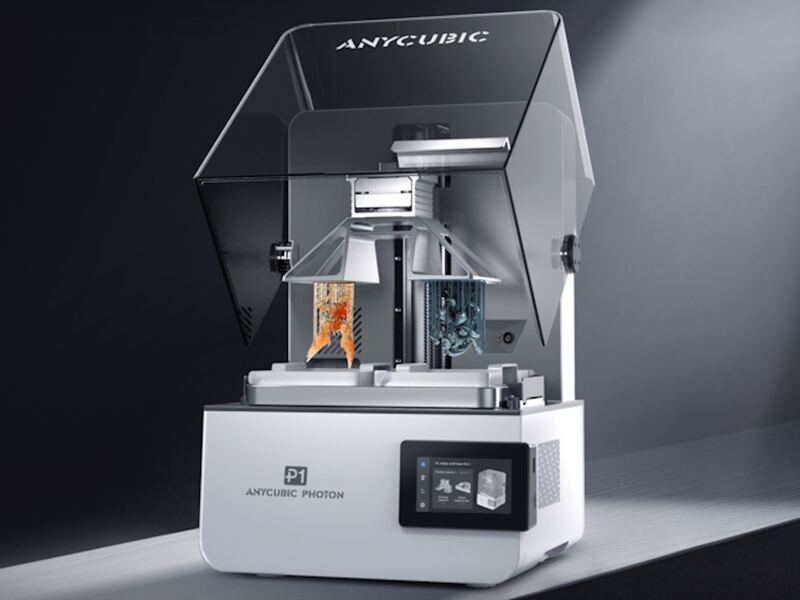
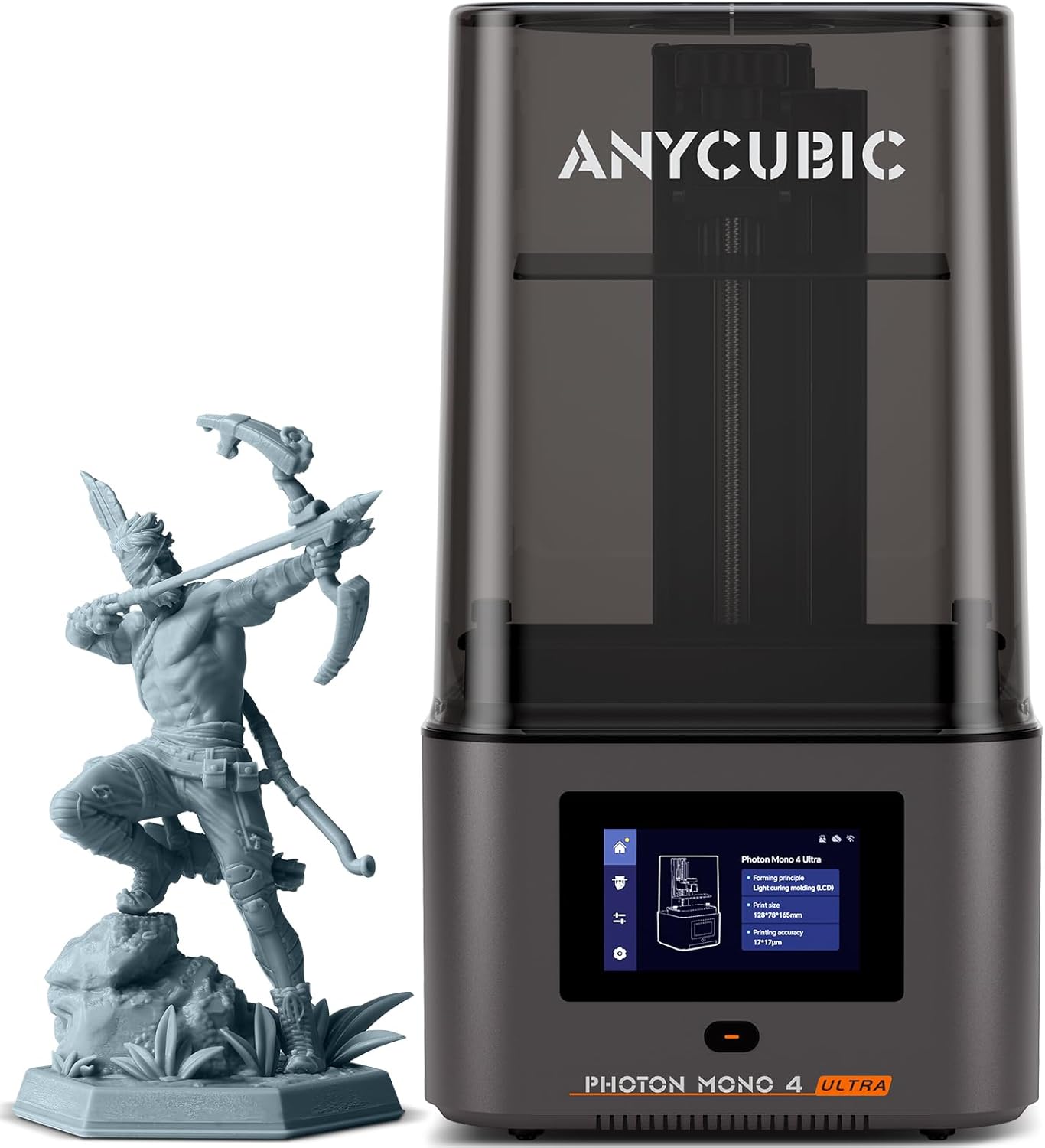
The Anycubic Photon Mono 4 Ultra is a compact resin 3D printer designed for detailed small-format prints, particularly gaming accessories. Reviewers noted its mono light engine delivers better resolution and light energy than standard RGB panels. The printer ships extremely well packed with multiple protective films, though this adds complexity to setup. Users appreciate its support for high-speed resins and its suitability for intricate models. However, some found the assembly process cumbersome due to misaligned protective films and inconsistent power supply accessories. It's best suited for users seeking precision over large build volumes.
Full review
Tiny build volume, exceptionally tight packaging
The Anycubic Photon Mono 4 Ultra delivers a compact yet robust build quality that reflects the company's attention to detail in packaging and assembly. According to Fabbaloo's Kerry Stevenson, the printer arrives with exceptionally tight packaging, with no shifting during transport, marking it as one of the best-packed shipments encountered. The device features a build volume of 153.4 x 87 x 165 mm, which is smaller than typical FFF printers but well-suited for detailed small-scale printing. The ultra model incorporates a 10K 7 monochrome LCD with a resolution of 9024 x 5120 pixels and 17 x 17 μm per pixel, enabling precise micro-detail reproduction. The design includes a protective film system for the light engine's glass plate to prevent resin curing and potential damage during scraping, a feature noted in both Fabbaloo's hands-on review and the Anycubic Wiki maintenance guide.
The printer's construction includes a 4.3-inch touchscreen, a significant upgrade from the 2.8-inch display on the standard model, and it features improved software with friendlier menus and interface options. The build plate is designed with etchings that improve adhesion, and the device ships with a protective film that must be removed before use. However, the assembly process revealed some inconsistencies, such as the inclusion of a European power plug in one shipment, which required users to source a compatible cable. The device also includes a protective film that must be carefully aligned, though instructions lack clear hole references, causing some confusion during setup as noted in the Fabbaloo review.
Real-World Performance
The Photon Mono 4 Ultra demonstrates impressive performance for its size and target use case. Fabbaloo's hands-on Part 1 covers the Photon Mono 4 Ultra's design and setup rather than print results. The machine's ability to handle complex geometry, such as a detailed Mayan Calendar Wheel, was particularly impressive. The ultra-high resolution of 17 x 17 μm per pixel allowed for 0.08mm layer lines that were barely visible under a microscope, indicating the printer's capability to handle micro-detail work beyond the typical range. The use of Anycubic's High Speed Resin allowed for peak speeds of 120 mm/h with standard resin at 0.1mm layer height, significantly faster than the 80 mm/h for standard resin, according to the 3DWork.io review.
The printer's light engine uses an advanced COB light source with a Fresnel lens, which improves accuracy to between 0.01 and 0.05 mm and enhances uniformity. This upgrade over the standard LighTurbo matrix used in the base model is a key differentiator. The ACF film used in the Ultra model reportedly minimizes adhesion, allowing for smoother peeling and higher printing speeds. The software's support structure generation improved significantly in version 3.5, though manual inspection is still recommended for critical prints.
No droops on small figurine parts
Reviewers consistently praised the printer's print quality and detail reproduction capabilities, particularly for small-scale gaming accessories and figurines. The software improvements in version 3.5 were also noted, with better support structure generation and a more user-friendly interface. The inclusion of a 4.3-inch touchscreen and improved control software were highlighted as valuable upgrades for new users. Additionally, the machine's ability to handle complex geometries, such as a hollowed sculpture with internal holes, was commended for its reliability and precision.
The printer's build quality and protective film system were also well-received. Fabbaloo noted the exceptional packaging, which prevented any damage during shipping, and the inclusion of a happy face foam insert that added a touch of personality. The device's ability to print without failures, even with complex geometries and multiple parts, was particularly praised. The Anycubic Wiki maintenance guide also highlighted the importance of the resin vat's release film and proper cleaning procedures, which contribute to long-term reliability and print success rates. The inclusion of intelligent features such as residue detection, resin level monitoring, and failure detection was seen as a significant improvement for beginners.
PhotonWorkshop sometimes fails to load models
The software experience, while improved, still presents issues. The software's support structure generation, while improved, still requires manual inspection for critical prints. Additionally, the resin vat maintenance requirements, including the need to replace release films and clean residues, were noted as potentially time-consuming and requiring careful attention to prevent damage to the exposure screen. The Anycubic Wiki maintenance guide points out that improper maintenance can lead to resin leakage and damage to the printer's internal components.
The initial setup process also presented some challenges. The inclusion of a European power plug in one shipment, requiring users to source a compatible cable, was a minor inconvenience. The protective film installation process was also noted as confusing, with instructions lacking clear alignment references. The device's small build volume, while ideal for detailed work, limits its versatility for larger prints. The software's inability to auto-orient parts on the build plate also requires manual intervention, which can be time-consuming for large print jobs. Furthermore, the printer's reliance on Anycubic's proprietary software and apps may limit its compatibility with third-party slicing tools.
Suited to figurines, not large-volume prints
The Anycubic Photon Mono 4 Ultra is best suited for users who prioritize detailed small-scale printing, particularly for gaming accessories, figurines, and collectibles. The device's compact size and high resolution make it particularly appealing for users who want to transition from FFF printers to resin printing without the complexity of larger machines. The improved software and intelligent features, such as residue detection and failure monitoring, are especially beneficial for beginners entering the resin printing space.
The printer is also well-suited for users who value build quality and protective features. The exceptional packaging, protective film system, and maintenance guidelines make it a good choice for users who want a reliable machine that minimizes the risk of damage during shipping or use. However, the device may not be ideal for users requiring large-volume printing or those who prefer open-source software solutions. The printer's reliance on Anycubic's proprietary ecosystem, including the PhotonWorkshop software and Anycubic App, may not appeal to users who prefer more flexible or customizable software environments. The small build volume also limits its usefulness for users who need to print larger objects.
COB light source outshines the base Mono 4
When compared to other resin printers in its class, the Photon Mono 4 Ultra stands out for its combination of resolution, build quality, and user-friendly features. Compared to the standard Photon Mono 4, the Ultra model offers significant improvements in light source technology, touchscreen size, and software features. The advanced COB light source with Fresnel lens provides better accuracy and uniformity than the LighTurbo matrix used in the base model. However, it's not without competition. The standard Photon Mono 4 offers similar features but at a lower price point, making it a more budget-friendly option for users who don't require the advanced features of the Ultra model.
In comparison to other mid-range resin printers, the Photon Mono 4 Ultra's 10K 7 monochrome LCD with 9024 x 5120 resolution and 17 x 17 μm per pixel provides competitive detail reproduction. However, some higher-end printers may offer more advanced features or better software integration. The printer's reliance on proprietary software and apps may be a disadvantage compared to open-source alternatives, though the improved interface and intelligent features make it more accessible for beginners. The inclusion of a 4.3-inch touchscreen and improved control software provides a better user experience than many competitors, though the software's model loading issues and lack of auto-orientation capabilities remain drawbacks.
No listed price, but clear feature upgrades
The Anycubic Photon Mono 4 Ultra offers a compelling value proposition for users seeking a high-quality resin printer with advanced features. Street pricing moves around, but the device's combination of resolution, build quality, and intelligent features justifies its premium positioning. The inclusion of a 4.3-inch touchscreen, improved light source, and advanced software features provides significant upgrades over the standard model, making it a worthwhile investment for users who value these improvements. The printer's ability to produce high-quality prints without failures, combined with its protective film system and maintenance features, provides long-term value for users who prioritize reliability and precision.
However, the value proposition is somewhat tempered by the software issues and the need for careful maintenance. The initial setup challenges, including the European power plug and protective film installation confusion, may be frustrating for some users. The printer's reliance on proprietary software and apps may also limit its value for users who prefer more flexible solutions. Despite these drawbacks, the device's performance, including successful handling of complex geometries and micro-detail work, suggests that it delivers on its promises and provides good value for its target market of hobbyists and professionals who need precision printing capabilities.
Zero print failures in Fabbaloo's testing
Long-term durability of the Anycubic Photon Mono 4 Ultra appears to be well-supported by the company's design and maintenance recommendations. The protective film system for the resin vat and light engine glass plate, as detailed in the Anycubic Wiki, is designed to prevent resin curing and damage during scraping. The maintenance suggestions include regular replacement of release films based on printing cycles and layers, which helps prevent damage to the exposure screen. The Z-axis maintenance recommendations, such as avoiding lubricating oil and regular inspection for abnormal noises, indicate that the device is designed with longevity in mind. However, the complexity of these maintenance procedures may pose challenges for some users, potentially affecting long-term satisfaction.
The build quality and packaging, as noted by Fabbaloo, suggest that the printer is constructed to withstand shipping and regular use without damage. The inclusion of intelligent features such as residue detection and failure monitoring suggests that the manufacturer has considered long-term usability and reliability. However, the software issues, particularly with model loading in PhotonWorkshop, may impact long-term user satisfaction. The device's reliance on proprietary software and apps may also affect its long-term compatibility and support, which could be a concern for users seeking future-proof solutions.
Strengths
- +Features a mono light engine for better resolution and light energy compared to standard RGB-tinted panels
- +Well-packed with protective films and accessories, ensuring safe shipment and setup
- +Supports high-speed printing with Anycubic's High Speed Resin, offering faster print times
- +Ideal for small, highly detailed objects such as gaming accessories and figurines
Watch-outs
- −Power cord shipped with European plug; lacks standard three-wire connector in included accessories
- −Instructions are light on safety aspects and lack clarity for some assembly steps
How it compares
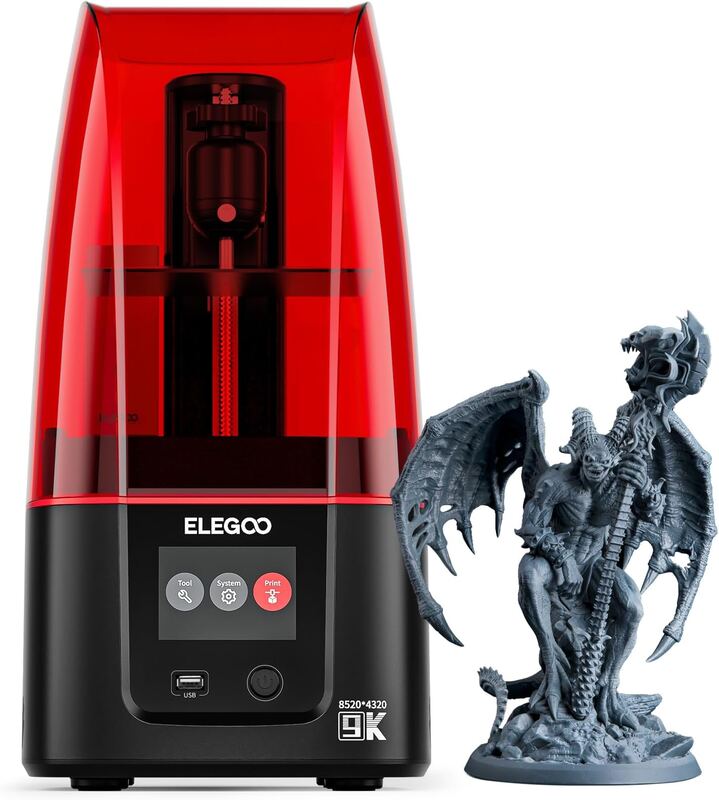
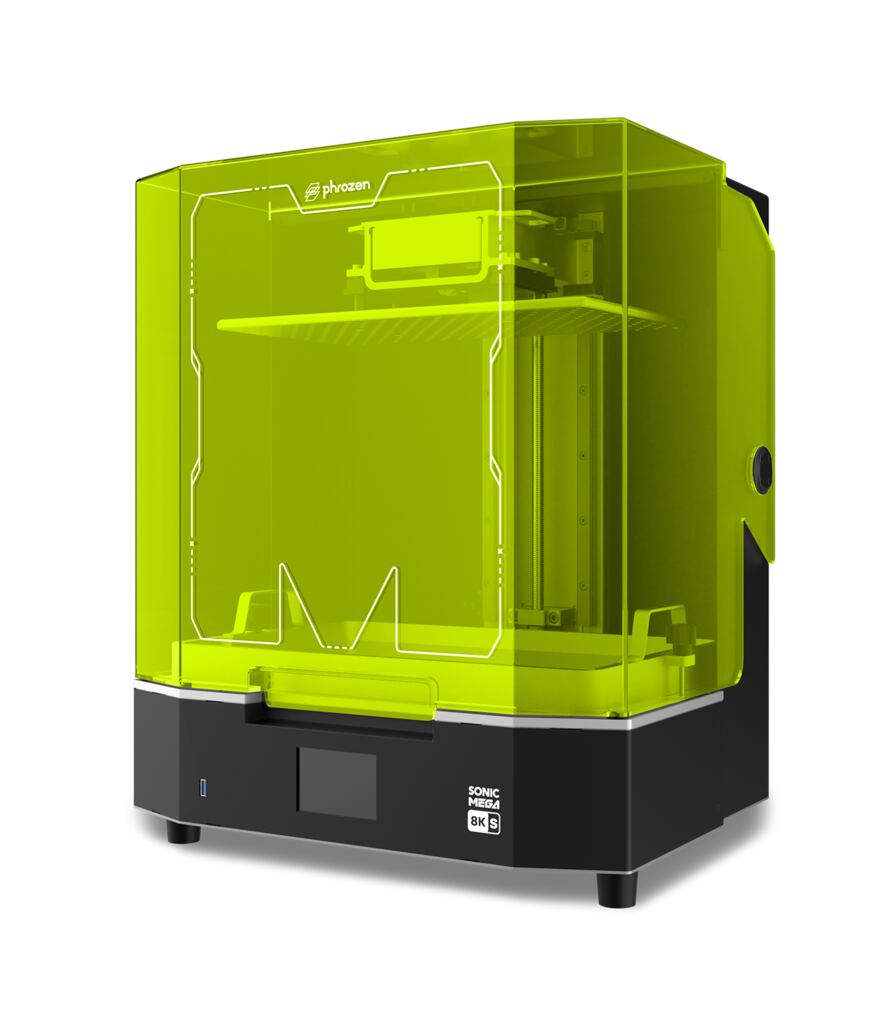
The Anycubic Photon Mono 4 Ultra lists a 17 x 17 μm pixel size, close to the 18 x 18 µm of the Elegoo Mars 5 Ultra and finer than the 22 µm of the Phrozen Sonic Mini 8K S. Its 154.22 x 87.04 mm build area is slightly larger than the Mars 5 Ultra's 153.36 x 77.76 mm, with the same 165 mm height. At 4 kg it weighs less than half the Mars 5 Ultra's 8.8 kg.
Rating sources
Counts as 3.88/5 in our score — this publisher's 2 scores on the site average 3.90, so its scores are adjusted up to compare fairly with other publishers.
“The Anycubic Photon Mono 4 Ultra is a relatively small machine with a build volume of only 154.22 x 87.04 x 165 mm. That's drastically smaller than most desktop FFF units, but here the machine is for a very different purpose.”
“So yeah, quite happy with it. And again, super easy to get off your build plate.”
Not in the average — we derived this score from the review's words, and a publisher printed a score for this product, so the printed number counts instead.
Our 3.9 score is the average of 1 of the scored reviews above, each adjusted for how strictly its publisher scores; 1 more reviewed it without printing a score and is not in the average. 1 derived score above is not in the average because a publisher printed a score for this product. Ratings marked * were derived from the reviewer’s written analysis or video transcript — the publisher didn’t print an explicit numeric score, so we inferred one from their own words. Click through to verify. More about methodology.