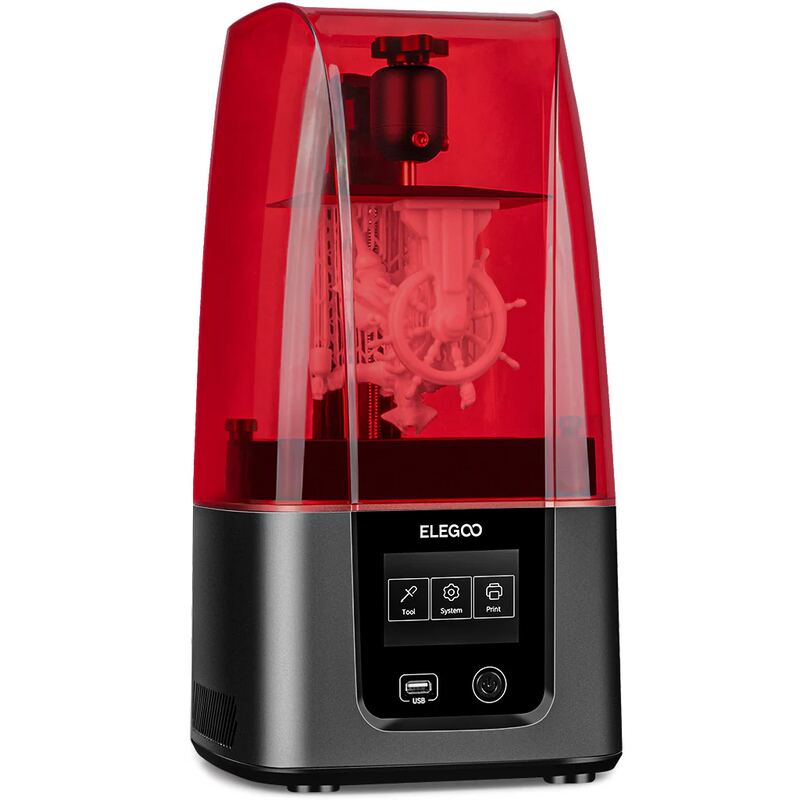
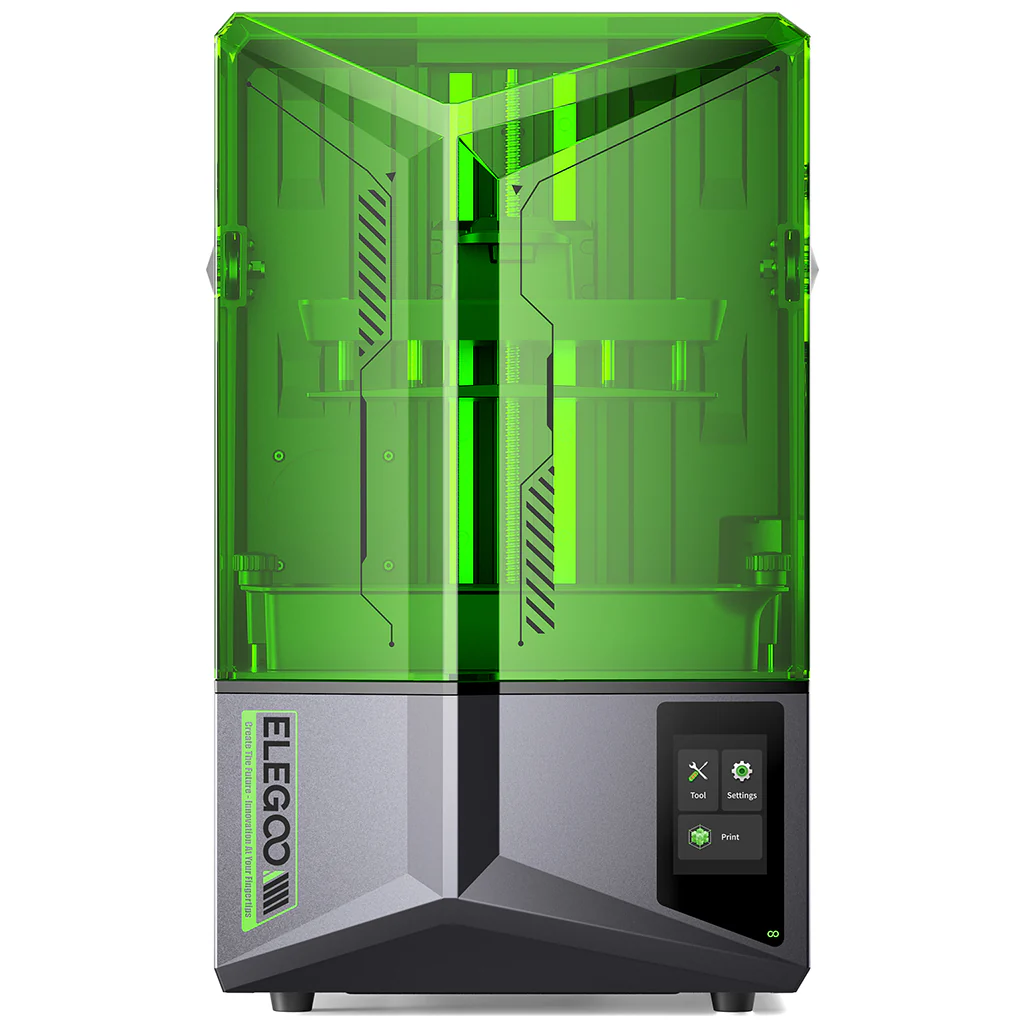
The Elegoo Saturn 4 Ultra stands out for its self-leveling build plate, tilting vat mechanism, and 12K resolution display that deliver excellent print quality without requiring manual leveling. Reviewers praised its ease of use and convenience features, though some noted the lack of a built-in heater as a potential drawback. Maker Hacks called it 'the best resin printer that I have ever used,' while Ron Burke from Gaming Trend highlighted its flawless initial prints and automated leveling as major advancements. This printer is ideal for users seeking reliable, user-friendly resin printing without the hassle of manual calibration, though those needing consistent performance in varying conditions might want to consider alternatives.
Full review
Unboxing and Initial Setup
The Elegoo Saturn 4 arrives in a well-padded box designed to protect the printer during shipping, with minimal signs of wear even after postal transit. The package includes a power supply, plastic scraper, 4GB USB stick, masks, gloves, funnel pack, replacement screws, and tools. The printer itself measures 327 x 329 x 548 mm and weighs 14.5kg, with a build volume of 218.88 x 122.88 x 220 mm. According to 3DWithUs, the Saturn 4 comes nearly 100% pre-assembled, requiring only the replacement of tank securing screws and removal of protective films. The build plate is secured with a new dogbone-shaped slide-on mount, and the printer features an intelligent mechanical sensor for detecting leveling errors and resin deficiencies. As noted by ThePhonograph.net, the printer's LCD display initially came loose during unpacking but self-calibrated after startup. The device includes a 4-inch capacitive touchscreen and supports multiple languages including English, Chinese, Japanese, Dutch, Korean, French, German, Russian, Italian, Spanish, Turkish, and Portuguese.
Design and Build Quality
Elegoo Saturn 4 maintains the brand's modern aesthetic with sharp corners and futuristic design elements, though it differs from the Saturn 3 in styling. The printer features a flip-back cover design that allows single-handed access, a significant improvement over previous models. The build plate has a redesigned quick-release system, though it uses a clamp rather than a knob, which reviewers noted as a preference. According to Maker Hacks, the machine feels substantial with a hefty metal base and a better-sealed lid than many recent printers, though it lacks a built-in heater unlike its newer sibling, the Saturn 4 Ultra. The resin vat is deeper than previous models to accommodate the tilt mechanism, and includes molded spouts in the corners for safer pouring. The printer's construction is mostly plastic but with a robust feel, and it measures 51–52 cm in depth and 76–78 cm in height when the lid is fully open, as noted by Maker Hacks.
Performance and Print Quality
The Saturn 4 utilizes a 10-inch 12K Mono LCD with COB + Fresnel collimating lens technology, offering a resolution of 11,520 × 5120 pixels, though this resolution is applied only to the X-axis. GamingTrend reported that the printer's auto-leveling feature eliminated the need for manual leveling, which is a significant advancement. The printer's print speed reaches up to 70mm/h, and it supports multiple resin types including standard, water-washable, ABS-like UV resin, high-speed resin, and wax. According to 3DWithUs, the printer's display screen uses resistive touch technology, and the auto-leveling system ensures the plate is perfectly level every time a print starts. The printer also features a tilting vat mechanism that reduces peel force between layers, leading to faster printing and fewer failures. The build volume of 218.88 x 122.88 x 220 mm is considered excellent for most users, and the printer can handle a wide range of print sizes and complexities.
Software and Connectivity
The Saturn 4 comes with Chitubox Basic as the included slicer, and supports network connectivity for remote print management, camera monitoring, and time-lapse downloads. However, some reviewers noted that the network printing feature did not function properly, as reported by Maker Hacks. The printer includes 6.3 GB of internal storage, which is handy for repeated printing. The touchscreen UI is user-friendly, though the portrait orientation makes text appear small for older users, according to Maker Hacks. The printer also features an AI camera for detecting print failures, but reviewers like Maker Hacks noted it was not particularly useful due to the dark interior and limited visibility. The printer's operating system is EL3D-3.0.1 for the basic version and EL3D-4.0 for the Ultra, both of which perform extensive self-tests including counting up the number of layers printed, a good indicator of wear and tear.
Real-World Performance and Testing
In real-world testing, the Saturn 4 demonstrated consistent performance across various resin types and print complexities. GamingTrend noted that the printer printed flawlessly right out of the box, even with more complex models like the Anubis, which required auto-orient and auto-supports. The auto-leveling system was particularly praised, as it eliminated the need for manual leveling, a common source of frustration for users. However, Maker Hacks reported that the lack of a built-in heater caused print failures, which were only resolved by using a fan heater, though this inadvertently damaged the WiFi antenna. The printer's AI camera for detecting print failures was found to be largely ineffective, especially in detecting failures on the far side of the plate or those caused by temperature issues. Despite these issues, the printer's overall performance was considered highly reliable, with the auto-leveling system being a standout feature.
Where It Falls Short
Despite its many strengths, the Saturn 4 has several notable shortcomings. The lack of a built-in heater is a major drawback, as noted by Maker Hacks, leading to print failures that required external interventions. The AI camera for detecting print failures was found to be largely ineffective, with issues such as poor visibility in the dark interior and failure to detect temperature-related problems. The printer's build plate design, while improved, still has a gap that collects resin, making cleaning difficult, according to 3DWithUs. Additionally, the printer's 12K display resolution is only applied to the X-axis, which may not meet the expectations of users seeking full 12K resolution. The touchscreen UI, while functional, is not ideal for older users due to its portrait orientation and small text size. The inclusion of a 4GB USB stick with basic software and test files, while helpful, is limited in functionality compared to more advanced slicers.
Who It's Best For
The Elegoo Saturn 4 is best suited for users who prioritize ease of use, reliability, and value for money. It is ideal for hobbyists and small-scale professionals who need a printer that can handle a variety of resin types and print complexities without requiring extensive setup or manual adjustments. The auto-leveling feature makes it particularly appealing to users who are new to resin 3D printing or those who want to avoid the common pitfalls of manual leveling. However, it may not be the best choice for users who require a built-in heater for specific resin types or those who need a camera system that reliably detects print failures. The printer's size and build volume make it suitable for medium-sized projects, but its lack of a built-in carbon filter and limited resolution on the Y-axis may be drawbacks for advanced users.
Value at This Price
At a price point of $319, the Elegoo Saturn 4 offers significant value for money, especially considering its advanced features such as auto-leveling, flip-back cover design, and tilting vat mechanism. The printer's performance and reliability, as noted by GamingTrend and 3DWithUs, justify its cost for users seeking a dependable resin printer. However, the lack of a built-in heater and the limited effectiveness of the AI camera may be seen as drawbacks that could affect the overall value proposition. The inclusion of a 4GB USB stick with basic software and test files is helpful, but users may need to invest in additional software or accessories for more advanced printing needs. Despite these limitations, the Saturn 4's combination of features, performance, and price makes it a strong contender in the mid-range resin printer market.
Strengths
- +Self-leveling build plate eliminates the need for manual leveling
- +Tilting vat mechanism reduces peel force and improves print success rate
- +12K resolution display (11,520 × 5120 pixels) delivers excellent print detail
- +Includes touchscreen UI with real-time exposure adjustment and network connectivity
Watch-outs
- −No built-in heater may cause print failures in certain conditions
- −Included Chitubox Basic software has quirks and lacks reliable network printing support
How it compares
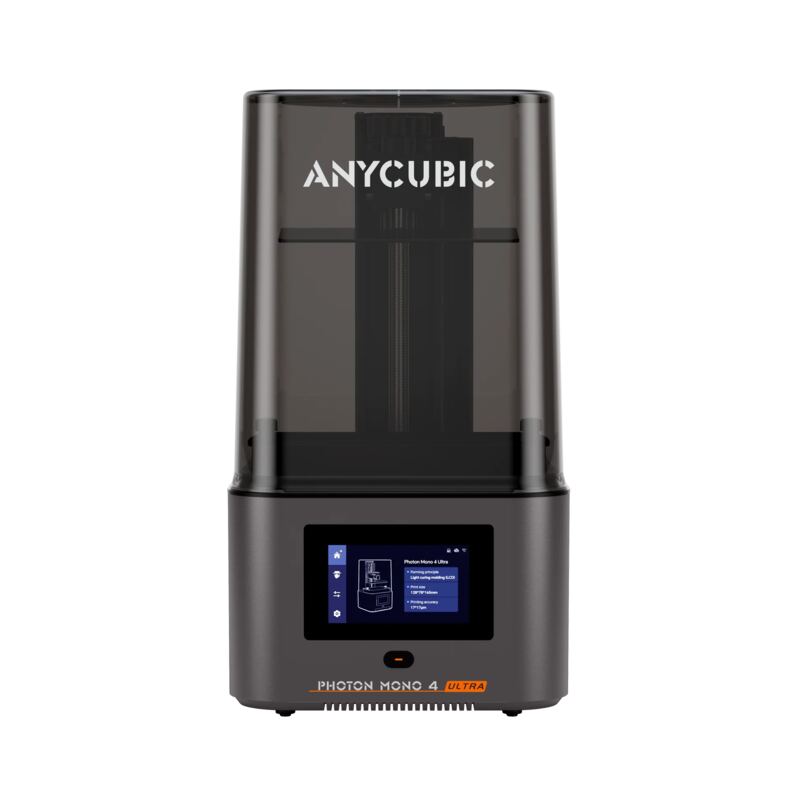
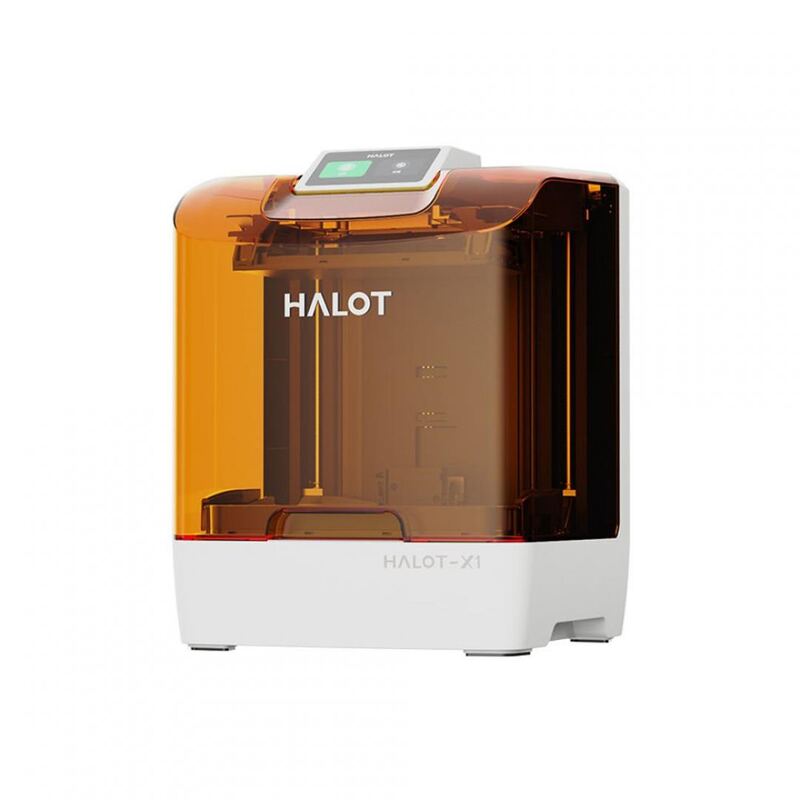
The Elegoo Saturn 4 surpasses the Elegoo Saturn 4 Ultra 16K in terms of resolution and touchscreen UI, offering a more modern interface compared to the Anycubic Photon Mono 4 Ultra which has software loading issues. Unlike the PioCreat HALOT-X1 16K, it doesn't include an AFU but provides better software support and easier print removal than the Phrozen Sonic Mini 8k S.
Who this is for
At a glance: Users wanting user-friendly resin printing with automated leveling.
Why you’d buy the Elegoo Saturn 4
- Self-leveling build plate eliminates the need for manual leveling.
- Tilting vat mechanism reduces peel force and improves print success rate.
- 12K resolution display (11,520 × 5120 pixels) delivers excellent print detail.
Why you’d skip it
- No built-in heater may cause print failures in certain conditions.
- Included Chitubox Basic software has quirks and lacks reliable network printing support.
Rating sources
Our 4.6 score is the average of these published ratings. More about methodology.