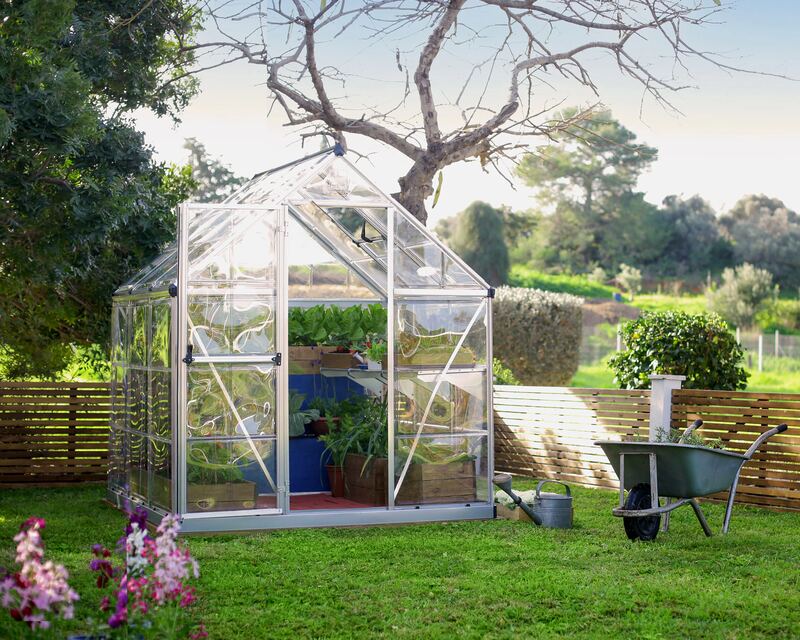
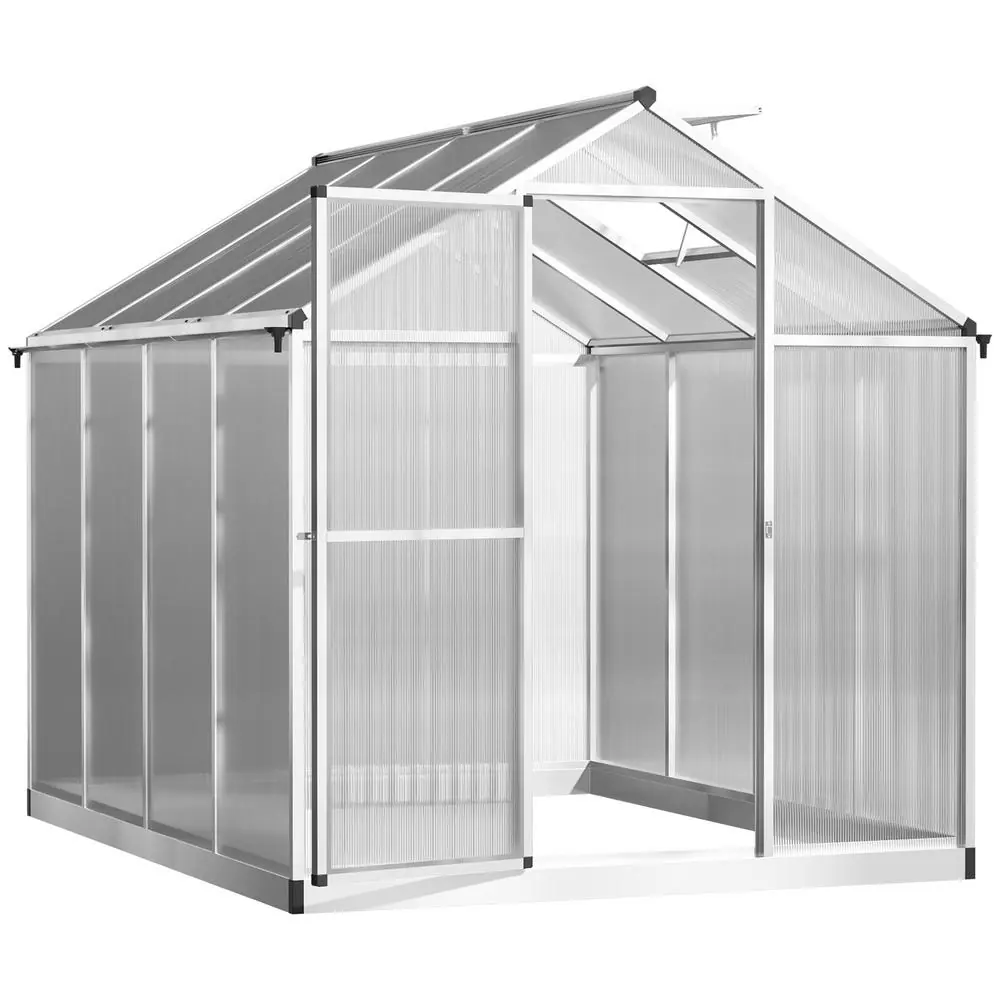
The Outsunny Walk-in Greenhouse offers a generous 6ft by 8ft interior footprint suitable for hardening seedlings or growing vegetables in compact spaces, supported by transparent polycarbonate panels that shield against wind and rain. However, the lightweight aluminium frame is described as flimsy and struggles significantly in exposed locations, with users reporting panels detaching during moderate winds despite manufacturer claims of stability. Assembly presents another major hurdle, taking eight to ten hours due to confusing instructions without textual guidance and potential screw hole misalignments that require careful leveling. diy.com found the structure accessible for beginners but noted mixed durability experiences; this model fits those in sheltered urban gardens willing to invest time in reinforcement, while gardeners in windy regions or seeking a permanent solution should look elsewhere.
Full review
Assembly challenges and instruction clarity
Building the Outsunny greenhouse requires a significant time investment, with diy.com noting that assembly takes approximately eight to ten hours. The process is complicated by instructions that lack clear textual guidance, forcing builders to interpret visual diagrams alone. One user on aosom.co.uk described this as taking "a little working out," while another reviewer mentioned struggling to get parts to fit because screw holes did not align properly. This misalignment can lead to frustration and may require assistance from a mechanically minded friend or relative to complete the build successfully.
The structural base presents specific hurdles for users who do not have perfectly level concrete pads. A YouTube builder documented spending an entire day just preparing the foundation, realizing that the metal base would not sit flat on uneven blocks. To compensate, they had to purchase wood from a local store and use brackets to level the frame before proceeding. This extra step highlights that while the greenhouse can be assembled by one person, having a prepared, perfectly level surface is critical for preventing alignment issues during the subsequent framing stages.
Wind vulnerability in exposed locations
The lightweight aluminium frame and polycarbonate panels struggle significantly when placed in windy environments. A reviewer on aosom.co.uk reported losing four panels during a single night because the framework was too flimsy to withstand moderate winds, requiring them to use grow house repair tape as an emergency fix. This experience underscores that the greenhouse is not suitable for exposed sites without substantial reinforcement. The manufacturer recommends securing it against an out-of-wind wall and using ground bolts, but even these measures may be insufficient in areas with prevailing strong breezes.
For gardeners living in regions prone to gusts or storms, the structural integrity of this model is a major concern. The lack of robust anchoring mechanisms means that users must be vigilant about securing the cover and frame regularly. In calm conditions or sheltered urban gardens, these weaknesses may go unnoticed, but in exposed rural settings, the greenhouse risks becoming unusable without extensive DIY modifications to add stability.
Interior space for seedling hardening
The generous 6ft by 8ft footprint provides ample room for gardeners looking to harden off seedlings or grow vegetables in a compact urban setting. A YouTube reviewer based in Zone 3 Alberta Canada utilized the greenhouse specifically to improve the survival rate of their seedlings during the short growing season. By placing the unit on a deck and covering the floor with plastic, they were able to trap warm air at night, creating a microclimate that protected delicate plants from cold snaps. This setup allowed them to start seeds indoors weeks earlier than usual, giving crops like cucumbers and strawberries enough time to mature before the first frost.
Polycarbonate glazing durability
Transparent polycarbonate panels allow sunlight to pass through while shielding plants from wind and rain, but their longevity depends heavily on installation quality. However, users have noted that if the panels are not secured tightly during assembly, they can blow off or become loose over time. The material itself is durable enough to withstand moderate weather, but the connection points between the frame and the glazing are vulnerable to stress from temperature changes and wind pressure.
Ventilation mechanisms for climate control
Effective ventilation is crucial for preventing overheating in small greenhouses, and this model includes a lift-up roof panel that holds in place to allow fresh air circulation. The single sliding door also contributes to airflow management, though it may not be sufficient on its own during hot summer days. Reviewers have found that opening both the roof vent and the door helps maintain a stable internal temperature, which is essential for preventing heat stress in plants like lettuces and strawberries. Proper ventilation strategy can mitigate some of the structural weaknesses by reducing wind resistance when panels are secured.
Value proposition versus long-term costs
However, diy.com lists a customer rating of 3.7 stars out of 5 from ten reviews, reflecting mixed experiences with durability and assembly. While the initial cost is low, users may incur additional expenses for reinforcement materials like repair tape or extra ground stakes if they live in windy areas. The trade-off between affordability and structural robustness means that shoppers who need a permanent solution should look elsewhere, while those willing to invest time in DIY improvements may find it a strong fit.
Strengths
- +Generous interior footprint (6ft x 8ft) allows ample space for plants, vegetables, and flowers.
- +Powder-coated aluminium frame provides a rust-resistant core structure with diagonal braces for stability.
- +Transparent polycarbonate panels allow sunlight to pass through while shielding against wind and rain.
- +Includes functional ventilation features such as a top roof panel that lifts up and a single sliding door.
Watch-outs
- −Aluminium frame and polycarbonate panels are described by users as lightweight and flimsy, struggling in windy conditions.
- −Assembly is reported to be time-consuming (8-10 hours) with confusing instructions that lack clear textual guidance.
How it compares
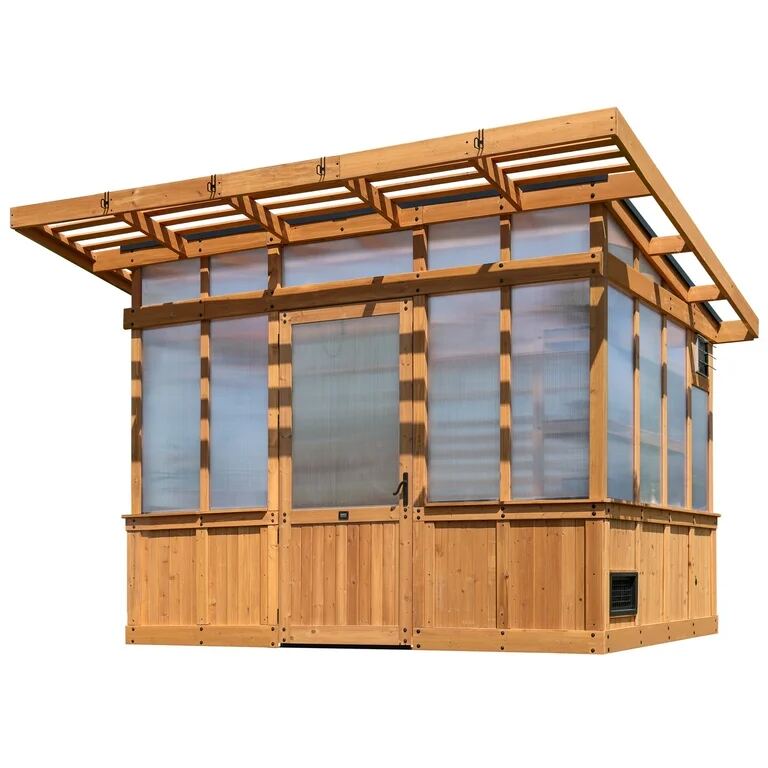
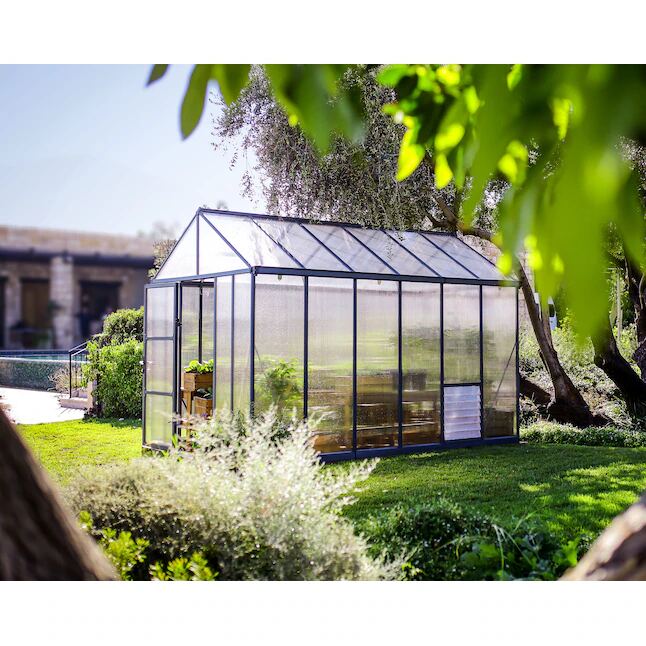
The Outsunny Walk-in Greenhouse provides a generous interior footprint but struggles with wind resistance compared to the robust Palram Canopia Glory, which is rated for much higher wind speeds. While both use polycarbonate panels, the Outsunny's aluminum frame is described as flimsy in comparison to the reinforced structures of the Backyard Discovery models.
Rating sources
“This is a great value greenhouse to install in a small garden... The frame is a little light weight but as you bolt it together the strength builds and it seems pretty good for the money paid.”
Every source above reviewed this product without printing a score, so there is no average to show. More about methodology.