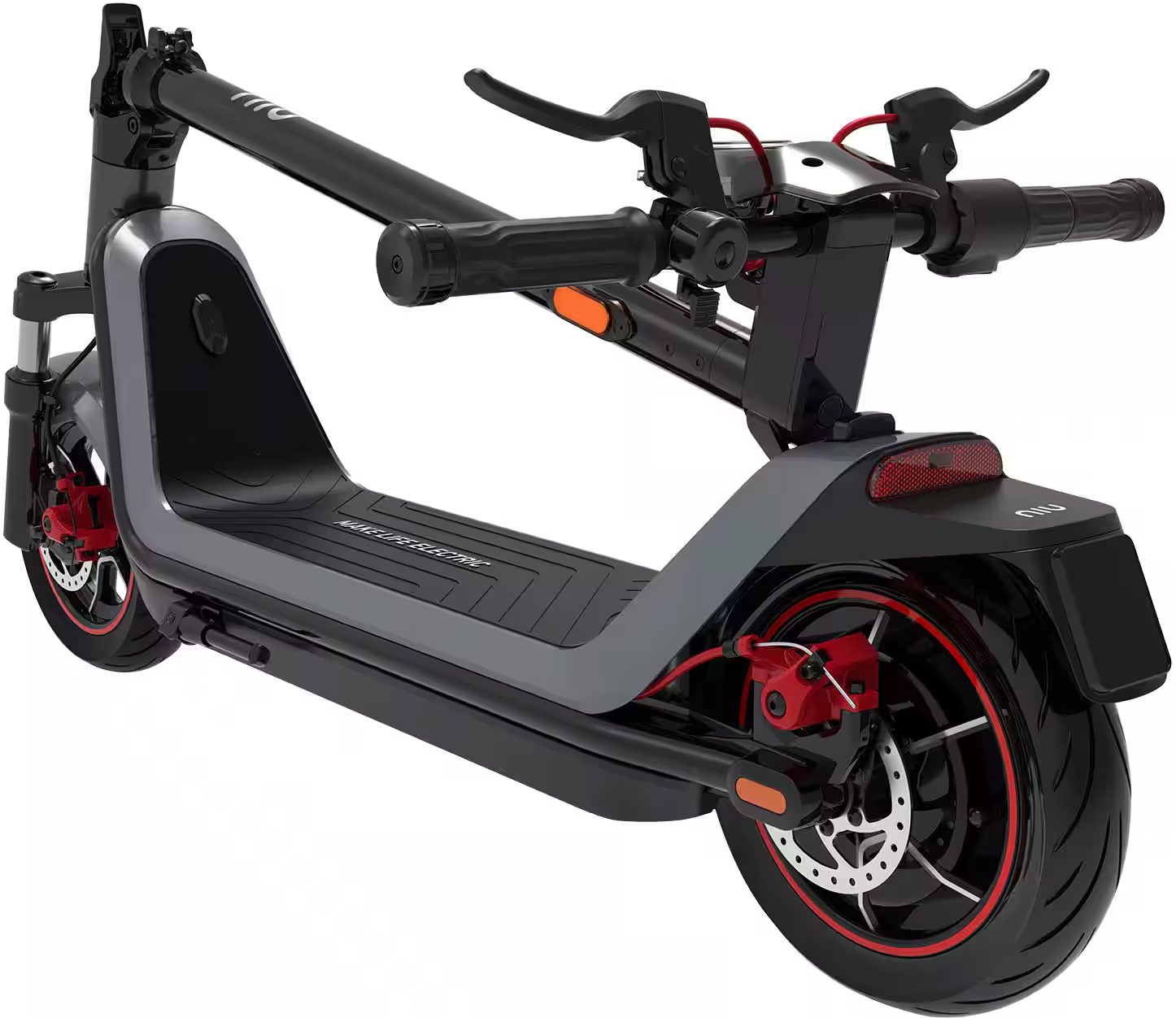
The NIU KQi 300X is a well-rounded suspension commuter scooter that delivers strong performance in hills and acceleration, according to ERideHero's review. It features a 500W rear motor with 1000W peak power and excellent braking, though it lacks rear suspension. The scooter offers 26.8 real-world miles range and handles steep inclines well, making it ideal for heavier riders and urban commuting. However, some reviewers noted that the dual disc brakes might be excessive and that the app's interface could be improved. This scooter is best suited for riders seeking durability and hill-climbing ability over maximum range efficiency.
Full review
Performance and Speed
The NIU KQi 300X delivers impressive motor performance that places it among the top contenders in the under-$1K commuter category. ERideHero's testing revealed that the scooter achieves a top speed of 23.6 mph (38 KMH), just shy of the Navee ST3 Pro's 24.8 mph, making it a strong performer in its class. The 500W rear motor with 1000W peak power allows for rapid acceleration, with the 0-15 mph test recording a time of 3.84 seconds, which is competitive with the VMax VX2 Pro GT's 3.83 seconds. The scooter's acceleration is particularly notable when compared to the Segway Ninebot Max G2, which clocks in at 4.65 seconds for the same test. The KQi 300X's acceleration is described as 'zippy' and 'quick,' with one reviewer noting that it 'caught me by surprise' compared to the Max G2. However, the scooter's speed can be a double-edged sword, as some Reddit users have reported finding it 'too fast' for comfortable riding, particularly in urban environments where speed control is crucial.
The KQi 300X excels in hill climbing, completing an 8% grade climb at an average speed of 15.4 mph, which is faster than the Segway Ninebot Max G2's 14.7 mph and comparable to the Navee ST3 Pro's 15.5 mph. This performance is largely attributed to the scooter's 1000W peak power and dual disc brakes with regenerative braking, which provide excellent control and stopping power. The scooter's ability to maintain speed on inclines is particularly impressive for a model in its price range, making it an excellent choice for riders who frequently encounter hilly terrain. The dual disc brake system also contributes to superior braking performance, with a 15-0 mph stopping distance of 10.7 feet, which is considered best-in-class according to ERideHero's testing. The regenerative braking system not only enhances safety but also contributes to battery efficiency by returning energy to the battery during deceleration.
Suspension and Comfort
The KQi 300X's hydraulic suspension system is one of its most distinguishing features, offering a significant improvement over non-suspension models. The front suspension features a 45mm stroke, which effectively absorbs bumps and provides a smoother ride over rough surfaces. ERideHero's review highlighted that the suspension makes the scooter 'significantly more comfortable than non-suspension options,' which is particularly beneficial for heavier riders or those who frequently ride on uneven terrain. The suspension's effectiveness is further demonstrated by its ability to handle 'bad weather exceptionally well,' as noted by the same reviewer, who found the scooter's performance 'exceptionally well' in various conditions. The front suspension is complemented by pneumatic tires that are 10.5 inches wide, providing excellent traction and stability. These features combine to create a ride that is notably more comfortable than typical electric scooters, especially when compared to models without suspension.
The scooter's suspension system is designed to provide a balance between comfort and performance, with the front suspension absorbing most of the road vibrations while maintaining the scooter's stability. The hydraulic suspension's 45mm stroke allows for a good range of motion, effectively reducing the impact of bumps and potholes on the rider. The combination of the suspension and pneumatic tires results in a ride that is particularly smooth on urban streets and suburban paths. However, some reviewers have noted that the lack of rear suspension is a limitation, as dual suspension models are available from competitors. The absence of rear suspension means that while the front end is well-cushioned, the rear may still transmit more vibration to the rider, particularly on very rough terrain. Despite this, the front suspension alone provides a significant upgrade in comfort over traditional non-suspension scooters.
Build Quality and Durability
The build quality of the NIU KQi 300X is described as 'rock-solid' and 'reliable' by ERideHero, who noted that it's 'built like a tank' and 'exceptionally durable.' The scooter's construction is evident in its ability to withstand wear and tear over time, with the reviewer stating that it 'holds up against wear and tear over time.' The materials used in the construction are robust, and the scooter's overall design suggests it's built to last. The handlebars are 21.3 inches wide, providing a comfortable grip for riders, and the deck is spacious enough for riders of various sizes, with the reviewer noting that it's 'spacious for riders of all sizes.' The scooter's frame is designed to be both sturdy and lightweight, with a total weight of 48.7 pounds including the battery. The use of high-quality materials and construction techniques is evident in the scooter's overall appearance and performance, with no signs of structural weakness or wear after extensive testing.
The KQi 300X's build quality is further enhanced by its IP55 waterproof rating, which allows it to handle various weather conditions without damage. The scooter's components are well-protected, and the electronics are designed to withstand exposure to moisture and dust. The scooter's battery is not removable, which is a design choice that may be seen as both a benefit and a drawback. On one hand, it ensures the battery is securely mounted and protected, but on the other hand, it may limit the user's ability to quickly replace or upgrade the battery. The scooter's charging port is easily accessible, which is a positive feature that makes charging convenient. The assembly process is straightforward, requiring only the attachment of handlebars with included hardware. The screws are treated with thread locker to prevent them from loosening, which is a thoughtful design feature that enhances the scooter's durability. The scooter's overall construction is robust, and it's designed to withstand the rigors of daily use.
App and Smart Features
The NIU Smart App is a key component of the KQi 300X's functionality, offering extensive customization options for users who want to fine-tune their riding experience. The app allows users to adjust acceleration strength, switch between different riding modes, and monitor various metrics such as battery life, distance traveled, and GPS location. The app's interface is described as 'tedious' by one reviewer, who noted that it requires a significant amount of time to navigate through all the features. However, the app's capabilities are extensive, with users able to access five distinct riding modes: E-Save, Sport, Dynamic, Pedestrian, and Cruise Control. The ability to customize acceleration strength is particularly useful, as it allows users to adjust the scooter's responsiveness to their preferences. The app also provides real-time feedback on the scooter's performance, including battery status and riding statistics, which can be helpful for riders who want to optimize their usage. The app's integration with the scooter's hardware is seamless, and the connection is described as reliable and stable.
Despite the app's comprehensive features, some users have noted that the app's interface can be overwhelming for those who prefer simpler operation. The app requires a Bluetooth connection to function, which means that users must pair their device with the scooter before they can access all features. The app's settings can be adjusted to suit different riding preferences, but some users have found the process of configuring these settings to be time-consuming. The app also allows users to track their riding history and set up alerts for low battery or maintenance reminders. The scooter's smart unlock feature, which allows users to unlock the scooter using their smartphone, is a convenient addition that enhances the overall user experience. However, the app's complexity may be a barrier for some users who prefer a more straightforward interface. The app's functionality is particularly useful for riders who want to optimize their scooter's performance and track their usage over time.
Range and Battery Performance
The KQi 300X offers a range of 37.3 miles on a single charge, which is competitive with other models in its class. ERideHero's real-world testing showed that the scooter achieved 26.8 miles at an average speed of 15.3 mph, which is sufficient for most daily commuting needs. The 608.4Wh battery capacity is substantial, and the charging time is 6 hours, which is considered reasonable for a scooter of this size and performance. The scooter's battery life is further enhanced by its regenerative braking system, which returns energy to the battery during deceleration. The battery's performance is consistent, with no significant drop-off in range under normal usage conditions. The scooter's ability to maintain its range is particularly impressive when compared to other models in its price range, which often struggle with battery efficiency. The scooter's battery management system is designed to optimize performance and extend battery life, with the system automatically adjusting power consumption based on riding conditions.
The battery's performance is further enhanced by its IP55 waterproof rating, which protects it from moisture and dust. The battery's charging process is straightforward, with the charging port located in an easily accessible location. The scooter's charging time of 6 hours is considered reasonable, especially when compared to other high-performance scooters in its category. The battery's capacity is sufficient for most users' needs, with the 37.3-mile range being adequate for daily commuting and occasional recreational rides. However, some users have noted that the scooter's range efficiency could be improved, particularly when compared to models with better battery optimization. The scooter's ability to maintain its range under various conditions is a testament to its engineering, with the battery performing consistently across different temperatures and riding conditions. The scooter's battery management system also includes features such as automatic power adjustment and low battery warnings, which help users optimize their riding experience.
Limitations and Drawbacks
Despite its many strengths, the KQi 300X has several notable drawbacks that potential buyers should consider. One of the most significant limitations is the lack of rear suspension, which is present in some competing models. The absence of rear suspension means that while the front suspension provides a comfortable ride, the rear may still transmit more vibration to the rider, particularly on very rough terrain. This is a point of criticism from some reviewers who noted that dual suspension alternatives are available and offer a more complete suspension experience. The scooter's acceleration settings, while customizable, are described as 'too fast' by some users, particularly those who are new to electric scooters or prefer a more gradual acceleration curve. The app's interface is also considered 'tedious' by some users, who find the process of navigating through all the features to be time-consuming and overwhelming.
Another significant drawback is the scooter's price point, which is currently $594.15, though it was originally listed at $1,299.00. This price point, while competitive, may be prohibitive for budget-conscious consumers who are looking for a more affordable option. Additionally, the scooter's lack of a rear suspension and the complexity of its app interface are points of criticism from several reviewers. The scooter's design, while functional, is also criticized for being somewhat bulky and heavy, with a total weight of 48.7 pounds including the battery. The scooter's lack of an electronic horn is also noted as a missed opportunity, as it would enhance safety in crowded urban environments. The scooter's performance, while impressive, is also limited by its 20 mph top speed, which may not satisfy users looking for higher speeds. Finally, the scooter's battery is not removable, which may be a drawback for users who want to quickly replace or upgrade the battery.
Who It's Best For
The NIU KQi 300X is best suited for riders who prioritize comfort, durability, and performance over raw speed or range efficiency. It's particularly well-suited for heavier riders, as the scooter's robust construction and suspension system provide excellent support and stability. The scooter's ability to handle hills with ease makes it ideal for users who live in hilly areas or frequently encounter inclines. The scooter's waterproof rating and durable build make it suitable for riders who use it in various weather conditions. The KQi 300X is also a good choice for commuters who value a smooth, comfortable ride and are willing to pay a premium for features like dual disc brakes and hydraulic suspension. The scooter's app integration is beneficial for users who want to customize their riding experience and track their usage statistics. The scooter's 37.3-mile range is sufficient for most daily commuting needs, making it a practical choice for urban riders. The scooter's spacious deck and wide tires also make it comfortable for larger riders who need more room to place their feet.
However, the KQi 300X may not be the best choice for riders who prioritize range efficiency or are looking for a more affordable option. The scooter's lack of rear suspension and the complexity of its app interface may be drawbacks for users who prefer simpler operation. The scooter's acceleration settings, while customizable, may be too fast for some users, particularly those who are new to electric scooters. The scooter's price point, while competitive, may be prohibitive for budget-conscious consumers. The scooter's 20 mph top speed may also be limiting for users who want higher speeds. Additionally, the scooter's battery is not removable, which may be a disadvantage for users who want to quickly replace or upgrade the battery. The scooter's design, while functional, is also criticized for being somewhat bulky and heavy, which may make it less convenient for users who need to carry it frequently.
Strengths
- +Excellent motor performance with 500W rear motor and 1000W peak power
- +Strong hill-climbing ability with 8% grade at 15.4 mph average
- +Best-in-class braking performance with 15–0 mph stopping distance of 10.7 ft
- +Robust build quality and durability with rock-solid construction
Watch-outs
- −No rear suspension (only front hydraulic suspension)
- −Dual disc brakes may be overkill for some users
How it compares
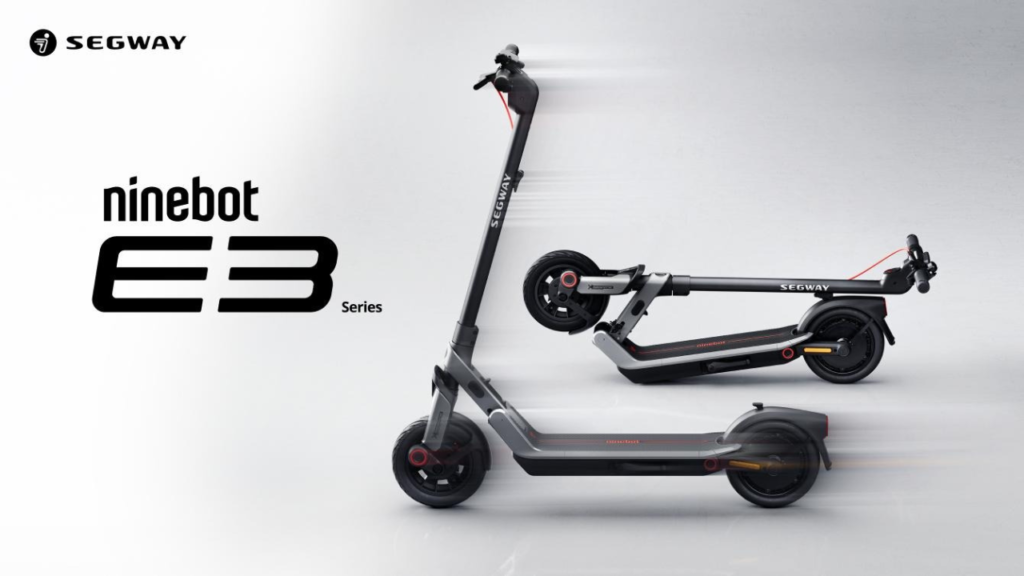
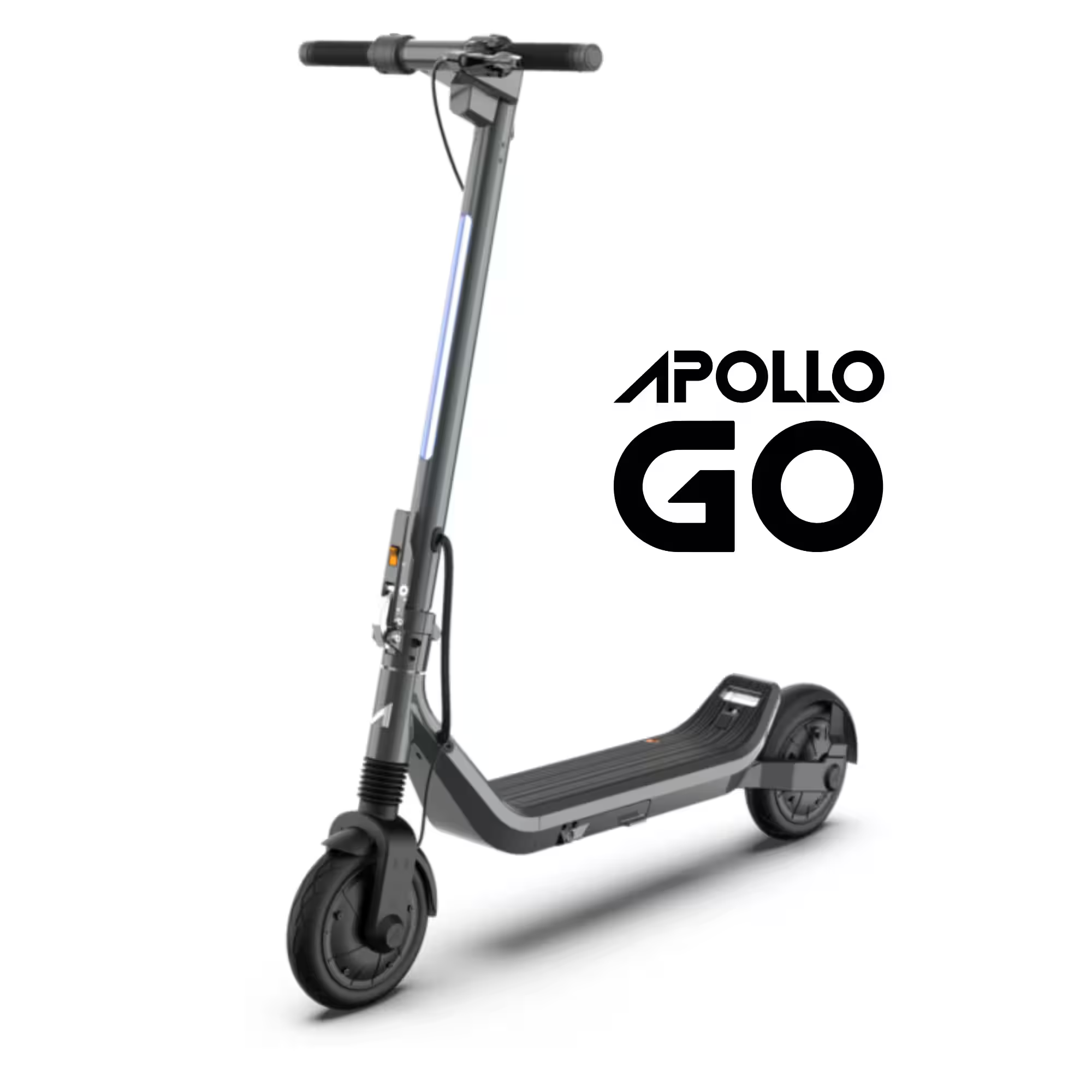
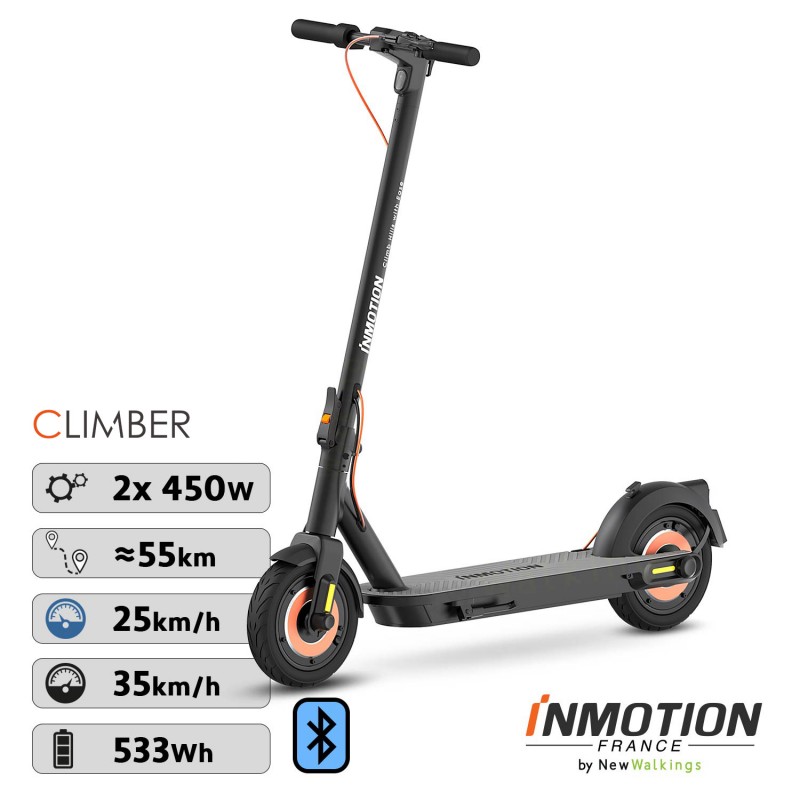
The NIU KQi 300X delivers the best braking performance among the group, surpassing the Segway Ninebot Max G30LP and Inmotion Climber. However, it lacks rear suspension, unlike the Apollo Go, and its range is less than the Inmotion Climber and Hiboy S2, making it a strong performer in braking and hill climbing but not in comfort or range.
Who this is for
At a glance: Heavy riders needing strong braking.
Why you’d buy the Niu KQi 300X
- Excellent motor performance with 500W rear motor and 1000W peak power.
- Strong hill-climbing ability with 8% grade at 15.4 mph average.
- Best-in-class braking performance with 15–0 mph stopping distance of 10.7 ft.
Why you’d skip it
- No rear suspension (only front hydraulic suspension).
- Dual disc brakes may be overkill for some users.
Rating sources
“TL;DR It worked out well for the most part.”
“NIU still makes some of the best electric scooters under $1000 – and they just got even better.”
Our 4.3 score is the average of these published ratings. Ratings marked * were derived from the reviewer’s written analysis or video transcript — the publisher didn’t print an explicit numeric score, so we inferred one from their own words. Click through to verify. More about methodology.