An ALPD 5.0 hybrid laser engine drives the NexiGo Aurora Pro MKII, a high-end UST projector with strong 4K performance. Reviewers cited 2400 ANSI lumens of brightness, a 4000:1 native contrast ratio, and gaming input lag down at 4.2 ms. All major HDR formats are supported, and Dolby Atmos sound is built in. Missing: USB 3.0 ports and Google TV OS support. Home theater enthusiasts and gamers who want premium performance will be happy; anyone counting on smart TV functionality won't.
Full review
Same chassis as the original, no USB 3.0
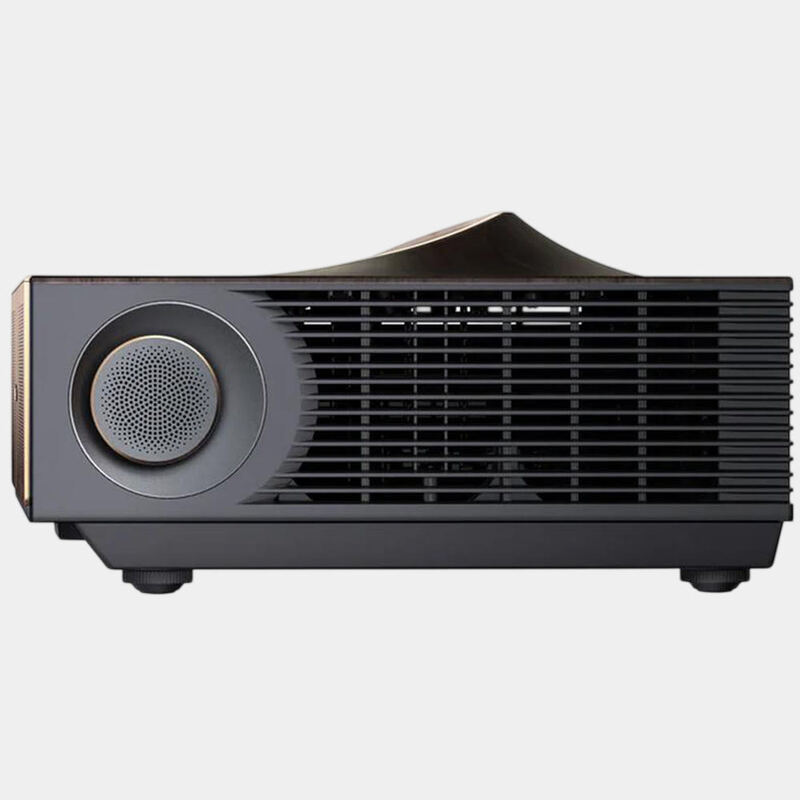
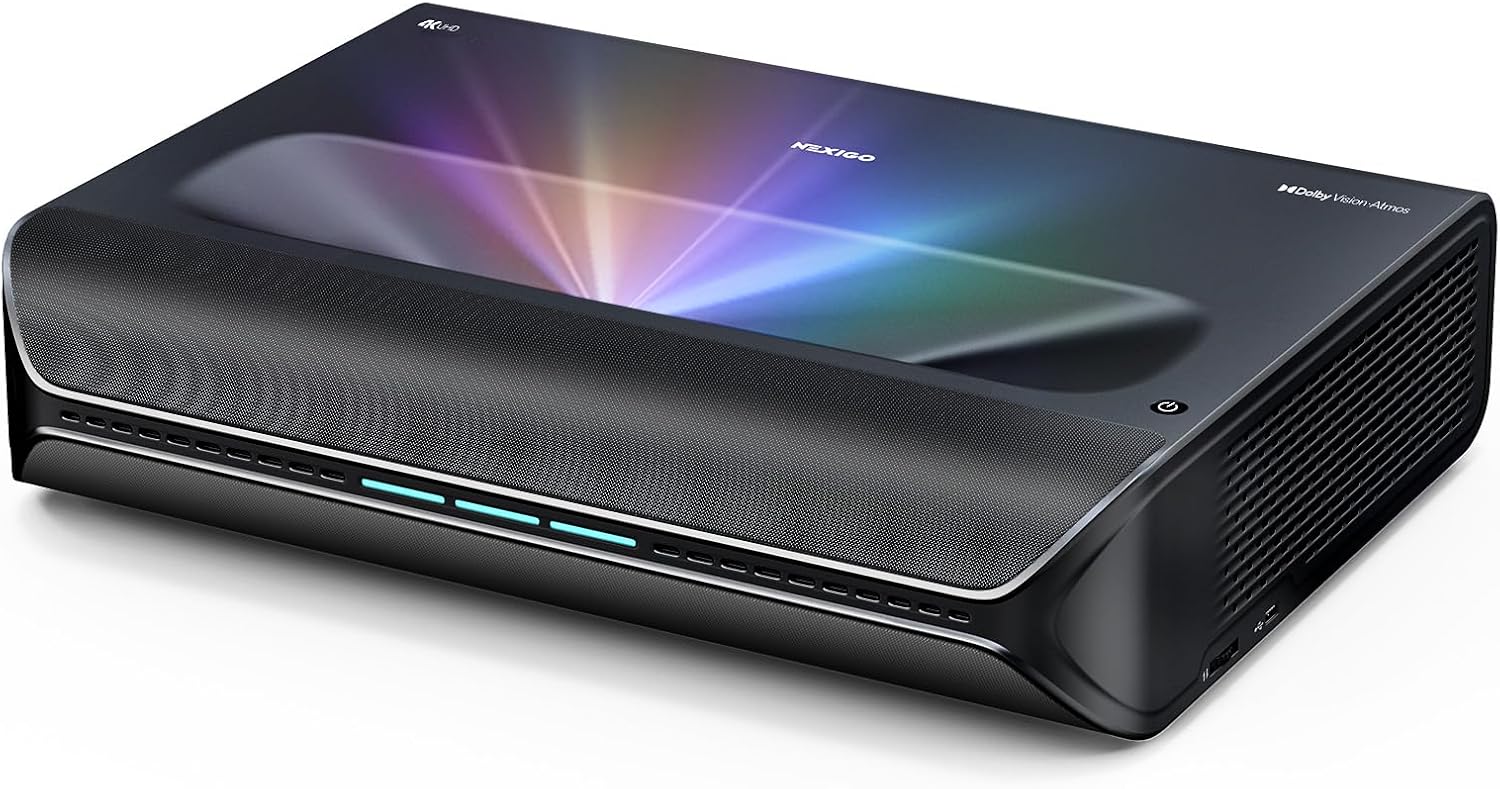
The NexiGo Aurora Pro MKII maintains the same chassis design as its predecessor, offering a sleek and unobtrusive presence in any home theater environment. Tsolas Nikos from Projectorjunkies noted that the projector's elegant design seamlessly blends into any room, with characteristic LED accents on the front that distinguish it from other models. The build quality remains robust, with dimensions of 21.54 x 4.81 x 16.04 inches and a weight of 10 kg, making it a substantial yet manageable unit. The rotary knob at each end of the sides allows for easy adjustment of the rear feet, facilitating installation on furniture without requiring complex mounting solutions. This design approach ensures that users can effortlessly upgrade from the original Aurora Pro without noticeable differences in appearance or handling.
ProjectorReviews.com's Philip Boyle emphasized that the MKII's exterior design remains unchanged from the original, which he described as 'discreet in both design and color, so it blends seamlessly into any room.' The projector's aesthetic appeal is further enhanced by its dual-mode remote control, which combines infrared and Bluetooth capabilities. This remote features well-placed buttons and an automatic backlight system that activates with even slight movement, ensuring usability in dark environments.
However, the MKII's substantial size and weight, while contributing to its build quality, may pose challenges for users seeking portability or those with limited installation space. The absence of a built-in smart platform such as Google TV was noted as a drawback by ProjectorCentral's Sammie Prescott, Jr., who wrote that having one built in “would have reduced the need for an external device and made the unit a more robust, all-in-one, plug-and-play solution.”
Performance and Brightness
The Aurora Pro MKII delivers a significant performance upgrade over its predecessor, thanks to the ALPD 5.0 ProVision Tri-Color Laser engine. This new optical system provides 2,400 ANSI lumens of brightness, though ProjectorCentral's testing measured 2,274 ANSI lumens in the Brightest Brightness setting, which is approximately 5.25% below NexiGo's stated specification. Despite this slight shortfall, the projector's brightness remains competitive for home theater use, particularly in controlled lighting environments. The throw ratio has been improved from 0.23 to 0.21, allowing for projection from just 6.3 inches away for a 100-inch image, making it ideal for ultra-short throw installations.
NexiGo's marketing claims of 107% BT.2020 color space coverage were met with mixed results. ProjectorCentral's Sammie Prescott, Jr. measured color gamut coverage at 81.23% (xy) and 86.6% (uv) for BT.2020, and 97.8% (xy) and 98.6% (uv) for the P3 color space. While the projector's color reproduction is generally impressive, color tracking within the BT.2020 color space could be improved, with oversaturation issues noted across all picture modes. The native contrast ratio has been upgraded from 3,000:1 to 4,000:1, with dynamic contrast reaching over 30,000:1 thanks to the hybrid dynamic contrast system called SAE (Scene Adapt Engine). This system integrates a dynamic iris with laser dimming algorithms to enhance overall contrast performance.
The projector's ability to handle HDR content is a standout feature, supporting Dolby Vision, HDR10+, HDR10, and HLG formats. However, ProjectorCentral's review noted that HDR10 performance could be improved, with some highlight clipping observed during its testing. The 0.47-inch DMD chip from Texas Instruments delivers native 1080p resolution with XPR technology, achieving a 4K UHD resolution of 3840 × 2160 through pixel shifting. While this makes the projector appear native 4K to most viewers, some users sensitive to rainbow effects may notice mild artifacts in certain highlights, according to the same reviewer.
Gaming Capabilities
The Aurora Pro MKII is positioned as a serious gaming projector, offering HDMI 2.1 connectivity with support for 4K 120 Hz signals and a manufacturer-claimed 4.2 ms low latency at 1080p 240 Hz or 8 ms at 1080p 120 Hz using the projector's GAMING mode. ProjectorReviews.com's Philip Boyle highlighted that the projector's low input lag makes it an excellent choice for gamers, with the 4ms latency at 1080p noted as one of the lowest in the market. The inclusion of advanced second-generation MEMC (Motion Estimation Motion Compensation) algorithm further enhances the gaming experience by reducing judder and providing buttery smooth motion.
However, the MKII lacks Auto Low Latency Mode (ALLM) support, which is a significant omission for competitive gaming enthusiasts. The projector's gaming capabilities are further limited by the absence of a built-in smart platform such as Google TV or Android TV, which would otherwise allow for direct streaming of games and applications. ProjectorCentral's Sammie Prescott, Jr. noted that while the projector's gaming features are impressive, the lack of a smart OS restricts its functionality in modern gaming environments where streaming and app integration are increasingly important.
The inclusion of Dolby Atmos sound system provides an immersive audio experience that complements the projector's visual capabilities. The 60-watt speaker system delivers dynamic sound that enhances both movie viewing and gaming experiences, according to ProjectorReviews.com's review. The combination of high-quality audio and visual performance makes the Aurora Pro MKII a compelling choice for users seeking a complete home entertainment solution.
Dynamic contrast reaches 30,000-to-1 via Scene Adapt Engine
The Aurora Pro MKII offers a comprehensive array of connectivity options, including three HDMI 2.1 ports, all supporting CEC for device control. HDMI 1 supports eARC, while HDMI 3 is optimized for the lowest input lag, making it the recommended port for gaming consoles. The projector also features two USB 2.0 ports, one analog audio output, one digital S/PDIF audio output, and a 100 Mbps RJ45 Ethernet port for wired internet connectivity. Wireless capabilities include Wi-Fi 6 for faster and more stable internet connections and Bluetooth 5.2 for seamless device pairing.
ProjectorReviews.com's Philip Boyle emphasized that the MKII's connectivity options are extensive, with support for streaming high-bitrate 4K content via Miracast, DLNA, and Apple AirPlay without buffering or stuttering. The projector also supports Amazon Alexa, allowing for voice control integration. However, ProjectorCentral's Sammie Prescott, Jr. noted that the lack of USB 3.0 high-speed ports and the absence of Google TV OS or similar smart platforms are significant drawbacks that limit the projector's versatility in modern home entertainment setups.
The MKII's hybrid dynamic contrast system, called SAE (Scene Adapt Engine), combines a dynamic iris with laser dimming algorithms to deliver exceptional blacks and dark area details. This system significantly improves the overall contrast performance compared to the previous model, with dynamic contrast reaching over 30,000:1. The projector also supports 3D playback for all major 3D formats and offers native 24p playback without conversion, making it suitable for cinephiles who appreciate authentic frame rates.
2,274 measured lumens fall short of the 2,400 claim
Despite its impressive feature set, the Aurora Pro MKII has several notable shortcomings that may deter potential buyers. ProjectorCentral's Sammie Prescott, Jr. identified the lack of USB 3.0 high-speed ports as a significant limitation, particularly for users who need to transfer large files or connect high-bandwidth devices. The absence of a built-in smart platform such as Google TV or Android TV is another major drawback, as it prevents direct streaming of games and applications without additional devices.
The projector's color accuracy, while generally good, could be improved. ProjectorCentral's testing revealed that color tracking within the BT.2020 color space could be better, with oversaturation issues noted across all picture modes. Additionally, the projector's brightness is slightly below its stated specifications, measuring 2,274 ANSI lumens compared to the claimed 2,400 lumens. This shortfall may impact performance in rooms with ambient light or when projecting onto large screens.
The lack of Auto Low Latency Mode (ALLM) support is particularly concerning for competitive gamers, as it prevents the projector from automatically switching to low-latency mode when connected to gaming consoles. This omission means that users must manually configure settings to achieve optimal gaming performance, which can be inconvenient for casual users. Furthermore, the projector's 30,000-hour laser lifespan, while impressive, may not be sufficient for users who plan to use the projector for extended periods without replacement.
4ms input lag at 1080p over HDMI 2.1
The NexiGo Aurora Pro MKII is best suited for home theater enthusiasts who prioritize contrast, color accuracy, and gaming performance over smart platform integration. Users seeking a high-quality projector for dark room viewing will find the Aurora Pro MKII's deep blacks and dynamic contrast performance particularly appealing. The projector's ultra-short throw capabilities make it ideal for installations where space is limited, and its 100-inch projection from just 6.3 inches away is perfect for smaller living spaces.
Gaming enthusiasts who value low input lag and 4K 120 Hz support will appreciate the Aurora Pro MKII's gaming capabilities, particularly its 4ms latency at 1080p and support for HDMI 2.1. However, users who require a built-in smart platform or extensive streaming capabilities should look elsewhere, as the MKII lacks Google TV OS or similar smart platforms. The projector's 60-watt Dolby Atmos sound system makes it an excellent choice for users who want a complete home entertainment solution without additional audio equipment.
The Aurora Pro MKII is also well-suited for users who value professional color accuracy and are willing to invest in a high-end projector. The projector's factory calibration provides precise color accuracy with △E≈1, and the ability to customize calibration settings allows for personalization. However, users who require USB 3.0 ports or advanced streaming features may find the MKII's limitations frustrating, particularly in modern home entertainment environments where these features are increasingly expected.
Hybrid RGB laser nearly eliminates speckle and fringing
When compared to competing ultra-short throw projectors, the Aurora Pro MKII stands out for its hybrid RGB laser engine that virtually eliminates laser speckle and color fringing while providing 2,400 ANSI lumens of brightness. However, it falls short of some competitors in terms of smart platform integration and USB 3.0 support. ProjectorCentral's review noted that while the Aurora Pro MKII delivers solid performance, it could benefit from further refinement in several areas, including increased brightness and improved HDR10 performance to reduce highlight clipping.
The projector's contrast performance is a clear strength, with native contrast ratio of 4,000:1 and dynamic contrast reaching over 30,000:1. This performance is comparable to or better than many competitors in its price range, making it an attractive option for users who prioritize contrast and dark room performance. The inclusion of Dolby Vision support and HDR10+ compatibility ensures that the projector can handle advanced HDR formats, which is a significant advantage over older models.
However, the Aurora Pro MKII's lack of Google TV OS or similar smart platforms puts it at a disadvantage compared to more modern alternatives that offer direct streaming capabilities. The absence of USB 3.0 ports and Auto Low Latency Mode (ALLM) support also limits its competitiveness in the gaming market. While the projector's performance is solid, these omissions mean that users seeking a complete, plug-and-play solution may find better alternatives in the market.
Street price often under $3,000, not $3,499
At its MSRP of $3,499, the NexiGo Aurora Pro MKII represents a premium price point that reflects its advanced features and performance capabilities. However, ProjectorReviews.com's Philip Boyle noted that the projector is often available on sale for less than $3,000, making it more accessible to budget-conscious consumers. The projector's hybrid RGB laser engine, which combines RGB solid state laser light source with LEDs, provides virtually zero laser speckle and color fringing, offering a significant upgrade over traditional laser projectors.
The projector's 30,000-hour estimated light source life is another value proposition, as it provides many years of use without requiring replacement. This longevity, combined with the projector's performance improvements over the original Aurora Pro, makes it a worthwhile investment for users who plan to use it extensively. The inclusion of Dolby Atmos sound system and support for advanced HDR formats further enhance its value proposition for home theater enthusiasts.
Despite its premium features, the Aurora Pro MKII's lack of smart platform integration and USB 3.0 support may limit its value for users who require these features. ProjectorCentral's Sammie Prescott, Jr. noted that while the projector delivers solid performance, it could benefit from further refinement in several areas, including increased brightness and improved HDR10 performance to reduce highlight clipping. The price point may be justified for users who prioritize contrast and color accuracy, but those seeking a complete, plug-and-play solution may find better value elsewhere.
Strengths
- +ALPD 5.0 hybrid laser engine delivers excellent color and brightness with 2400 ANSI lumens
- +Ultra-low input lag for gaming with 4.2 ms latency at 1080p 240 Hz
- +Dynamic iris combined with laser dimming provides exceptional blacks and dark area details
- +Supports advanced HDR formats including Dolby Vision, HDR10+, HDR10, and HLG
Watch-outs
- −No USB 3.0 high-speed ports for fast data transfer
- −Does not support Google TV OS, Google Play Store, or Google Search
How it compares
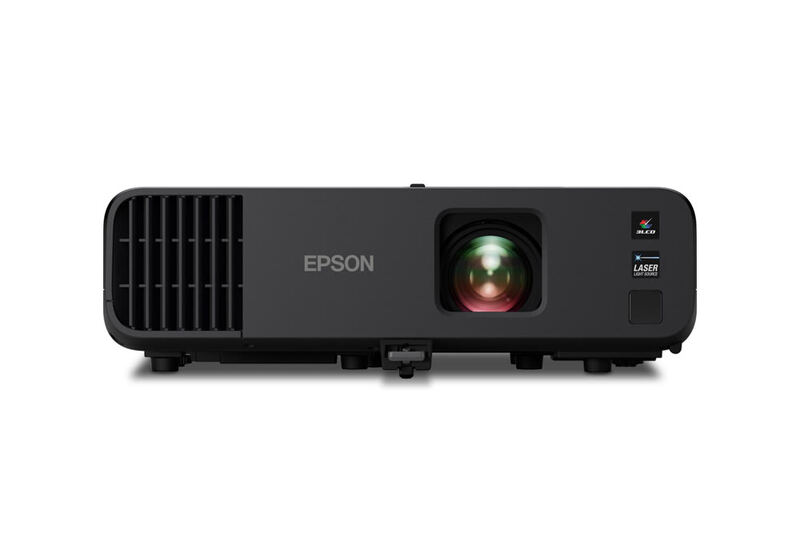
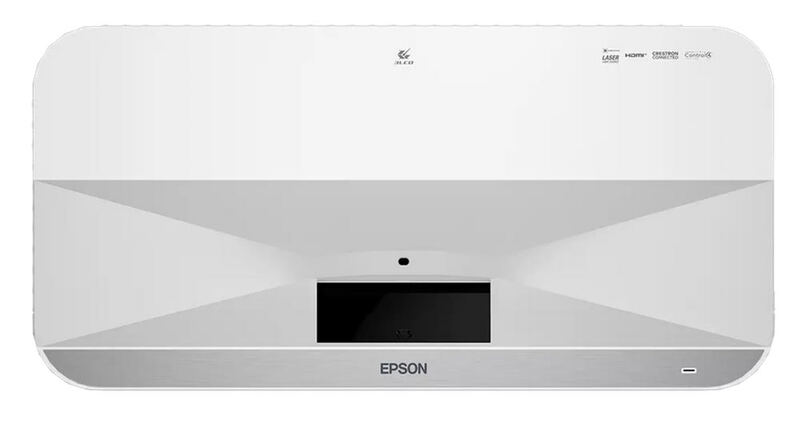
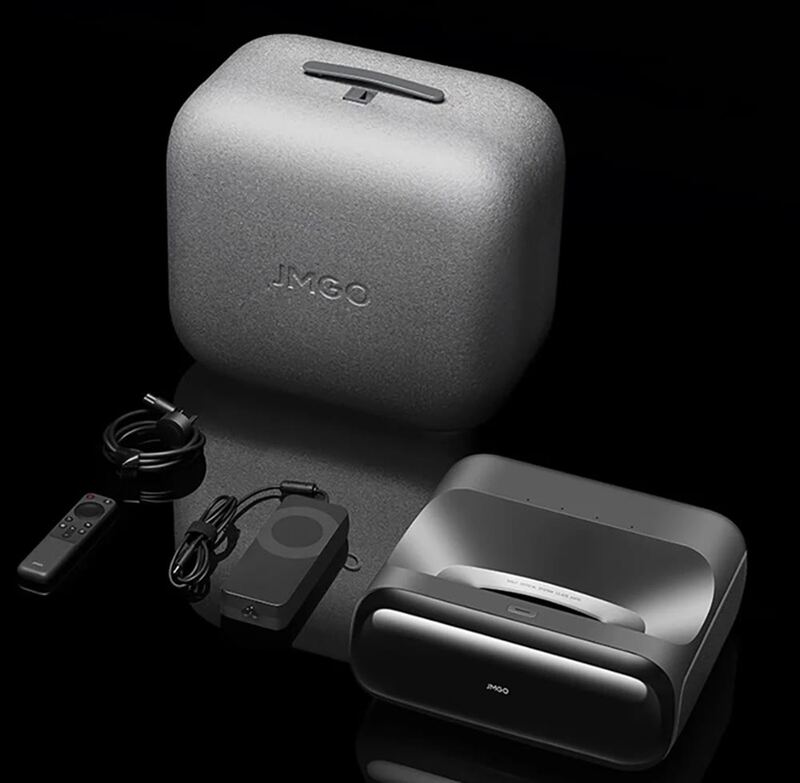
The NexiGo Aurora Pro MKII delivers ultra-low gaming input lag of 4.2 ms, a significant advantage over the Hisense L9Q and JMGO O2S Ultra, which don't emphasize gaming performance. While it lacks Google TV OS support, it provides better contrast and dynamic iris features compared to the Epson QS100, which has a lower native contrast ratio and no dynamic iris.
Rating sources
Counts as 3.61/5 in our score — this publisher's 9 scores on the site average 4.00, so its scores are adjusted up to compare fairly with other publishers.
“The Aurora Pro MKII is undeniably an elegant UST projector. It's quite large, but remains discreet in both design and color, so it blends seamlessly into any room and virtually disappears when in use.”
Not in the average — we derived this score from the review's words, and a publisher printed a score for this product, so the printed number counts instead.
“The NexiGo Aurora Pro MKII displays deep blacks with excellent dark-area detail by boosting the native contrast to 4000:1 and the dynamic contrast to 30,000:1.”
Not in the average — we derived this score from the review's words, and a publisher printed a score for this product, so the printed number counts instead.
Our 3.6 score is the average of 1 of the scored reviews above, each adjusted for how strictly its publisher scores. 2 derived scores above are not in the average because a publisher printed a score for this product. Ratings marked * were derived from the reviewer’s written analysis or video transcript — the publisher didn’t print an explicit numeric score, so we inferred one from their own words. Click through to verify. More about methodology.