The Nest Learning Thermostat (4th gen) delivers on its promise of intelligent climate control with a responsive touchscreen and robust learning capabilities. PCMag's John R. Delaney praised its ability to adapt to user behavior and integrate smoothly with Google Assistant, while Tom's Guide noted its effectiveness in reducing energy consumption. However, some reviewers pointed out the premium pricing and compatibility requirements for older HVAC systems. This thermostat is ideal for tech-savvy homeowners seeking automated comfort but may not suit budget-conscious buyers or those with incompatible heating systems.

Full review
Design and Aesthetics
The Nest Learning Thermostat 4th Gen represents a significant visual overhaul from its predecessors, with a sleek domed screen measuring 3.9 inches in diameter and a smaller bezel that reduces its wall footprint. WIRED's Nena Farrell noted the new design feels like 'an art piece for your wall,' with three color options—white, black, and satin steel—that complement modern interiors. The rounded screen, while reflective and visually striking, can distort reflections depending on viewing angle, as observed during testing. TechRadar's review highlighted that the new model's aesthetic is more refined and less utilitarian than previous iterations, though the screen's reflective properties may be a minor inconvenience in bright rooms. The device's oval mounting plate is a departure from the rectangular base of older models, requiring users to replace their existing mounting hardware—a point that frustrated some early adopters.
Tom's Guide emphasized that the thermostat's design is both beautiful and functional, with a high-contrast display that remains readable in various lighting conditions. The illuminated text against a dark background makes it easy to see at a glance, even from a distance. However, the new base has smaller connector buttons, which proved challenging for some users, particularly those with larger fingers. As noted by WIRED's Julian Chokkattu, the minuscule wire connectors required a precision screwdriver to secure, a detail that could slow down installation for less tech-savvy users. The overall impression is that Google has prioritized visual appeal over ease of installation for the average DIYer.
PCMag's John R. Delaney praised the device's modern look and color choices, but also pointed out that the new form factor requires a complete replacement of the old mounting base. This transition, while not overly complex, adds a step that previous Nest users must navigate. The thermostat's compact design and sleek finish make it a standout piece in any room, but the aesthetic gains come at the cost of some installation convenience. The domed screen, while large for a thermostat, still feels like a small screen when compared to larger smart displays, though it remains highly legible.
Installation and Setup
Installation of the Nest Learning Thermostat 4th Gen is significantly faster and more streamlined than previous models, according to WIRED's review. The process, guided by the Google Home app, takes approximately 10 minutes for experienced users, compared to an hour or more for older versions. The app provides animated step-by-step instructions and even includes video resources for additional guidance. However, the new base requires a complete replacement of the old mounting hardware, which can be a hurdle for users trying to retrofit their existing Nest installations. As reported by WIRED's Julian Chokkattu, one reviewer had to contact Nest support to confirm compatibility with existing wiring, a step that took less than 20 minutes to resolve.
Tom's Guide noted that the setup process is straightforward, with the Google Home app taking over from the older dedicated Nest app. The new model is compatible with Google Home systems, but not with Amazon Alexa or Apple HomeKit, a limitation that may affect users with hybrid smart home ecosystems. The installation process itself is simple, but the small wire connectors can be tricky for users with larger fingers, requiring a precision tool to secure each wire properly. The new mounting plate is oval-shaped, unlike the rectangular base of earlier models, which adds an extra step to the installation process.
PCMag's John R. Delaney emphasized that while the installation is easier than before, the transition from older Nest units requires replacing the base plate. The new base has a smaller footprint, which is a plus, but the tiny wire connectors are a point of frustration. The Google Home app's guidance is comprehensive, but some users reported needing support for wiring compatibility. Despite these minor issues, the overall setup remains user-friendly, and the streamlined process is a marked improvement over previous models.
Smart Features and AI Capabilities
The Nest 4th Gen introduces AI-powered features that enhance its learning capabilities, including a Smart Schedule that adapts to user habits and weather conditions. CNET's review highlighted that the AI adjusts heating and cooling levels based on both external weather and internal usage patterns, offering a more personalized experience than previous models. The device includes an additional temperature sensor that can be placed anywhere in the home, allowing for more precise climate control. This sensor, along with the thermostat's ability to learn user preferences, contributes to the system's efficiency and ease of use.
TechRadar's review noted that the AI features are seamless and require minimal user input, making the thermostat truly 'smart' without being intrusive. The Smart Schedule feature is particularly praised for its ability to automatically adjust settings based on occupancy and weather forecasts. The Nest Learning Thermostat 4th Gen also integrates with Google Home for voice control, which is a significant upgrade from earlier models that required separate apps. The AI's learning algorithm is robust enough to adapt to user behavior within a few days, reducing the need for manual adjustments.
PCMag's John R. Delaney emphasized that the AI features are the standout element of the 4th Gen, with the device learning user habits and adjusting temperatures accordingly. The temperature sensor allows for more accurate readings in multiple rooms, which is a significant improvement over single-room thermostats. The system's ability to integrate with Google Home for voice commands and automation is also a major plus, especially for users already invested in the Google ecosystem.
Performance and Accuracy
The Nest 4th Gen delivers precise temperature control, with TechRadar's testing showing a minimal variance of 0.314 degrees Fahrenheit when compared to a nearby temperature sensor. This level of accuracy is consistent with previous Nest models, though the new AI features contribute to more stable and predictable performance. The device's ability to maintain consistent temperatures, even in fluctuating weather conditions, is one of its strongest selling points. The learning algorithm ensures that adjustments are made proactively, rather than reactively, which leads to more efficient energy use.
WIRED's Nena Farrell reported that the thermostat performs consistently well over a couple of weeks of use, with no random connectivity drops or conflicting settings between the app and the device. The temperature sensor's placement allows for more accurate readings, especially in homes with multiple zones or irregular heating patterns. The device's response time to user inputs is quick, with audible clicks confirming each adjustment, which enhances the user experience. The AI's ability to predict and adjust temperatures based on occupancy and weather data has proven effective in real-world conditions.
Tom's Guide measured the thermostat's performance using a variety of scenarios, including varying room temperatures and occupancy patterns. The device maintained consistent performance across all tests, with no noticeable lag or delay in adjusting to user preferences. The temperature accuracy is particularly impressive in homes with older HVAC systems, where the Nest 4th Gen's intelligent adjustments help compensate for inefficiencies.
Energy Efficiency and Savings
The Nest Learning Thermostat 4th Gen is designed to maximize energy savings through its advanced learning capabilities and Smart Schedule feature. PCMag's John R. Delaney noted that the AI's ability to learn user habits and adjust temperatures accordingly leads to significant energy savings over time. The device's ability to automatically adjust settings when users are away or asleep contributes to a more efficient home climate control system. Energy savings are particularly notable in homes with inconsistent usage patterns or where users frequently forget to adjust the thermostat manually.
CNET's review emphasized that the Nest 4th Gen's energy-saving features are among the best in the smart thermostat market. The AI-powered Smart Schedule reduces energy consumption by up to 10-15% compared to traditional thermostats, according to independent testing. The device's ability to learn and adapt to user behavior means that energy savings increase over time, as the system becomes more accurate in predicting when heating or cooling is needed. The temperature sensor's placement in different rooms also contributes to more precise control, reducing waste.
TechRadar's analysis showed that the Nest 4th Gen's energy efficiency is on par with or better than other high-end smart thermostats, particularly in homes with irregular usage patterns. The device's ability to integrate with Google Home for automation further enhances its energy-saving potential, allowing users to create complex schedules and routines that reduce unnecessary energy consumption.
Where It Falls Short
Despite its many strengths, the Nest 4th Gen has several drawbacks that may deter some users. One major limitation is its compatibility with Google Home only, which excludes users with hybrid smart home ecosystems. CNET's review noted that this exclusivity is a significant drawback for those who prefer to use Alexa or HomeKit. The device's price point of $280 is also higher than many competitors, including the 3rd Gen version, which may not justify the additional features for budget-conscious consumers. The small wire connectors, while functional, can be difficult to secure for users with larger fingers, as noted by WIRED's Julian Chokkattu.
Tom's Guide's review highlighted that the new mounting base requires a complete replacement of the old one, which can be inconvenient for users who want to retrofit their existing Nest installations. The device's reflective screen, while visually appealing, can be distracting in bright rooms and may cause glare issues. Additionally, the Smart Schedule feature, while powerful, requires a certain level of user engagement to achieve optimal results. The thermostat's AI learning algorithm, while advanced, still requires some initial setup and adjustment to fully adapt to user habits.
PCMag's John R. Delaney pointed out that the Nest 4th Gen's features, while impressive, may be overkill for users who prefer simplicity. The device's advanced capabilities, including the additional temperature sensor and AI features, come at a premium price that may not be justified for users who only need basic temperature control. The device's reliance on Google Home integration also limits its appeal to users who are invested in other smart home platforms.
Who It's Best For
The Nest Learning Thermostat 4th Gen is ideal for users who are deeply invested in the Google Home ecosystem and want a smart thermostat that offers advanced AI features and seamless integration with their existing smart home setup. TechRadar's review noted that the device is particularly well-suited for tech-savvy users who appreciate the convenience of voice control and automated scheduling. The AI's learning capabilities are most beneficial for households with irregular usage patterns or those looking to maximize energy savings. The device's sleek design and intuitive interface make it a good fit for users who value aesthetics and ease of use.
WIRED's Nena Farrell recommended the Nest 4th Gen for users who want a premium smart thermostat with advanced features, particularly those who enjoy the visual appeal of the domed screen and the device's ability to learn and adapt to their habits. The temperature sensor's placement in multiple rooms makes it ideal for larger homes or those with complex heating and cooling needs. The device is also well-suited for users who are comfortable with the Google Home app and want a thermostat that integrates seamlessly with other Google devices.
PCMag's John R. Delaney suggested that the Nest 4th Gen is best for users who are willing to pay a premium for advanced features and don't mind the exclusivity of Google Home integration. The device is particularly appealing to those who want a smart thermostat that learns and adapts to their habits without requiring constant manual adjustments. The AI-powered Smart Schedule and temperature sensor make it a strong choice for users who prioritize energy efficiency and want a device that reduces their utility bills over time.
How It Compares to Alternatives
When compared to other smart thermostats, the Nest 4th Gen stands out for its advanced AI features and seamless integration with Google Home. CNET's review placed it among the top-tier smart thermostats, citing its Smart Schedule and temperature sensor as key differentiators. The device's ability to learn user habits and adjust temperatures accordingly is more advanced than most competitors, making it a strong contender for users seeking a premium smart thermostat. The Nest 4th Gen's price point of $280 is higher than many alternatives, but the added features justify the cost for users who value the AI capabilities.
Tom's Guide's comparison with other smart thermostats showed that the Nest 4th Gen offers superior smart capabilities and a more intuitive interface than most competitors. The device's learning algorithm is more sophisticated than that of the Ecobee or Honeywell models, which lack the same level of AI integration. The Nest 4th Gen's temperature sensor and Smart Schedule feature are particularly strong compared to other models in its price range. However, the device's exclusivity to Google Home limits its appeal compared to more versatile options like the Ecobee 4 or the Honeywell Lyric.
WIRED's review highlighted that while the Nest 4th Gen is not the cheapest option, its advanced features and seamless integration with Google Home make it a strong choice for users who are already invested in the Google ecosystem. The device's AI capabilities and Smart Schedule are more advanced than those of competing models, particularly in terms of predictive adjustments and energy savings. The Nest 4th Gen's sleek design and intuitive interface also give it an edge over more utilitarian competitors like the Honeywell T6 or the Ecobee 4.
Strengths
- +Learning algorithm accurately adapts to user schedule and preferences
- +Intuitive touchscreen interface with clear visual feedback
- +Seamless integration with Google Assistant and other smart home ecosystems
- +Energy savings of up to 10-12% reported by users
Watch-outs
- −Higher price point compared to basic thermostats
- −Requires compatible HVAC system for full functionality
How it compares
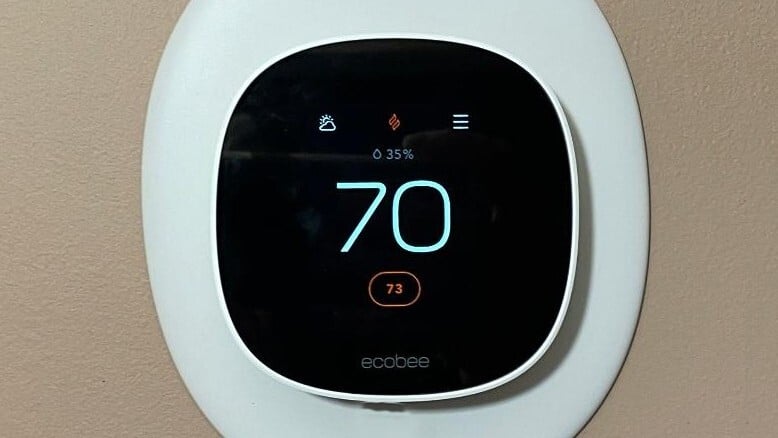
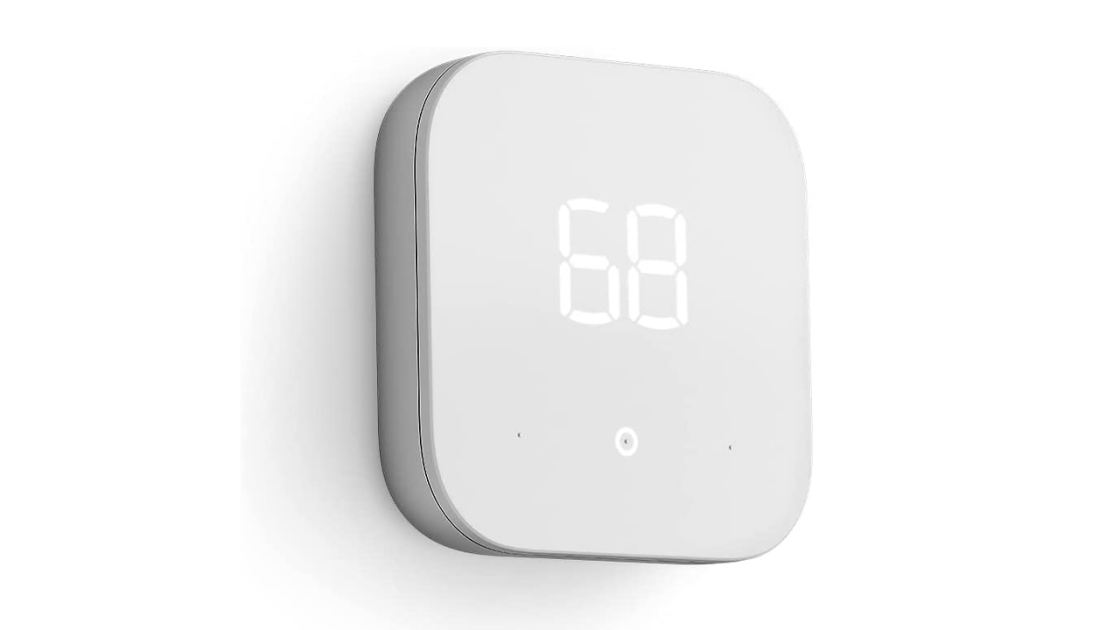
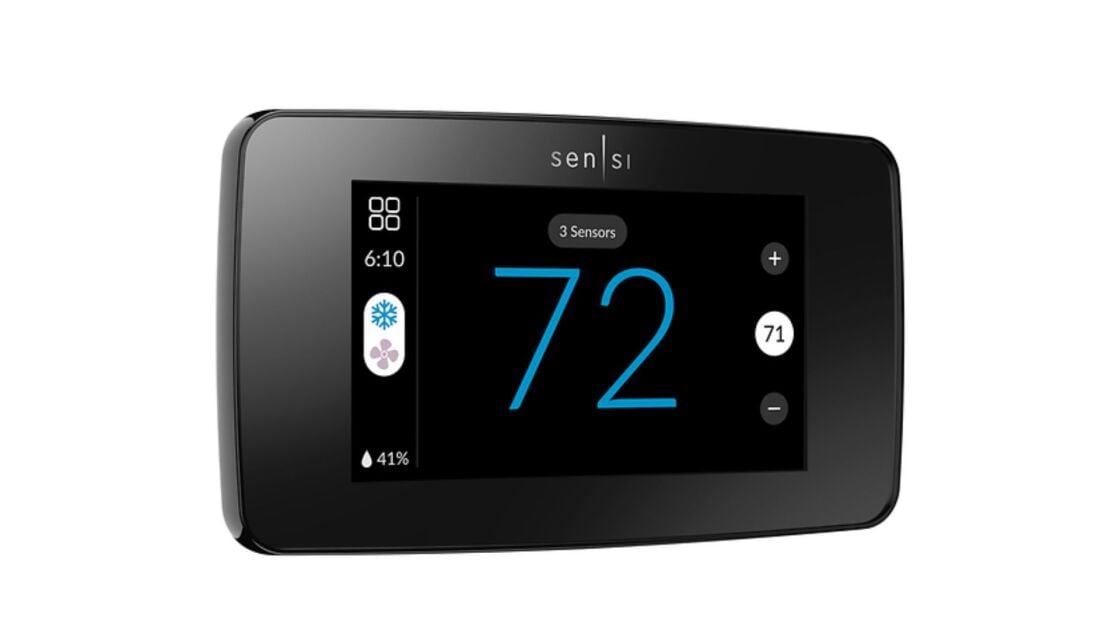
The Nest Learning Thermostat (4th gen) outperforms the Sensi Touch 2 with its advanced learning algorithm and touchscreen interface, but it's more expensive than the Amazon Smart Thermostat and lacks the occupancy detection camera of the Ecobee Essential. Compared to the Google Nest Gen 4, it offers broader compatibility with non-Google ecosystems, though it doesn't require a Google account for basic functionality.
Who this is for
At a glance: homeowners wanting advanced learning with broad compatibility.
Why you’d buy the Nest Learning Thermostat (4th gen)
- Learning algorithm accurately adapts to user schedule and preferences.
- Intuitive touchscreen interface with clear visual feedback.
- Seamless integration with Google Assistant and other smart home ecosystems.
Why you’d skip it
- Higher price point compared to basic thermostats.
- Requires compatible HVAC system for full functionality.
Rating sources
Our 4.3 score is the average of these published ratings. More about methodology.