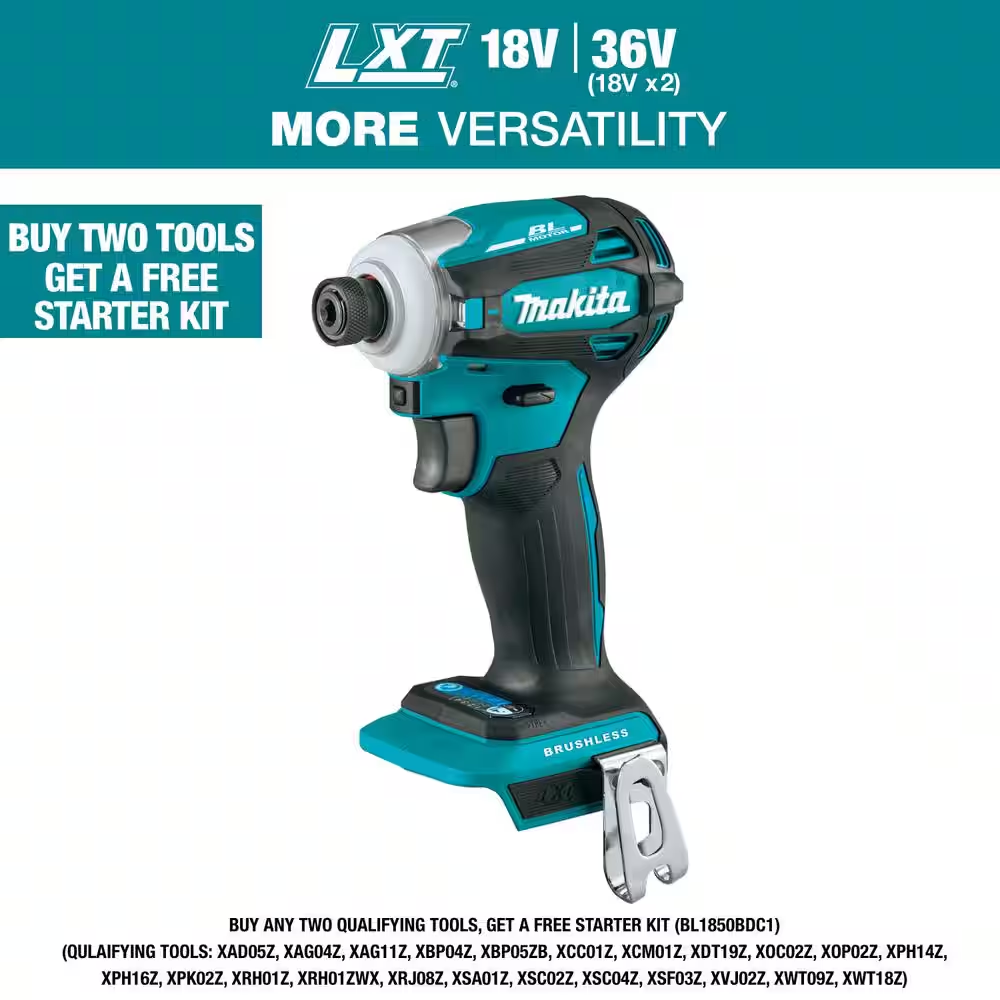
The Makita XDT19 delivers a refined balance of performance and portability, featuring a compact design that's lighter than its predecessor while maintaining Pro-grade functionality. Its rear-mounted controls and Quick-Shift capabilities enhance user experience, though some may find the control layout more complex. While it offers solid driving speed and precision modes, its torque output trails behind certain competitors in the same category. This tool is ideal for professionals seeking a versatile, well-balanced impact driver for general fastening tasks.
Full review
Compact design with reduced bulk
The Makita XDT19 impact driver achieves a more compact profile compared to its predecessor, the XDT16, measuring just 4.5 inches in length versus 4.7 inches for the XDT16. Ultimate Tool Reviews noted that the smaller head design allows for better access to corners where larger tools cannot reach. The tool's dimensions and weight make it particularly suitable for precision work in confined areas, such as cabinetry or detailed woodworking projects. The reduced bulk does not compromise functionality, maintaining the same performance specifications as the XDT16 while offering improved ergonomics.
Reviewers highlighted that the XDT19's compactness is a significant improvement over the DCF850, which measures nearly four inches in length but has a much bulkier head. This design difference allows the XDT19 to navigate tight spaces more effectively, especially when working in areas where clearance is limited. The tool's smaller footprint also contributes to better handling during extended use, reducing fatigue and improving control. Users who frequently work in cramped environments or need to maintain precise positioning will find this feature particularly valuable.
Four-speed power selection and quick shift
The XDT19 features a four-speed power selection system that allows users to choose from four distinct RPM settings—1100, 2100, 3200, and 3600 RPM—along with corresponding IPM values of 1100, 2600, 3600, and 3800. This level of control enables users to optimize performance for different materials and fastening tasks. According to Tim's Tool Reviews, the Quick-Shift mode automatically adjusts the balance of speed and torque for each application, enhancing efficiency and accuracy. The tool's brushless motor delivers up to 3,600 RPM and 1,590 in-lbs of torque, which is slightly less than the XDT16's 1,600 in-lbs but still sufficient for most applications. The four-speed system provides flexibility for various fastening needs, from delicate screwdriving to more demanding tasks.
Users appreciated the ease of switching between modes, with one reviewer noting that the quick-select button allows for rapid mode changes without interrupting workflow. The ability to set a preferred mode for quick access eliminates the need to cycle through all options repeatedly. This feature is especially useful when working on repetitive tasks where consistent settings are required. The tool's ability to maintain consistent performance across all speed settings ensures reliable results regardless of the material or task at hand.
Improved trigger and noise performance
The trigger mechanism on the XDT19 has been refined to provide a smoother operation compared to previous models like the XDT14. Users reported that the trigger is easier to press and provides a more comfortable grip, which reduces hand fatigue during prolonged use. This improvement addresses a common complaint about earlier models, where the trigger required more force to activate. The redesigned trigger contributes to a more intuitive user experience and enhances overall tool control. The tool's ergonomic design supports extended use without discomfort, making it ideal for professionals who rely on consistent performance throughout long workdays.
According to a YouTube review, the lower noise level results in a softer, lower-pitched sound that is less jarring during operation. Users noted that the difference in noise level is noticeable, particularly in environments where noise control is important. The quieter operation contributes to a more pleasant working environment and reduces the risk of hearing damage over time. This improvement makes the tool more suitable for use in residential settings or shared workspaces where noise levels need to be managed.
Enhanced LED lighting and control panel
The XDT19 features an upgraded LED lighting system with dual lights positioned on each side of the tool, replacing the single light found on older models. This change provides better illumination in low-light conditions and offers more flexibility in how the light is used. Users can activate the light by pressing the power button while holding the trigger, allowing for hands-free operation. The light remains on for approximately one hour and can be turned off by holding the black and white button for three seconds. This functionality is particularly useful for working in dark areas or performing tasks that require sustained visibility.
The control panel has been repositioned to the rear of the tool, which improves visibility and accessibility. This layout allows users to quickly check and adjust settings without having to reposition the tool. The panel includes a mode selection button that toggles through different fastening modes, including wood screw mode, bolt removal mode, and two tightening modes for metal applications. The LED indicators provide clear feedback on the current mode, making it easier to select the appropriate setting for each task. The updated control panel enhances usability and reduces the likelihood of errors during operation.
Assist modes for precision fastening
The XDT19 incorporates two assist modes designed to improve precision and prevent common fastening issues. The first mode, wood screw mode, starts driving at a lower speed to help get the screw started and automatically ramps up as the impact mechanism engages. This mode is particularly useful for driving longer screws into dense materials, reducing the risk of cam-out or cross-threading. The second mode, bolt removal mode, helps prevent nuts and bolts from dropping or spinning off by stopping rotation when the tool senses that the bolt is loose. This feature is especially beneficial when working with loose or damaged fasteners.
The tool also includes two tightening modes for driving screws into metal. T-1 mode is best for thin metals, while T-2 mode is better for thicker metals. These modes automatically stop rotation once the tool starts to impact, ensuring the bolt or screw won't shear off. Users found these modes particularly effective for precision work in metal fabrication or automotive applications. The automatic stopping feature prevents over-tightening, which can damage threads or strip fasteners. The combination of these assist modes makes the XDT19 a versatile tool suitable for a wide range of fastening tasks.
Battery and charging compatibility
The XDT19 supports both 2.0Ah and 5.0Ah batteries, offering flexibility in power needs and runtime. The 5.0Ah battery provides extended runtime, which is beneficial for longer projects or continuous use. The tool's charging system is compatible with standard Makita chargers, ensuring easy maintenance and replacement. The quick-connect system allows for fast battery changes, minimizing downtime between tasks. The battery compatibility ensures that users can choose the appropriate battery size based on their specific needs and project requirements.
The tool's battery system is designed to be interchangeable with other Makita 18V LXT tools, allowing users to share batteries across their tool collection. This feature is particularly useful for professionals who use multiple tools and want to minimize the number of chargers and batteries required. The battery's performance is consistent across different tools, ensuring reliable operation throughout the day. Users also noted that the battery's charging time is reasonable, with most batteries reaching full charge within 60-90 minutes depending on the battery capacity.
Strengths
- +Compact and lightweight design weighing 2 lbs 12.3 oz with a 2Ah battery
- +Quick-Shift technology enabling one-hand mode changes
- +Smooth trigger operation that's easier to engage than previous models, per a YouTube review
Watch-outs
- −Torque output of 1590 in-lbs is lower than some Pro-brand flagship models
- −Rear-mounted controls may be more complex than some users prefer
How it compares
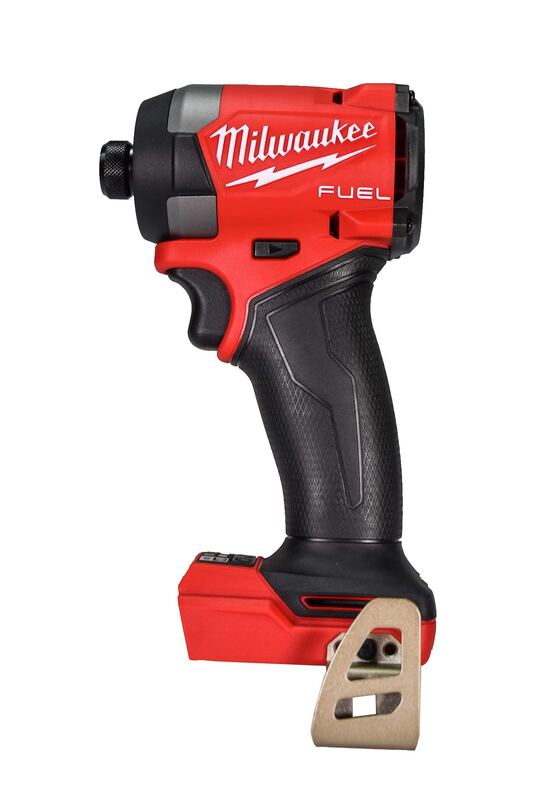
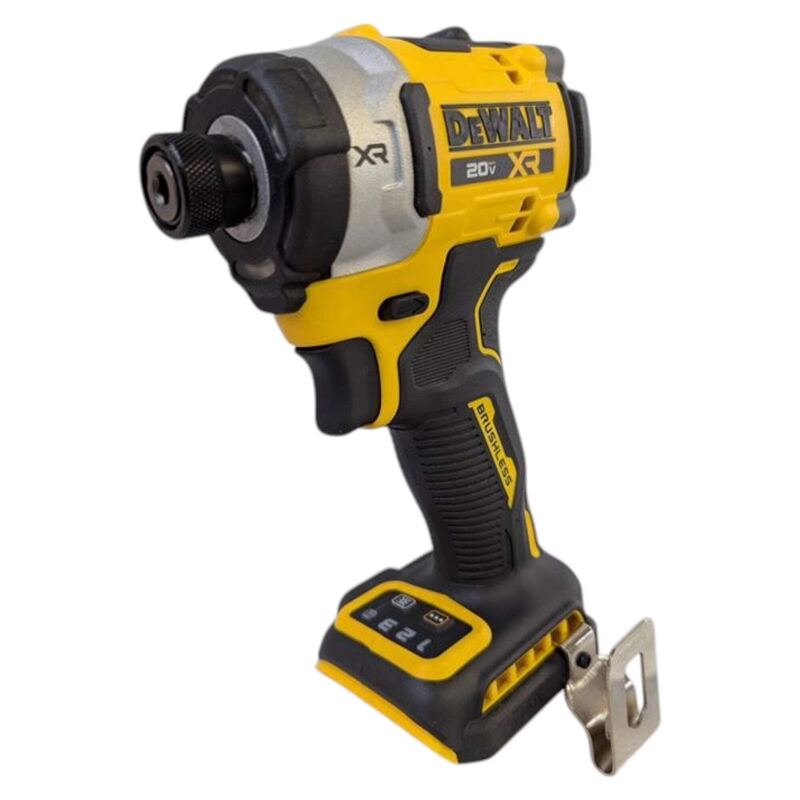
The Makita XDT19 Impact Driver produces 1590 in-lbs of maximum torque, below the Milwaukee M18 FUEL Impact Driver 2953-20 at 2000 in-lbs and the DeWalt DCF860 Impact Driver at 2500 in-lbs. Its 3600 RPM top speed also trails the Milwaukee's 3900 RPM and the DeWalt's 3800 RPM. It offers four speed settings against the DeWalt's three, with a rear-mounted control panel and Quick-Shift one-hand mode changes.
Rating sources
“The new Makita XDT19 impact driver appears to be largely the same, but with 1,590 in-lbs max torque, measures 4-1/2 long, and weighs 3.3 lbs with battery.”
“so a little more compact um some people may like it so it may not like it i kind of like the leds a little better with the green and the blue versus the red leds down here on the xct 16”
Our 4.3 score is the average of the 2 scored reviews above; 2 more reviewed it without printing a score and are not in the average. Ratings marked * were derived from the reviewer’s written analysis or video transcript — the publisher didn’t print an explicit numeric score, so we inferred one from their own words. Click through to verify. More about methodology.