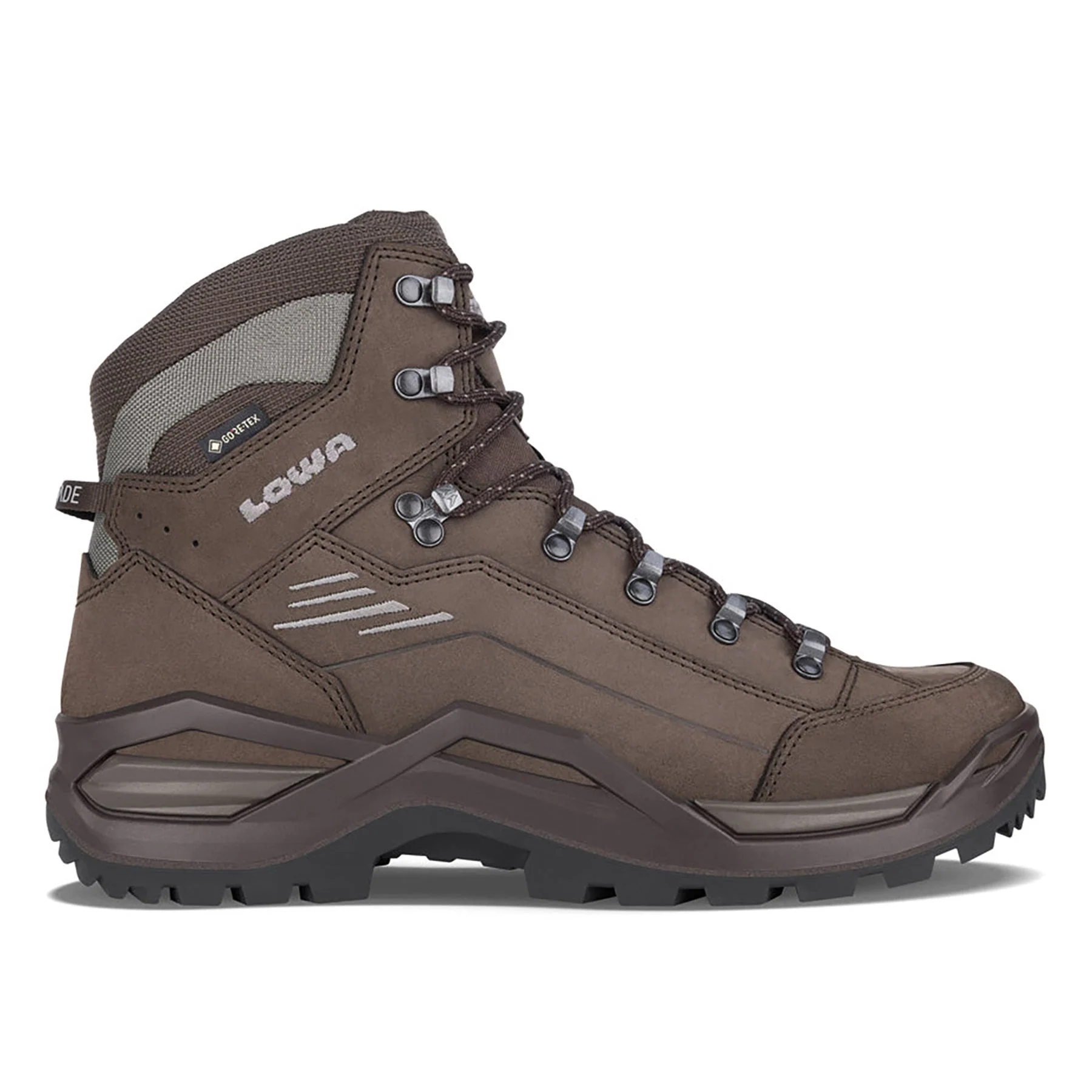
The Lowa Renegade Evo GTX Mid delivers exceptional torsional stability and ankle support through its external TPU MONOWRAP frame, which Better Trail found keeps feet secure on steep descents. Its nubuck leather upper offers high durability against abrasion, while the Vibram Rene Trac outsole provides reliable grip across varied terrains like wet rock and loose gravel. However, the firm polyurethane midsole is unapologetically burly and lacks plush cushioning, which can feel unforgiving for hikers accustomed to softer footwear. This rigid build suits those prioritizing protection on rugged trails over lightweight comfort, while users seeking a flexible, trail-runner-like experience should look elsewhere.
Full review
Stability from external Monowrap frame
The Lowa Renegade Evo GTX Mid distinguishes itself through a rigid structural system designed to lock the foot in place during demanding descents. Better Trail identified this stability as one of the boot's most compelling strengths, noting that testers trusted their footing in no-fall zones while navigating steep alpine terrain and descending wet metal ladders at Havasupai. The external TPU MONOWRAP frame extends up the sides of the midsole to cradle the foot using a specialized injection-molding process that bonds the sole and upper together, creating a supportive cage without adding excessive weight.
SectionHiker highlighted that this built-in support system provides strong heel and arch support, making it a solid option for hikers who prefer a secure feel. For individuals with ankle, knee, or hip weaknesses, these boots offer extra surefooted cushioning to build confidence on rocky terrain. The firm PU midsole combined with the stabilizing frame delivers excellent torsional rigidity, which keeps the foot locked in and helps prevent ankle rolls on uneven ground.
Hiking Feet emphasized that this strong ankle support comes from the moderately stiff build and substantial ankle collars. When tested on steep and rocky trails, feet and ankles felt well protected both on and off trail. The secure lacing system works in tandem with the MONOWRAP to stabilize the heel, providing a level of protection that lighter, more flexible hikers often lack.
Firm polyurethane midsole limits plush comfort
The unapologetically burly build of the Renegade Evo GTX Mid results in a firm ride that can feel unforgiving for hikers accustomed to softer, more flexible footwear. Better Trail noted that tester feedback was split: those familiar with leather boots found the boot quick to break in and mold comfortably within a few hikes, while others who prefer trail-runner-like designs developed blisters on their pinky toes after just 11 miles. The polyurethane midsole provides firmer cushioning and excellent ground isolation but lacks the plushness of competing designs.
Mountaineer Journey measured the toe box at about three and a half inches, noting that while it has decent room, they wished it was larger to allow feet to splay out more for stability. The reviewer found compression at the beginning of the toe box during the first 10 miles before it went away. They also observed that the PU foam midsole does not allow feet to sink in as much as typical cushioning systems, which can contribute to foot fatigue over long distances despite the shock absorption zones around the heel and forefoot.
LiveForTheOutdoors described the underfoot cushioning as not exactly plush, contrasting it with the softer feel of full-grain leather alternatives. While the double-injection DuraPU and DynaPU midsole materials provide ideal support and rebound, the overall sensation is one of stability rather than softness. This trade-off means hikers seeking a barely noticeable boot or highly flexible stride will likely find the Renegade too rigid for their preferences.
Vibram Rene Trac outsole grip on varied terrain
The Vibram Rene Trac outsole delivers reliable, premium grip across a wide range of surfaces, from dry desert rock and loose scree to muddy trails and wet metal ladders. The 5 mm lugs are slightly thicker than average, providing a robust interface with the ground that performs well even when carrying heavy loads.
SectionHiker noted that while the practical tread pattern grips well on dirt, gravel, rock, and ordinary wet surfaces, hikers facing deep mud or very technical routes may prefer a more aggressively lugged outsole. The traction is reliable for general hiking terrain but does not match the extreme aggression of dedicated mountaineering boots. LiveForTheOutdoors confirmed that the Vibram sole is reliably grippy, contributing to the boot's overall performance rating.
Despite its strong grip on most surfaces, Mountaineer Journey noted one specific weakness: the outsole had trouble shedding mud more than other hiking boots tested. When navigating wet trails and snowy conditions, the Renegade maintained dependable grip, but caked-on mud could potentially reduce effectiveness in prolonged winter or deep clay environments.
Nubuck leather upper durability versus toe protection
The nubuck-leather upper provides enhanced abrasion resistance and shields feet from rocks, roots, and trail debris. SectionHiker emphasized that nubuck is more durable and protective than the thin synthetic fabrics used on many lightweight hiking shoes. The multi-panel design maps to the shape of the foot straight out of the box, offering immediate comfort without a lengthy break-in period for most users.
However, LiveForTheOutdoors pointed out that nubuck can be more susceptible to scrapes and bumps compared to full-grain leather. They noted that while the external Monowrap frame offers protection along the rear and much of the sides, the front of the boot is more exposed. Their pair developed light scuffs after hikes in rocky terrain like the Glyders, suggesting that hikers frequently jamming their feet between boulders might want a boot with more toe coverage.
Base-Mag raised similar concerns about durability, noting that multiple stitch lines on the multi-panel nubuck upper make them wonder how well the Gore-Tex liner will last over time. The toe cap is positioned very low, leaving the leather vulnerable to damage in rocky terrain. While the small rand covers around two-thirds of the front, it may not be sufficient for highly technical scrambling or rough bushwhacking.
Gore-Tex waterproofing and breathability trade-offs
The integrated Gore-Tex membrane ensures reliable waterproof performance while maintaining breathability. Outdoorguru confirmed that the boot uses the newer environmentally friendly ePE membrane rather than the older ePTFE version, keeping feet dry during puddle crossings and wet grass traversal. The liner sits like a sock inside the shoe, providing consistent protection against external moisture.
However, waterproofing comes with inherent breathability limitations in hot conditions. SectionHiker noted that while the Gore-Tex lining helps in cool weather, it can make the boot warmer during hot hikes. If water enters over the collar or feet sweat heavily, the boot may take time to dry out. Outdoorguru stressed that regular leather treatment is key to maintaining waterproof performance and preventing the shoe itself from becoming heavy when saturated.
Base-Mag found the Gore-Tex lining effective for keeping feet dry during varied weather in North Wales, including mud, mountains, rocks, and bogs. The versatility of the waterproof system allows the boot to handle non-technical mountain terrain followed by urban environments like pubs without compromising foot comfort.
Fit variations across standard narrow and wide lasts
The Lowa Renegade Evo GTX Mid offers a standard last suitable for normal to slightly higher insteps, with specific women's versions featuring less volume, a lower instep, and a narrower heel. LiveForTheOutdoors highlighted the huge range of sizes and widths available, including narrow, normal, and wide fits, making it accessible for hard-to-fit feet. This versatility contributes to its reputation as a jack-of-all-trades hiking boot.
SectionHiker advised that choosing the right size matters because the strong structure does not disguise a poor fit. They recommended wearing hiking socks and leaving enough space for toes to move, especially on descents when feet slide forward. The two-zone lacing system allows independent adjustment of tension in the forefoot and upper sections, helping users achieve a close, secure fit.
Mountaineer Journey found that while the toe box has acceptable room, it could be larger for optimal stability. They noted about 10 miles were required to break in the compression at the top of the toe box. The midsole's PU foam provides moderate comfort but does not offer groundbreaking cushioning, requiring hikers to adapt to its firmer ride.
Weight and long-distance hiking suitability
Mountaineer Journey weighed their pair at 22 ounces, noting it feels as heavy as other midweight to heavyweight boots like the Oboz Bridger. The weight is offset somewhat by the rocker sole design, which provides forward propulsion during walking.
Better Trail described the boot as unapologetically burly, acknowledging that its rugged build comes with a trade-off in comfort for those preferring lighter footwear. While not the lightest or most flexible design, it offers impressive support and protection for heavy loads on rugged trails. The substantial construction ensures durability but means hikers seeking an ultralight experience will find it cumbersome.
LiveForTheOutdoors found the boot incredibly supportive with a decently firm platform underfoot. The shaft extends well above the ankle bone with nicely cushioned material at the top, providing comfort for long days on the trail. Despite its weight, the balance between support and mobility makes it suitable for multi-day treks where stability is prioritized over speed.
Strengths
- +Provides exceptional torsional stability and ankle support through its external TPU MONOWRAP frame.
- +Features a nubuck leather upper that reviewers cite as highly durable and protective against trail abrasion.
- +Equipped with a Vibram Rene Trac outsole that delivers reliable, premium grip on wet rock, dirt, and loose gravel.
- +Includes a Gore-Tex waterproof liner to keep feet dry in rain and stream crossings.
Watch-outs
- −The polyurethane midsole is firm and stiff, which can feel unforgiving for hikers accustomed to plush cushioning.
- −The boot can feel stiff and lacks cushioning for some users.
How it compares
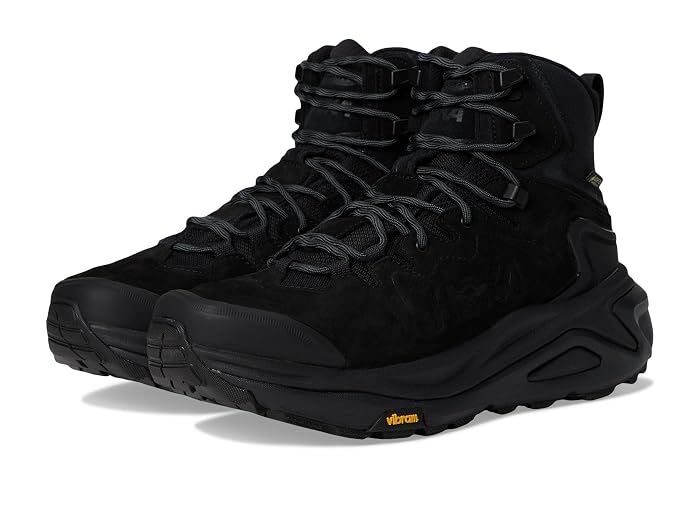
The Lowa Renegade Evo GTX Mid provides exceptional torsional stability through its external TPU MONOWRAP frame, offering more structured support than the soft, unstructured upper of the Arc'teryx Kopec Mid. Its firm polyurethane midsole is notably less forgiving than the plush dual-density EVA found in the Hoka Kaha 3 GTX, making it better suited for rugged protection than soft comfort.
Rating sources
Counts as 4.16/5 in our score — this publisher's 149 scores on the site average 3.69, so its scores are adjusted up to compare fairly with other publishers.
Counts as 4.21/5 in our score — this publisher's 36 scores on the site average 4.38, so its scores are adjusted down to compare fairly with other publishers.
Counts as 4.50/5 in our score — this publisher's 60 scores on the site average 4.49, so its scores are adjusted down to compare fairly with other publishers.
Counts as 3.96/5 in our score — this publisher's 4 scores on the site average 4.25, so its scores are adjusted down to compare fairly with other publishers.
Our 4.2 score is the average of the 4 scored reviews above, each adjusted for how strictly its publisher scores; 8 more reviewed it without printing a score and are not in the average. More about methodology.