Prosettings found the Logitech G PRO X SUPERLIGHT 2 retains a safe ambidextrous shape that fits nearly every grip style, while Techpowerup confirmed its HERO 2 sensor supports up to 8000 Hz polling for reliable wireless performance. The addition of USB-C charging and optical LIGHTFORCE switches addresses previous complaints about proprietary cables and double-clicking faults, though the clicks feel noticeably heavier than on earlier versions. This tactile shift may not suit users accustomed to ultra-light actuation, and the new straight U-shaped bottom skates render third-party replacements from the original model incompatible. The mouse fits competitive players prioritizing sensor precision and durability over customizable glide surfaces or a featherlight click.
Full review
Ambidextrous shape fits nearly every grip
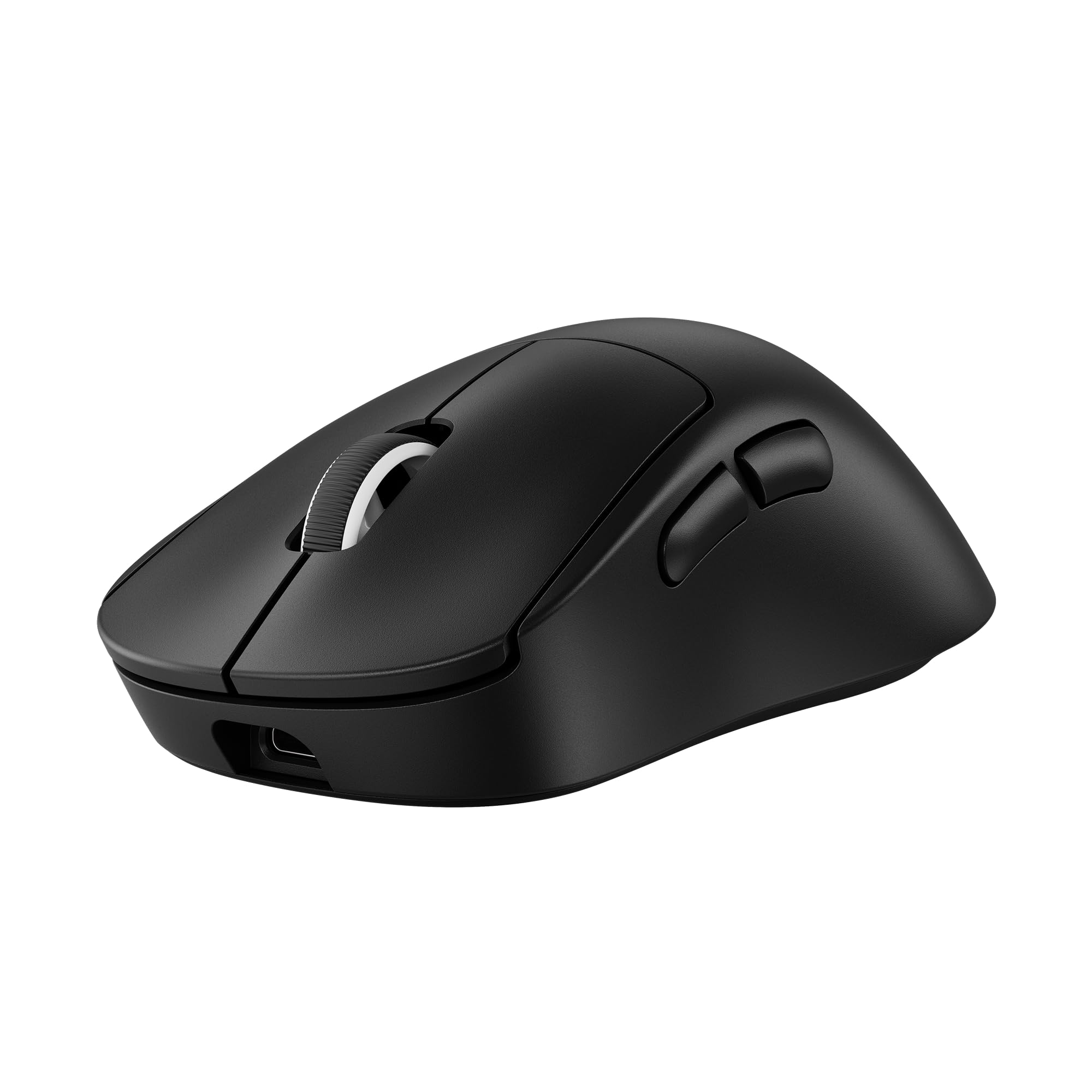
Prosettings evaluated the Logitech G Pro X Superlight 2 and found its design to be a highly conservative evolution of an already dominant form factor. The mouse retains the classic ambidextrous silhouette that has made it the standard issue in professional esports for years, This shape is widely regarded as safe and versatile, accommodating a massive range of hand sizes and grip styles without forcing the user into an uncomfortable posture. The physical dimensions remain consistent enough that veterans switching from previous generations will feel immediately at home.
The external shell does not announce its identity to casual observers; the side panels still bear the "Superlight" branding rather than explicitly labeling it as a second-generation model. This deliberate lack of visual distinction underscores Logitech's strategy of prioritizing functional upgrades over aesthetic shifts. The result is a mouse that feels familiar from the moment it is picked up, offering a sense of reliability through its unchanging external geometry while quietly integrating modern internal components underneath.
Heavier click actuation alters tactile feedback
The most immediate physical difference between the Superlight 2 and its predecessor is found in the button actuation. Prosettings noted that the clicks feel noticeably heavier and more solid than on earlier versions of the mouse. This change stems from Logitech's adoption of LIGHTFORCE hybrid optical switches, which were introduced to permanently eliminate the double-clicking issues that plagued mechanical switches in previous iterations. The tactile response is firmer, providing a distinct physical confirmation with every press.
While this heavier actuation contributes to the switch's durability and reliability, it represents a significant departure from the light, airy click feel that many long-time Superlight users were accustomed to. This specific trade-off means that players who prefer an ultra-light touch might find the new switches jarring or fatiguing over extended sessions. The change is not necessarily negative in terms of performance, but it fundamentally alters the tactile experience and may require a brief adjustment period for those transitioning from older models.
Optical switches eliminate double-clicking faults
Addressing one of the most persistent complaints about gaming mice, Logitech equipped the Superlight 2 with LIGHTFORCE hybrid optical switches. Prosettings highlighted that this addition directly targets and resolves the hardware failures associated with older mechanical microswitches. By utilizing an optical beam to register clicks rather than physical metal contacts, the mouse effectively removes the risk of double-clicking errors during critical gameplay moments. This upgrade ensures a much higher level of reliability for competitive players who cannot afford input failure.
The implementation of these switches does not just fix a defect; it future-proofs the device against wear and tear that typically degrades mechanical switches over time. Reviewers found this to be a crucial improvement, particularly given the mouse's target audience of high-volume esports athletes. The hybrid nature of the switch combines the speed benefits of optical triggering with the familiar tactile feedback of a physical button, creating a durable solution that maintains the responsiveness gamers expect.
USB-C port modernizes charging workflow
The inclusion of a USB-C charging port on the Logitech G Pro X Superlight 2 marks a significant shift in convenience compared to the proprietary connectors used in earlier generations. Prosettings described this change as highly welcome, finally aligning the mouse with modern charging standards and eliminating the need for specialized cables or dongles just to power the device. This upgrade simplifies the user experience by allowing gamers to use common USB-C cables found on smartphones and other peripherals.
This practical improvement removes a major friction point from the ownership cycle. Users no longer have to worry about losing a unique, proprietary charging cable that was often difficult to replace or source. The move toward universal connectivity reflects a broader industry trend and ensures that the Superlight 2 remains compatible with the widest possible range of power sources, making it easier to keep the mouse charged during long gaming sessions without hunting for specific accessories.
Straight U-shaped skates block third-party upgrades
A subtle but impactful design change is found on the bottom of the mouse, where Logitech altered the shape of the main skate. Prosettings identified this modification as a less welcome change because it renders third-party replacement skates from the original Superlight model completely incompatible. The new back skate features a straight U-shape that differs significantly from its predecessor's geometry.
This incompatibility forces users who rely on aftermarket glide pads to purchase specific replacements designed for the second-generation model, or risk using ill-fitting parts that could negatively impact performance. For enthusiasts who frequently swap skates to tune their mouse's friction and speed characteristics, this change adds a layer of inconvenience and cost. It highlights how even minor physical alterations can disrupt established user workflows and accessory ecosystems.
HERO 2 sensor supports up to 8000 Hz polling
Under the hood, the Logitech G Pro X Superlight 2 utilizes the advanced HERO 2 sensor, which delivers extremely reliable wireless performance. Techpowerup confirmed that this sensor supports a maximum polling rate of 8000 Hz, providing exceptional responsiveness and precision for competitive gaming. The sensor's capabilities ensure that every movement is tracked accurately without any acceleration or smoothing artifacts.
This high polling rate allows the mouse to communicate with the PC eight times more frequently than traditional 1000 Hz devices, reducing input latency significantly. For fast-paced tactical shooters where milliseconds matter, this technical specification provides a tangible advantage. The combination of the HERO 2 sensor and stable wireless transmission ensures that the mouse performs consistently under pressure, maintaining its status as a top-tier tool for professional players.
G HUB calibration simplifies DPI adjustments
Logitech's G HUB software includes a dedicated sensor calibration tool that Prosettings found to be genuinely useful for fine-tuning the mouse's performance. This feature allows users to calibrate the sensor directly through the software, ensuring optimal tracking accuracy and consistency across different surfaces. The presence of this tool adds a layer of customization that goes beyond simple DPI switching.
The ability to calibrate the sensor addresses potential issues with tracking uniformity, which can sometimes occur due to manufacturing variances or specific mousepad interactions. By providing users with direct control over these parameters, Logitech empowers them to achieve peak performance from their hardware. This software feature complements the high-quality hardware, ensuring that the Superlight 2 performs exactly as intended for each individual user.
59-gram weight defines ultra-light category
The weight distribution is carefully balanced to complement the ambidextrous shape, ensuring that the mouse feels nimble regardless of how it is held. While other manufacturers have pushed weights even lower, the 59-gram figure represents a sweet spot for many users who prioritize durability and battery life alongside lightness. The combination of low weight and robust build quality makes this mouse a strong contender in the high-end esports market.
Strengths
- +Super safe and versatile shape that reviewers found fits a wide range of hand sizes and grip styles.
- +Extremely reliable wireless performance with the new HERO 2 sensor supporting up to 8000 Hz polling rate.
- +Addition of USB-C charging port addresses a major complaint from users of the previous generation.
Watch-outs
- −Clicks feel noticeably heavier and more solid than on earlier Superlight versions, which may not suit everyone's preference.
- −Bottom skate shape was changed to a straight U-shape, rendering third-party skates from the original model incompatible.
How it compares
This mouse offers a significantly higher maximum DPI of 32,000 compared to the Logitech G305 LIGHTSPEED's 12,000 and supports an 8000 Hz polling rate versus the G305's 1000Hz. It provides USB-C charging which addresses a major limitation of the G305, while maintaining a lighter weight than the Logitech G502 X PLUS.
Price history At its highest tracked price
9 daily reads from amazon.com since Oct 29, 2026. Lowest $143.85 (Oct 31), highest $157 (Nov 3), latest $157 (Nov 8).
Rating sources
Counts as 4.88/5 in our score — this publisher's 87 scores on the site average 3.98, so its scores are adjusted up to compare fairly with other publishers.
Counts as 4.18/5 in our score — this publisher's 95 scores on the site average 3.98, so its scores are adjusted up to compare fairly with other publishers.
Counts as 4.52/5 in our score — this publisher's 156 scores on the site average 4.15, so its scores are adjusted up to compare fairly with other publishers.
Counts as 4.42/5 in our score — this publisher's 195 scores on the site average 4.25, so its scores are adjusted down to compare fairly with other publishers.
Our 4.5 score is the average of the 4 scored reviews above, each adjusted for how strictly its publisher scores; 2 more reviewed it without printing a score and are not in the average. More about methodology.