The Lemokey P1 HE Wireless features a heavy 3.6 lb full aluminum body and Gateron double-rail magnetic switches that allow adjustable actuation from 0.2mm to 3.8mm with rapid trigger functionality. Gamepadsquire found the dense chassis eliminates flex, while Howtogeek noted the tenkeyless layout provides ample mouse space for users with larger hands. The keyboard supports quad-actuation thresholds per key and tri-mode connectivity, though RTINGS rates the software integration as excellent for managing these complex profiles. Quality control issues include reports of key chatter, dead switches, and wireless dropouts that create a lottery-like reliability experience. This stationary desk tool fits competitive gamers seeking customizable input speed but may disappoint users prioritizing consistent quality or portable form factors.
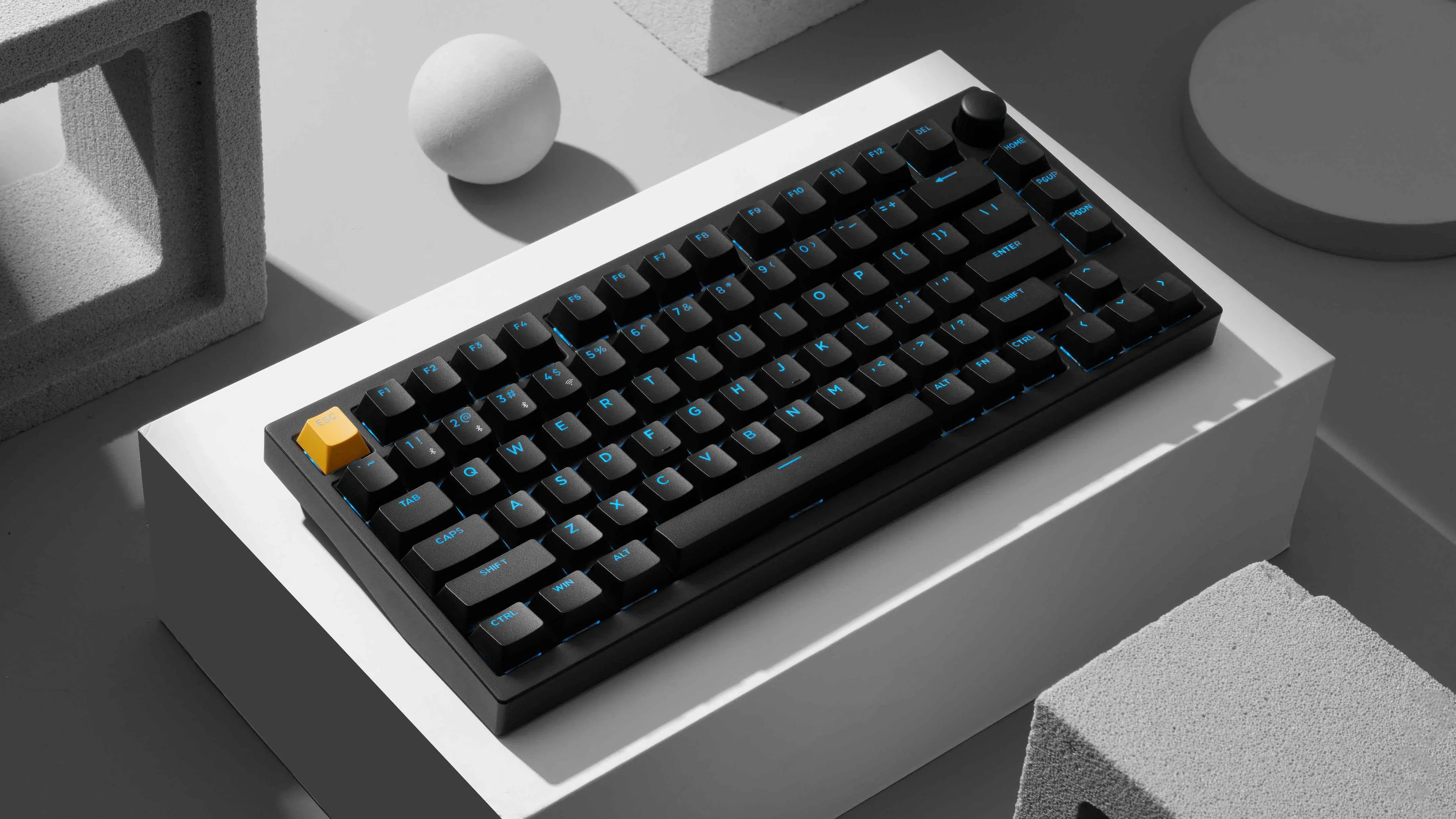
Full review
Full aluminum chassis and gasket mount construction
The Lemokey P1 HE utilizes a full metal frame that Gamepadsquire describes as weighing 1630 grams, which translates to roughly 3.6 pounds of dense material in the final assembly. This substantial mass anchors the keyboard firmly on any desk surface, preventing unwanted sliding during intense gaming sessions or rapid typing workflows.
Inside this rigid shell sits a gasket mount system designed to isolate the PCB from the case, allowing for a degree of flex and acoustic dampening. RTINGS notes that this construction contributes to an excellent typing feel across office and programming tasks, creating a deep, thocky sound profile that many enthusiasts prefer over the sharper clacks of plate-mounted designs. The combination of the heavy aluminum body and the gasket suspension results in a unit that feels premium and stable, though it firmly categorizes the P1 HE as a stationary desk tool rather than a portable peripheral.
The structural integrity is further reinforced by screw-in PCB stabilizers, which Gamepadsquire highlights as consistently rattle-free compared to traditional wire-based stabilization methods. This hardware choice ensures that larger keys like spacebar and shift maintain consistent feedback without the loose wobble often found in budget mechanical keyboards. The rigid connection between the plate and the case provides a solid foundation for the switches, ensuring that actuation feels precise regardless of where on the board the key is pressed.
Gateron double-rail magnetic switch performance
At the core of the P1 HE are Gateron Double-Rail Magnetic switches, which enable Hall Effect technology to function without physical contact points. Gamepadsquire specifies that these switches offer an adjustable actuation range from 0.2mm to 3.8mm with a sensitivity step of just 0.1mm. This granular control allows users to customize the trigger point for every individual key, enabling rapid fire in shooters by setting actuation to the shallowest possible threshold while keeping typing keys deeper to prevent accidental presses.
The magnetic nature of these switches also unlocks Rapid Trigger functionality, a feature that resets the actuation point immediately upon release rather than waiting for the key to return to its physical peak. This capability is critical for competitive gaming where split-second reactions determine outcomes, allowing players to strafe and reverse direction with minimal input delay. The linear feel of the Gateron switches, lacking the tactile bump found in traditional mechanical variants, further enhances this speed by reducing friction during long travel distances.
For non-gaming tasks, these switches provide a smooth typing experience that many reviewers have compared to soft ceramic or deep marbles due to the pre-lubed factory condition. The double-rail design guides the stem vertically with high precision, minimizing wobble and ensuring consistent actuation across millions of keystrokes. This combination of speed and smoothness makes the P1 HE versatile enough for both high-stakes gaming and extended coding sessions where finger fatigue is a concern.
Quad-actuation system and software customization
Beyond standard actuation adjustment, the Lemokey P1 HE introduces a quad-actuation system that allows four distinct thresholds to be programmed per key. This feature enables complex input mapping where different depths of press trigger different actions or macros, adding a layer of strategic depth for gaming and productivity workflows. Howtogeek notes that this software-enabled functionality transforms the keyboard from a simple input device into a highly customizable control surface capable of handling intricate command sequences.
The customization is managed through a web-based launcher that requires a Chromium browser such as Chrome or Edge to function properly. This digital approach allows for deep profiling across different applications, ensuring that gaming settings do not interfere with office work modes. The ability to save these profiles directly to the keyboard’s onboard memory means users can switch between devices without needing to reinstall software, maintaining their specific actuation curves and macro assignments wherever they plug in.
RTINGS rates the software integration as excellent for both gaming and programming use cases because it provides immediate feedback on configuration changes. The interface allows users to fine-tune not just actuation points but also RGB lighting effects, which can be synchronized across the 81 keys of the tenkeyless layout. This level of control ensures that the keyboard adapts to the user’s specific needs rather than forcing a one-size-fits-all experience.
Tenkeyless layout and physical dimensions
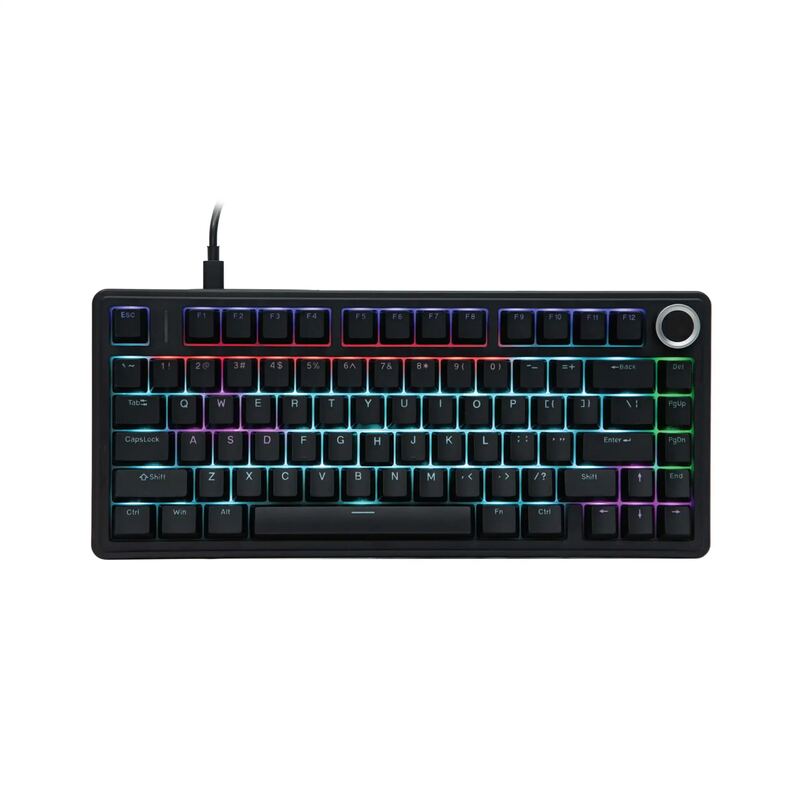
The P1 HE adopts a 75% tenkeyless layout that retains the arrow cluster and function row while eliminating the numeric keypad. This configuration measures approximately 12.68 inches in width, providing ample space for mouse movement on standard desks without sacrificing essential navigation keys. Howtogeek highlights this spacious arrangement as particularly beneficial for users with larger hands who find smaller 60% or 65% boards cramped during extended use.
A prominent feature of this layout is the inclusion of a clickable rotary encoder knob positioned where volume controls typically reside on full-size boards. This analog dial offers precise control over system volume and media playback, serving as a tactile alternative to software-based adjustments. The placement keeps frequently used navigation keys within easy reach while maintaining a clean aesthetic that avoids the clutter of dedicated macro pads or secondary function layers.
The keycaps themselves are double-shot PBT plastic in the Cherry profile, chosen for their durability and resistance to shine over time. Howtogeek points out that the version with shine-through legends significantly enhances the RGB backlighting experience by allowing light to diffuse evenly through each character. This design choice improves visibility in low-light environments while adding a vibrant visual element that distinguishes the P1 HE from more subdued office keyboards.
Wireless connectivity and battery endurance
Connectivity options include true tri-mode support via 2.4 GHz wireless, Bluetooth 5.2, and a wired USB-C connection. The 2.4 GHz dongle provides a polling rate of 1000Hz, ensuring minimal latency that matches the performance of wired setups for competitive gaming. Bluetooth mode drops to 125Hz, which is sufficient for office tasks but may introduce noticeable lag in fast-paced games where every millisecond counts.
Powering this wireless functionality is a 4000 mAh internal battery that Gamepadsquire estimates can deliver up to 100 hours of runtime on a single charge. This endurance level allows users to go weeks without plugging in the keyboard, even with RGB lighting active. The USB-C charging port supports convenient recharging without requiring proprietary cables, and the included adapter allows the dongle to attach directly to the cable for compact storage.
While the wireless performance is generally robust, some reports indicate occasional dropouts on the 2.4 GHz connection that require reseating the receiver or restarting the keyboard. These instances are not universal but represent a potential inconsistency in the wireless module’s stability under certain environmental conditions. Users who prioritize absolute reliability may prefer to keep the dongle close to the USB port or utilize the wired mode for critical sessions.
Quality control inconsistencies and switch limitations
Despite its high-end materials, the P1 HE has faced documented quality control issues that potential buyers should consider. Gamepadsquire notes reports of key chatter, dead switches, and wireless dropouts appearing across Amazon listings and Reddit threads, creating a lottery-like experience where some units arrive flawless while others require immediate returns or repairs. This inconsistency suggests variability in factory assembly processes that can affect long-term reliability.
The hot-swap PCB is another area of restriction, as it only accepts Gateron Double-Rail Magnetic switches. Unlike many mechanical keyboards that support a wide variety of switch brands and types, the P1 HE’s socket design limits users to Keychron’s proprietary magnetic variants. This constraint prevents enthusiasts from experimenting with third-party switches or upgrading to different actuation characteristics without replacing the entire PCB.
Howtogeek also observes that while the keyboard lacks the distinctive aluminum finish of its mechanical predecessor, the P1 Pro, it compensates with a more functional gaming-focused design. The trade-off between aesthetic uniqueness and practical performance is evident in the homogenized look that prioritizes utility over visual flair. This decision makes the P1 HE a serious tool for gamers but may disappoint users who value distinctive industrial design as much as technical specifications.
Strengths
- +Full aluminum body construction provides a solid, rattle-free feel and weighs 3.6 lb.
- +Gateron double-rail magnetic switches offer adjustable actuation from 0.2mm to 3.8mm with 0.1mm sensitivity.
- +Includes rapid trigger functionality alongside quad-actuation thresholds for advanced gaming control.
Watch-outs
- −Hot-swappable PCB is limited to Gateron double-rail magnetic switches only.
- −Quality control issues include reports of key chatter, dead switches, and wireless dropouts.
How it compares
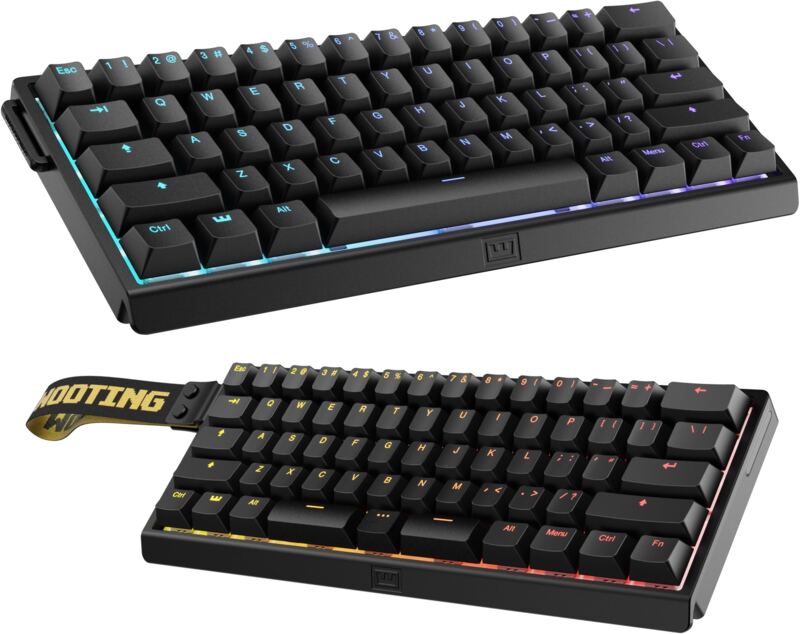
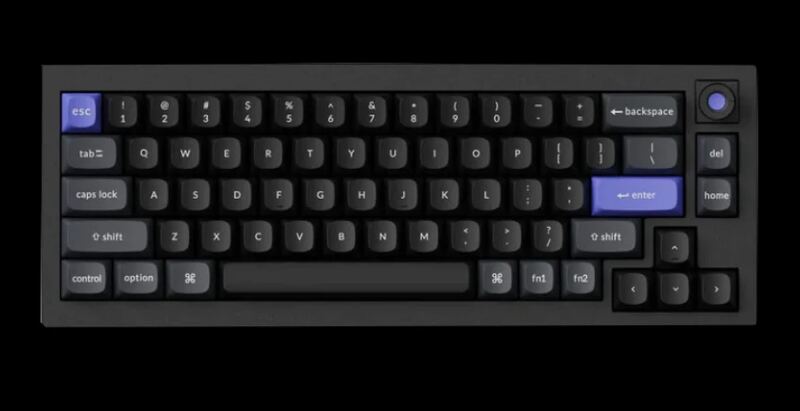
The Lemokey P1 HE Wireless shares the full aluminum body and Gateron double-rail magnetic switches with the Keychron Q1 HE, but offers quad-actuation thresholds for more granular control. It differs from the Wooting 60HE v2 by providing wireless connectivity options instead of being strictly wired-only.
Rating sources
Counts as 4.58/5 in our score — this publisher's 87 scores on the site average 3.98, so its scores are adjusted up to compare fairly with other publishers.
Counts as 4.24/5 in our score — this publisher's 18 scores on the site average 3.86, so its scores are adjusted up to compare fairly with other publishers.
Our 4.4 score is the average of the 3 scored reviews above, each adjusted for how strictly its publisher scores; 1 more reviewed it without printing a score and is not in the average. More about methodology.