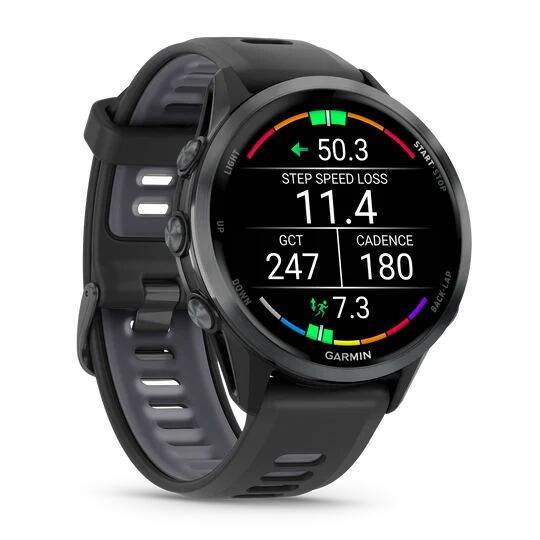
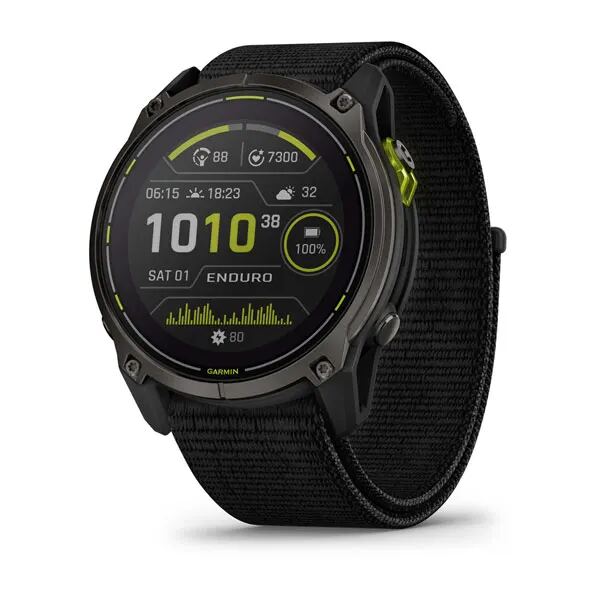
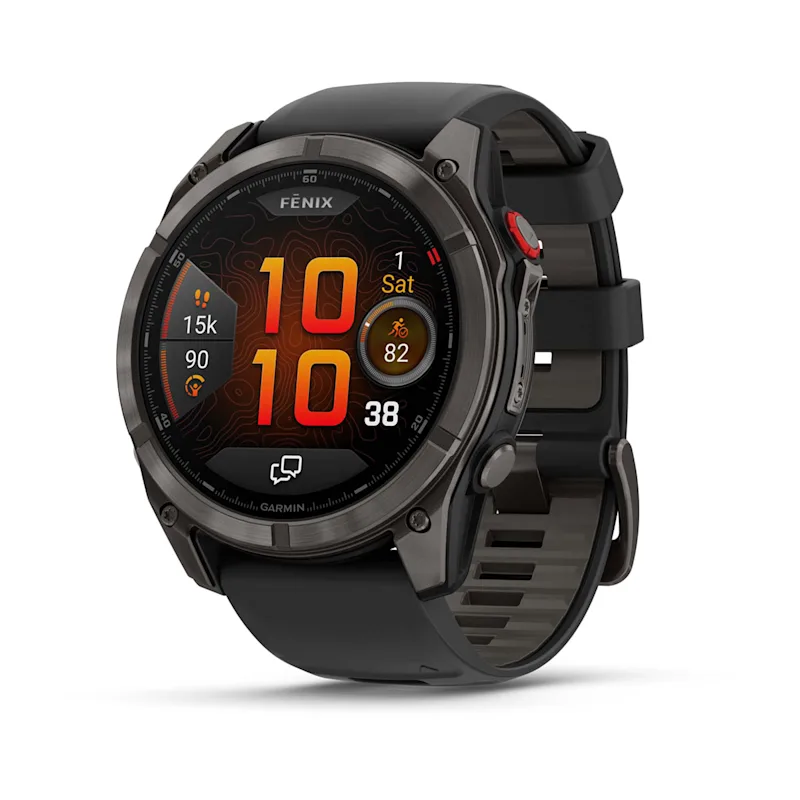
The Garmin Fenix 8 Pro delivers exceptional battery life in smartwatch mode, lasting up to 15 days on the 51mm model, and features a bright 454x44 pixel AMOLED display with sapphire crystal. Bettertrail found its titanium bezel and MIL-STD-810 durability justify the premium positioning for expedition-ready use, while Oracleoftime confirmed the sharp visuals enhance navigation during activities like backcountry skiing. However, the watch is extremely expensive, starting at $1200 for the 47mm version, and lacks a smaller case size option, making it bulky and heavy for everyday wear. Additionally, satellite connectivity features require an ongoing monthly subscription plan, which adds to the total cost of ownership compared to competitors offering free basic SOS services.
Full review
The $1200 price tag and titanium build
Bettertrail found the Garmin Fenix 8 Pro to be an expedition-ready GPS watch that justifies its premium positioning through rugged construction, though it demands a significant financial commitment from buyers.
The physical build supports this high-end positioning with a titanium bezel and back, paired with a sapphire crystal lens that Bettertrail described as adding palpable polish to the overall user experience. Oracleoftime confirmed the case measures 16mm thick and weighs 77g on the 47mm model, noting it wears better than raw numbers suggest despite being thicker than standard Fenix models. The watch is tested to MIL-STD 810 for thermal and shock resistance, ensuring it can handle extreme environments while maintaining a premium aesthetic suitable for daily wear alongside mechanical watches.
Bulkier dimensions limit wrist compatibility
Theruntesters identified the Fenix 8 Pro's lack of smaller case sizes as a significant drawback, noting that Garmin omitted the 43mm model available on other watches in the lineup. The watch is only offered in 47mm and 51mm versions, making it an inherently large device for those with thinner wrists or those who prefer discreet daily wear. Theruntesters explicitly stated that the extra girth of the 51mm version yields excellent battery life but makes the watch noticeably bulky compared to lighter alternatives like the Forerunner 970.
While Oracleoftime found the 16mm thickness to be slimmer than a Rolex Deepsea, the physical presence of the watch remains undeniable. Shoppers who prioritize comfort during sleep tracking or all-day casual wear will find the substantial footprint intrusive, whereas those seeking maximum battery endurance may view the larger case size as an acceptable trade-off for extended off-grid performance.
AMOLED display brightness and clarity
Oracleoftime highlighted that the 454 by 454 pixel AMOLED display is a major upgrade over previous MIP-based Fenix screens, offering significantly brighter and more vibrant visuals. Theguardian described the screen as large, sharp, and super-bright on the touchscreen, capable of showing detailed data or traditional watch faces with ease. This high-resolution panel allows for crisp rendering of topographic maps and training metrics, ensuring legibility even in direct sunlight without requiring constant brightness adjustments.
The interface benefits from this display technology, as Bettertrail noted that the optional touchscreen adds a polished layer to Garmin's familiar five-button layout. Oracleoftime found the pushers feel distinct from other Garmins, sitting somewhere between a button and a pusher with nicely judged haptic feedback that enhances the premium feel. The combination of sharp visuals and responsive controls makes navigating complex menus during activities like backcountry skiing or mountaineering significantly more intuitive than on older monochrome displays.
Cellular connectivity and subscription costs
The Fenix 8 Pro introduces LTE calling, messaging, and live tracking alongside inReach satellite features, but Theguardian emphasized that these capabilities require an ongoing monthly subscription rather than being included for free.
Bettertrail found that the execution of these connectivity features is imperfect due to the physical limitations of fitting a satellite antenna into a watch case. Satellite connectivity can be finicky, requiring users to hold still for signal acquisition in dense tree cover or deep valleys. Theguardian noted that while LTE works well within cellular range for making calls and sending texts via the Garmin Messenger app, relying on it as a primary lifeline demands careful battery management and an understanding of its coverage gaps compared to dedicated handheld satellite communicators.
Satellite messaging speed and interface
OutdoorGearLab measured the Fenix 8 Pro's satellite performance, awarding it a perfect score for SOS/Emergency Messaging but noting that non-emergency texting is slow and basic. The outlet found the signal coverage to be limited compared to dedicated handheld devices, describing the interface as demanding rather than slick. While the watch successfully sends and receives two-way texts via the Skylo network, users should expect delays in transmission times when navigating remote areas without cellular assistance.
Theguardian detailed how messaging works on the tiny screen, noting that typing out full text messages is slow due to the limited keyboard space. To mitigate this, Garmin provides customizable canned responses and voice-to-text capabilities for both sending and receiving messages. The recipient does not need a Garmin account to receive texts via SMS, but accessing voice messages or transcriptions requires them to download the Garmin Messenger app. This friction can hinder communication in emergency situations where speed is critical.
GPS accuracy and training metrics
Bettertrail found that GPS tracking on the Fenix 8 Pro was consistent and reliable, producing distance, pace, and heart rate metrics nearly identical to those of the Forerunner 970 when tested side-by-side. The watch supports multi-band GPS with SatIQ technology, which automatically balances accuracy and battery life by selecting the best available satellite signals. This ensures that runners and hikers receive precise route mapping without prematurely draining the battery during long endurance events.
Theruntesters confirmed that heart rate tracking consistently matched up well with chest straps throughout their testing period, validating the optical sensor's reliability for high-intensity interval training. The watch supports an expansive range of 99 activities, from standard running and cycling to niche pursuits like backcountry skiing and scuba diving. Oracleoftime added that performance analytics remain top-tier, offering features like Training Readiness scores, VO2 max estimates, and adaptive suggested workouts that help users train harder and smarter.
Battery life across usage modes
The Fenix 8 Pro delivers exceptional endurance in smartwatch mode, lasting up to 15 days on the 51mm model with always-on display enabled. Theruntesters noted that the larger case size yields excellent battery life despite the power demands of the bright AMOLED screen and continuous cellular connectivity features. Oracleoftime confirmed this longevity, stating that Garmin's endurance remains unmatched compared to competitors like Apple and Samsung in daily use scenarios where the screen sleeps when not in active use.
OutdoorGearLab rated the battery performance at five out of ten points due to the heavy drain caused by satellite tracking and live location sharing features. Users planning multi-day expeditions must carefully manage their power settings, as continuous dual-band GPS usage will deplete the battery much faster than standard daily wear patterns.
Built-in flashlight utility
Bettertrail initially dismissed the built-in LED flashlight as gimmicky but found it genuinely useful in field conditions, such as navigating a dark trail when a headlamp failed. The feature provides multiple brightness settings and a red-light mode that preserves night vision while offering enough visibility to safely traverse rooty terrain. This small addition adds real utility for hikers and campers who need a secondary light source without carrying extra gear.
Theguardian highlighted the flashlight as part of the watch's comprehensive toolset, alongside its navigation features like routable maps and dynamic round-trip routing. These capabilities allow users to create routes on the fly in new locations or guide themselves back home safely if they get lost. The combination of visual aids, lighting, and offline mapping makes the Fenix 8 Pro a robust companion for off-grid adventures where smartphone reliance is impossible.
Diving capabilities and water resistance
Dcrainmaker noted that this addition includes profiles for both scuba and apnea diving, along with widgets for tracking no-fly times and surface intervals. The watch is water-resistant to 10 ATM, making it suitable for swimming and snorkeling, though the metal buttons are designed to be leak-proof even under pressure.
Oracleoftime confirmed that while the 100-meter rating does not imply saturation diving capabilities, the device is fully dive-rated for recreational use. The inclusion of a depth sensor allows users to monitor their descent and ascent rates accurately during dives. This functionality expands the watch's utility beyond land-based activities, making it a viable tool for water sports enthusiasts who require reliable tracking underwater without relying on a smartphone.
Strengths
- +Exceptional battery life in smartwatch mode, lasting up to 15 days on the 51mm model.
- +Bright and sharp 454x454 pixel AMOLED display with sapphire crystal lens.
- +Premium expedition-ready build featuring a titanium bezel and MIL-STD-810 durability rating.
Watch-outs
- −Extremely expensive, with the 47mm version starting at $1,200.
- −Bulky and heavy for everyday wear, lacking a smaller case size option.
- −Satellite connectivity features require an ongoing monthly subscription plan.
How it compares
The Garmin Fenix 8 Pro has a 1.4-inch AMOLED display like the Garmin Forerunner 970, with a 10 ATM water rating where the Forerunner 970 lists 5 ATM. Its GPS battery life is listed at 23 hours for the 47mm case and 41 hours for the 51mm, against 120 hours for the Garmin Enduro 3. At 77g in the 47mm size it is heavier than the 56g Garmin Forerunner 970.
Rating sources
Counts as 4.21/5 in our score — this publisher's 36 scores on the site average 4.38, so its scores are adjusted down to compare fairly with other publishers.
Counts as 3.86/5 in our score — this publisher's 149 scores on the site average 3.69, so its scores are adjusted up to compare fairly with other publishers.
Our 4.0 score is the average of the 2 scored reviews above, each adjusted for how strictly its publisher scores; 4 more reviewed it without printing a score and are not in the average. More about methodology.