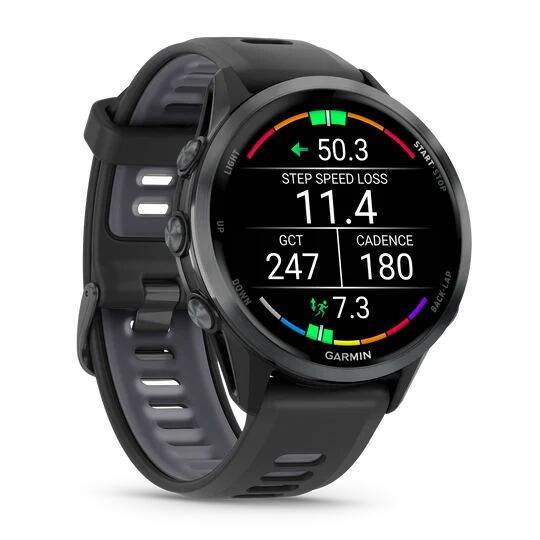
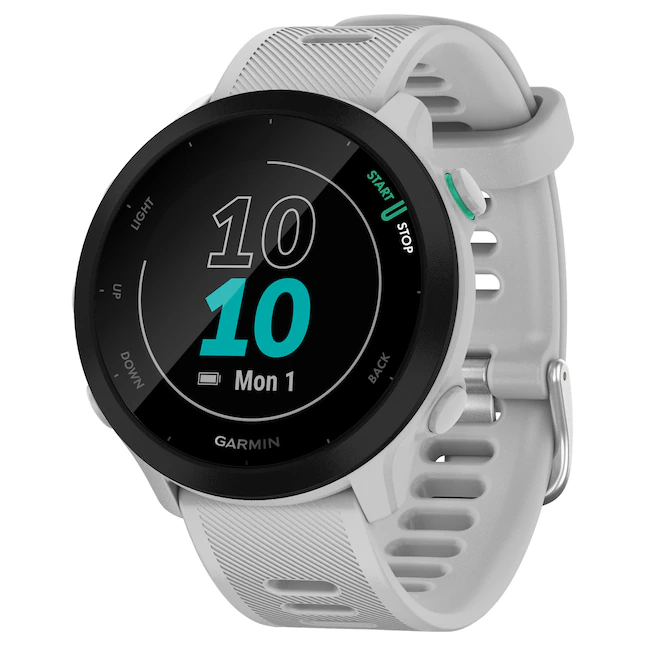
The Garmin Forerunner 55 delivers reliable GPS distance accuracy and precise heart rate monitoring via its Elevate V3 sensor, making it a strong entry-level choice for runners. Dcrainmaker found the inclusion of PacePro dynamic pacing guidance to be a significant value-add at this price point, while Runningshoesguru highlighted how Garmin Coach adaptive training plans help users transition from basic fitness tracking to structured routines. However, the watch lacks true offline navigation with map visuals and features a lower-resolution Memory-In-Pixel display without touchscreen controls. OutdoorGearLab noted that these interface limitations are deliberate trade-offs for cost efficiency but restrict its utility for complex trail exploration. This device fits beginners seeking core metrics in a lightweight 37g form factor, whereas experienced hikers or those demanding high-definition screens should look elsewhere.
Full review
Entry-level GPS watch positioning
The Garmin Forerunner 55 occupies a distinct niche as the brand's most affordable running watch, designed specifically for individuals who need core tracking capabilities without the premium price tag of higher-end models. Dcrainmaker observed that while it lacks the fancier features found in the Forerunner 245 or 945 series, it successfully delivers the essential run tracking metrics that define a functional GPS device. This positioning makes it an attractive option for beginners who do not require advanced multisport tools but still want reliable data to monitor their progress.
Runningshoesguru emphasized that this watch serves as a significant upgrade from basic fitness trackers, offering features like daily suggested workouts and recovery time estimates that help users transition into more serious training routines. The device provides running power compatibility through Connect IQ support for third-party sensors like Stryd, bridging the gap between simple step counting and comprehensive athletic analysis without requiring a substantial financial investment.
Runnersworld noted that despite being released in 2021, the watch remains a capable option for those who prefer simplicity over complexity. The device avoids unnecessary bells and whistles, focusing instead on delivering accurate GPS tracking, optical heart rate monitoring, and smart notifications within a compact form factor. This streamlined approach ensures that new runners are not overwhelmed by data they do not yet understand or need.
GPS track smoothness versus distance accuracy
OutdoorGearLab recorded highly accurate distance measurements during their evaluation, finding the Forerunner 55 was only off by 0.08 miles on a predetermined 2.80-mile route that included significant elevation changes. This level of precision suggests the GPS chipset performs reliably even when navigating hilly terrain, providing runners with trustworthy data regarding total mileage and pace calculations during workouts.
Mountaineerjourney reported a slightly different experience regarding track quality, noting that while distance accuracy was solid with an average variance of just 0.06 miles over their testing routes, the actual GPS lines appeared very squiggly on the map. They cross-referenced these tracks against mapped GPX routes and found elevation readings to be off by approximately 4-5 feet during hikes. This discrepancy between distance accuracy and track smoothness can cause confusion when following pre-planned maps in unfamiliar terrain.
The contrast between these findings highlights a trade-off inherent in the device's GPS implementation. While the numerical data regarding pace and total distance remains dependable for training purposes, the visual representation of the route may not always align perfectly with physical trails. Runners relying on visual navigation aids might find this limitation frustrating, whereas those focused solely on performance metrics will likely remain satisfied with the distance precision.
Heart rate sensor reliability
The optical heart rate monitoring system utilizes Garmin's Elevate V3 sensor, which has been validated against medical-grade chest straps in independent testing. OutdoorGearLab compared the Forerunner 55 readings to a Polar H10 chest strap and found the watch was only off by plus or minus 1.68 beats per minute during half-mile runs. This tight variance demonstrates that the sensor provides highly reliable data even at higher exercise intensities, matching the performance of more expensive Garmin models.
Mountaineerjourney conducted similar comparisons using their own Polar H10 reference and recorded an average variance of just 1.8 beats per minute across various conditions including summer running and winter hiking. This consistency confirms that the heart rate tracking is accurate enough for precise training zones, allowing users to trust their physiological data when structuring interval sessions or monitoring recovery efforts.
Dcrainmaker highlighted that this level of sensor accuracy is particularly impressive given the watch's budget positioning. The reliability of the Elevate V3 sensor ensures that beginners and intermediate athletes alike can utilize heart rate data for structured workouts without needing to purchase a separate chest strap immediately, simplifying the entry into data-driven training.
Navigation limitations in trail environments
The Forerunner 55 lacks true offline navigation capabilities, offering only basic breadcrumb GPS tracking for known routes rather than full map visuals or turn-by-turn guidance. Mountaineerjourney explicitly stated that the watch will not cover needs for off-grid mapping support on remote trails or unfamiliar terrain, making it unsuitable for hikers who require reliable orientation tools in complex environments.
OutdoorGearLab reinforced this limitation by noting that the device cannot be recommended to users wanting to get off the beaten path. While the breadcrumb feature allows for simple route following if a GPX file is pre-loaded, the absence of visual map data means runners must rely entirely on audio cues or prior knowledge of the trail layout. This restriction confines the watch primarily to road running and familiar loop trails.
Runnersworld confirmed that the lack of advanced navigation tools is a deliberate trade-off for the lower price point. The device focuses on tracking performance metrics rather than route finding, which suits beginners who typically run in safe, predictable environments like parks or neighborhood streets but falls short for adventurous trail runners seeking exploration capabilities.
Display resolution and interface design
The 1.04-inch Memory-In-Pixel display provides a sunlight-visible screen that is easily readable in direct light, though it lacks the pixel density found on premium Garmin models. OutdoorGearLab noted that while the color screen is vivid, the lower resolution can result in slight pixelation when viewing detailed data fields or maps. This trade-off keeps costs down but reduces visual clarity compared to higher-end devices.
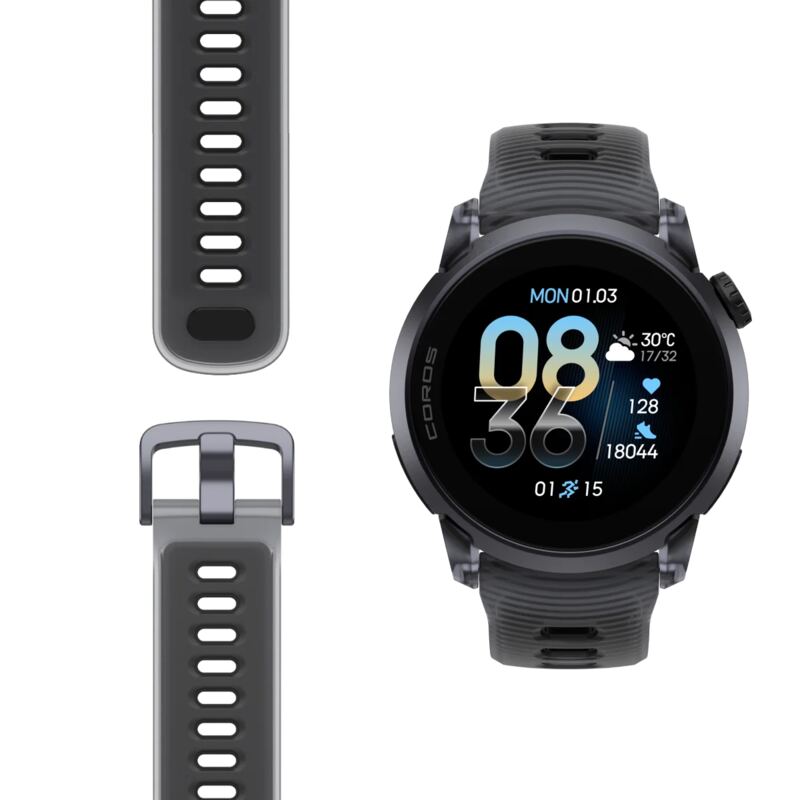
Runnersworld observed that the display quality is noticeably inferior to closest-price rivals like the Coros Pace 3, yet it remains functional for its intended audience. The screen displays time, date, battery life, and customizable data fields without a touchscreen interface, relying instead on five physical buttons around the face. This button-only design ensures precise control even when hands are sweaty or wet, avoiding the accidental inputs common with touchscreens.
Treelinereview appreciated the simplicity of the interface for users unfamiliar with complex smartwatches. The discrete buttons and straightforward menu system make navigation intuitive, allowing new runners to focus on their workout rather than deciphering complicated gestures. The lack of a touchscreen also contributes to the device's durability and battery efficiency.
Battery performance in GPS mode
Garmin claims up to 20 hours of battery life in GPS mode, which OutdoorGearLab found sufficient for most single-day running activities but noted as shorter than some competitors offering extended endurance. Mountaineerjourney recorded approximately 17.5 hours of actual GPS usage during their testing, depending on brightness settings and other variables. This duration comfortably covers marathon distances and long training runs without requiring mid-activity charging.
In smartwatch mode with daily notifications and heart rate tracking enabled, the device lasts up to two weeks according to manufacturer specifications. Runningshoesguru described this battery life as impressive for the price point, allowing users to wear the watch continuously for sleep tracking and daily activity monitoring without frequent recharging interruptions.
Runnersworld confirmed that the general usage battery life supports at least a week of training on a single charge, aligning with Garmin's claims. This endurance makes the Forerunner 55 suitable for athletes who prefer not to manage charging schedules around every workout, though ultra-endurance runners may still find the GPS duration limiting compared to solar-powered alternatives.
Training tools and coaching features
The watch includes Garmin Coach adaptive training plans that provide guidance from professional coaches for various race distances. Runningshoesguru highlighted this feature as a key differentiator, noting that the daily suggested workouts are tailored based on fitness level and recovery time to help users improve gradually without overtraining.
PacePro technology offers dynamic course-based pacing guidance for races, allowing runners to plan their strategy before hitting the start line. Dcrainmaker identified PacePro as a huge addition for this price point, enabling athletes to see expected pace changes based on elevation and distance targets. This feature brings advanced race planning capabilities typically reserved for higher-tier models down to the entry-level segment.
Additional tools include track run mode for accurate lap distances on standard tracks, virtual running mode for treadmill workouts with Bluetooth broadcasting, and recovery time estimates that suggest hours of rest needed between efforts. Runnersworld praised these features as comprehensive enough for beginners to structure effective training programs while avoiding the complexity of advanced performance metrics like VO2 max trends or training load balance.
Physical comfort and build quality
Weighing just 37 grams with a slim 42mm case, the Forerunner 55 is one of the lighter running watches available. Runnersworld noted that while not as light as some specialized competitors, its compact design makes it comfortable for all-day wear and sleep tracking without feeling intrusive on the wrist.
The device features chemically strengthened glass rather than premium Gorilla Glass and a plastic case construction. Runningshoesguru described the build as sleek and modern with a silicone wristband that feels comfortable during workouts. This material choice keeps costs low while maintaining sufficient durability for daily running and casual wear, though it may not withstand the rigors of extreme trail conditions.
Water resistance up to 5 ATM allows for swimming tracking and protection against rain and sweat. The lack of touchscreen also contributes to robustness by eliminating potential failure points from water ingress or screen damage during impacts. This simple yet sturdy construction aligns with the watch's role as a reliable daily trainer rather than a luxury accessory.
Strengths
- +Includes Garmin Coach adaptive training plans and daily suggested workouts based on recovery
- +Features PacePro dynamic course-based pacing guidance for races
- +Offers accurate heart rate monitoring with the Elevate V3 optical sensor
- +Lightweight design at 37 grams with a slim 42mm case
Watch-outs
- −Lacks true offline navigation and route-following map visuals
- −Screen is lower resolution Memory-In-Pixel display compared to premium models
- −No touchscreen interface, relying solely on physical buttons
How it compares
The Garmin Forerunner 55 is an entry-level device with a lower-resolution MIP display, lacking the touchscreen interface found on the Coros Pace 4. It offers up to 20 hours of GPS battery life, which is less than the 41 hours provided by the Coros Pace 4 but comparable to the Garmin Forerunner 970's 21-hour runtime.
Rating sources
Counts as 3.96/5 in our score — this publisher's 149 scores on the site average 3.69, so its scores are adjusted up to compare fairly with other publishers.
“The Forerunner 55 remains a capable little watch that does the basics well... it's a good entry-level option that caters for the needs of most beginner runners.”
Not in the average — we derived this score from the review's words, and a publisher printed a score for this product, so the printed number counts instead.
Our 4.5 score is the average of 2 of the scored reviews above, each adjusted for how strictly its publisher scores; 3 more reviewed it without printing a score and are not in the average. 1 derived score above is not in the average because a publisher printed a score for this product. Ratings marked * were derived from the reviewer’s written analysis or video transcript — the publisher didn’t print an explicit numeric score, so we inferred one from their own words. Click through to verify. More about methodology.