The Garmin Enduro 3 delivers up to 120 hours of GPS battery life, extending to 320 hours with solar charging, a feat Dcrainmaker verified across epic hikes and endurance rides. Bettertrail recorded smartwatch battery life of 36 days without solar, highlighting the device's exceptional longevity for ultra-marathoners and thru-hikers who need weeks of off-grid reliability. However, the single 51 mm case size limits comfort for everyday wear or smaller wrists, a trade-off that OutdoorGearLab confirmed through lab tests of continuous GPS tracking. While Gearjunkie praised its durability in extreme conditions, Hodinky-365.com noted the thick profile and plastic lugs raise questions about long-term build quality compared to titanium predecessors. This watch fits endurance athletes prioritizing battery life over AMOLED visuals or smart features; those seeking a discreet everyday wearable should look elsewhere.
Full review
Battery life and solar efficiency
The Garmin Enduro 3 achieves up to 120 hours of GPS battery life, extending to 320 hours with solar charging. Dcrainmaker measured the watch across epic hikes in the Pyrenees and long endurance rides to verify these claims, Bettertrail recorded a smartwatch battery life of 36 days without solar, extending to 90 days with it, which positions the watch as one of the longest-lasting GPS devices on the market.
OutdoorGearLab measured 120 hours of continuous GPS tracking in their lab tests, confirming the baseline performance that allows athletes to tackle multi-day objectives without carrying a charger. The solar harvesting capability makes a meaningful difference during summer months with plenty of sun exposure, as noted by Hmmuller after one year of daily use. This extended runtime is essential for ultra-marathoners and thru-hikers who rely on the device for weeks at a time.
Gearjunkie found that efficient solar charging serves as a game-changer for users who want to push battery limits without sacrificing other features. The combination of the Memory-in-Pixel display, which sips power compared to AMOLED alternatives, and the advanced solar technology allows the watch to maintain peak performance in harsh conditions. This focus on endurance ensures the device remains reliable even when off-grid navigation is critical.
51 mm case size and weight distribution
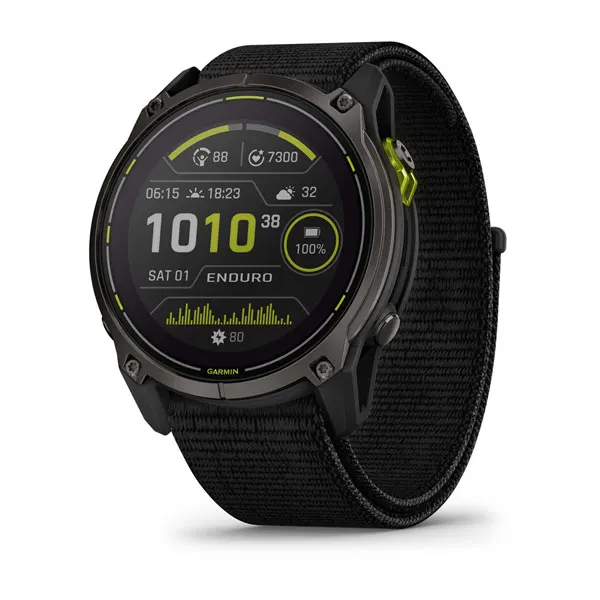
The Garmin Enduro 3 features a single 51 mm case size that limits comfort for everyday wear or smaller wrists. Bettertrail noted that the large case will limit its appeal as an all-day wearable, despite the impressive weight savings achieved through material choices. Gearjunkie found this weight to be about as heavy as they personally want a watch for running, allowing it to blend into the background during high-movement activities.
Hodinky-365.com observed that the thickness is now 15.7 mm, which initially felt like quite a lot but wears great in practice without excessive knocking into corners or doorframes. The design breaks away from previous generations with a much thinner bezel and button labels removed, leaving only fine grooves at the 12 and 6 o'clock positions. This stepped profile on the bezel sides meets a polymer case that replaces the titanium used in earlier models to save weight.
Hmmuller appreciated the plastic back for being warmer to the touch than metal during winter cross-country skiing, though they noted the lime green accents remain an aesthetic choice that some users might find distracting. The UltraFit nylon strap breathes well and dries quickly, which Gearjunkie found useful after activities ranging from shorebreak surfing in Hawaii to splitboarding in sub-freezing temperatures. Despite the 63-gram weight, the physical footprint of the 51 mm case remains a compromise for those prioritizing discretion.
Memory-in-Pixel display and screen clarity
The Memory-in-Pixel display feels dated compared to modern AMOLED screens, which is the primary tradeoff for the Enduro 3's exceptional battery life. Bettertrail found that while it lacks the brightness and vibrancy of color displays, it remains easy to read in direct sunlight and provides a quick tap backlight when needed. Hmmuller noted that the MIP display looks fantastic in direct sunlight, actually getting more readable as conditions brighten, which is ideal for backcountry navigation.
Dcrainmaker explained that Garmin revamped the solar panel by removing the transparent surface across the majority of the display to increase clarity while boosting power harvesting. This engineering shift addresses previous complaints about visibility, resulting in a screen that prioritizes legibility and endurance over visual flair.
Thetrek found the large screen beneficial for off-trail desert hiking, allowing users to see detailed course overlays and stay oriented in complex terrain. The combination of Power Sapphire glass and a fiber-reinforced polymer case protects the display from the violent impacts encountered during mountain biking and snowboarding crashes reported by Gearjunkie. While not as visually engaging as AMOLED options, the screen delivers exactly what endurance athletes require: uncompromising visibility and reliability.
Build quality and material durability
The build quality holds up exceptionally well after a year of heavy use, according to Hmmuller's long-term review. The fiber-reinforced polymer case body shows very few marks, and the plastic back proves advantageous in cold weather by staying warmer than metal alternatives.
Gearjunkie tested the Enduro 3 through extreme conditions ranging from 110 degrees Fahrenheit in Ethiopia to 0 degrees Fahrenheit in the Sierra Nevada, finding it looked exactly like new after months of abuse. The watch survived mountain bike crashes, motorcycle incidents, and violent snowboard tomahawks without compromising its structural integrity or water resistance rating of 10 ATM. This level of durability makes it a reliable companion for backcountry navigation and health tracking.
Hodinky-365.com pointed out that the lugs are now made of plastic rather than titanium, raising questions about whether this change prioritizes weight savings or cost reduction. Despite this shift in materials, the core components that matter most—the bezel, screen, and buttons—retain a premium feel. The metal buttons remain solid, and the overall construction ensures the watch can handle every activity from shorebreak surfing to sub-freezing skiing without failure.
Navigation accuracy and map features
The Enduro 3 includes detailed topographic mapping with preloaded TopoActive maps, eliminating the need for time-consuming USB downloads before heading out. Thetrek found this convenience valuable for off-trail navigation, noting that the off-route alert helped identify missed turns during canyon hikes. The watch connects to all major satellite systems using SatIQ technology, which automatically chooses between battery-saving and multi-band accuracy modes based on surroundings.
Bettertrail reported reliable tracking across road running, trail running, and big mountain days, with only occasional dropouts in dense forest that did not significantly impact overall data quality. The device allows users to customize data screens directly on the watch for specific activity modes like trail running, making it easy to review interval data afterward in the Garmin Connect app. This level of customization supports analytical athletes who need precise metrics during long efforts.
Hmmuller encountered a serious navigation issue during cross-country skiing where keeping the map screen active caused the compass to point in the opposite direction of the intended route. Their theory is that continuous map rendering drains system resources on the low-powered MIP display, causing the malfunction. The workaround involves switching to a data screen instead of the map view to prevent resource drain, though this remains a potential risk for backcountry users relying solely on wrist-based navigation.
Heart rate sensor and training metrics
The Garmin Enduro 3 features the latest Elevate V5 optical heart rate sensor, which includes ECG capability and wrist-temperature monitoring. Thetrek checked its accuracy against gym equipment capacitive sensors and found readings matched within two beats per minute during steady-effort activities like hiking. The sensor excels at measuring consistent effort but struggles with quick changes in intensity, such as sprint patterns or downhill skiing.
Cadence lock remains an issue where the heart rate measurement mistakes steps for heartbeats, causing unnaturally consistent readings that do not match actual physical exertion. Thetrek found this to be a minor problem during typical running and hiking but noted it lost sharp peaks during more dynamic activities. Bettertrail observed similar limitations, recommending external chest monitors like the Coros Heart Rate Monitor for high-intensity efforts where optical sensors fall short.
The watch provides a full suite of training metrics including VO2 max, training load, stamina, recovery, and running dynamics. The inclusion of Strava Live Segments allows users to compete against past efforts or segment leaders in real time, adding a gamified element to outdoor training sessions.
Smart features and connectivity limitations
The Garmin Enduro 3 matches the brand's high-end smartwatch capabilities with contactless payments, music integration, notifications, and morning and evening reports.
Bettertrail noted that the lack of a built-in mic and speaker is a deliberate choice to keep the build streamlined and maximize endurance. While some users might miss direct-to-roof calls found on higher-end models, most Enduro users likely do not require this feature during long outdoor excursions. The watch still offers robust connectivity through Bluetooth for syncing data with the Garmin Connect app and managing music libraries.
Hmmuller recommended pairing the Enduro 3 with a dedicated GPS device for serious off-grid adventures due to potential navigation software quirks, rather than relying on it as a sole safety net. The absence of built-in InReach satellite connectivity further limits its utility in extreme remote scenarios where emergency communication is critical. For users who value simplicity and endurance over constant smartphone integration, the Enduro 3 delivers exactly what they need without unnecessary distractions.
Strengths
- +Delivers up to 120 hours of GPS battery life, extending to 320 hours with solar charging.
- +Features a redesigned solar panel that is 120% more efficient than the previous generation while improving screen clarity by removing the transparent display overlay.
- +Weighs only 63 grams, making it significantly lighter than comparable titanium models like the Fenix 8.
Watch-outs
- −The single 51 mm case size is considered large and limits comfort for everyday wear or smaller wrists.
- −Lacks a built-in microphone and speaker, preventing direct wrist calls found on higher-end Garmin models.
- −Uses a Memory-in-Pixel display that reviewers note feels dated compared to modern AMOLED screens.
How it compares
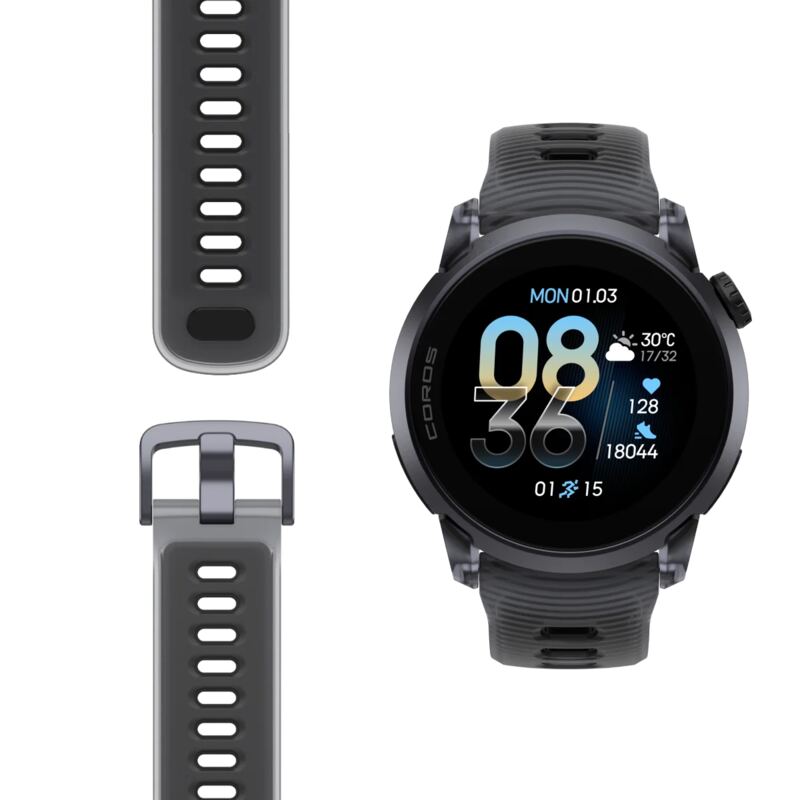
The Garmin Enduro 3 lists 120 hours of GPS battery life, or 320 with solar, against 41 hours for the Coros Pace 4 and 21 hours for the Garmin Forerunner 970. It uses a memory-in-pixel display where those two use AMOLED panels, and at 63 g it weighs almost twice as much as the 32g Coros Pace 4.
Rating sources
Counts as 4.41/5 in our score — this publisher's 36 scores on the site average 4.38, so its scores are adjusted down to compare fairly with other publishers.
Counts as 5.00/5 in our score — this publisher's 149 scores on the site average 3.69, so its scores are adjusted up to compare fairly with other publishers.
Counts as 4.22/5 in our score — this publisher's 45 scores on the site average 4.03, so its scores are adjusted up to compare fairly with other publishers.
“If battery life is king, the Enduro 3 is the king.”
Our 4.5 score is the average of the 3 scored reviews above, each adjusted for how strictly its publisher scores; 4 more reviewed it without printing a score and are not in the average. More about methodology.