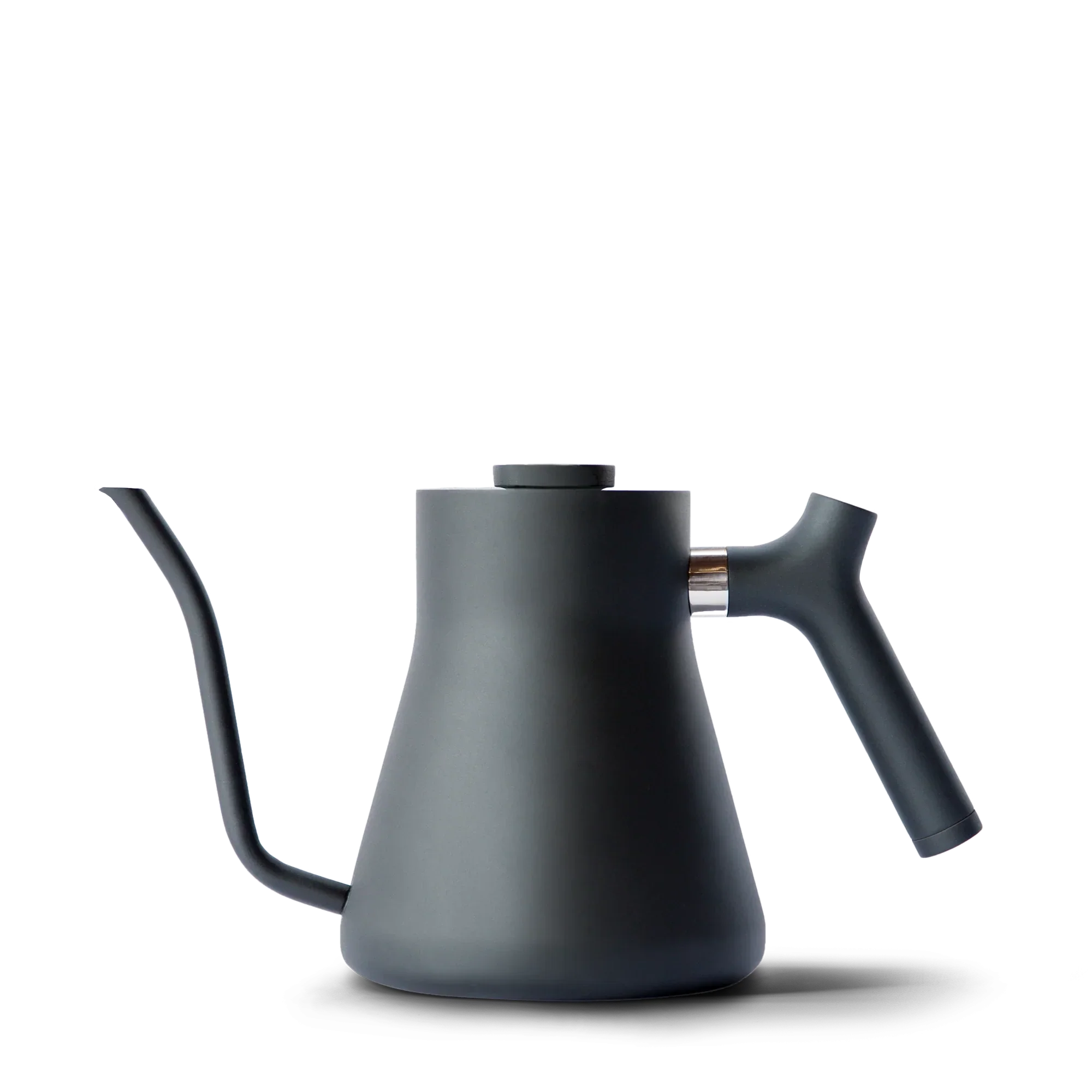
Fellow's unplugged Stagg is the stovetop version of its electric gooseneck, with the same counterbalanced handle and slow-pour spout plus a thermometer in the lid. Serious Eats, The Strategist, and Food Network each picked it as their top stovetop gooseneck, praising its pour control. Serious Eats' electric-heavy gooseneck guide rated it Not Recommended because it won't work on induction and is slow to boil.
Full review
What Reviewers Found
Three stovetop-kettle roundups chose Fellow's Stagg Pour-Over Kettle as their gooseneck pick. Serious Eats contributor Irvin Lin tested 14 stovetop kettles and named it The Best Stovetop Gooseneck Kettle. Strategist senior kitchen and dining writer Emma Wartzman tried four stovetop models as a replacement for the Stagg EKG she had owned for years, and the Stagg came out on top. Food Network Kitchen, with testing by Beth Lipton and Jill Novatt, gave it the Best Gooseneck label in its stovetop roundup. All three credit the same things: the slow pour, the counterbalanced handle, and the thermometer in the lid. A fourth verdict goes the other way. Serious Eats' gooseneck-kettle guide, a 17-kettle test that is mostly electric models, put the stovetop Stagg under Not Recommended because it won't work on induction and was slow to boil. The disagreement comes down to the comparison. Next to other kettles heated on a burner, its pouring stands out. Next to plug-in kettles that boil in minutes and hold a set temperature, its weaknesses count for more.
How Reviewers Tested It
Lin boiled one quart of 66°F water in each gooseneck on medium-high heat, then repeated with half a quart. After each boil he poured eight ounces into a mug, checked how hot the handle got, and used a Timemore scale to find the slowest flow he could hold without dribbling. He also brewed a pour-over in a Hario V60 dripper and tasted water cooled to 130°F. Food Network boiled three cups of room-temperature water in each kettle, timed it, checked whether the handle heated up, and judged pour flow, control, dripping, and cleanup. Both roundups compared it with whistling kettles as well as other goosenecks.
Wartzman's test was simpler and longer. She boiled exactly three cups of cold tap water in each of her four kettles on the same gas burner, then kept each one on her stove for at least a few weeks of daily use. Serious Eats' gooseneck guide filled every kettle to its stated capacity with roughly 60°F tap water and timed it to 212°F. Its accuracy and keep-warm tests applied only to electric models, so boil time and pouring are the measures that compare the Stagg directly to plug-in kettles. Each of these tests heated a different amount of water, so their boil times can't be compared directly.
Pour Control and Handle
Pouring is what won the Stagg its three picks. Serious Eats wrote that it 'poured similarly to its electric sibling'. Food Network found that the gooseneck makes water flow more slowly and evenly, so you can saturate the grounds for better extraction. That slow, narrow stream is what lets you wet a pour-over bed evenly instead of carving a channel through it. The handle explains much of the control. Fellow says it moves the center of mass back toward your hand. Serious Eats found the thumb rest worked as a counterweight that made precise pouring easy 'regardless of how full the kettle is'. Food Network said it evens out the weight so the kettle is more comfortable to pour. Wartzman preferred it to the over-the-top handles on larger stovetop kettles, which she said make you lift your arm and tilt at a steeper angle.
The Built-In Thermometer
Stovetop kettles have no temperature control, so the analog thermometer in the Stagg's lid is its main convenience. Food Network noted that a red section marks the 195ºF to 205ºF range for pour-over. Wartzman found the scale reads in five-degree steps from 70 to 230, in Fahrenheit and Celsius. That is coarser than the one-degree settings on the electric version, but she called it 'just enough information, and just enough control' for steeping herbal and green teas at 160 to 180 degrees and black teas at 190 to 212. She said the thermometer is what tipped the decision toward the Stagg over her runner-up. Even Serious Eats' gooseneck guide, which didn't recommend the kettle, called the lid thermometer 'cool'. In use, you watch the dial and take the kettle off the heat when it reaches your range, instead of boiling it fully and waiting for it to cool.
Heating Speed on the Stove
Reviewers agree the Stagg isn't fast. In Serious Eats' gooseneck speed test, with each kettle filled to stated capacity, the electric models reached a boil within seconds of each other. The two stovetop goosenecks 'both took over 12 minutes to reach boiling', and the guide's competition notes list 16 minutes for the Stagg. Serious Eats put this down to the thick stainless steel walls and the matte coating, which slow heat transfer from the burner. Wartzman's three-cup gas test was closer: all four of her stovetop kettles boiled between 11 minutes 1 second and 11 minutes 54 seconds, a spread she called 'pretty inconsequential'. Lin's roundup found that wide-based kettles boil faster because more of the base sits on the burner. The Stagg is narrow by design to keep the spout and handle balanced, so it gives up some heating speed for pour control.
Cleaning, Finish, and Care
Serious Eats measured the opening at 2.875 inches, and it was the one thing Lin disliked. Anyone without very small hands will struggle to reach inside, so he needed a dish wand or bottle cleaner to wash the interior. His spec list also marks the kettle as not dishwasher-safe. Fellow's product page adds that rough or dirty surfaces, and normal daily use on cooking ranges, will damage the finish on the bottom of the kettle. Fellow calls this normal wear that doesn't affect function, and says the copper version will discolor slightly on the bottom on gas and electric stoves. Wartzman described the body as painted stainless steel, the same material as the electric model. If the kettle will stay out on the stove, expect the base to look used before long.
Where It Falls Short
Induction is the deal-breaker. Fellow lists gas and electric ranges only, Food Network states it is not compatible with induction stoves, and Serious Eats' gooseneck guide called it not 'induction-friendly' when it marked the kettle Not Recommended. Reviewers disagree about the handle. Wartzman found it 'fine to grip unprotected', but Food Network warned it gets hot enough that you should use a towel or oven mitt. Serious Eats landed in between, finding it warm after a long heating but fine after a minute or two off the burner. There's no whistle, and Food Network pointed out that nothing tells you when the water has reached temperature, so you have to keep an eye on the dial. Capacity is 1.0 liter, and the gooseneck guide called the kettle 'pricey' for a non-electric model. Fellow lists it at $89.95.
Who It's Best For
This kettle suits pour-over coffee and loose-leaf tea drinkers who cook on gas or standard electric burners and care more about pour control than speed. If you brew one or two cups at a time, it's the stovetop gooseneck that Serious Eats, The Strategist, and Food Network each ranked first. It also suits anyone who, like Wartzman, wants an electric gooseneck's pour without a corded base on the counter, and it costs about $100 less. Skip it if you have induction, if you want a full liter at a boil as fast as possible, or if you need to set and hold an exact temperature. Electric goosenecks do those jobs better, which is why Serious Eats' gooseneck guide passed on it. If you dislike cleaning narrow-mouthed vessels, plan to buy a bottle brush with it.
Strengths
- +Picked as the top stovetop gooseneck by Serious Eats, The Strategist, and Food Network (as "Best Gooseneck")
- +Counterbalanced thumb-rest handle kept pours precise whether the kettle was full or half empty
- +Lid thermometer marks the 195–205°F pour-over range and reads from 70 to 230°F in five-degree steps
- +Narrow gooseneck spout delivers a slow, even stream for saturating pour-over grounds
- +About $100 less than Fellow's electric version, per The Strategist
Watch-outs
- −Not induction compatible: Fellow lists gas and electric ranges only
- −Slow to boil: over 12 minutes in Serious Eats' full-kettle gooseneck test, and that guide's notes list 16 minutes
- −Narrow 2.875-inch opening needs a bottle brush to clean, and there's no whistle, so you have to watch the thermometer
How it compares
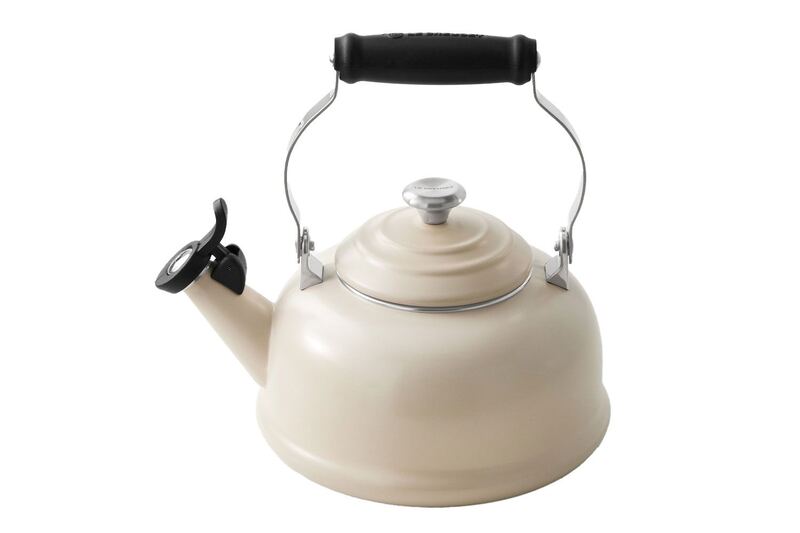
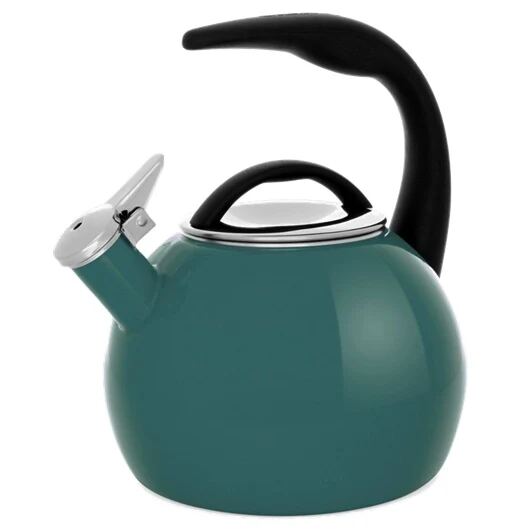
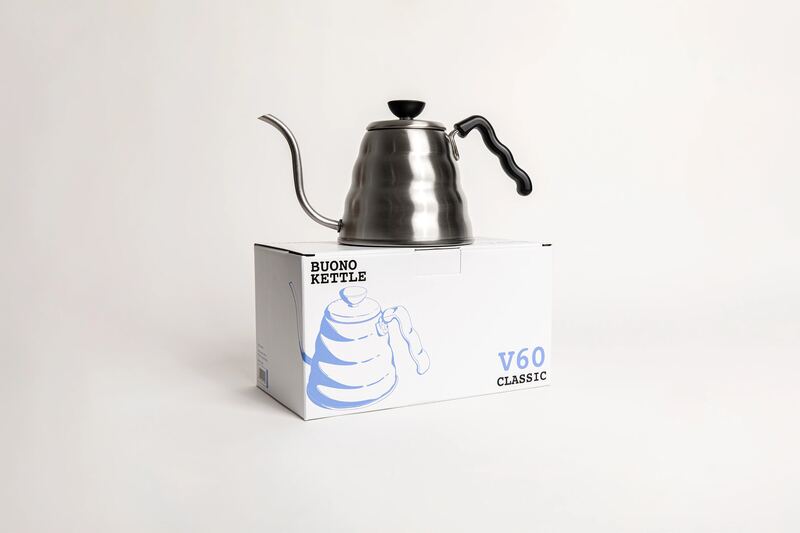
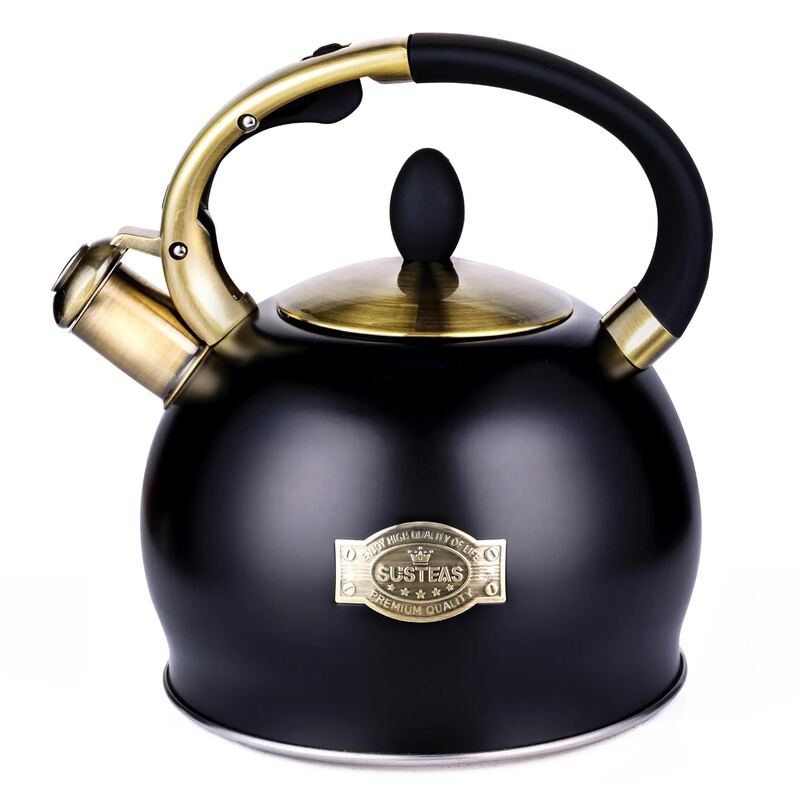
The only kettle here with a built-in thermometer, which is its main edge over the Hario Buono. It costs about $25 more than the Buono, has no whistle, and unlike the Buono, Chantal, Le Creuset and SUSTEAS it does not work on induction.
Rating sources
“Designed for a more precise, slow pour, which is ideal for pour-over coffee, the Fellow Stagg poured similarly to its electric sibling.”
“Perhaps it shouldn’t be surprising that Fellow’s stovetop kettle reigns supreme — but it’s not something the brand is especially known for.”
“This gooseneck takes all the guesswork out of making great pour-over coffee, and it’s a beautiful addition to your stovetop.”
Our 4.3 score is the average of these published ratings. Ratings marked * were derived from the reviewer’s written analysis or video transcript — the publisher didn’t print an explicit numeric score, so we inferred one from their own words. Click through to verify. More about methodology.