The 9100MC is the plainest cooktop in Duxtop's own lineup and, in the most thorough test available, the best one. Serious Eats ran 17 portable induction burners through boiling, frying, searing and simmering and this model won outright: it boiled a gallon of water fastest at 16 minutes and drifted less than five degrees across an hour of simmering. Its advantage is restraint — physical buttons, no presets to fight, no auto-timers that cut the heat early. The ceiling shows up in deep-frying, where it could hold 375°F oil only by running flat out.
Full review
The Plainest Duxtop Is the Best Duxtop
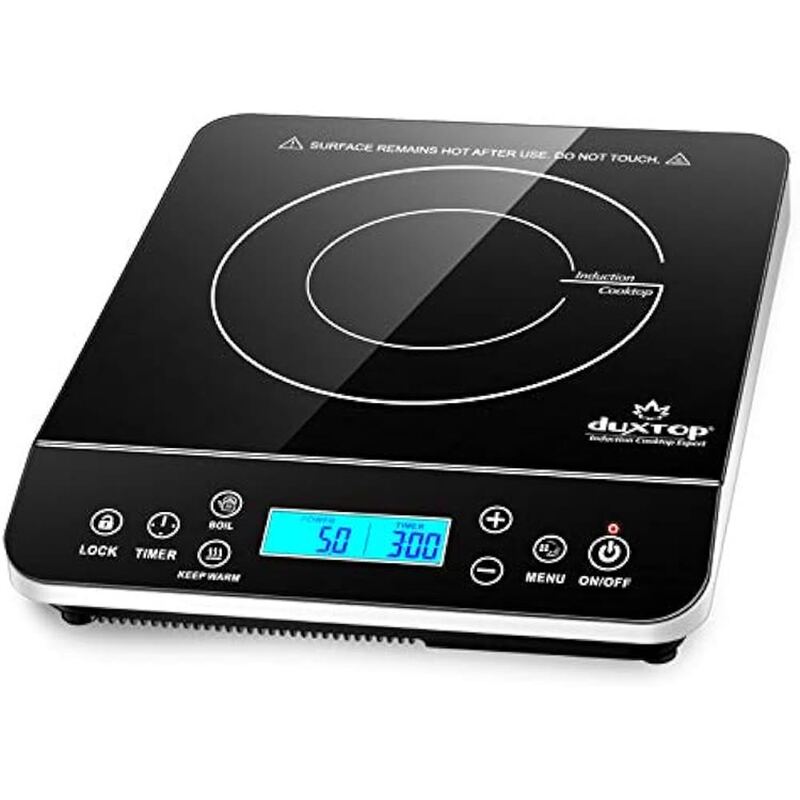
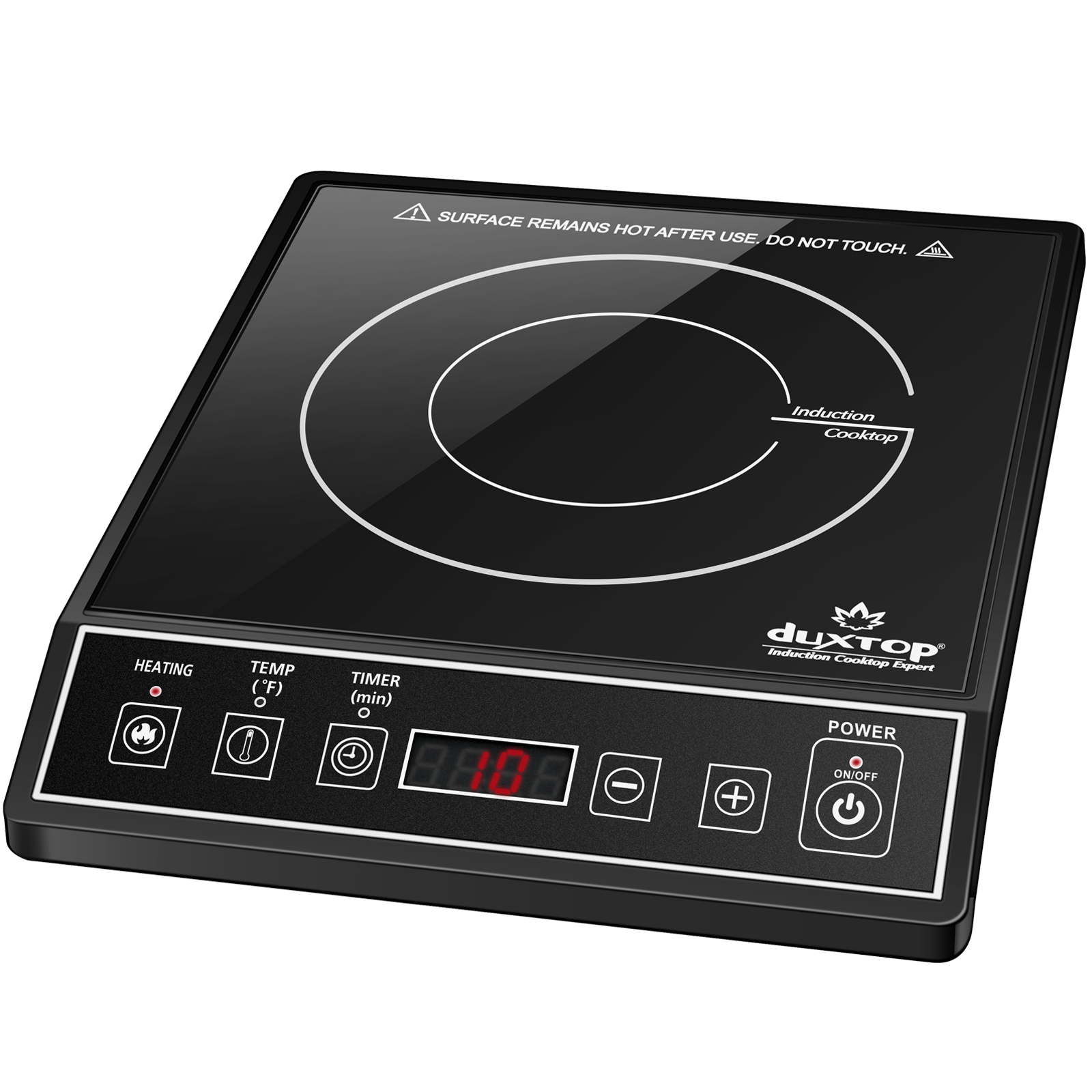
Duxtop sells several near-identical looking single-burner induction cooktops, and the 9100MC is the one with the least going on. It has a row of physical buttons, a small readout, and no touchscreen, no boil shortcut and no keep-warm preset. That turns out to be the point. When Serious Eats' Ashlee Redger ran 17 portable induction models through a battery of boiling, frying, searing and simmering tests for a review updated in April 2026, this was the model she picked first overall, summarising it as a cooktop that "impressed me with its controlled heating and intuitive interface."
Her broader conclusion across the whole field explains why a stripped-down unit won. "Overall, I found that the more features that crowded an induction cooktop's interface, the harder it was to operate," she wrote, adding that at their worst, presets "meddled with the cooking process by suddenly turning off the heat mid-cook or blasting a pan with high temperatures." The 9100MC has nothing to meddle with. It is 14 by 11.3 by 2.8 inches, weighs six pounds, and runs off a standard 120-volt outlet on a 55-inch cord.
Sixteen Minutes for a Gallon of Water
The headline number comes from a repeatable test: a full gallon of room-temperature water in a 4.5-quart Dutch oven, timed to a boil. The 9100MC did it in 16 minutes, the fastest of everything Serious Eats put through that test. For scale within the same lineup, the SMEG portable took 18 minutes, Duxtop's own 9600LS took 18.5, the IKEA TILLREDA also took 18.5, the Hamilton Beach 34104 took 20.5, and the Cuisinart double burner took 26.
That spread matters more than it looks, because every single one of these cooktops is rated to the same 1800-watt ceiling. As Redger put it, "All the portable induction cooktops I tried had a maximum of 1800 watts, but some were more efficient than others." The 9100MC converts that shared wattage into heat in the pan more effectively than its rivals, which is the whole argument for buying it over a cheaper unit with the same number on the box.
Less Than Five Degrees of Drift in an Hour
The other test the 9100MC won is the one that separates a cooktop from a hot plate. After the boil test, Redger reduced each burner to a steady simmer and tracked how far the water wandered over a full hour. The 9100MC moved less than five degrees across that hour. If you make stock, hold a braise, or reduce a sauce without hovering over it, that is the specification that actually changes your cooking.
It is also where the physical buttons pay off a second time. Redger noted that the control panel "had physical buttons rather than a touch sensor, so I was able to wipe up oil splatters while I cooked without fear of changing any settings." On the touch-panel burners in her lineup, a wet cloth is a setting change. On this one it is a wet cloth. The trade is that there is no lock function at all, so nothing stops a curious hand from pressing a button that does work.
Two Control Modes, One of Them Honest
The 9100MC gives you 15 power settings from 200 to 1800 watts, labelled in half-steps from one to 5.5 and whole numbers from six to ten, plus 15 temperature settings from 140°F to 460°F in 20- and 30-degree increments. Redger's advice for this whole category applies here: "Power settings tend to be more beginner-friendly than temperature settings."
Her reason is worth understanding before you rely on the temperature mode. "A burner set to 212°F could only measure the temperature at the pan's base—not the temperature of the food or liquid being cooked, which was often far under the given temperature setting," she wrote, and the correct setting shifts with your cookware, your ingredient and your batch size, so you re-tune it every time. Treat the 9100MC's temperature numbers as repeatable positions on a dial rather than as a thermostat, and it behaves predictably. Expect a thermostat and it will disappoint you.
The Frying Ceiling at 375°F
The clearest limitation shows up in oil. In the onion-ring test, Redger brought two quarts of peanut oil to the 375°F frying target, then added battered rings and watched how the burner recovered. The 9100MC got there, but only just: "In order to maintain 375°F oil for frying, I had to keep the burner on its highest power setting the whole time (it wasn't efficient enough to get the oil any hotter than that)."
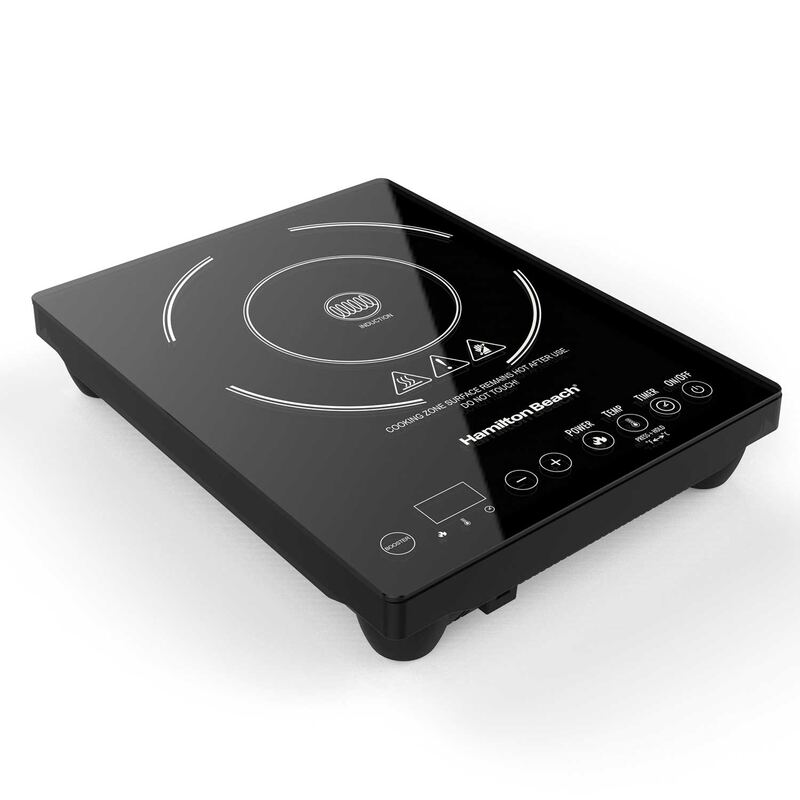
Running an appliance at 100 percent for an entire fry session leaves nothing in reserve for the temperature crash when cold food goes in. Her own suggested workarounds are the sensible ones — a smaller pot, less oil, smaller batches. If deep-frying is a regular event in your kitchen rather than an occasional one, the Hamilton Beach 34104 was the burner in the same test that heated oil fastest and most efficiently, and both it and the IKEA TILLREDA could push past 375°F on full heat.
Where the Heat Actually Lands
The 9100MC's coil is eight inches across and Duxtop asks for a pan at least five inches wide at the base. Redger's flour heat-map test — a tablespoon of flour spread across a stainless skillet, run at medium power, watched for where it browned first — found that most of the field, this model included, had a consistent four- to five-inch hot spot in the centre. Nothing about induction fixes that; it is a function of coil geometry.
The practical consequence is that pan choice does more for evenness than any setting. Match the pan base to the burner outline and the 9100MC sears cleanly; Redger reported it "didn't have a problem heating up the large skillet for searing chicken." Put a 12-inch skillet on it and the rim will lag. And as with any induction burner, the cookware has to be ferromagnetic — cast iron, carbon steel, or magnetic stainless. Aluminium and copper simply will not heat.
The Small Annoyances Add Up Slowly
Two minor complaints are worth knowing before you buy. First, there are no shortcut keys: no one-touch boil, no keep-warm. Redger noted this directly — "It lacked boil and keep warm shortcuts, so quick temperature changes required more button pushes." On a burner you use twice a day, that is a handful of extra presses each time rather than a real obstacle, and the absence of a boil preset also means the 9100MC never does what the 9600LS did in her testing, which was start a 10-minute countdown on its boil setting roughly eight and a half minutes before the water was actually rolling.
Second, durability of the labels rather than the machine: "While I liked the physical buttons over a touchscreen, the icons printed on them could wear out over time." That is a cosmetic and eventually a usability issue on a unit that gets wiped down after every cook. The timer runs up to 170 minutes, and the burner shuts itself off after two hours if the timer is unset and nobody touches anything.
The Default Recommendation in This Category
If you want one countertop induction burner and you do not want to think about it again, this is it. It suits renters in kitchens without gas, cooks who need a third element during a big meal, dorm and RV setups where 1800 watts on a normal outlet is all the infrastructure available, and anyone whose main use is boiling, simmering and searing rather than frying. The six-pound weight and 2.8-inch profile mean it stores in a drawer and travels without complaint.
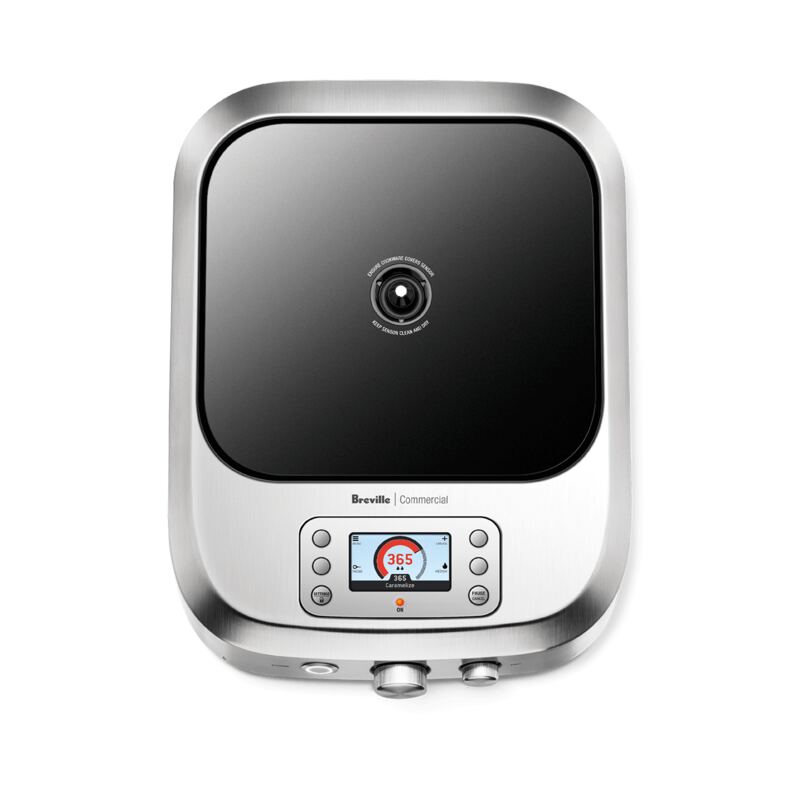
It is the wrong buy in two situations. If you deep-fry regularly, the ceiling described above is real and you should look at the Hamilton Beach 34104. If you need temperature settings that correspond to actual pan temperatures — pastry work, tempering, sugar — nothing in the affordable tier does that, and the Breville Control Freak is the only cooktop in Serious Eats' lineup that held cookware within 15 to 20 degrees of its target.
Wirecutter Calls It the Budget Pick, Not the Winner
Serious Eats is not the only test kitchen with a long history in this category, and the other one ranks the 9100MC differently. NYT Wirecutter's Rachel Wharton, who has "tested more than a dozen portable induction cooktops since 2021" and whose guide was updated in February 2026, names it the budget pick — it is in fact Wirecutter's former top pick, displaced by the pricier Duxtop 9600LS. Her summary: "A great machine for a good price, this stripped-down induction burner may be ideal for infrequent or tech-averse users."
Her reasons for preferring the 9600LS are specific and worth weighing against Serious Eats' speed argument. Wharton's stated shopping criterion is granularity: "I focused on induction burners that claimed to offer at least 15 settings. With 10 or fewer settings, it's harder to dial in the right heat level, especially in the low-heat and all-important simmer zones." The 9100MC clears that bar with exactly 15, but the 9600LS offers 20 power and 20 temperature settings and a lower 100°F floor. She also notes the 9100MC "doesn't have warm and boil buttons" and offers "no immediate way to drop the temperature quickly if it's too high, other than to turn the machine off."
The Case for Physical Buttons
Both outlets independently landed on the same unfashionable virtue. Wharton: "It has just six raised buttons (better than touch controls if you have low vision) and a notably small LED display. And because the control panel is not touch-sensitive, when you wipe it during cooking, you won't mess up any settings." Redger made the same observation from the other direction, about cleaning up oil splatter mid-cook without changing the setting.
Wharton adds an accessibility angle that rarely appears in appliance reviews: the 9100MC's beep is slightly louder than the 9600LS's, which she frames as a benefit for anyone hard of hearing, and raised buttons are easier to find by feel than a flat glass panel. The trade-off she found in long-term use is cosmetic: "The unit one of our staffers has been long-term testing for a couple of years has lost part of a sticker on one button, though the button still works." That is the same wear risk Serious Eats predicted, confirmed after a couple of years of real use rather than a test cycle.
What a Metered Teardown Found
CenturyLife, which instrumented the 9100MC with a power meter rather than just cooking on it, documented behaviour neither of the big outlets measured. At the lowest settings the burner does not run continuously — it pulses. Level 1.0 runs roughly six seconds on and seven off, drawing about 433 watts instantaneously to average the nominal 200; level 2.0 runs about nine on and four off. From level 3.5 upward it runs 100 percent continuously at around 700 watts. Their power ladder is the first 12 levels in 100-watt increments from 200 to 1300 watts, then jumps to 1500, 1600 and 1800.
That explains something cooks notice and reviews rarely account for: a very low setting on any inexpensive induction burner is not gentle heat, it is full heat interrupted. For melting chocolate or holding a delicate sauce, the cycling can show as small swings. CenturyLife also measured the onboard temperature sensor reading roughly 15°F below the actual pan surface, which is the mechanical reason Wirecutter's testers found the displayed number unreliable. Their overall verdict was still favourable: "The highest bang for the buck you can find among portable induction cookers."
Strengths
- +Fastest boil of the 17 cooktops Serious Eats tested — a full gallon of room-temperature water in a 4.5-quart Dutch oven reached a boil in 16 minutes
- +Held an hour-long simmer with less than five degrees of fluctuation, the steadiest low-heat behavior in that test group
- +Physical push-buttons instead of a touch panel, so you can wipe up oil splatter mid-cook without changing a setting
- +15 power steps from 200 to 1800 watts plus 15 temperature steps from 140°F to 460°F, so both control modes are genuinely usable
- +Six pounds and 2.8 inches tall, with a 55-inch cord that reaches an outlet across a counter or a camp table
Watch-outs
- −Ran out of headroom deep-frying: Serious Eats had to hold it at maximum power for the entire onion-ring test just to keep the oil at 375°F, and it would not push past that
- −No boil or keep-warm shortcut buttons, so routine heat changes take more presses than on cooktops that have them
- −The control icons are printed onto the buttons rather than moulded, and Serious Eats flagged that they could wear off over time
- −Eight-inch burner with a four- to five-inch hot spot in the middle, the same centre-weighted pattern Serious Eats found across most of the field, so wide skillets brown unevenly at the rim
- −No lock function, which matters if small children or pets can reach the counter
- −The temperature shown on the display is not the temperature of the pan — Wirecutter found it held a set temperature accurately, "just not the one on the display"
- −Neither Duxtop nor Secura publishes a warranty term for this model, so there is no stated coverage period to rely on
How it compares
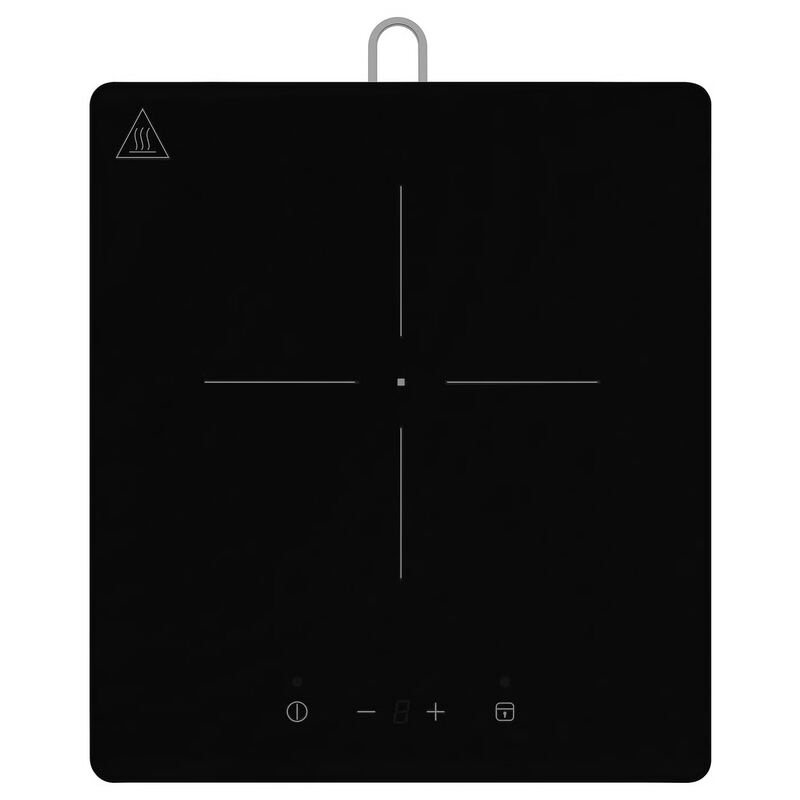
The 9100MC and the Duxtop 9600LS split the two best tests in this category: Serious Eats made the 9100MC its overall winner, while Wirecutter made the 9600LS its top pick and demoted the 9100MC to budget pick. The 9100MC is the faster boiler and roughly two-thirds the price; the 9600LS has 20 settings to its 15 and a 10-hour timer. The Hamilton Beach 34104 beats both at heating frying oil, the IKEA TILLREDA is simpler but caps out at a 7.9-inch pan, the Nuwave PIC Gold is down on wattage, and only the Breville Control Freak CMC850 Induction Cooktop has temperature settings you can take at face value.
Rating sources
“The Duxtop Portable Induction Cooktop 9100MC impressed me with its controlled heating and intuitive interface. It boiled water quickly, and its analog buttons were easy to clean.”
“A great machine for a good price, this stripped-down induction burner may be ideal for infrequent or tech-averse users.”
“The highest bang for the buck you can find among portable induction cookers”
Our 4.4 score is the average of these published ratings. Ratings marked * were derived from the reviewer’s written analysis or video transcript — the publisher didn’t print an explicit numeric score, so we inferred one from their own words. Click through to verify. More about methodology.