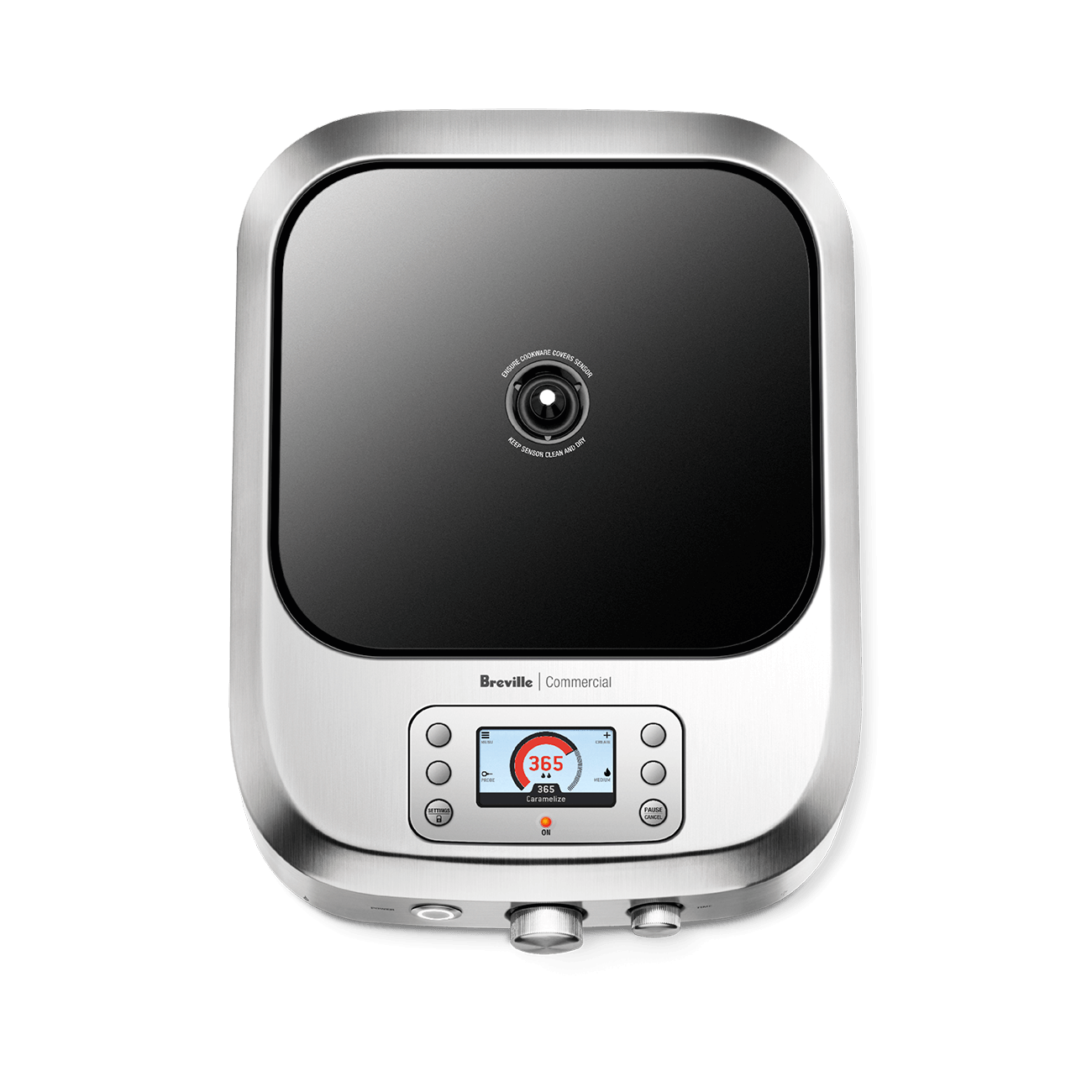
The Control Freak is the outlier in this category and the reason is measurable. Serious Eats found that on ordinary portable induction burners a temperature setting can be hundreds of degrees away from what is happening in the pan; this one held cookware within 15 to 20 degrees of target and came with a probe to tighten that further. It is also 21 pounds, has no quick-boil, and costs more than ten times the price of the burners it beats. That is a specialist's trade, not a general one.
Full review
The One Burner Whose Numbers Mean Something
The single most useful finding in Serious Eats' test of 17 portable induction cooktops was not about any one product — it was that the temperature settings on almost all of them are decorative. Ashlee Redger explained the mechanism plainly: a burner set to 212°F is measuring the pan's base, not the contents, and the correct setting shifts with the cookware, the ingredient and the batch size, so you re-tune it every single time you cook.
Then she named the exception. "While other burners had hit-or-miss temperature settings that could be hundreds of degrees off the actual temperature inside the pan, this model consistently heated cookware to within 15 to 20 degrees of its target (a small margin of error, comparatively)." That is the entire case for the Control Freak. Everything else about it — the weight, the price, the missing conveniences — is the bill for that one property.
397 Temperatures and a Probe
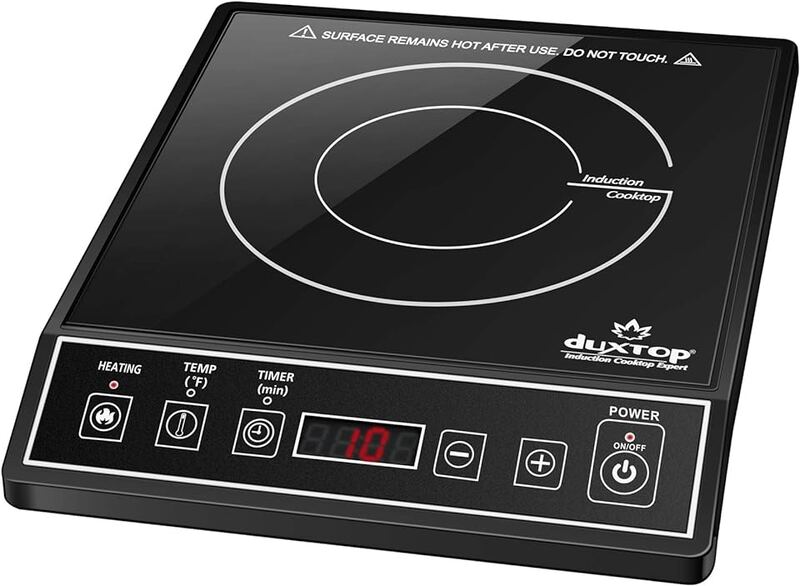
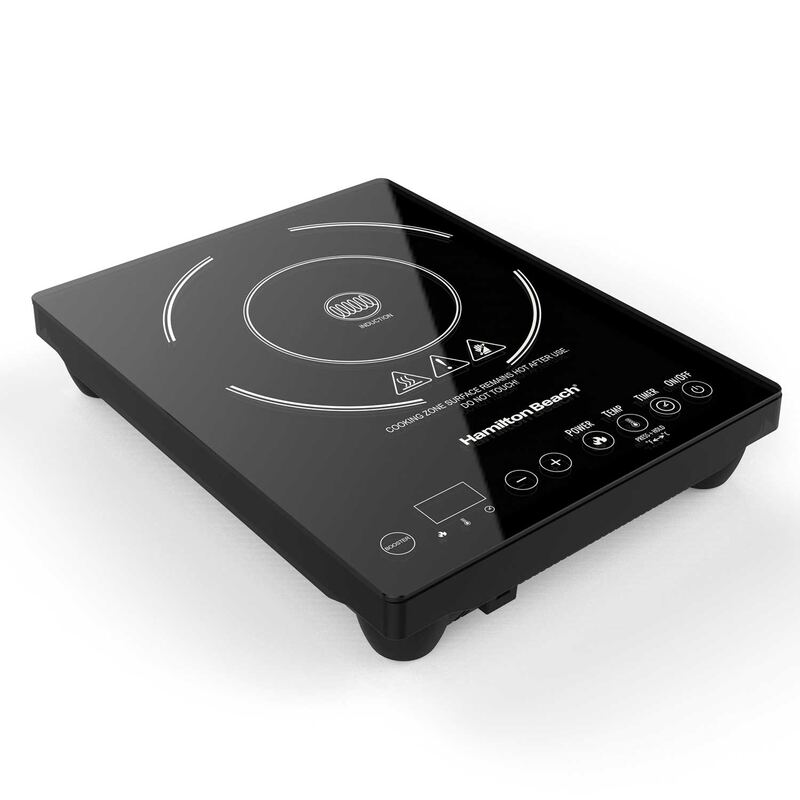
The resolution is unusual. Where the Duxtop 9100MC offers 15 temperature steps between 140°F and 460°F and the Hamilton Beach 34104 offers 15 between 175°F and 450°F, Breville specifies a range of 77°F to 482°F and Serious Eats counted 397 discrete temperatures inside it. (Serious Eats' own key-specs block gives the floor as 86°F; Breville's product page and Wirecutter both say 77°F, and the manufacturer's figure is used here.) The bottom of that range matters as much as the top: below 90°F is proofing and chocolate territory, well outside what a conventional portable burner can hold at all.
It also ships with a probe that attaches to the cooktop, which changes the control loop rather than just refining it. Redger noted it "came with a probe that attaches to the cooktop for even better automatic temperature regulation" — the burner is no longer inferring pan-base temperature and hoping, it is reading a sensor in the food. Alongside that sit three intensity settings, slow, medium and fast, which govern how aggressively the unit climbs to the set point. As she put it, they "controlled how quickly the burner heated cookware to the set temperature," which is exactly the control you want when the difference between a smooth custard and scrambled eggs is the rate of approach.
Still Not Sous Vide
It is worth being precise about how good 15 to 20 degrees actually is, because it is both remarkable in this category and insufficient in absolute terms. Redger drew the line herself: "While that's not quite up to tasks that need exact precision (like sous vide cooking), it's an impressive feat for a countertop induction burner."
So the honest framing is comparative. Against a $90 burner whose 212°F setting might leave the pot at 180°F, this is transformative. Against an immersion circulator holding a bath to a tenth of a degree, it is not in the same conversation. Where it lands usefully is the band of cooking that needs tight but not laboratory control — Redger's own examples were "delicate egg-based creams" and caramelising sugar, and she called it "an excellent pick for pastry aficionados." She also conceded, without hedging, that "it may be overengineered for most home cooks."
Twenty-One Pounds Is Not Portable
The Control Freak is classified as a portable induction cooktop and it is one in the sense that it plugs into a wall. It is not one in the sense the rest of this category is. At 21 pounds it weighs more than three times the six-pound Duxtop 9100MC and more than twice the weight of anything else in Serious Eats' winners list; Redger flagged it as "more than twice as heavy" than her other recommendations. Its footprint is 13.7 by 18.5 inches and it stands 4.3 inches tall.
Two further constraints follow from the hardware. The cord is 36 inches, the shortest among the tested picks and 19 inches less reach than the Duxtop 9100MC's 55-inch lead, so it needs to live near an outlet. And the glass has a stated 13-pound surface weight limit, which a large loaded stockpot can exceed. Between the mass, the footprint and the cord, this is an appliance that occupies a permanent spot on a counter rather than one that goes into a cupboard between dinners.
No Quick Boil, and a Display That Warms Up
Two operational complaints are worth knowing. The first is a straightforward omission: there is no quick-boil setting. Redger wanted one and said so — "I wished that it had a quick-boil setting. Without one, it took 19 minutes to boil, but stayed consistent at 210°F after that." Nineteen minutes puts it behind the Duxtop 9100MC's 16 on the identical gallon-of-water test, which is a strange result for the most expensive unit in the room until you remember that this machine is optimised for holding a temperature, not for racing to one.
The second is a startup quirk: "The burner sometimes took a few minutes to start showing accurate temperatures on its display." On a cooktop bought specifically because you trust its readout, a warm-up period during which you cannot is a real irritation. Neither problem is a defect so much as evidence of what the machine was designed around — the 72-hour timer with its four end behaviours, including keep-warm and repeat, is aimed at cooks who set a temperature and leave it there for hours.
Ten Times the Price of the Alternatives
There is no way to soften the cost argument and Redger did not try: "the Breville induction cooktop is extraordinarily pricey—more than 10 times the cost of most of my other recommendations." On a page where the other picks cluster in the double digits and low hundreds, this one sits in four figures. The question is not whether it is expensive; it is whether the thing you get is the thing you need.
The test that decides it is simple. If your cooking failures come from not having enough heat, or from a burner too slow to boil, this fixes nothing — the Duxtop 9100MC is faster and the Hamilton Beach 34104 has more frying headroom. If your failures come from a sauce splitting, chocolate seizing, or a custard tightening while your back is turned, then the 15-to-20-degree tracking and the probe are addressing the actual cause. Serious Eats' strongest endorsement is not a phrase but a fact: it is the burner they keep in their own test kitchen.
Who Should Actually Buy It
This is a specialist purchase for pastry work, confectionery, and any cooking where a held temperature is the technique. It is also defensible for a small professional or catering kitchen, where a 72-hour timer and commercial-grade construction earn their keep, and for a serious home cook who has already outgrown the guesswork on a conventional burner.
It is the wrong appliance for the use cases that define the rest of this category. It will not go in an RV, it is a burden in a dorm room, and it is poor value as a supplementary third burner for a big holiday meal — for that, two Duxtop 9100MC units cost a fraction of one Control Freak and boil faster. Buy it for what only it does, or do not buy it.
There Are Now Two Control Freaks, and Only One Was Tested
This is the most important thing to get right before buying. Breville sells two machines under the Control Freak name. The commercial CMC850, sold as SKU CMC850BSSUSA, is the 21-pound, 13.7 by 18.5 inch unit with a USB port and a padded carry case — and it is the machine Serious Eats tested and keeps in its test kitchen, confirmed by its dimensions matching Breville's published figures exactly. The newer Control Freak Home, model BMC800, is smaller at 12.2 by 16.9 inches, lighter, touchscreen-driven, built on a polymer chassis with a thinner stainless shell, and is not rated for commercial use.
Neither Serious Eats nor Wirecutter has tested the Home version. Wharton says so directly: "I also plan to test Breville's The Control Freak Home, a new version of The Control Freak that has a smaller body (though it's still $1,500). Unlike the original model, the Home version lacks a USB port and isn't equipped to withstand use in a commercial kitchen." Both list at the same price. Everything in this review — the 15-to-20-degree accuracy, the 19-minute boil, the 397 settings — describes the CMC850 and should not be assumed to carry over to the Home.
How Tight the Control Actually Gets
Serious Eats' 15-to-20-degree figure is a target-approach measurement, and two other hands-on reviewers reported on what happens once the machine settles. Sizzle and Sear, whose reviewer instrumented it with a Thermapen over long-term use and scored it 5 out of 5, found it holds within one to two degrees once stabilised, and reported it handling a 12-quart stockpot of stock without thermal shutoff thanks to dual cooling fans. The mechanism behind that is a sensor reading the glass surface 20 times per second rather than a thermostat cycling on a set point.
The practical version of precision is being able to leave. Sizzle and Sear's example is the one that captures it: "One of the first things I made using the Control Freak was a caramel sauce, and I was able to leave the kitchen and do some chores in the living room without worrying about burning the sugar." Engadget's Billy Steele, reviewing the same commercial unit, reached a compatible conclusion after hands-on use: "The Control Freak has proven it can handle meticulous cooking and consistently deliver stellar results." Programs can be named, saved and copied to a USB stick to move between machines, which is a professional-kitchen feature that happens to be useful to anyone who repeats a recipe.
Actually Getting Hold of One
Buying this is harder than buying anything else on this page. As of 2 August 2026 the commercial CMC850 was listed on Breville's own store at $1,499.95 but marked out of stock, and its Amazon listing was showing as currently unavailable with no price in the buy box. The unit was in stock at that same $1,499.95 through foodservice supplier WebstaurantStore, which is where the buy link here points.
A caution about pricing while you shop: a second Amazon listing for a "Control Freak Countertop Induction Range - 120V, 1800W" carried a price of $2,795 — nearly double Breville's own — which is a marketplace reseller markup rather than a real price for the machine. The Control Freak Home was in stock directly from Breville at the same $1,499.95, but as set out above, it is a different machine and the test data here does not describe it. If you want the tested unit, check that the listing says CMC850.
Strengths
- +The only cooktop in Serious Eats' 17-model test whose temperature settings tracked reality, holding cookware within 15 to 20 degrees of the target
- +Ships with a probe that attaches to the cooktop for closed-loop temperature regulation rather than open-loop guessing
- +Breville specifies a 77°F to 482°F range and Serious Eats counted 397 discrete temperature settings within it — resolution no other portable burner in that test approached
- +Three intensity settings — slow, medium, fast — that control how aggressively it climbs to the set temperature, useful for delicate custards and sugar work
- +72-hour timer with four end behaviours: continue cooking, keep warm, repeat the timer, or switch off
- +It is the burner Serious Eats uses in its own test kitchen
- +A through-glass sensor reads the surface 20 times a second, and Sizzle and Sear cross-checked the held temperature against a Thermapen at one to two degrees once stabilised
Watch-outs
- −Costs more than ten times what most of the other recommended portable induction cooktops cost
- −21 pounds and 13.7 by 18.5 inches — Wirecutter says it "takes up about as much counter space as a 1980s microwave"
- −No quick-boil setting; without one it took 19 minutes to boil a gallon of water, slower than the Duxtop 9100MC's 16
- −The display sometimes took a few minutes to start showing accurate temperatures after switch-on
- −Serious Eats' own accuracy figure, 15 to 20 degrees, is still not tight enough for genuinely exacting work such as sous vide
- −Short 36-inch cord and a 13-pound surface weight limit that rules out the heaviest loaded stockpots
- −Availability is poor: on 2 August 2026 it was out of stock on Breville's own store and unavailable on Amazon, leaving foodservice suppliers as the route to buy one
- −Breville publishes no warranty term for the commercial CMC850, only a general warranty-and-repairs page
How it compares
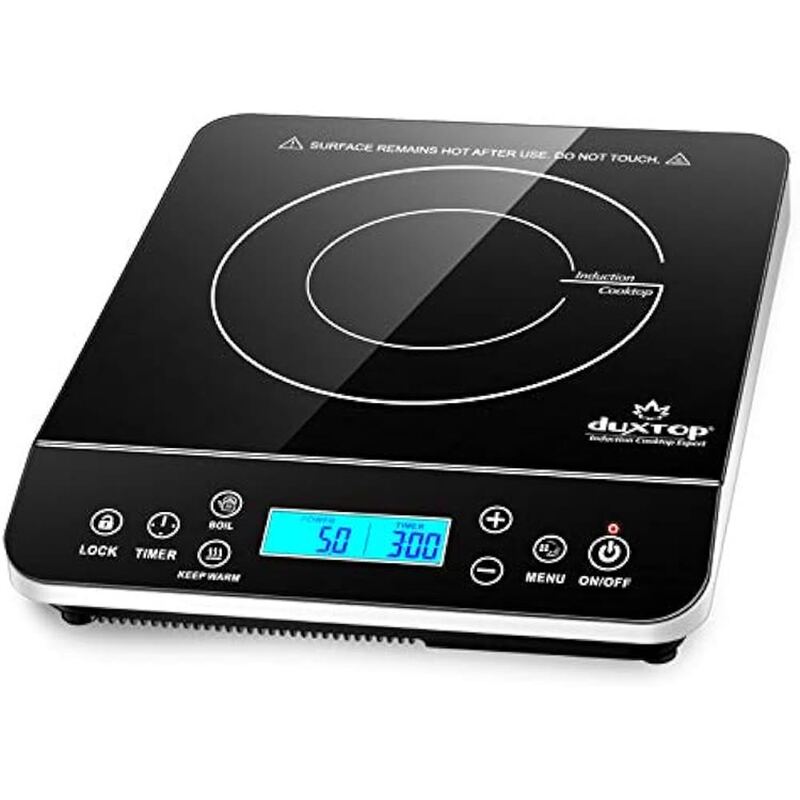
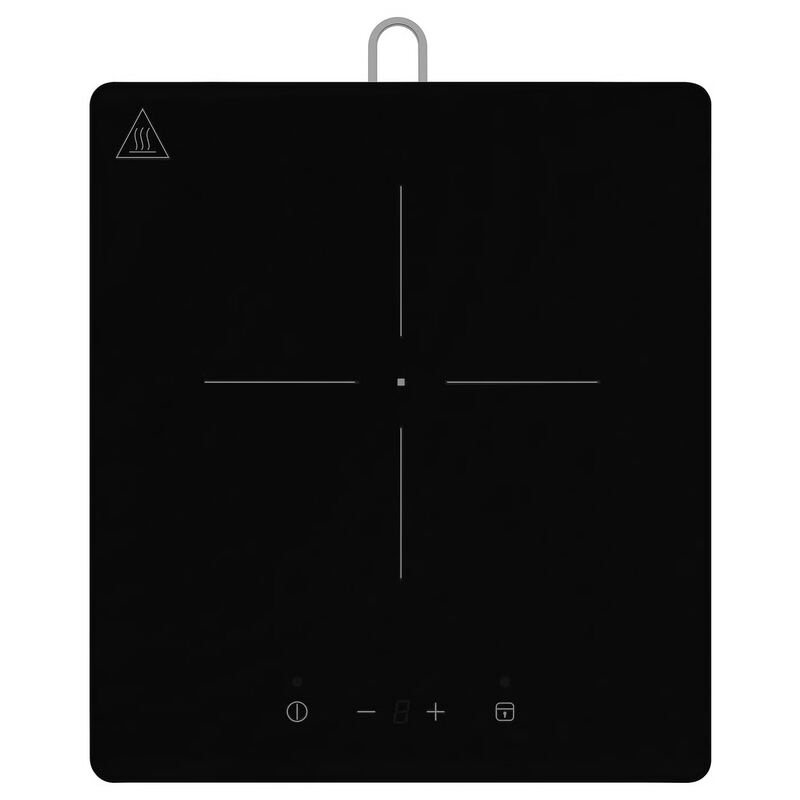
Every other cooktop here has temperature settings you have to re-learn for each pot; the Control Freak is the one where the number on the display means something. It does not win on speed — the Duxtop 9100MC boiled a gallon in 16 minutes to the Breville's 19 — and it is not portable in the sense the Duxtop 9600LS, IKEA TILLREDA or Nuwave PIC Gold are, at 21 pounds against their five to six. The Hamilton Beach 34104 is the cheap way to get frying headroom; this is the expensive way to get precision.
Rating sources
“The Breville Control Freak induction burner is the best of the best; in fact, it's what we use in the Serious Eats test kitchen.”
“Breville's staggeringly expensive The Control Freak is often described as the best portable induction cooktop you can buy. That claim is probably true — but it costs $1,500.”
“The Control Freak has proven it can handle meticulous cooking and consistently deliver stellar results.”
“It is by far the best induction cooktop I've used.”
Our 4.6 score is the average of these published ratings. Ratings marked * were derived from the reviewer’s written analysis or video transcript — the publisher didn’t print an explicit numeric score, so we inferred one from their own words. Click through to verify. More about methodology.