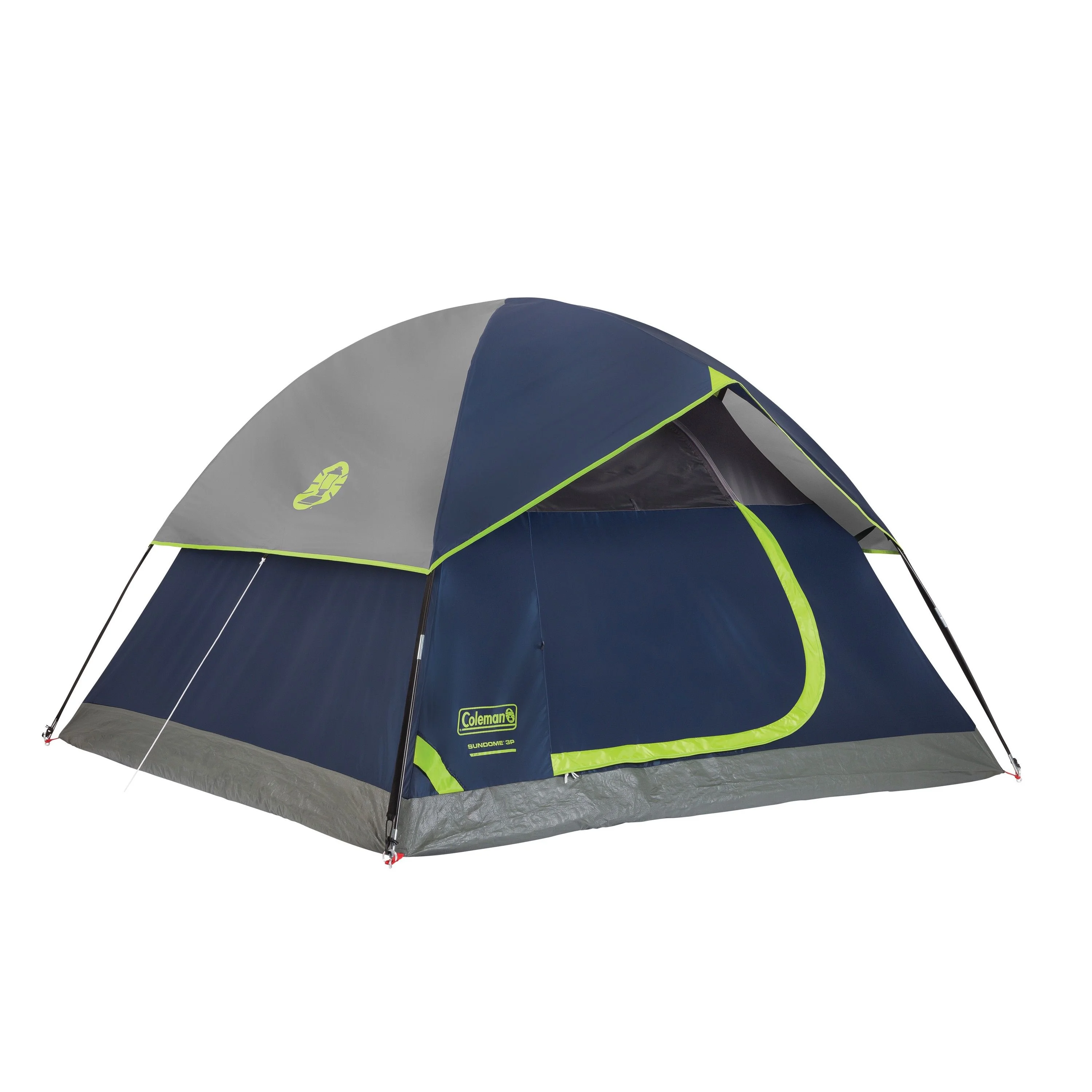
The Coleman Sundome 4-Person Tent offers an unbeatable low price point that lowers the barrier to entry for camping, featuring a durable 1000D Polyethylene bathtub floor and effective ventilation with mesh roof and ground vent. Campedtoohard found it functions as a reliable, no-frills shelter ideal for beginners, while OutdoorGearLab confirmed its space accommodates two adults comfortably despite the tight fit. However, fiberglass poles are prone to snapping or splintering under stress compared to aluminum alternatives, and the peak height of only 59 inches prevents adults from standing upright inside. The included metal stakes bend easily and require immediate replacement for reliable anchoring. This product fits budget-conscious car campers seeking basic shelter but should be avoided by those needing full rainfly coverage or long-term structural durability.
Full review
Budget pricing and entry-level positioning
The Coleman Sundome 4 establishes itself as a no-frills shelter that prioritizes affordability above all else. Cleverhiker noted that the tent fills a niche that is becoming increasingly rare in the outdoor industry, offering good value for those looking for an inexpensive option without modern features. This positioning makes it accessible to beginners who want to test their interest in camping before committing to higher-end gear.
Campedtoohard described the Sundome 4 as the Honda Civic of the camping world: cheap, reliable, and absolutely everywhere. The reviewer emphasized that for under $100, often far below that mark, it lowers the barrier to entry for camping to almost zero. This price point allows shoppers to purchase a functional shelter without significant financial risk if they decide the hobby is not for them.
9 ft by 7 ft floor and 59 in peak height
The tent fits four sleeping pads touching each other with zero room for gear, but realistically accommodates two adults comfortably or three in a pinch. OutdoorGearLab confirmed that the space allows two twin beds to fit with ease, though it leaves little extra room for bags and storage.
At 59 inches tall at the center, the tent strictly enforces sitting room only. Campedtoohard found that no adult can stand up inside, making kneeling mandatory when entering or changing clothes. This crouch factor can feel claustrophobic over long trips, a limitation that OutdoorGearLab highlighted by noting the minimal height and thick materials create a warm but tight environment.
1000D Polyethylene bathtub floor durability
The tent features a 1000D Polyethylene tub floor that Campedtoohard rated as bombproof and tough enough to resist dog claws and heavy boots. This material choice provides excellent puncture resistance compared to lighter fabrics found in backpacking tents. The bathtub design keeps moisture from seeping up from the ground, offering solid protection against damp grass or light dew.
However, OutdoorGearLab characterized the floor as cheap polyethylene material that essentially functions like a tarp. They noted that while it is waterproof and durable against punctures, it can be crinkly and loud underfoot. The durability of this component stands in contrast to other parts of the tent, serving as one of its strongest structural elements.
Fiberglass pole flexibility and failure points
The structure relies on 8.5mm fiberglass poles that Campedtoohard found flexible but prone to splintering if over-flexed. OutdoorGearLab reported a critical failure during their initial evaluation, noting that the string connecting the pole sections snapped right out of the gate on their first pitch. This incident highlights a significant durability risk associated with the budget components used in the frame.
Campingguidance tested fourteen different Coleman models and concluded that fiberglass poles are the least structurally sound option available. They advised that aluminum poles would provide better confidence, as fiberglass is more likely to crack under stress rather than bend. Reviewers consistently recommended carrying a pole patch kit or upgrading to aluminum replacements for long-term reliability.
Sleeve setup mechanics and speed
Pitching the tent involves feeding poles through continuous fabric sleeves, a process Campedtoohard described as slower and more annoying than modern clip systems. They warned that metal ferrules on the poles love to snag on the fabric inside the sleeve, creating a nightmare tangle if pulled backward. The recommended technique is to always push the pole through rather than pull it.
OutdoorGearLab measured their setup time at 5 minutes and 43 seconds, noting that the fly attachment was the kicker in the process. They found Coleman used pins on every corner that slide inside the pole instead of grommets, which is not ideal but fairly easy to get used to once the initial learning curve is passed.
Ventilation mesh and ground vent performance
The Sundome 4 includes a floor vent on the back that Campedtoohard found works wonders for airflow. The system sucks cool air in through the bottom while hot air exits the mesh roof, effectively preventing the stuffy tent feeling common in budget shelters. This feature makes the tent more livable than competitors lacking similar cross-ventilation.
Mountainsforeverybody highlighted that the upper portion of all four sides features mesh, complemented by two windows under small awnings. These design elements allow for a decent cross-breeze even when it is raining, as the awnings provide partial cover. The combination of roof mesh and floor vents ensures adequate air circulation during warm summer nights.
Partial rainfly coverage and weather limits
The included rainfly is described by Campedtoohard as a Polyguard 800mm layer that covers the roof but leaves the windows exposed. This partial coverage means users must zip up the windows during rain to stay dry, functioning more like a rain hat than a full fly. The awnings over the door and rear window offer minimal protection against driving precipitation.
Campingguidance noted that Coleman tents are water-resistant rather than fully waterproof, with short rainflies that can allow moisture ingress after 15 to 30 minutes of heavy rain. While the low wide profile holds up well in wind according to OutdoorGearLab, the construction materials pose a higher risk of failure during harsh weather events compared to premium alternatives.
Included stakes and E-port utility
The package includes metal stakes that Campedtoohard advised replacing immediately, as they bend easily if looked at wrong. OutdoorGearLab agreed that the cheap plastic clips and elastic connection points are weak points where failure is likely after harsh use. Investing in heavier-duty aluminum or steel stakes is a necessary upgrade for reliable anchoring.
An E-port provides a zippered opening to run an extension cord inside the tent for charging devices, a feature Campedtoohard listed as a practical convenience for car camping setups. This small addition enhances livability by allowing campers to keep electronics powered without compromising the weather seal of the main door.
Strengths
- +Unbeatable low price point that lowers the barrier to entry for camping.
- +Durable 1000D Polyethylene bathtub floor resists punctures from rocks and boots.
- +Effective ventilation system with mesh roof, side windows, and a ground vent prevents condensation buildup.
- +Includes an E-port for running extension cords into the tent to charge devices.
Watch-outs
- −Fiberglass poles are prone to snapping or splintering under stress compared to aluminum alternatives.
- −Peak height of only 59 inches prevents adults from standing upright inside.
- −Included metal stakes bend easily and require immediate replacement for reliable anchoring.
How it compares
The Coleman Sundome 4-Person Tent features a much higher peak height of 59 inches compared to the ALPS Mountaineering Lynx 4-Person Tent's 52 inches, allowing for better headroom despite using less durable fiberglass poles.
Rating sources
Counts as 3.60/5 in our score — this publisher's 60 scores on the site average 4.49, so its scores are adjusted down to compare fairly with other publishers.
Counts as 4.06/5 in our score — this publisher's 3 scores on the site average 4.53, so its scores are adjusted down to compare fairly with other publishers.
Our 3.8 score is the average of the 2 scored reviews above, each adjusted for how strictly its publisher scores; 4 more reviewed it without printing a score and are not in the average. More about methodology.