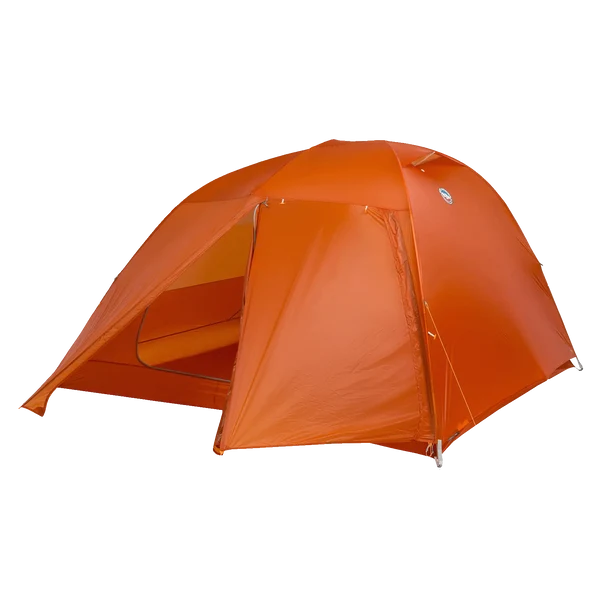
Gearinstitute found that the Big Agnes Copper Spur HV UL4 offers the most spacious interior environment of its category with a 67 square foot floor area, making it an impressive choice for four campers. The outlet noted that while the setup is intuitive and fabrics compress well, the tent's tall profile can bow during extreme winds and the lightweight floor is susceptible to punctures from sharp vegetation. This shelter best fits backpackers prioritizing maximum shoulder room and weight savings over absolute storm resilience in exposed environments.
Full review
Interior volume and headroom measurements
Gearinstitute recorded a floor area of 67 square feet with dimensions measuring 86 by 96 inches, establishing the Copper Spur HV UL4 as having the largest interior space among comparable four-person backpacking tents. The design incorporates nearly vertical walls that contribute to this generous footprint, creating an environment where campers do not feel confined even when sleeping side-by-side in a group of four. This spatial advantage distinguishes it from competitors that often market for four people but effectively accommodate only three plus gear or pets.
The peak height reaches 50 inches, providing sufficient vertical clearance to prevent long-limbed users from compressing their insulation against the tent walls while sleeping. Testers over six feet tall reported having adequate length without needing to alter their sleeping positions significantly. The dual vestibules add another 28 square feet of protected storage space, with each vestibule offering 14 square feet for external gear organization.
The integration of vertical wall geometry maximizes usable floor area compared to traditional A-frame designs. This configuration supports extended trips where living space inside the shelter directly impacts comfort levels during inclement weather.
Packability and trail weight advantages
Gearinstitute found that the Copper Spur HV UL4 achieved a trail weight of 5 pounds, 4 ounces, which translates to approximately 1.3 pounds per person for a group of four. This makes it the lightest tent evaluated in its category while simultaneously maintaining the largest interior volume and vestibule space. The combination of low weight and high capacity creates an exceptional space-to-weight ratio that appeals to ultralight backpackers prioritizing load reduction.
The flyweight fabrics used in construction allow the tent to compress down to a remarkably small packed size. Gearinstitute reported it tied for the most compressible tent in its test group, whether packed as a single unit or divided among multiple campers. This high packability ensures that the shelter consumes minimal space in a backpacking load, leaving room for other essential gear.
Enwild highlights that superlight aluminum J stakes are included to further secure the freestanding structure without adding significant weight penalty. The DAC Featherlite NFL and NSL aluminum poles provide necessary durability while maintaining the low overall mass required for long-distance hiking. This balance of structural integrity and minimal footprint supports multi-day expeditions where every ounce matters.
Hubbed pole setup mechanics
Gearinstitute observed that the Copper Spur HV UL4 features a single hubbed pole section that terminates at each corner, combined with a brow pole spanning from door to door. This configuration includes color coding and intuitive clip attachments that allow the tent to be erected 100 percent correctly on the first attempt without consulting directions or backtracking through steps. The Velcro tabs anchor the fly to poles efficiently, streamlining the pitching process for solo users.
The length of the hubbed pole section presents a notable handling challenge during setup. Gearinstitute noted that this specific component proved unwieldy at times, particularly when erecting the tent alone or in windy conditions. The extended reach requires careful manipulation to avoid tangling or bending the poles prematurely, demanding more dexterity than shorter pole designs.
Enwild describes an innovative attachment system for the short roof section of the pole that pulls the tent body taut. This mechanism increases the verticality of interior walls and maximizes vestibule space once fully pitched. The integration of these components creates a fast setup experience, though the initial handling of the long hubbed section requires practice to manage smoothly in adverse weather.
Wind resistance and structural limitations
Gearinstitute reported that the tall profile of the Copper Spur HV UL4 made it prone to bowing into the interior space during high wind gusts. During a desert windstorm test, one side of the tent deformed significantly while other tents in the evaluation maintained their structural integrity. This vulnerability suggests that users camping in exposed, windy environments may need to reinforce guy lines or seek natural windbreaks.
The tent is rated as a three-season shelter, which implies limitations in extreme weather conditions. Gearinstitute found it was one of only two tents out of three that caved in under severe gusts during field testing. While the low-slung fly and vestibules provide good protection from rain, the vertical wall design captures more wind force than lower-profile alternatives.
Enwild emphasizes that the DAC aluminum poles are lightweight yet durable, designed to withstand typical backpacking conditions. However, the structural compromise in high winds remains a documented weakness. Campers prioritizing stormworthiness over maximum interior volume should consider tents with lower profiles or reinforced pole architectures.
Floor durability and puncture risks
Gearinstitute found that the proprietary random-patterned ripstop floor material suffered pinhole punctures from blades of thick, dry grass during field use. The manufacturer claims this fabric boosts strength by 25 percent compared to standard materials, yet it still proved susceptible to damage in abrasive terrain. None of the other tents tested in the same environment experienced similar floor breaches.
These tiny punctures did not cause immediate leaks or functional failures during the remainder of Gearinstitute's evaluation period. However, they represent a potential vulnerability if water runs under the tent floor during heavy rain events. Tape repairs were sufficient to address the damage, but repeated exposure to rough ground could compromise the waterproofing integrity over time.
Enwild notes that the ripstop nylon is coated with 1200mm of waterproof polyurethane to enhance weather resistance. While this coating provides effective protection against standard precipitation, the thin nature of the fabric required for weight savings introduces a trade-off between durability and packability. Users camping on rocky or thorny terrain should consider using a separate footprint.
Ventilation and condensation management
Gearinstitute recorded that the significant amount of mesh in the tent body kept condensation at bay even during high humidity conditions typical of early summer in Texas. The large D-shaped doors encourage cross ventilation, allowing air to circulate freely through the interior space. This design effectively mitigates moisture buildup from breath and sweat, maintaining a drier sleeping environment.
Enwild highlights that ample mesh coverage on the tent body works in conjunction with the dual vestibule openings to create continuous airflow. The integration of media pockets enables headphone or earbud cord routing from phones or devices without compromising the weather seal. This attention to ventilation details supports comfort during warm nights when temperature regulation is critical.
The combination of vertical walls and extensive mesh panels maximizes interior volume while preventing stuffiness. Campers who prioritize breathable shelters over maximum wind protection will find this configuration advantageous. The design effectively balances space with air circulation, reducing the likelihood of condensation dripping onto sleeping gear.
Interior storage and feature integration
Gearinstitute found that storage pockets adorn each interior lower and upper corner of the tent body, allowing four campers to store personal items and electronics separately. This distributed organization system prevents clutter from accumulating in central areas and keeps essential gear within easy reach for all occupants. The inclusion of these pockets adds functionality without significantly increasing weight.
Enwild describes a three-dimensional storage bin located at the feet of each sleeper, providing additional space for shoes or small accessories. Integrated gear loft loops offer connection points for optional Big Agnes Square Gear Loft units sold separately. These features enhance usability by creating designated zones for different types of equipment inside the shelter.
The Copper Spur HV UL includes just the right number of amenities for participating testers without adding unnecessary bulk. The media pockets and storage bins support modern camping habits where electronics and personal items need secure, dry locations. This thoughtful integration of organizational features complements the tent's primary focus on lightweight performance.
Strengths
- +Features an intuitive setup process that went up correctly on the first attempt without consulting directions.
- +Constructed from flyweight fabrics that compress well and offer excellent packability for backpacking.
- +Includes ample ventilation through significant mesh usage to manage condensation in humid conditions.
Watch-outs
- −Tall profile makes it prone to bowing into the interior space during high winds.
- −Floor material suffered pinhole punctures from thick, dry grass blades during field use.
- −Hubbed pole section is long and can be unwieldy when erecting the tent solo.
How it compares
The Big Agnes Copper Spur HV UL4 is substantially lighter at 5 lbs 4 oz than the ALPS Mountaineering Lynx 4-Person Tent (8 lbs 10 oz), making it a far better choice for backpackers prioritizing weight over raw durability.
Rating sources
Our 4.3 score is the average of the 1 scored review above; 2 more reviewed it without printing a score and are not in the average. More about methodology.