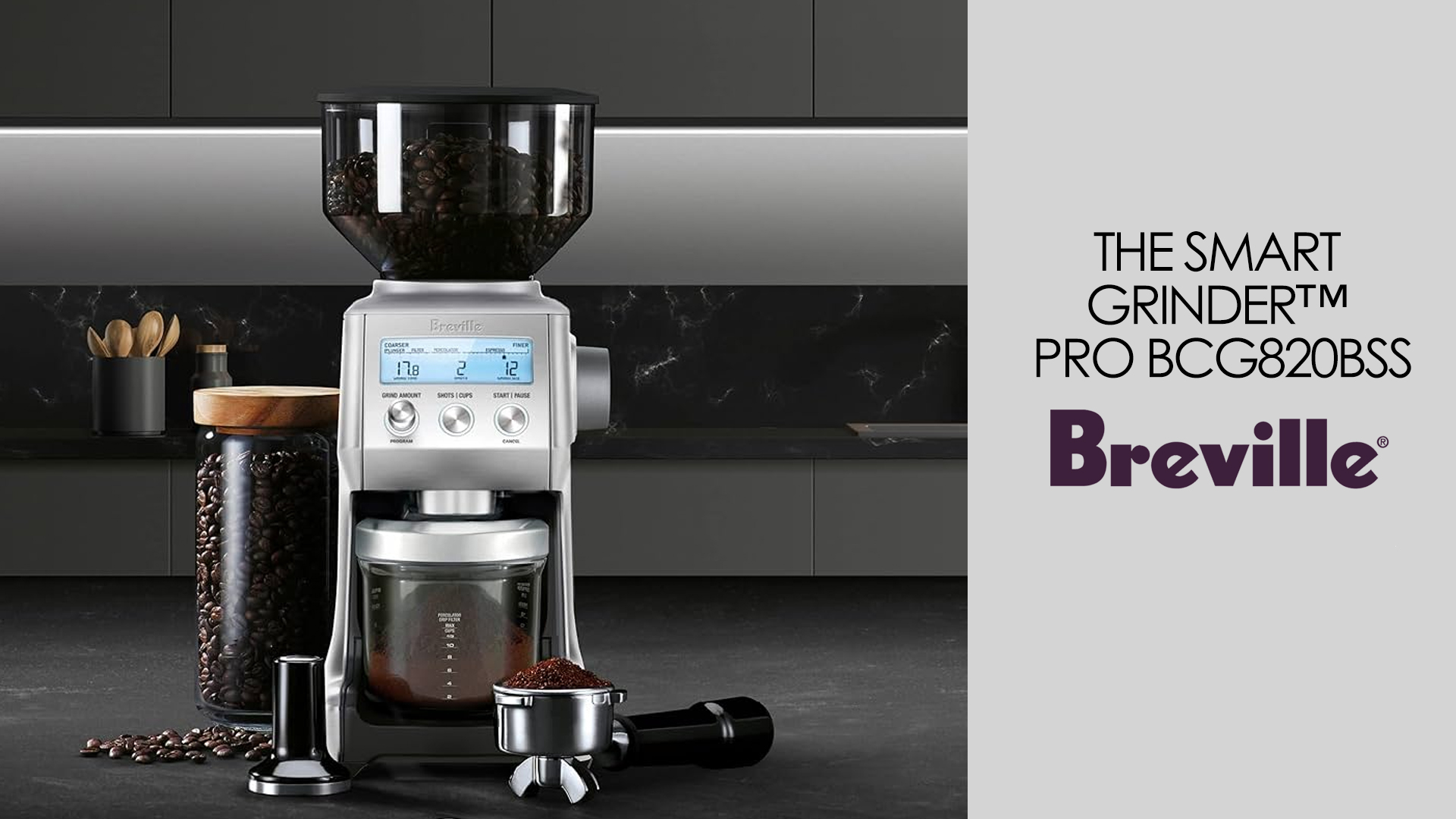
The Breville Smart Grinder Pro offers 60 precise grind settings and Dosing IQ Technology to maintain consistent dose weights across brew methods. Homegrounds found that the 40mm conical burrs deliver excellent uniformity in medium to fine ranges, while Coffeeness.de highlighted the class-leading precision of its electronic timer for repeatable dosing. However, Danielnorris identified high retention rates as a critical flaw, noting that stale grounds left in the chute mix into fresh doses and disrupt shot dialing. The large adjustment steps can also cause channeling issues, making this grinder suitable for home baristas who prioritize automation over micro-adjustment precision.
Full review
60-step precision and Dosing IQ automation
The Breville Smart Grinder Pro delivers a highly granular control scheme through its 60 distinct grind settings, which span from the finest espresso preparations to coarse French press textures. Homegrounds noted that this range is significantly broader than competitors like the Baratza Encore and Virtuoso, which offer only 40 settings. The dial provides tactile feedback with firm clicks at each interval, allowing users to navigate between brew methods without ambiguity. This extensive step count gives home baristas a wide playground for experimentation, particularly in the medium to fine ranges where most daily brewing occurs.
A standout feature identified by CoffeeGearZone is the Dosing IQ Technology, which automatically adjusts the grinding timer when the grind size dial is changed. Because coarser grinds flow faster than finer ones, switching settings would normally alter the weight of the coffee dose. The Smart Grinder Pro compensates for this by modifying the duration to keep the final output weight consistent. This automation removes the need for manual math or trial-and-error weighing during routine morning workflows.
The precision electronic timer operates with a 0.2-second resolution, enabling exact and repeatable dosing for every cup. Coffeeness.de highlighted that this digital timer was class-leading when the grinder launched in 2014 and remains relevant today. Users can program specific doses into memory slots, ensuring that an 18-gram espresso dose or a larger pour-over batch is reproduced identically day after day. The bright LCD interface displays the current grind time, setting number, and cumulative cup count, providing clear visual feedback without requiring external scales.
40mm conical burrs and 165-watt motor performance
Grinding capability is driven by a set of 40 mm stainless steel conical burrs, which rotate at a relatively low speed of 450 RPM powered by a 165-watt motor. Homegrounds explained that this lower rotational speed is traditional for conical burrs and serves to limit heat build-up in the ground coffee beans during operation. The grinder processes beans efficiently; it took approximately 10-12 seconds to grind 20 grams of coffee for a pour-over, while finer espresso doses required around 14 seconds. This output speed is sufficient for daily home use without creating excessive thermal stress on the grounds.
Grind consistency across medium and fine ranges
The grinder excels in producing consistent particle distribution within its primary operating zones. Homegrounds found that grind uniformity was excellent even at the edges of the usable range, noting that the burr set performs better than expected for this price point. The machine handles medium to fine grinds particularly well, making it suitable for drip coffee and espresso machines in the mid-range category. For French press brewing, users generally utilize the coarsest setting, which produces a clean coffee bed without excessive fines.
High retention rates disrupt shot dialing
A critical flaw identified by Danielnorris is the high retention rate caused by empty space inside the chute and burr chamber. When loading 18 grams of beans, only about 16 grams may exit the grinder; the remainder gets stuck inside. These retained grounds go stale over time and then randomly fall into subsequent shots, mixing old coffee with fresh doses. This behavior makes it incredibly frustrating to dial in an espresso shot because the flavor profile shifts unpredictably as stale grounds are introduced.
Large adjustment steps cause channeling issues
The step size on the adjustment dial is too large for precise micro-adjustments, often leaving users stuck between settings that either choke or gush the espresso machine. Danielnorris described a scenario where setting 12 chokes the shot while setting 13 produces a watery extraction in just 10 seconds. This lack of granularity forces baristas to make compromises on grind size rather than fine-tuning flow rate, which can lead to channeling and uneven water distribution through the coffee puck.
Plastic impeller durability concerns
The Smart Grinder Pro uses a plastic impeller to push coffee grounds out of the burr chamber, which Danielnorris identified as a known durability failure point. Over time, this plastic component wears down from friction and impact with hard bean particles. When the impeller degrades sufficiently, it causes the grinder to jam and produce a horrible clicking noise during operation. This mechanical weakness is not present in higher-quality grinders that utilize metal components for ground delivery.
18-ounce hopper capacity limits counter space
The bean hopper holds 18 ounces of coffee beans, which is a substantial volume designed to reduce the frequency of refills. However, Homegrounds noted that this large capacity makes the unit very tall, potentially restricting placement under standard kitchen cabinets. The hopper features a tight-sealing lid and a safety locking system to keep beans fresh and prevent spills during removal. While convenient for high-volume brewing, the physical footprint requires careful consideration of available vertical space on the countertop.
Static management and chute maintenance
Users may encounter static cling issues where grounds stick to the plastic grinds container or internal surfaces. CoffeeGearzone suggested using the RDT method, which involves spraying a tiny drop of water on whole beans before grinding, to eliminate static problems entirely. Additionally, switching between brew methods requires manual intervention; old grounds can remain lodged in the chute after dosing into a portafilter. Tapping the top lightly clears these remnants, ensuring that flavor crossover does not occur when moving from dark roast espresso to lighter pour-over beans.
Strengths
- +60 precise grind settings allow users to dial in a wide range of brew methods from espresso to French press.
- +Dosing IQ Technology automatically adjusts the timer when changing grind size to maintain consistent dose weight.
- +Precision electronic timer with 0.2-second resolution enables exact and repeatable dosing for every cup.
- +Bright LCD interface provides clear visual feedback on grind time, setting number, and shot count.
Watch-outs
- −High retention rates leave stale coffee grounds in the chute that mix into fresh doses.
- −Plastic impeller is a known durability failure point that can wear down over time.
- −Grind size adjustment steps are too large for fine-tuning, often causing channeling or chocking.
How it compares
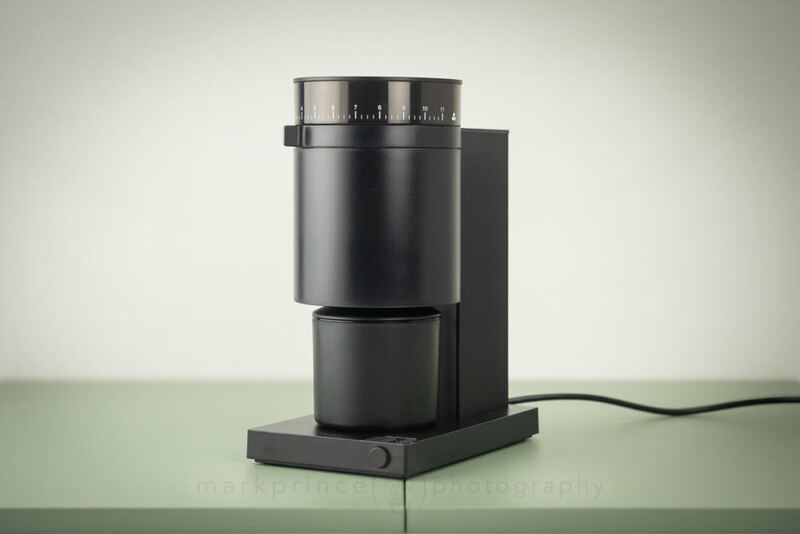
The Breville Smart Grinder Pro offers more grind settings (60) than the Fellow Opus (41), allowing for broader versatility across brew methods. However, it suffers from higher retention and larger adjustment steps compared to the Baratza Encore ESP, which provides better micro-adjustment precision for espresso.
Rating sources
Counts as 4.16/5 in our score — this publisher's 1 scores on the site average 5.00, so its scores are adjusted down to compare fairly with other publishers.
Counts as 4.30/5 in our score — this publisher's 8 scores on the site average 4.01, so its scores are adjusted up to compare fairly with other publishers.
Our 4.3 score is the average of the 3 scored reviews above, each adjusted for how strictly its publisher scores; 3 more reviewed it without printing a score and are not in the average. More about methodology.