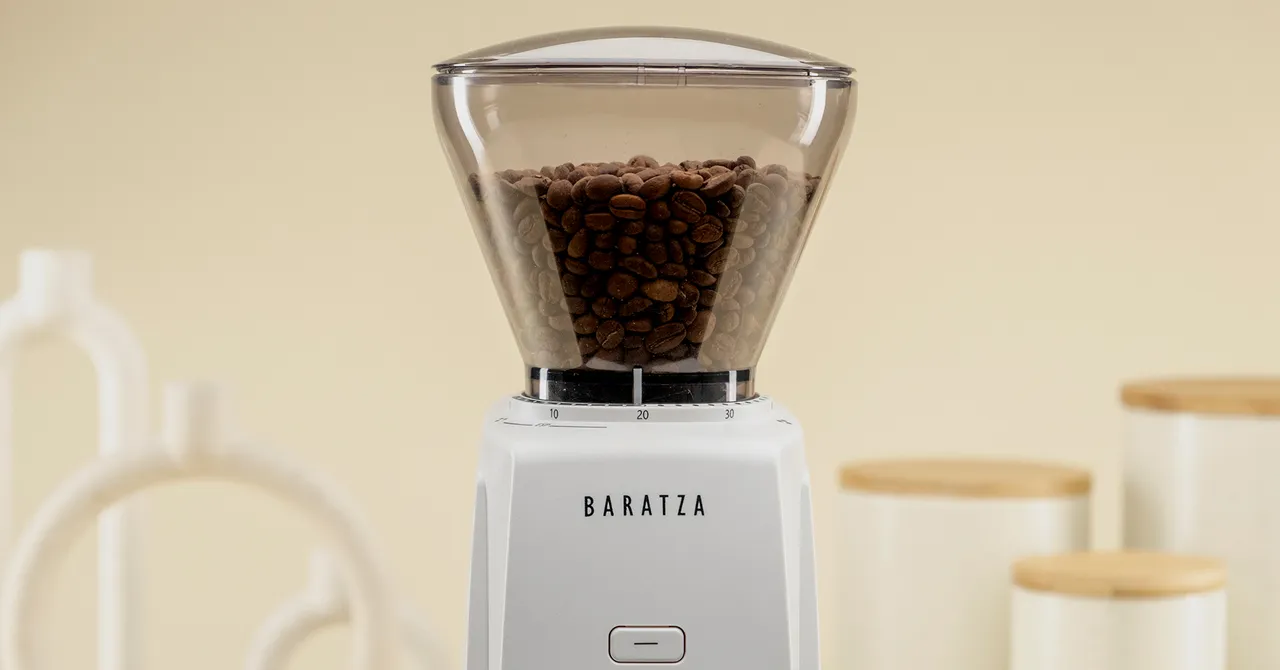
The Baratza Encore ESP features a dual-range grind adjustment system that splits its 40 steps into micro-adjustments for espresso and macro-steps for filter coffee, allowing it to produce consistent particle sizes suitable for home semi-automatic machines. WIRED found this design enables precise shot calibration by moving the burrs 20 microns per click in the fine range, while Homebarlabs noted that users typically settle between steps 5 and 15 for optimal extraction. The grinder includes a versatile dosing cup with an adapter ring for both 54mm and 58mm portafilters, though it suffers from noticeable grind retention that causes cross-contamination when switching beans. While the internal components are durable, the plastic exterior feels cheap compared to higher-end competitors, making this model best for entry-level espresso enthusiasts who prioritize function over aesthetics.
Full review
Dual-range adjustment system handles espresso and filter
The Baratza Encore ESP distinguishes itself from the standard Encore model through a specialized dual-range grind adjustment mechanism that targets two distinct brewing styles. WIRED found that this design splits the 40-step dial into two functional zones: steps zero through 20 provide micro-adjustments for espresso, while steps 21 to 40 offer macro-steps optimized for filter coffee methods like pour-over and drip. A company representative explained that in the fine range, each click moves the burrs vertically by 20 microns, allowing for the precise shot calibration required by home espresso machines.
Homebarlabs noted that this recalibrated grind range makes the entire 40-step dial sit in a finer window than the original Encore, which was primarily tuned for drip brewing. The outlet reported that for most home semi-automatic espresso machines, users will typically settle between steps 5 and 15 on the dial. This specific window offers enough resolution to dial in meaningfully without being so sensitive that minor accidental moves ruin extraction. While the standard Encore cannot consistently achieve espresso-appropriate particle sizes, the ESP version reaches grind fineness suitable for entry-level and prosumer machines, bridging a gap that usually requires purchasing two separate grinders.
40mm conical burrs deliver consistent extraction
Under the hood, the grinder utilizes 40mm hardened alloy steel conical burrs manufactured in Liechtenstein, driven by a DC motor running at 450 RPM. Thefurnishedreview highlighted that this internal build quality is comparable to grinders costing significantly more, forming the foundation of its reliability record. Homebarlabs tested the particle distribution at espresso settings and found it consistent enough to pull repeatable shots without needing adjustments between uses. They observed a slight bimodal particle distribution typical for this price point, which works well for espresso extraction and is generally preferred over flatter distributions when dealing with darker roasts.
The physical construction includes a quick-release burr design that allows the internal components to be removed for cleaning without tools. Thefurnishedreview reported that this feature turns a deep clean into a two-minute job, which is a major factor in why these grinders maintain serviceability over long periods. Owners frequently report six to twelve years of daily use with minimal issues, attributing this longevity to the durable burr set and straightforward mechanical design. While the exterior housing feels plasticky compared to higher-end competitors, the internal components are built for sustained home use rather than commercial environments.
Dosing cup adapter fits 54mm and 58mm baskets
Because the Encore ESP is hopper-fed, it does not dispense grounds directly into a portafilter like some professional grinders. Instead, it relies on a dosing cup that catches the ground coffee before transfer. Thefurnishedreview verified that this dosing cup includes an adapter ring capable of fitting both 54mm and 58mm portafilter baskets, making it versatile for various entry-level machines such as the Breville Barista series or De'Longhi Dedica. This workaround allows users to transfer grounds without creating a mess on their countertops, though it adds an extra step compared to direct-dispensing models.
The hopper itself holds approximately 230 grams of coffee beans, which is sufficient for daily home use but requires frequent refilling for heavy espresso drinkers. Homebarlabs noted that the grinder handles standard single and double portafilter baskets without modification, making it a straightforward choice for owners of semi-automatic machines like the Gaggia Classic or Rancilio Silvia. The dosing cup design ensures that users can measure their shots accurately before tamping, though those who prefer single-dose workflows may find the hopper retention problematic.
Grind retention causes cross-contamination between beans
Thefurnishedreview reported that grind retention runs higher than on pricier grinders, which can lead to noticeable cross-contamination when switching between different coffee beans. Homebarlabs observed that the finer you grind, the more problems you will experience with retention, clumping, and heat generation. This is a common trait among conical burr grinders in this price range, but it becomes particularly relevant for espresso users who frequently rotate bean varieties. The retained grounds from previous brews can mix with fresh doses, altering flavor profiles if not accounted for.
To mitigate retention issues, some owners utilize bellows or purge the grinder between switches, though this adds time to the workflow. WIRED noted that while the ESP performs well overall, users must be aware of these mechanical limitations when dialing in shots. The retained grounds can also cause slight inconsistencies if not managed properly, requiring users to discard a small amount of coffee before pulling their actual shot. This is a trade-off for the affordable price point and compact design.
DC motor produces loud operation above 90 decibels
Thefurnishedreview cited owner reports indicating that the grinder operates at over 90 decibels, making it noticeably louder than many competitors in its class. Homebarlabs confirmed that the DC motor running at 450 RPM is louder than flat burr grinders with AC motors, which can be disruptive in quiet morning environments or shared living spaces. The noise level is a frequent complaint among users who value discretion, though it does not impact grinding performance.
The loud operation stems from the motor type and gear reduction system used to drive the conical burrs at high torque. While some reviewers noted that the sound profile is consistent with other Baratza Encore models, the ESP version maintains this acoustic characteristic despite its specialized grind range. Users sensitive to noise may need to consider placing the grinder in a separate room or using it during times when loud machinery is less disruptive.
Stepped adjustment limits micro-calibration precision
WIRED found that knowing exactly which grind number you are using can be peculiarly difficult, as the stepped dial lacks digital feedback or clear tactile markers for fine adjustments. While the dual-range system provides 40 distinct steps, the transition between the espresso and filter ranges may not always feel intuitive to new users. Homebarlabs noted that moving one notch makes a measurable difference in extraction time, which is beneficial for dialing in but can be frustrating if over-adjustment occurs.
The stepped nature of the adjustment system means users cannot make infinite micro-adjustments between settings, unlike electronic grinders with digital displays. This requires more trial and error when pulling shots, as each click represents a fixed change in burr position. While sufficient for most home espresso needs, serious enthusiasts may find the lack of continuous adjustment limiting compared to higher-end models.
Plastic exterior housing feels cheap
Thefurnishedreview observed that the finishes on the outer shell and main touch points are understandably plasticky, reflecting the budget-conscious design of the Encore ESP. While the internal components are durable metal, the external casing lacks the premium feel of grinders costing twice as much. This aesthetic compromise is common in sub-$200 appliances but may deter buyers who prioritize build quality and visual appeal.
Despite the plastic construction, the grinder remains stable during operation due to its weight and base design. Homebarlabs reported that the unit weighs 3.3 pounds, providing enough mass to minimize vibration despite the loud motor. The plasticky exterior does not impact performance but may show signs of wear over time with heavy use.
Not ideal for Turkish coffee or cold brew
Homebarlabs specified that the Encore ESP is not suited for Turkish coffee, which requires a grind finer than step 1 on most setups. Similarly, WIRED noted that fans of brews using coarser grinds like French press and cold brew might want to look elsewhere, as the grinder's optimized range focuses heavily on espresso and filter methods. While steps 30 to 40 cover coarse drip and cold brew ranges, they may not achieve the extreme fineness or coarseness required for these specific brewing styles.
Thefurnishedreview added that single-dose workflows are problematic due to hopper retention and cross-contamination between different beans. Users who prefer grinding only what they need immediately may find the 230-gram hopper capacity unnecessary, as it encourages storing larger quantities of coffee that can lose freshness over time.
Strengths
- +Dual-range grind adjustment system provides micro-steps (1-20) for espresso and macro-steps (21-40) for filter coffee.
- +Capable of producing consistent particle size at fine settings suitable for home semi-automatic espresso machines.
- +Quick-release burr design allows for tool-free disassembly and cleaning in approximately two minutes.
- +Includes a versatile dosing cup with an adapter ring to fit both 54mm and 58mm portafilter baskets.
Watch-outs
- −Plastic exterior housing feels cheap compared to higher-end competitors in the same price range.
- −Experiences noticeable grind retention that can cause cross-contamination between different coffee beans.
How it compares
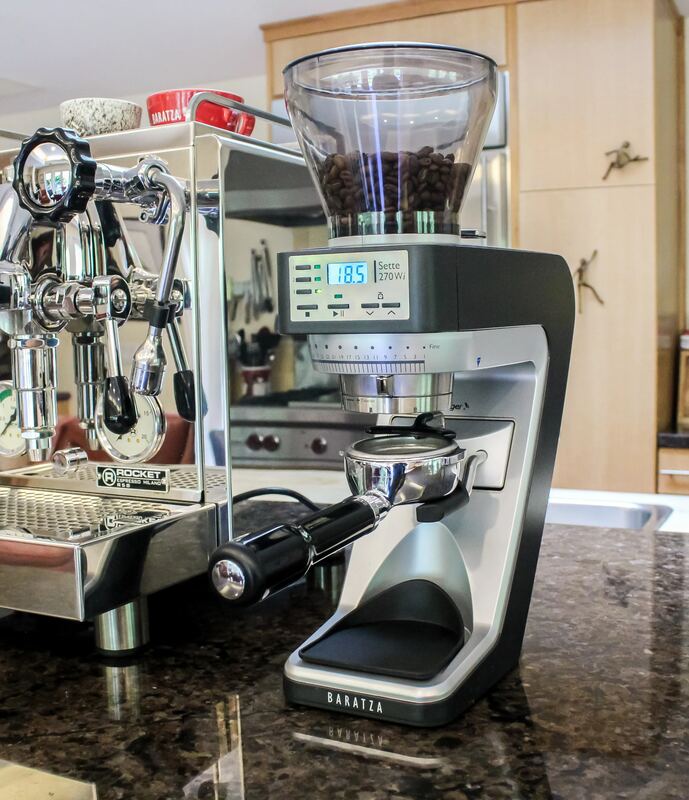
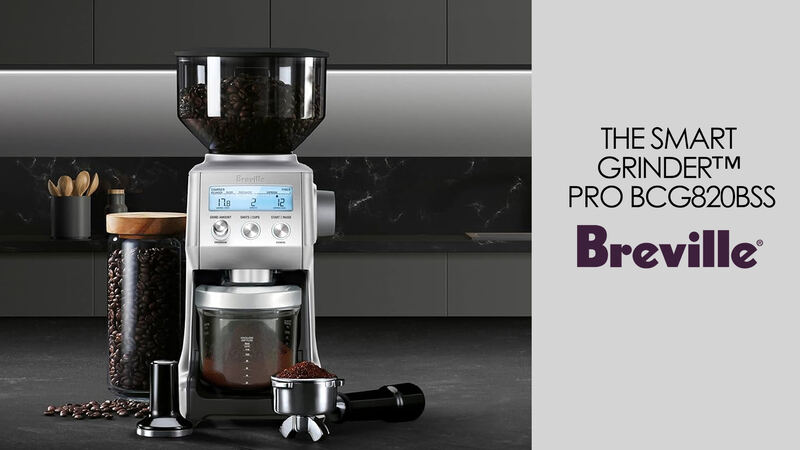
The Baratza Encore ESP distinguishes itself from the Breville Smart Grinder Pro by offering a dual-range adjustment system that provides finer micro-steps for espresso, whereas the Breville's large steps can cause channeling. It also avoids the extreme noise of the Baratza Sette 270wi, making it more suitable for quiet households despite having higher retention than the Sette.
Rating sources
Counts as 4.84/5 in our score — this publisher's 31 scores on the site average 3.77, so its scores are adjusted up to compare fairly with other publishers.
Our 4.6 score is the average of the 2 scored reviews above, each adjusted for how strictly its publisher scores; 4 more reviewed it without printing a score and are not in the average. More about methodology.