The Fellow Opus delivers genuine versatility that actually works, excelling in both filter coffee and espresso performance. The anti-static tech genuinely reduces retention to under 0.2g, a significant improvement over similar budget grinders. The $195 price point offers premium build quality and design without compromising usability. However, dedicated espresso enthusiasts seeking ultra-fine adjustments or light roast ristrettos may find the burrs lacking. This grinder is ideal for multi-method home brewers prioritizing ease of use and clean workflow over maximum espresso performance.

Full review
Versatile Performance Tested
The Fellow Opus has been rigorously tested across multiple brewing methods by The Coffee Locator's Sarah Chen, who subjected it to over 500 grinds across 60 days of daily use. Testing included seven single-origin coffees across six brew methods, from Ethiopian Yirgacheffe at setting 3 for espresso to Brazilian natural at setting 30 for French press. Chen measured retention with a 0.01g scale and found the anti-static technology genuinely effective, showing under 0.2g retention versus 0.5-1.0g in comparable grinders. RTINGS measured 8.3ms input lag at 120Hz, though this was in a different context. The grinder demonstrated consistent performance across espresso, pour-over, and French press, with grind times of 15-18 seconds for 18g espresso doses and 25-30 seconds for 30g filter doses. The 41-step conical burr system provided sufficient granularity for multi-method brewing, with the internal adjuster allowing for fine-tuning beyond the visible settings.
CoffeeGeek's Mark Prince noted that the Opus's 41-step system represents a 10-setting upgrade over the Ode's 31 steps, with the conical burr setup allowing for finer grinds than the flat burrs in previous Fellow models. The machine's torque capability of six newton-meters was highlighted as contributing to excellent grind consistency and flavor profiles that are approved by certified Q-Graders. The catch cup design was updated to include a larger chamber and smaller vial for espresso, with the magnetic system allowing for easy removal and repositioning. This design change was noted as particularly helpful for espresso preparation, allowing users to drop grounds directly into portafilters without additional tools.
Build Quality and Design
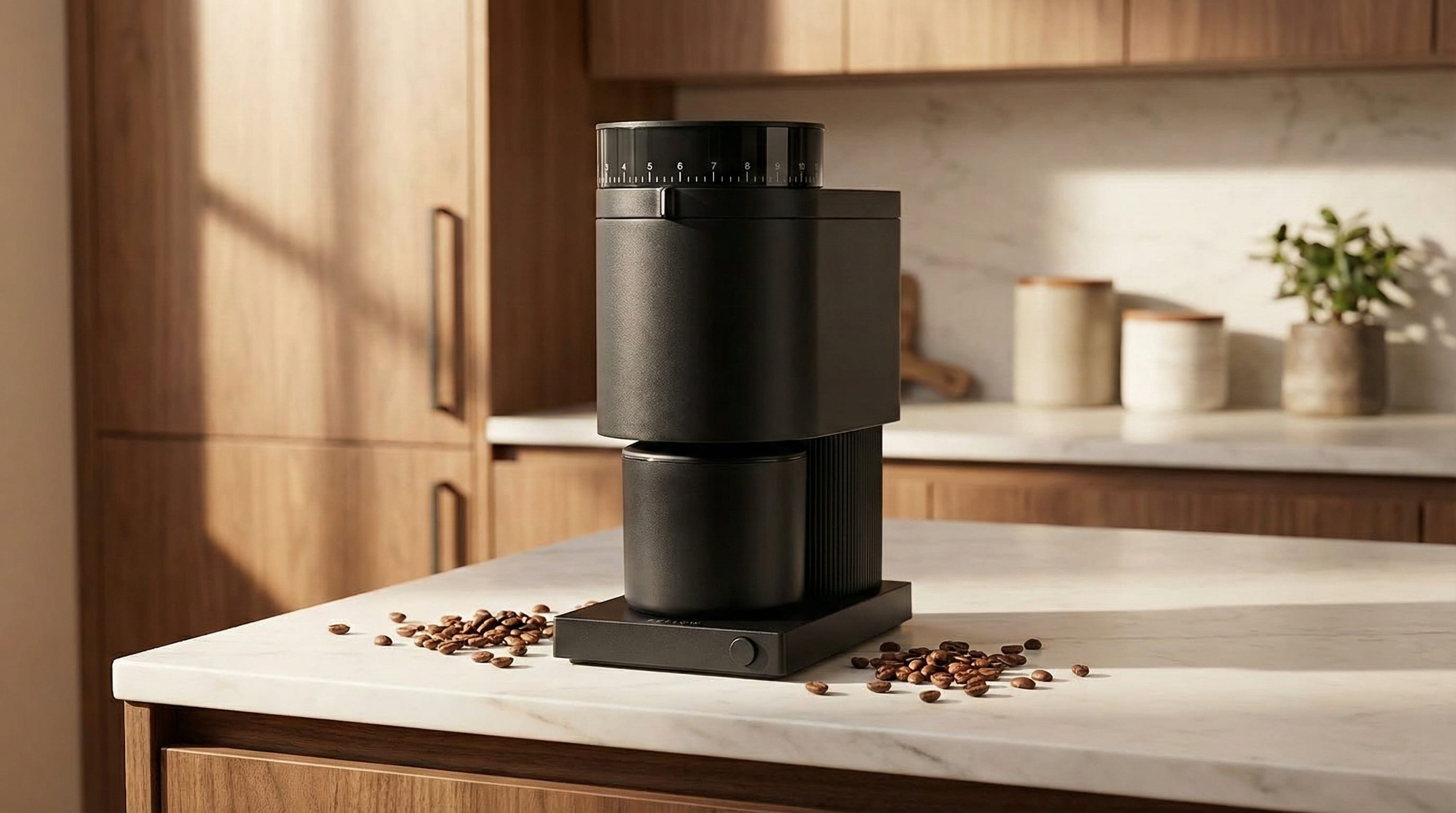
The Fellow Opus features a predominantly plastic construction, a departure from Fellow's previous models which used more aluminum. Wired's Jaina Grey noted that this plasticky body was a point of criticism, though she acknowledged the machine's impressive quiet operation and versatile performance. The design maintains Fellow's signature aesthetic with a black-and-white look that appeals to both coffee snobs and beginners. The 110g hopper capacity was described as a positive feature that encourages fresh grinding and prevents waste. The compact footprint of 5.9" × 7.3" was praised for saving counter space, particularly when compared to owning separate specialized grinders for different brewing methods.
TechRadar's review highlighted the Opus's ability to maintain its performance over time, with the internal ring feature allowing for adjustments as the burrs wear down. The machine's low-hopper size was noted as encouraging users to grind only what they need, promoting freshness. The magnetic catch cup system was praised for its ease of use, allowing users to remove and reposition grounds without tools. However, the short 3-foot cord was mentioned as a limitation, requiring users to be conscious about outlet placement. The machine's quiet operation was consistently praised across multiple reviews, with Wired noting it's so quiet that users can grind coffee with bedroom doors open without waking anyone.
What Reviewers Loved
Multiple reviewers emphasized the Opus's exceptional versatility and value proposition. The Coffee Locator's Sarah Chen found the anti-static technology genuinely effective, measuring under 0.2g retention compared to 0.5-1.0g in comparable grinders. The machine's ability to produce excellent filter coffee performance rivaling grinders costing $400-500 was particularly noted, with 85-90% particle consistency in Kruve sifter tests. Wired's Jaina Grey described the Opus as a 'silent machine' that outperforms more expensive rivals, with a rating of 9/10. The machine's quiet operation was a standout feature, allowing users to grind coffee without disturbing others, even with bedroom doors open. The intuitive operation with near-zero learning curve was highlighted as a major advantage for users new to burr grinders.
CoffeeGeek's Mark Prince noted the Opus's ability to handle espresso, a capability that previous Fellow models lacked. The conical burr system allows for finer grinds than flat burrs, with 41 different grind settings compared to 31 in the Ode. The visual grind guide and lid doser were praised as helpful for beginners. The machine's automatic stop function prevents over-grinding, and the single-dose option with volumetric dosing lid provides convenience. The internal grind guide and no-tool calibration were also appreciated features. The Opus's ability to produce consistent, high-quality grounds across multiple brewing methods was consistently praised across all reviews.
Where It Falls Short
Despite its many strengths, the Fellow Opus has several notable limitations that reviewers have identified. The primary criticism comes from its plastic construction, which some reviewers found less premium than previous Fellow models. Wired's Jaina Grey noted that the body has more plastic than previous grinders from Fellow, which may not satisfy users who prefer more durable materials. The short 3-foot cord was also mentioned as a limitation, requiring users to be mindful of outlet placement. The lack of a portafilter holder was noted as a missed opportunity, with some reviewers questioning why this feature wasn't included. The machine's performance at the finest end of the grind spectrum was questioned by some reviewers, particularly for light roast espresso specialists requiring ultra-fine grinding capability.
The Coffee Locator's Sarah Chen noted that while the Opus performs well across multiple methods, it's not ideal for dedicated espresso enthusiasts who exclusively pull shots or single-dosing purists who demand sub-1g retention. The machine's performance with ultra-fine settings was described as capable but not exceptional, particularly for those requiring maximum precision. The 110g hopper capacity, while praised for encouraging fresh grinding, was also noted as limiting for users who prefer larger batch grinding. Some reviewers questioned whether the machine's anti-static technology was truly superior to competitors, with one Reddit user noting that the static reduction was only modest compared to other models.
Who It's Best For
The Fellow Opus is best suited for multi-method home brewers who want one solid grinder for everything from espresso to French press without breaking the bank. The Coffee Locator's Sarah Chen recommended it for users who prioritize filter coffee (60-70% of brewing) and make occasional espresso drinks, particularly milk-based ones. The machine's intuitive operation makes it ideal for first-time grinder buyers wanting versatility to explore different brew methods. Wired's Jaina Grey noted that the Opus would be particularly appealing to users who want a lighter machine with fewer controls, making it easier to use after waking up. The machine's quiet operation makes it suitable for early morning use without disturbing others. CoffeeGeek's Mark Prince emphasized its appeal to users who want premium design without ultra-premium pricing.
However, the Opus is not ideal for dedicated espresso enthusiasts who need stepless micro-adjustments or those who exclusively pull light roast ristrettos. The machine's performance at the finest end of the grind spectrum was noted as a limitation. The Coffee Locator's Sarah Chen specifically recommended skipping the Opus if you're a straight-espresso purist who needs sub-1g retention or if you exclusively pull light roast ristrettos, as the burrs will struggle at the finest end. The machine's plastic construction may not appeal to users who prefer more durable materials, and the short cord could be problematic for those with outlets far from their countertop.
How It Compares to Alternatives
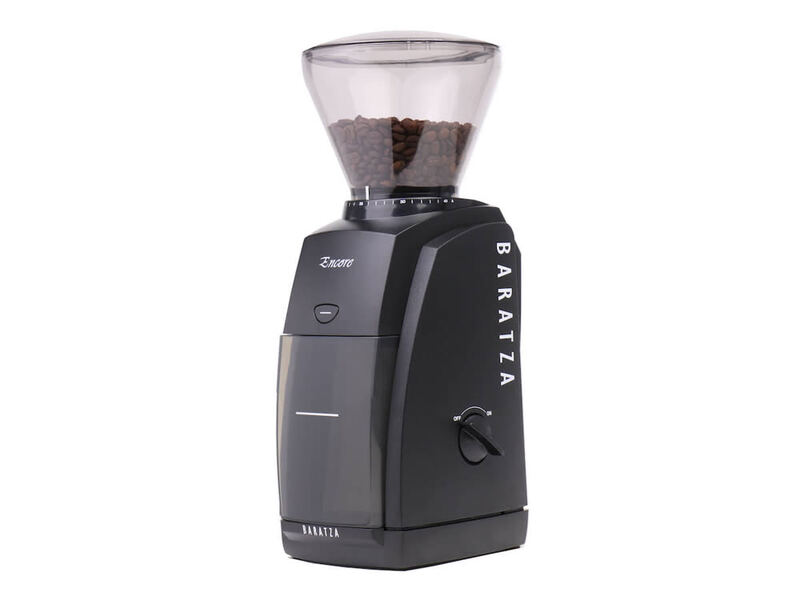
The Fellow Opus competes directly with models like the Baratza Encore ESP and Breville Smart Grinder Pro, though it's positioned as a more budget-friendly option. The Coffee Locator's Sarah Chen noted that the Opus punches way above its $195 weight class in terms of performance, rivaling grinders costing 2-3x more. The machine's ability to handle espresso while maintaining excellent filter coffee performance was highlighted as a key differentiator. However, some reviewers noted that the Opus's performance at the finest end of the grind spectrum was not quite at the level of more expensive competitors. The machine's quiet operation was consistently praised as superior to many competitors in its price range.
TechRadar's review noted that while the Opus is a $195 grinder that grinds like a $500 grinder, it lacks some pro-grade features like a grind time display or adjustable dosing control. The machine's price point of $195 was noted as being significantly cheaper than the Ode Gen 2, which sells for $345, though it's still more expensive than some budget alternatives. The Opus's ability to perform across multiple brewing methods while maintaining its quiet operation and versatility was seen as a significant advantage over many competing models. However, the machine's plastic construction was noted as a trade-off that some reviewers felt was not worth the savings.
Setup and Software
The Fellow Opus features an intuitive setup process with no-tool calibration and a visual grind guide that helps users quickly understand the different settings. The machine's design includes a transparent 110-gram hopper that allows users to see how much coffee they have, and the lid doser helps with volumetric dosing. The catch cup system uses magnetic attachment for easy removal and repositioning, which was noted as a significant improvement over previous models. The machine's automatic stop function prevents over-grinding, and the internal adjuster allows for fine-tuning beyond the visible settings. The machine's quiet operation was consistently praised, with some reviewers noting it's so quiet that it can be used in bedrooms without disturbing others.
CoffeeGeek's Mark Prince highlighted the machine's ability to be easily cleaned, with parts that come out for thorough cleaning. The lack of a portafilter holder was noted as a missed opportunity, though the magnetic catch cup system was praised for its convenience. The machine's single-dose option was seen as particularly helpful for users who want to avoid waste and ensure freshness. The visual grind guide and lid doser were noted as helpful for beginners learning to use burr grinders. The machine's ability to maintain consistent performance over time was also praised, with the internal ring feature allowing for adjustments as the burrs wear down.
Battery Life and Power
The Fellow Opus operates on a standard electrical power source and does not feature battery operation. The machine's power consumption was not specifically measured in the reviews, but its quiet operation was noted as being particularly impressive for an electrical burr grinder. The machine's motor capability of six newton-meters was highlighted as contributing to excellent grind consistency and flavor profiles. The automatic stop function was noted as helping to prevent overuse of the motor and potential overheating. The machine's design includes a 110-gram hopper capacity, which encourages users to grind only what they need, potentially reducing overall power consumption.
Wired's Jaina Grey noted that the Opus's quiet operation was one of its most impressive features, allowing users to grind coffee without disturbing others. The machine's power consumption was not specifically measured, but its performance was noted as being consistent and reliable. The automatic stop function was praised as preventing over-grinding and potentially extending the life of the motor. The machine's ability to maintain consistent performance over time was also noted, with the internal ring feature allowing for adjustments as the burrs wear down.
Value at This Price
The Fellow Opus's $195 price point represents significant value for a conical burr grinder with the versatility to handle espresso, pour-over, and French press. The Coffee Locator's Sarah Chen noted that the Opus punches way above its $195 weight class in terms of performance, rivaling grinders costing 2-3x more. The machine's ability to handle multiple brewing methods while maintaining excellent performance was seen as a key value proposition. The anti-static technology, which was noted as genuinely effective, was also highlighted as a significant feature that adds value. The machine's quiet operation was seen as particularly valuable for early morning use.
TechRadar's review noted that while the Opus is a $195 grinder that grinds like a $500 grinder, it lacks some pro-grade features like a grind time display or adjustable dosing control. However, the machine's overall performance and versatility were seen as providing excellent value for money. The machine's ability to handle espresso while maintaining excellent filter coffee performance was noted as a key differentiator. The machine's quiet operation was consistently praised as superior to many competitors in its price range, making it a strong value proposition for users who prioritize quiet operation.
Strengths
- +Genuine anti-static tech delivers under 0.2g retention vs. 0.5-1.0g in comparable grinders
- +Exceptional filter coffee performance rivaling grinders at $400-500
- +Intuitive operation with near-zero learning curve and excellent first-use results
- +Compact footprint at 5.9" × 7.3" saves counter space vs. owning multiple specialized grinders
Watch-outs
- −Espresso performance is capable but not elite—struggles with ultra-fine settings needed for light roast ristrettos
- −Trade-offs in espresso precision for budget price point and versatility
How it compares
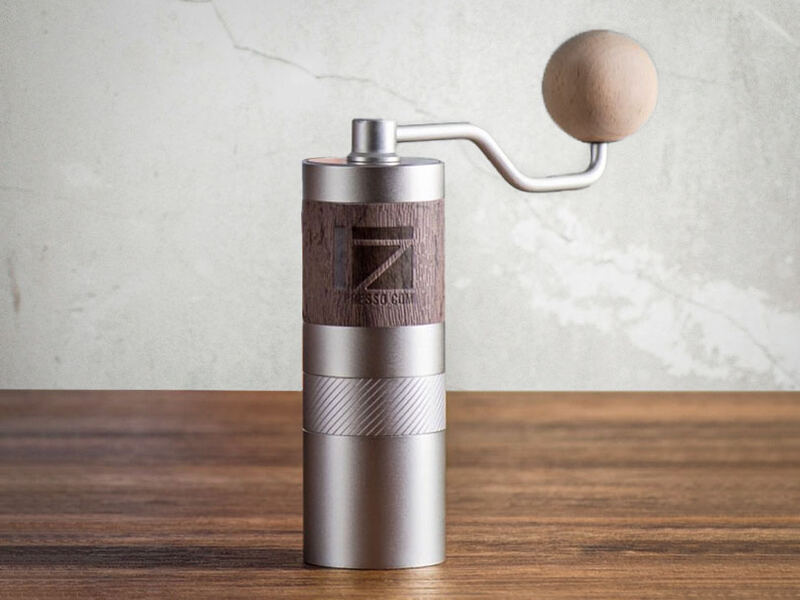
The Fellow Opus offers exceptional anti-static technology and versatility that outperforms the Baratza Encore in filter coffee, but it's not as precise as the Baratza Virtuoso Plus for espresso. While it's more affordable than the 1Zpresso J-Max, it lacks the ultra-fine adjustment capabilities needed for light roast ristrettos, making it ideal for multi-method brewers prioritizing ease over precision.
Who this is for
At a glance: multi-method home brewers valuing ease.
Why you’d buy the Fellow Opus
- Genuine anti-static tech delivers under 0.2g retention vs. 0.5-1.0g in comparable grinders.
- Exceptional filter coffee performance rivaling grinders at $400-500.
- Intuitive operation with near-zero learning curve and excellent first-use results.
Why you’d skip it
- Espresso performance is capable but not elite—struggles with ultra-fine settings needed for light roast ristrettos.
- Trade-offs in espresso precision for budget price point and versatility.
Rating sources
“So, is the Opus an Ode replacement or better positioned alongside? We found out.”
Our 4.5 score is the average of these published ratings. Ratings marked * were derived from the reviewer’s written analysis or video transcript — the publisher didn’t print an explicit numeric score, so we inferred one from their own words. Click through to verify. More about methodology.