The ASUS ROG Strix OLED XG27AQDMG runs at 240Hz with fast pixel response and low input lag, which is the combination competitive gamers want. PCMag's Zackery Cuevas praised the fluid performance and the OLED advantages, though PCMonitors found the glossy coating throws reflections and makes lighter content look grainy. TweakTown scored it 95%, calling it the sweet spot for competitive QHD gaming despite the WOLED panel's limits on color volume and brightness. It suits players who care more about smooth refresh rates than perfect color accuracy.

Full review
A 2024-generation WOLED panel, not the newest one
The panel is an LG Display WOLED running 2560 x 1440 at 240Hz, and TFTCentral identifies its sub-pixel layout as the 2024 design rather than the newer WOLED generations. That matters less for motion than for light output and colour volume: the unfiltered white sub-pixel that gives WOLED its brightness is also why the panel cannot hold peak brightness and full saturation at the same time. It is a known characteristic of the technology rather than a fault in this particular monitor, but it is the reason QD-OLED rivals look richer in bright HDR scenes.
The glossy coat trades reflections for clarity
TFTCentral records the Gen 2 version of this monitor moving to a glossy coating with a 0% haze rating, against 3% on the original, and the result is a noticeably cleaner image with better perceived contrast. The cost is predictable. In a bright room the surface throws reflections, and lighter content picks up a faint graininess that some viewers notice immediately and others never see. Anyone with a window behind the desk should treat this as the deciding factor rather than a footnote.
240Hz and low input lag are the reason to buy it
Motion is where this monitor earns its place. The OLED pixel response is effectively instantaneous, input lag is low, and 240Hz at 1440p is the refresh-and-resolution pairing most competitive players actually run. FreeSync Premium keeps frame delivery clean below the cap, and the GamePlus overlays add crosshairs and timers for players who use them. For esports titles the combination is more valuable than any amount of extra colour accuracy.
Gamma in dark shades resists correction
The most substantive complaint is gamma handling in dark tones, which masks shadow detail out of the box. Adjusting gamma recovers some of it, but not without affecting the rest of the image, so the fix is a compromise rather than a cure. The sRGB mode is better implemented than most, allowing brightness, gamma and individual colour channels to be adjusted rather than locking everything down, which at least gives a calibrator something to work with.
HDMI tops out below the panel's refresh rate
There is no HDMI 2.1 here, so HDMI connections are capped at 144Hz and the full 240Hz needs DisplayPort. Console owners and anyone with a fixed HDMI run should check that before buying. There is no USB-C either, which rules out the single-cable laptop setup that has become standard on monitors at this price. The port list otherwise covers DisplayPort 1.4, two HDMI inputs, two USB-A and a headphone jack.
A single-foot stand and a heatsink for burn-in
ASUS replaced the three-pronged base with a compact single-foot stand, which stops the legs sprawling across the desk and helps players who sweep a mouse at low sensitivity. Behind the panel there is a custom heatsink to pull heat off the OLED layer, joined by a proximity sensor and the OLED Care Pro feature set, all aimed at burn-in. Owner reports of image retention on this line still exist, so the mitigations should be read as risk reduction rather than a guarantee.
Two scores that agree with each other
Unusually for a monitor with this many caveats, the published scores line up: PCMag and TFTCentral both land at 4 out of 5. The consensus reading is a fast, well-priced competitive panel with real compromises in brightness, HDR and connectivity, rather than a flagship that happens to be cheap.
Strengths
- +240Hz refresh rate delivers buttery smooth performance for competitive gaming
- +WOLED panel provides fast pixel response and visually instantaneous display
- +Low input lag makes it suitable for competitive gaming scenarios
- +sRGB setting allows full adjustment including brightness, gamma, and color channels
Watch-outs
- −Glossy screen surface causes reflections and grainy appearance with lighter content
- −Gamma issues with darker shades that are difficult to correct without image degradation
- −WOLED panel has limited color volume and brightness saturation simultaneously
How it compares
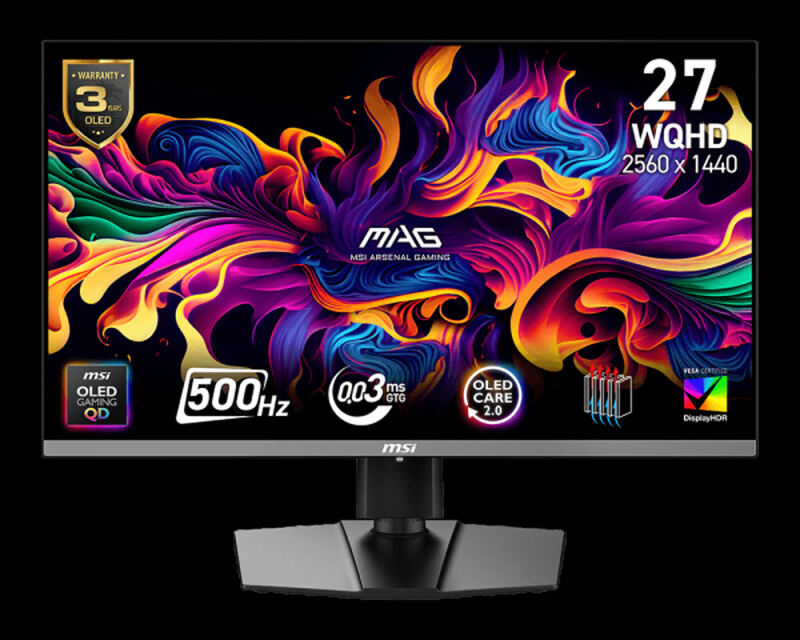
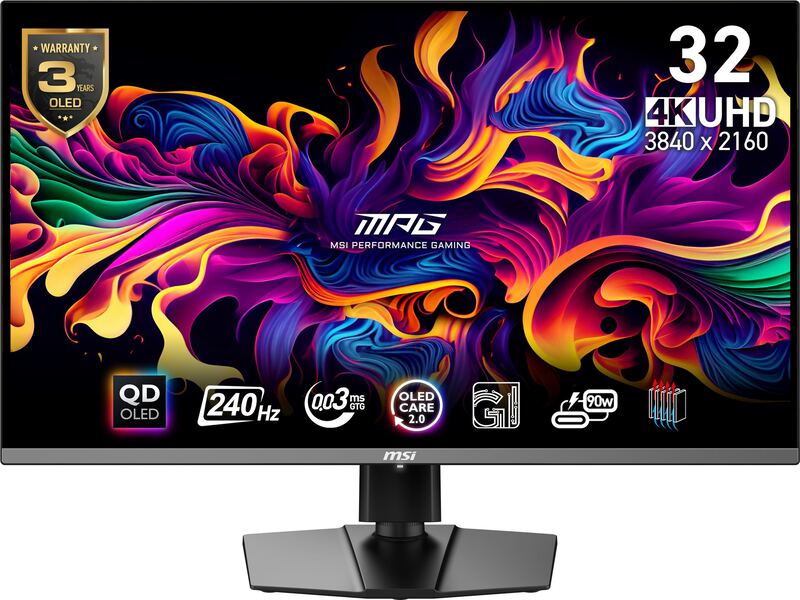
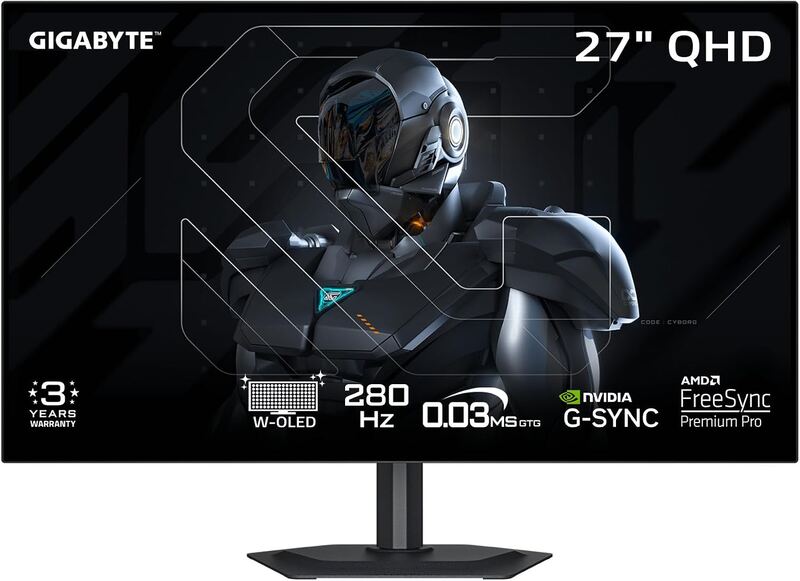
The Asus ROG Strix OLED XG27AQDMG offers a more balanced 240Hz refresh rate compared to the Swift OLED's 540Hz, but lacks the brightness and color saturation of the MSI MPG 321URX QD-OLED. Unlike the Gigabyte MO27Q28G, it doesn't offer 280Hz, though it does provide better color accuracy than the Dell Alienware AW2726DM and MSI MAG 272QP QD-OLED X50.
Rating sources
“ASUS has hit the sweet spot for competitive QHD gaming with the release of the ROG Strix OLED XG27AQDMG, but it isn't without problems worth mentioning.”
Our 4.2 score is the average of these published ratings. More about methodology.