The Asus ROG NUC (2025) packs an Intel Core Ultra 9 275HX CPU and Nvidia GeForce RTX 5080 Laptop GPU into a compact 3-liter chassis, delivering desktop-rivaling gaming performance in a small footprint. GeekaWhat found the unit’s engineering impressive for housing such high-end silicon within its tiny dimensions, while PCMag noted it can sustain stable frame rates in demanding titles like Cyberpunk 2077 at maximum settings. The system offers extensive connectivity with five display outputs and user-upgradeable storage and memory up to 96 GB of DDR5 RAM. This model fits users who prioritize high performance in a portable form factor but should be avoided by those seeking absolute silence or budget-friendly pricing.
Full review
Desktop power crammed into a 3-liter chassis
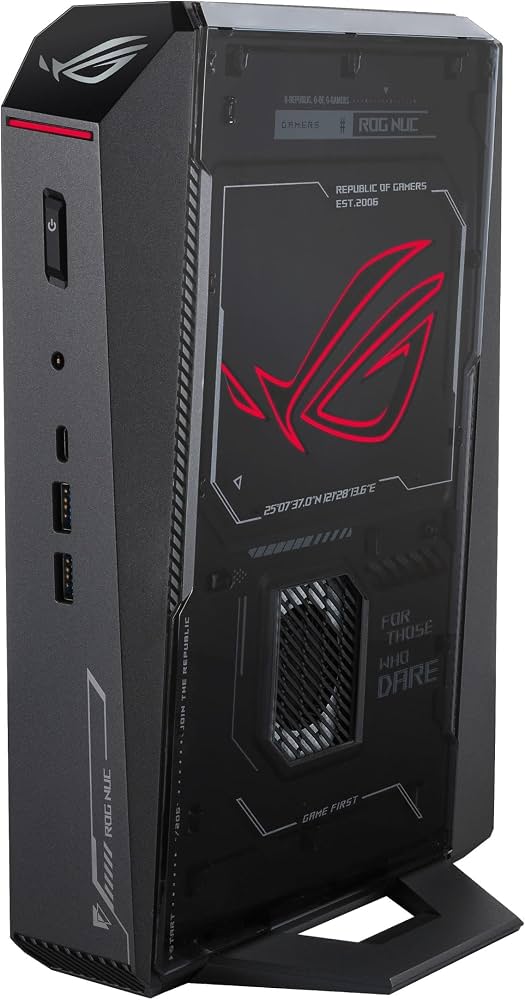
The Asus ROG NUC (2025) redefines the boundaries of mini PC gaming by housing high-end mobile silicon within an ultra-compact footprint that measures just 187.7 x 282.4 x 56.5 mm and weighs approximately 3 kilograms, according to GeekaWhat. The design prioritizes vertical density over horizontal spread, resulting in a chassis that resembles an oversized graphics card when stood upright on its integrated stand.
PCMag highlights this spatial efficiency by noting how the unit delivers genuine desktop-rivaling performance despite its diminutive size, effectively bridging the gap between portable gaming rigs and stationary workstations. The compact dimensions allow it to fit comfortably next to a 4K television or within tight desk setups where traditional towers would dominate the space. This portability is not merely theoretical; reviewers emphasize that the system can be easily transported in a large backpack, making it suitable for users who want identical high-performance computing environments across different locations without sacrificing gaming fidelity.
Core Ultra 9 and RTX 5080 deliver smooth 4K frame rates
Performance benchmarks confirm that the combination of an Intel Core Ultra 9 275HX processor and an Nvidia GeForce RTX 5080 Laptop GPU provides exceptional gaming capabilities. Notebookcheck.net recorded stable performance in demanding titles at Full HD resolutions, often extending smoothly into QHD settings as well. The system leverages modern technologies like DLSS 4 and Frame Generation to significantly boost frame rates, ensuring that even graphically intensive games run without stuttering or dropping frames during critical moments.
Real-world gaming tests described by reviewers show zero stutter in titles such as Warhammer 40k: Space Marine 2 when played at maximum settings on a 4K display. The hardware handles swarms of enemies and complex particle effects effortlessly, maintaining consistent frame pacing that rivals dedicated desktop systems with full-size graphics cards. PCMag found the machine capable of squeezing out stable 60 fps in most modern games, including heavily modded versions of Cyberpunk 2077 and Red Dead Redemption 2, proving that the mobile silicon inside is fully optimized for high-fidelity gaming experiences.
Five display outputs maximize multi-monitor productivity
Connectivity on the ROG NUC (2025) is extensive, featuring five distinct video output options that cater to both gamers and content creators. The rear panel houses two HDMI 2.1 ports and two DisplayPort 2.1 connections, while a Thunderbolt 4 port doubles as a DP 2.1 interface, allowing users to drive up to five displays simultaneously at 4K resolution. This array of outputs eliminates the need for docking stations or hub expansions for most standard setups, providing direct connectivity for monitors, capture cards, and streaming equipment.
The inclusion of Thunderbolt 4 also facilitates rapid data transfer speeds alongside display signals, making it easy to connect high-speed external storage solutions without bottlenecking performance. PCWorld noted that this wealth of ports allows users to connect all gaming peripherals directly to the NUC, reducing desk clutter significantly. However, some reviewers pointed out that an SD card reader is notably absent from the front I/O panel, which might inconvenience creators who frequently transfer media files from cameras or drones without relying on external adapters.
Cooling efficiency balances heat with audible fan noise
Managing thermal output in such a confined space requires aggressive cooling solutions, which Asus has implemented using blower-style fans visible through ventilation cutouts on the chassis sides. Notebookcheck.net praised the excellent cooling unit for maintaining stable performance across CPU, GPU, and SSD components under load, preventing thermal throttling that often plagues smaller form factor PCs. The system successfully keeps temperatures in check, with reviewers noting maximum GPU temperatures hovering around 70 degrees Celsius even during extended gaming sessions at full load.
Despite the effective heat dissipation, the acoustic profile is a trade-off inherent to high-performance mini PCs. PCWorld and other reviewers observed that the cooling fans grow audible under heavy workloads, particularly the CPU cooler which activates noticeably around 60 to 70 percent load levels. While the GPU fan remains relatively quiet, emitting only a faint whisper during intense gaming, the overall system noise becomes perceptible enough that users seeking absolute silence in their living room or office environments may find it distracting compared to larger desktop cases with more massive airflows.
Wi-Fi 7 connectivity shows signal strength limitations
Networking hardware includes an Intel Killer Wi-Fi 7 BE1750W module and a Killer E3000 2.5 Gigabit Ethernet controller, providing the theoretical bandwidth necessary for modern internet speeds and low-latency gaming. The system supports Bluetooth 5.4 as well, ensuring compatibility with contemporary wireless peripherals. These specifications position the ROG NUC (2025) at the forefront of connectivity standards, ready to handle high-throughput tasks like streaming and large file transfers.
Steep pricing reflects premium compact engineering
The cost of acquiring this level of performance in a 3-liter chassis comes with a significant financial premium. The model tested by PCMag, equipped with a Core Ultra 9 275HX and RTX 5070 Ti Laptop GPU alongside 32GB of RAM and a 2TB SSD, retailed for $2,799.
Limited upgrade paths constrain long-term flexibility
While the ROG NUC (2025) offers more expandability than typical gaming laptops, its self-upgrade options are restricted compared to traditional desktop towers. The system allows users to replace M.2 NVMe SSDs and add or upgrade DDR5 RAM modules up to a maximum of 96 GB, as confirmed by Notebookcheck.net. However, the CPU and GPU are soldered directly to the motherboard, meaning these core components cannot be swapped out over time.
Strengths
- +Delivers high-end gaming performance in a compact chassis using an Intel Core Ultra 9 275HX CPU and Nvidia GeForce RTX 5080 Laptop GPU.
- +Features extensive connectivity with five display outputs, including two HDMI 2.1 ports, two DisplayPort 2.1 ports, and one Thunderbolt 4 port.
- +Includes fast networking hardware with a Killer E3000 2.5 Gigabit Ethernet controller and Intel Killer Wi-Fi 7 module.
- +Offers user-upgradeable storage via dual M.2 slots and expandable memory up to 96 GB of DDR5 RAM.
Watch-outs
- −Comes with a steep price tag, starting around $1,899 for base models and reaching over $3,000 for the flagship RTX 5080 configuration.
- −Fans become audible under load, particularly the CPU cooler which kicks in at moderate usage levels.
How it compares
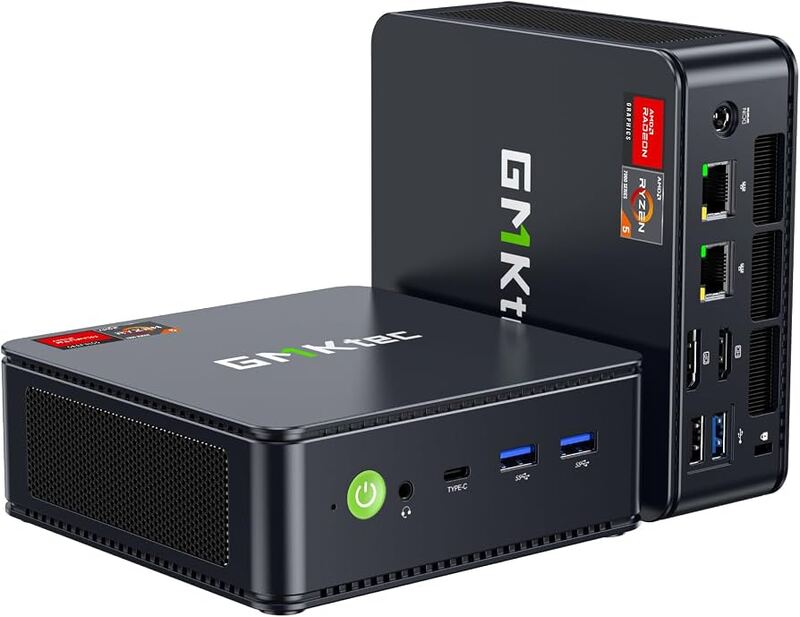
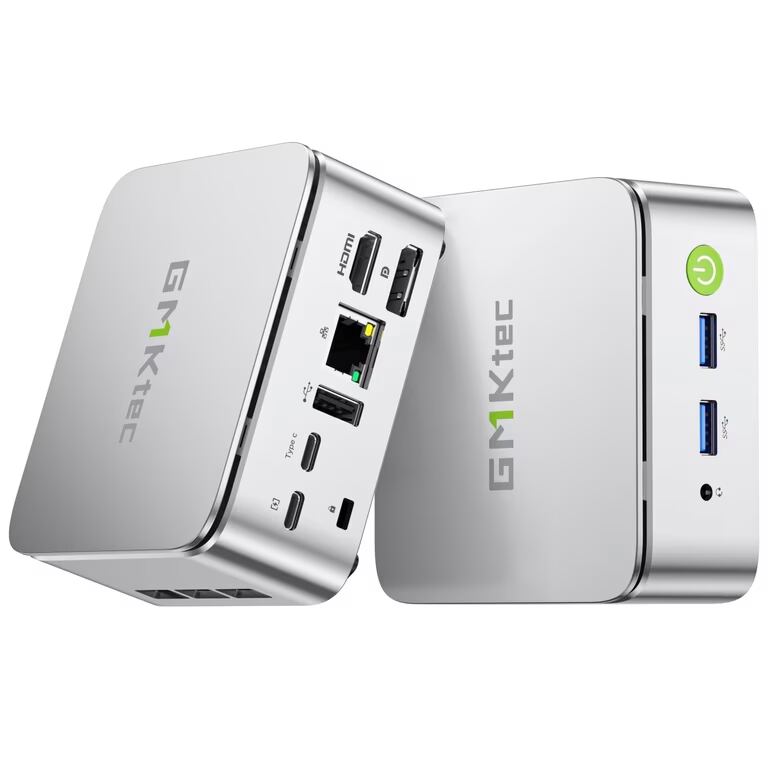
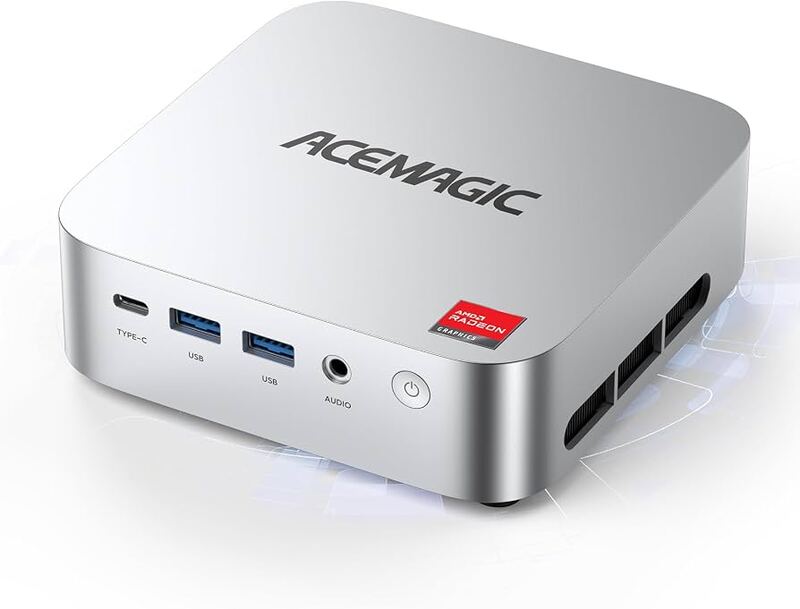
The Asus ROG NUC 2025 delivers desktop-rivaling gaming performance with an RTX 5080 Laptop GPU, vastly outperforming the integrated graphics of the AceMagic K1 and GMKtec NucBox M6 Ultra. It features five display outputs including Thunderbolt 4, offering more connectivity options than the Geekom A9 Max's dual USB4 ports or the GMKtec G10's lack of modern high-speed standards like USB4.
Rating sources
Our 4.3 score is the average of the 4 scored reviews above; 2 more reviewed it without printing a score and are not in the average. More about methodology.