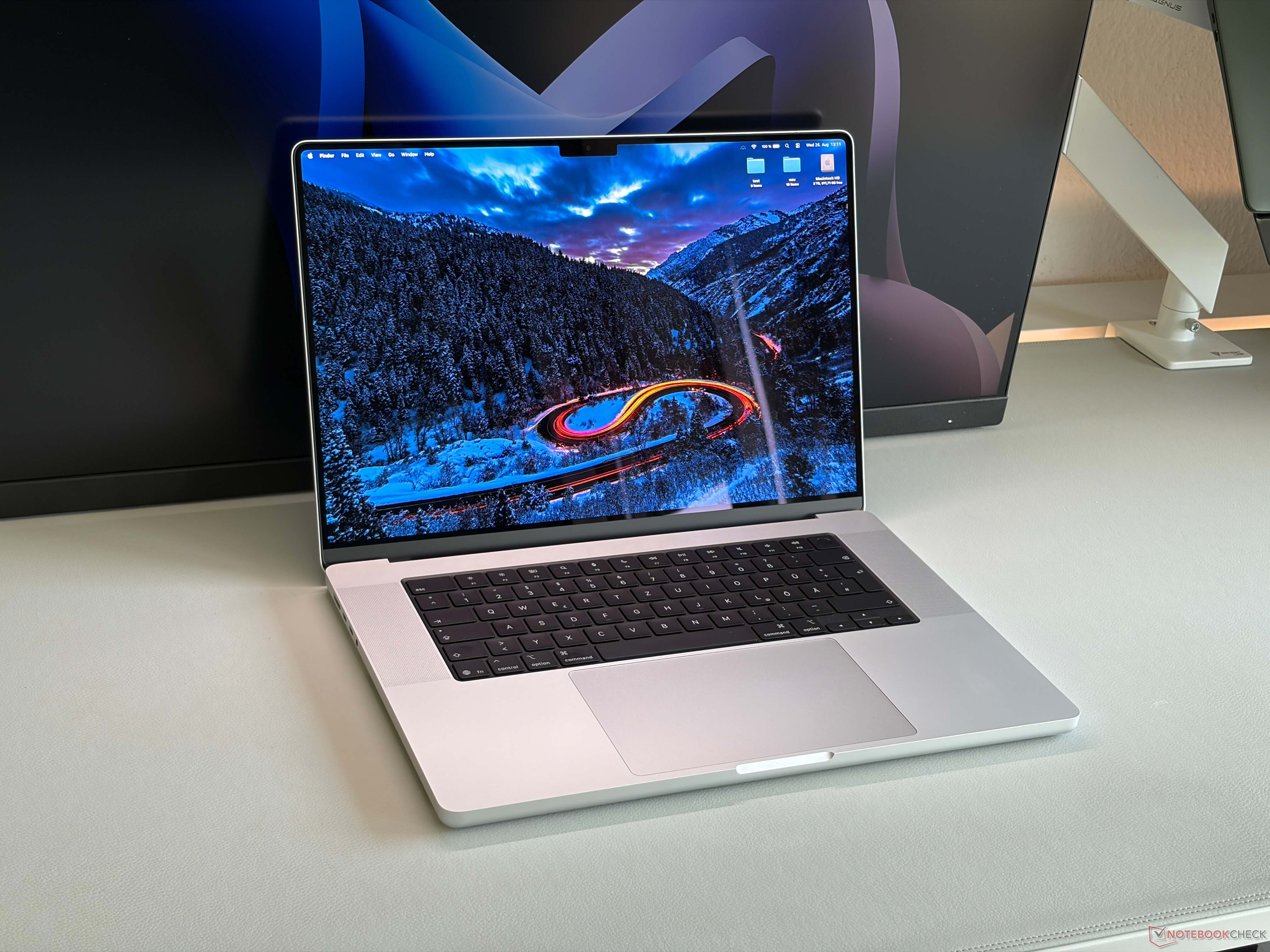
Notebookcheck rates the 2026 MacBook Pro 16 with the M5 Max 92% and calls it one of the most powerful and complete packages in the multimedia segment, while warning that the chassis can only cool 70 watts and the 140W adapter cannot keep the battery from draining under full load. AppleInsider gives it 5 out of 5, pointing to new neural accelerators in the GPU for on-device LLMs and image generation and a memory bandwidth increase to 614GB/s. Memory is shared between CPU and GPU and can be configured up to 128GB.
Full review
Shared memory instead of fixed VRAM
Notebookcheck writes that the M5 Max GPU can access the system memory, which it calls an advantage over most Windows competitors with Nvidia GPUs that are usually limited to 8 or 16 GB of VRAM. Its list of pros includes up to 128 GB of RAM and 8 TB of SSD storage on the M5 Max.
AppleInsider reports that Apple added neural accelerators to the GPU for on-device local LLMs and image generation, and that memory bandwidth rose from 546GB/s to 614GB/s, a change it describes as negligible for most tasks but useful for certain local AI workflows.
Performance and the 70-watt ceiling
Notebookcheck measured the 40-core M5 Max GPU at 12% slower than a 120W RTX 5090 in the Asus ProArt P16 in 3DMark Steel Nomad, and recorded 2490 points in Cinebench 2024 multi-core. It notes that this performance is also available on battery power.
The same review found that the cooling system can only handle 70 watts: in its stress test the chip drew up to 114 watts and then levelled off at 70. AppleInsider recorded a Geekbench Metal score of 223887, which it puts 18 percent ahead of the 40-core M4 Max.
Power adapter and battery
Notebookcheck recorded a maximum draw of 150 watts against a 140W adapter and saw the battery fall from 100 to 88% after one hour of combined load, a result that did not change with a 180W adapter. Under light use it measured 18.5 hours in its Wi-Fi test at 150 nits and almost 7 hours at maximum SDR brightness.
AppleInsider did not notice a battery life improvement over the previous model in daily use, but said the laptop still lasts a full day of writing work.
Noise, display and weight
Notebookcheck measured fan noise of almost 54 dB(A) in High Power mode and about 41 dB(A) in Automatic mode, with the fans inaudible in Low Power mode. It measured the Mini-LED panel at close to 700 nits in SDR and up to 1737 nits in HDR, and lists constant PWM flickering and slow response times among the cons.
AppleInsider calls the weight noticeable at almost five pounds and notes that the design is nearly unchanged from the previous generation while the price went up.
Strengths
- +GPU shares system memory, configurable up to 128 GB (Notebookcheck)
- +AppleInsider reports new GPU neural accelerators for on-device LLMs and memory bandwidth of 614GB/s
- +18.5 hours in Notebookcheck's Wi-Fi test at 150 nits
- +Fans usually inaudible in everyday use; Low Power mode measured 24.8 dB(A) (Notebookcheck)
- +Mini-LED display measured up to 1737 nits in HDR (Notebookcheck)
Watch-outs
- −Notebookcheck found the 140W power adapter insufficient: the battery dropped by 12% in one hour under full load
- −Cooling limits the M5 Max to about 70 watts sustained (Notebookcheck)
- −Fans reach almost 54 dB(A) in High Power mode (Notebookcheck)
- −Constant PWM flickering and slow response times (Notebookcheck)
- −Price increased over the previous generation and the design is unchanged (AppleInsider)
How it compares
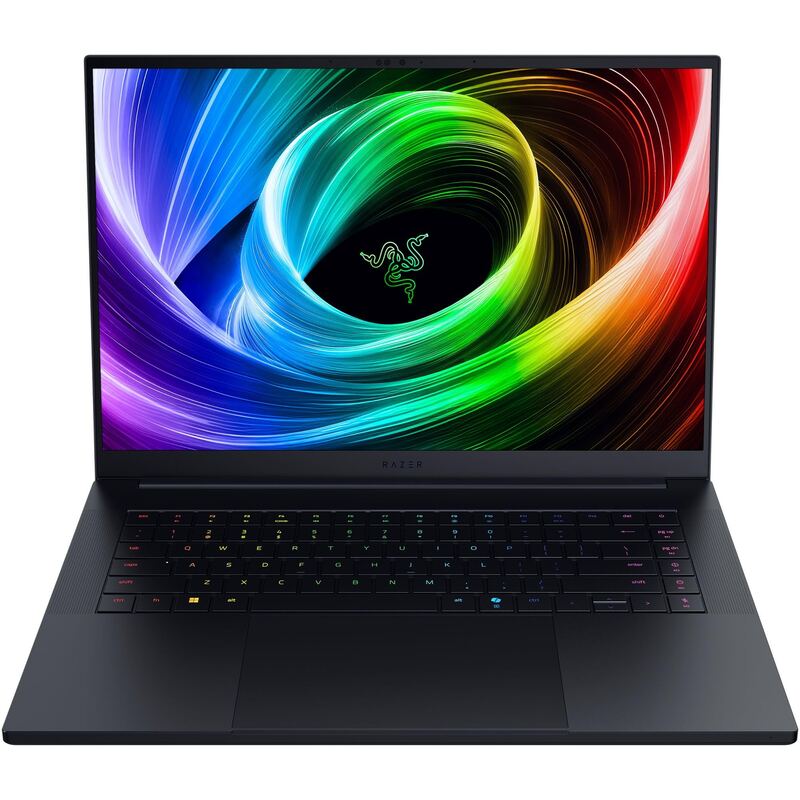
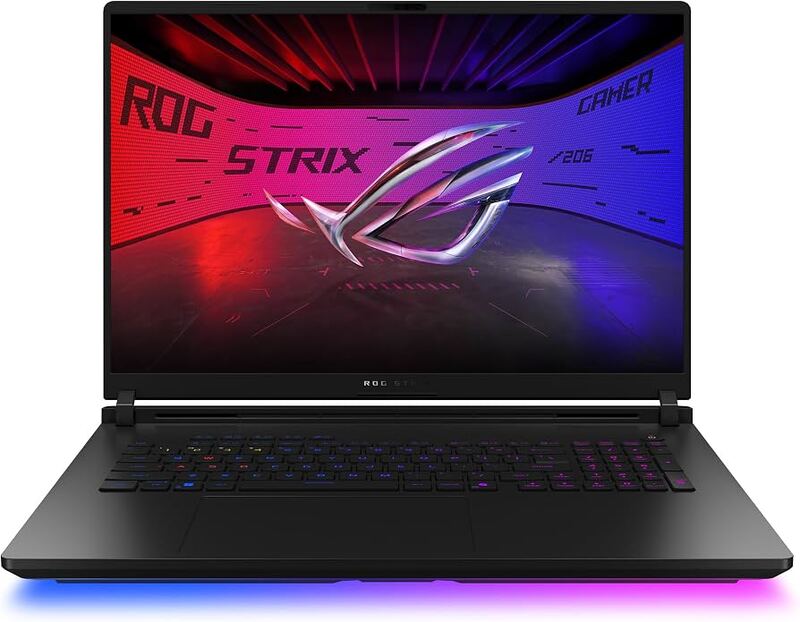
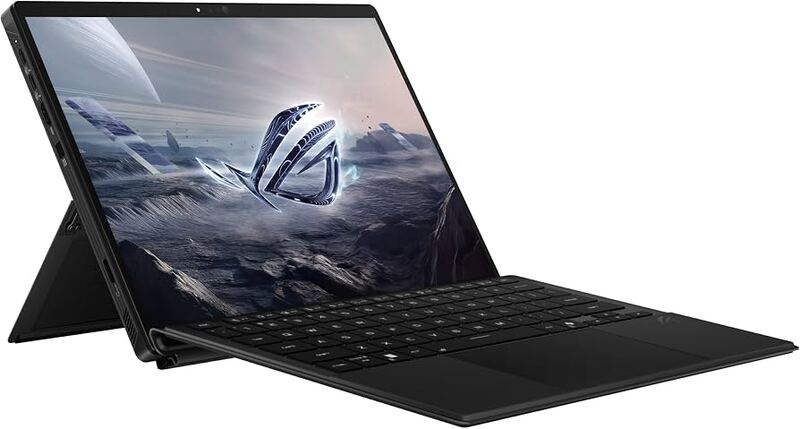
Notebookcheck notes that the M5 Max GPU can use system memory, unlike Windows laptops whose Nvidia GPUs have fixed VRAM; the Asus ROG Strix Scar 18 (2026) and Razer Blade 16 (2026) on this page each have a 24GB RTX 5090. The Asus ROG Flow Z13 takes the same shared-memory approach on Windows. Notebookcheck weighed this laptop at 4.73 pounds, close to the Razer's 4.71 and well under the Scar 18's 8.16.
Price history Within 5% of its tracked low
17 daily reads from amazon.com since Oct 29, 2026. Lowest $3,789 (Oct 29), highest $3,899.99 (Nov 11), latest $3,899 (Nov 22).
Rating sources
Counts as 4.52/5 in our score — this publisher's 7 scores on the site average 4.30, so its scores are adjusted down to compare fairly with other publishers.
Counts as 4.94/5 in our score — this publisher's 16 scores on the site average 4.25, so its scores are adjusted down to compare fairly with other publishers.
Our 4.7 score is the average of these published ratings, each adjusted for how strictly its publisher scores. More about methodology.