Verdict
Head-to-head · Best Laptops For Machine Learning

Apple MacBook Pro 16 (2026, M5 Max) vs Razer Blade 16 (2026) with RTX 5090

Which is the better buy? Side-by-side on rating, price, strengths, and watch-outs — with the published ratings we averaged to get there.

Verdict is reader-supported. As an Amazon Associate we earn from qualifying purchases. Some links on this page are affiliate links — if you click through and buy, we may earn a small commission at no extra cost to you. Our ratings are sourced from independent publications, not sponsors.
The short answer

Apple MacBook Pro 16 (2026, M5 Max) comes out ahead by a narrow margin (4.7 vs 4.5). Apple MacBook Pro 16 (2026, M5 Max) is best for: Local inference with large models on battery, using memory shared between CPU and GPU and configurable up to 128GB. Read the strengths below before deciding.

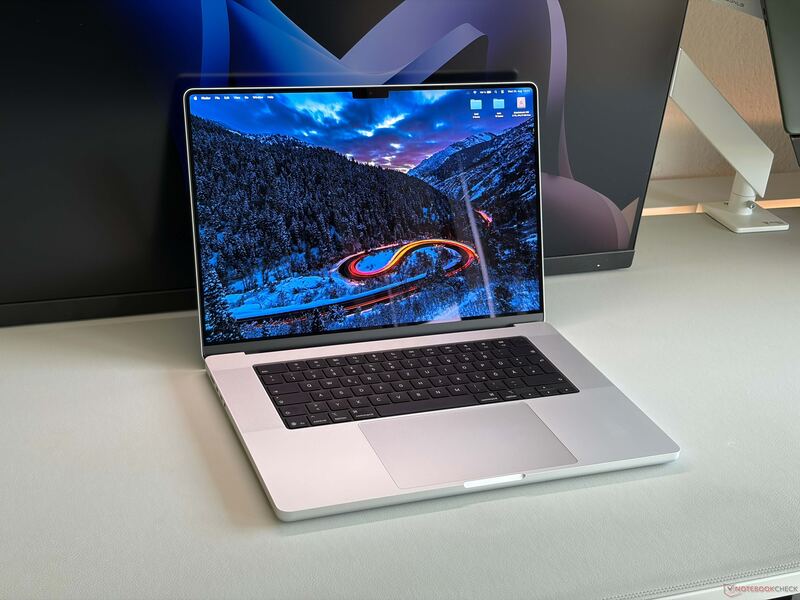
Apple MacBook Pro 16 (2026, M5 Max)
Higher ratedRanked #1 in Best Laptops For Machine Learning
Apple MacBook Pro 16 (2026, M5 Max)
2 sources$3,899as of Nov 8

Notebookcheck rates the 2026 MacBook Pro 16 with the M5 Max 92% and calls it one of the most powerful and complete packages in the multimedia segment, while warning that the chassis can only cool 70 watts and the 140W adapter cannot keep the battery from draining under full load. AppleInsider gives it 5 out of 5, pointing to new neural accelerators in the GPU for on-device LLMs and image generation and a memory bandwidth increase to 614GB/s. Memory is shared between CPU and GPU and can be configured up to 128GB.

Strengths
  • — GPU shares system memory, configurable up to 128 GB (Notebookcheck)
  • — AppleInsider reports new GPU neural accelerators for on-device LLMs and memory bandwidth of 614GB/s
  • — 18.5 hours in Notebookcheck's Wi-Fi test at 150 nits
Watch-outs
  • — Notebookcheck found the 140W power adapter insufficient: the battery dropped by 12% in one hour under full load
  • — Cooling limits the M5 Max to about 70 watts sustained (Notebookcheck)
  • — Fans reach almost 54 dB(A) in High Power mode (Notebookcheck)
Razer Blade 16 (2026) with RTX 5090
Ranked #2 in Best Laptops For Machine Learning
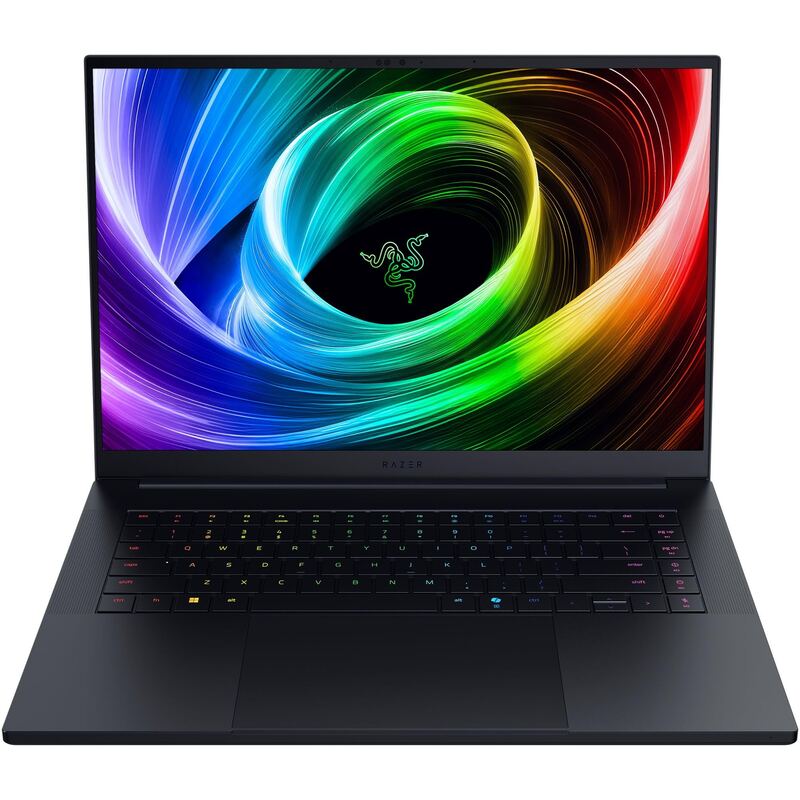
Razer Blade 16 (2026) with RTX 5090
2 sources$4,899.99as of Oct 10

The Razer Blade 16 delivers top-tier gaming performance via the Nvidia GeForce RTX 5090 mobile GPU housed in an exceptionally thin, premium CNC-milled aluminum chassis. Ultrabookreview found that while the build quality is dense and stylish, the device suffers from noticeable flex in the keyboard deck and lid compared to past generations. The glossy OLED display offers stunning contrast and high brightness but lacks an anti-reflective coating, causing significant mirror-like reflections in bright environments. Additionally, a column of non-standard macro keys disrupts muscle memory and leads to frequent accidental presses during typing. This laptop fits users who prioritize portability and premium aesthetics over raw thermal efficiency or ergonomic comfort. Buyers seeking better value, superior battery life for all-day use, or a glare-free screen should look elsewhere.

Strengths
  • — Features a premium CNC-milled aluminum chassis that is exceptionally thin (14.9mm) and lightweight for its class at approximately 2.1kg.
  • — Equipped with a high-end OLED display offering QHD+ resolution, 240Hz refresh rate, and up to 1,100 nits peak brightness in HDR modes.
  • — Includes an extensive port selection such as Thunderbolt 5, HDMI 2.1, USB-A ports, and a UHS-II SD card reader despite the slim profile.
Watch-outs
  • — The glossy OLED screen lacks anti-reflective coating, causing significant mirror-like reflections in bright environments.
  • — Includes a column of non-standard macro keys that disrupts muscle memory and leads to accidental key presses.

How they stack up

Apple MacBook Pro 16 (2026, M5 Max)

Notebookcheck notes that the M5 Max GPU can use system memory, unlike Windows laptops whose Nvidia GPUs have fixed VRAM; the Asus ROG Strix Scar 18 (2026) and Razer Blade 16 (2026) on this page each have a 24GB RTX 5090. The Asus ROG Flow Z13 takes the same shared-memory approach on Windows. Notebookcheck weighed this laptop at 4.73 pounds, close to the Razer's 4.71 and well under the Scar 18's 8.16.

Razer Blade 16 (2026) with RTX 5090

Tom's Hardware lists the same RTX 5090 (24GB GDDR7, 175 W) here as in the Asus ROG Strix Scar 18 (2026), in a chassis it weighed at 4.71 pounds against the Scar's 8.16. Tom's Hardware also measured nearly 13 hours of non-gaming battery life. Memory is 32GB of LPDDR5X on the linked configuration, whereas Ultrabookreview's Scar 18 unit ran 128 GB in two DIMM slots.

Specs side-by-side

SpecApple MacBook Pro 16 (2026, M5 Max)Razer Blade 16 (2026) with RTX 5090
ProcessorApple M5 Max, 18-core CPUIntel Core Ultra 9 386H
GraphicsIntegrated 32-core GPU on the linked configuration (40-core optional); shares system memoryNvidia GeForce RTX 5090 (24GB GDDR7, 175 W max TGP)
Display16.2-inch Mini-LED, 3456 x 223416-inch OLED, 2560 x 1600, 240Hz
Memory36GB unified memory on the linked configuration; up to 128GB32GB LPDDR5X-9600
Storage2TB SSD2TB PCIe 4.0 NVMe SSD
Weight4.73 lb4.71 lb
Battery99.6 Wh90 Wh
Dimensions9.77 x 0.66 x 14.01 inches—
← See the full ranking of best laptops for machine learning