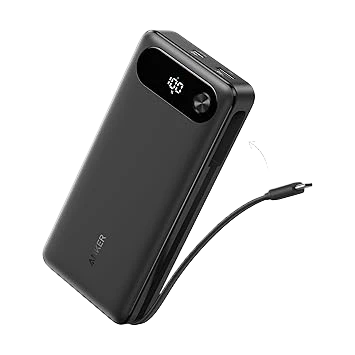
The Anker A1383 delivers a genuine 65W fast-charge to laptops via its USB-C port or built-in cable, while Smart Gadget Kit confirmed it recharges fully in about 1.5 hours with a 65W adapter. Its approximately 72Wh capacity stays under the 100Wh airline carry-on threshold, and Adam Talks Tech verified that double-pressing the button activates a dedicated low-power mode for small accessories like earbuds. However, the unit weighs around 440g, making it strictly a bag item rather than a pocket carry, and it does not support pass-through charging. This power bank fits travelers needing reliable laptop charging on flights but may disappoint users requiring simultaneous input-output operation or ultra-portable weight.
Full review
65W output handles laptops at full speed
The defining capability of this power bank is its ability to deliver a genuine 65 watts of fast-charge power directly to laptops. This figure comes from either the dedicated USB-C port or the integrated cable, allowing users to maintain their computing workflow without hunting for wall outlets. While Anker markets the device with an 87-watt label, that number represents the total shared output when multiple ports are active simultaneously; a single connected device is capped at the 65-watt limit. This distinction matters because it confirms the unit can sustain high-draw devices like MacBook Pros during intensive tasks such as video editing or running complex applications.
The built-in USB-C cable matches the performance of the standalone port, delivering that same maximum speed without requiring users to carry a separate cord. For travelers and remote workers, this integration removes friction from the charging process. Its stiffness provides enough structural integrity to remain connected securely even when navigating tight spaces like airplane tray tables or cramped hotel desks.
72Wh capacity stays under airline limits
With a rated energy capacity of approximately 72 watt-hours, the power bank sits comfortably below the standard 100-watt-hour carry-on threshold enforced by most commercial airlines. This specification allows users to bypass checked baggage restrictions and keep their charging solution within reach during flights. For context regarding actual usage on the ground, this capacity translates to roughly 61 watt-hours of usable output after accounting for typical conversion losses inherent in USB-C power delivery protocols.
In practical scenarios involving mobile devices, that energy reserve provides substantial coverage. It can fully charge a smartphone like an iPhone 16 approximately four and a half times or provide over three full charges to a high-capacity device such as the Samsung Galaxy S24 Ultra. For tablet users, it offers about two complete cycles for an iPad Pro. This makes it a viable primary power source for multi-day trips where access to mains electricity is limited or entirely unavailable.
Recharges in 1.5 hours with fast input
Unlike many competitors in the same capacity class that require half a day to refill, this unit supports rapid self-recharging via its USB-C port when paired with a sufficiently powerful wall adapter. SmartGadgetKit confirmed that using a 65-watt charger allows the battery to reach full capacity in approximately one and a half hours. This speed is critical for users who cycle through their power bank daily during long workdays, as it minimizes downtime between charging sessions.
Adam's Faves highlighted this fast input capability as a major differentiator compared to older Anker models that top out at much lower input wattages. To achieve the advertised recharge time, users must supply an external charger rated for 65 watts or higher; using a standard low-power brick will significantly extend the refill duration. This requirement adds a minor cost consideration but ensures the power bank remains ready for immediate use after short breaks.
440g weight restricts pocket carry
The substantial 65-watt output and large cell capacity come with a tangible physical trade-off: the unit weighs approximately 440 grams. This mass firmly categorizes the power bank as a bag item rather than a pocket carry, making it cumbersome to transport in clothing pockets or small sleeves. Users who primarily charge lightweight smartphones might find this weight unnecessary compared to lighter 10,000-milliamp-hour alternatives.
No pass-through charging capability
The device lacks support for pass-through charging, meaning it cannot simultaneously accept power from a wall outlet while discharging to charge connected devices. This limitation forces users to choose between recharging the bank itself or powering their gadgets at any given moment. For travelers who might want to top off both their laptop and the power bank during an overnight layover, this absence requires careful planning around available power sources.
Trickle mode enables low-power charging
Charging small electronics like wireless earbuds or smartwatches often fails with standard power banks because the devices draw too little current to keep the charger active. This model addresses that issue through a dedicated low-power mode activated by double-pressing the front button, which illuminates a green indicator light. Adam Talks Tech demonstrated this feature, noting it allows safe and reliable charging of trickle-draw accessories without the power bank shutting down prematurely.
Discharge efficiency drops at low levels
In MobileReviewsEh's discharge test at maximum speed, the pack stopped at 30%, and after a restart it went dead at 20%; the reviewer suspects the unit gets too hot and shuts itself off. Across the test the bank delivered 53 watt-hours against the advertised 72.
Strengths
- +Delivers a genuine 65W fast-charge to laptops via either the USB-C port or the built-in cable, as confirmed by smartgadgetkit and Adam Talks Tech.
- +Rated at approximately 72Wh capacity, keeping it well under the 100Wh airline carry-on threshold for flight safety.
- +Supports rapid self-recharging in about 1.5 hours when paired with a 65W USB-C wall adapter, according to smartgadgetkit and Adam's Faves.
- +Includes a dedicated low-power mode activated by double-pressing the button to safely charge small devices like wireless earbuds.
Watch-outs
- −Weighs approximately 440g (15.5 oz), making it too heavy for pocket carry and strictly a bag item.
- −Does not support pass-through charging, meaning the power bank cannot charge connected devices while simultaneously recharging itself.
How it compares
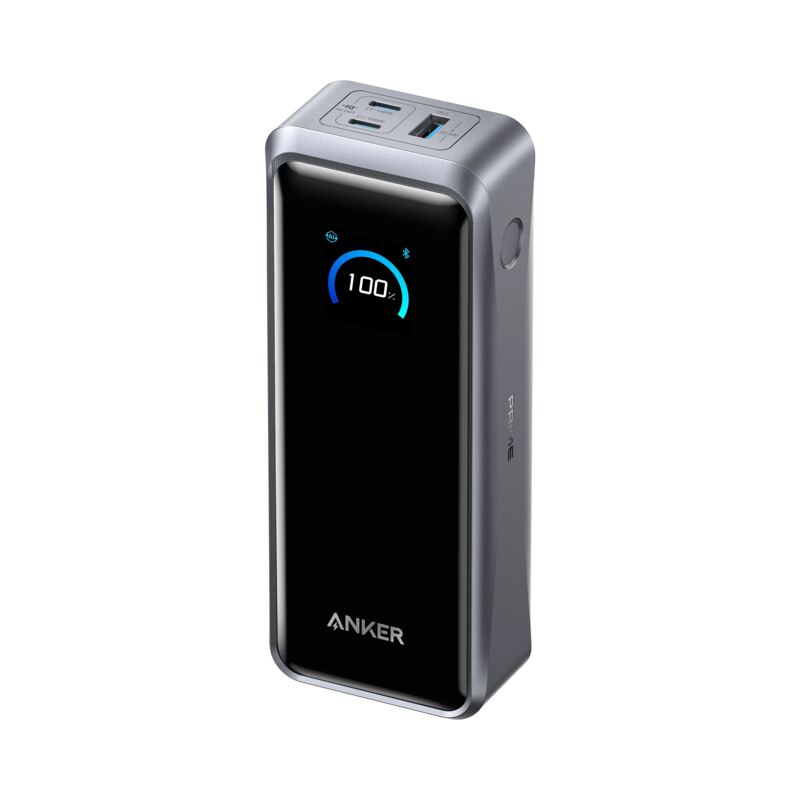
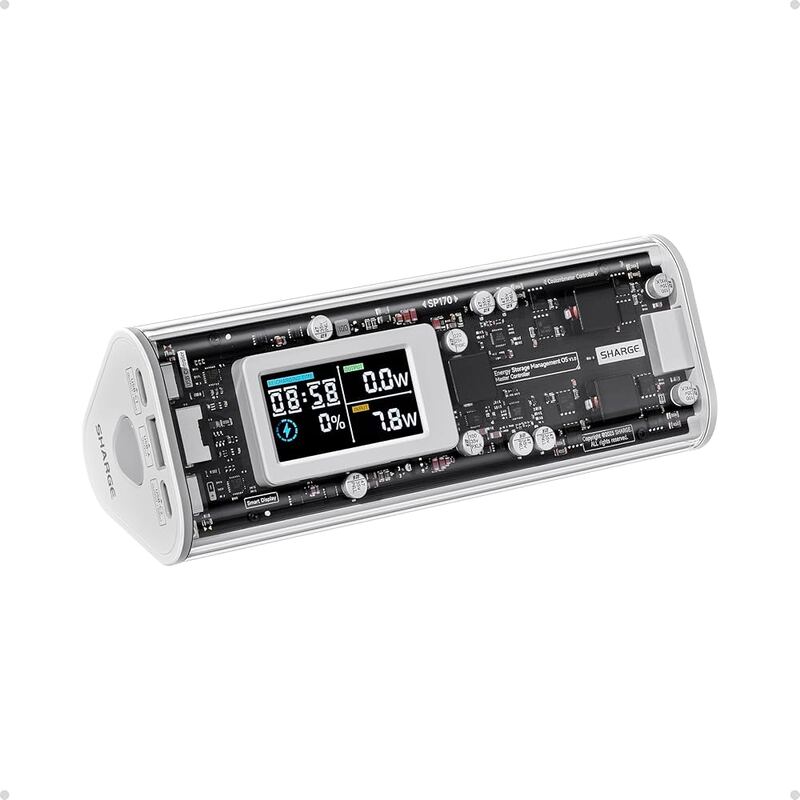
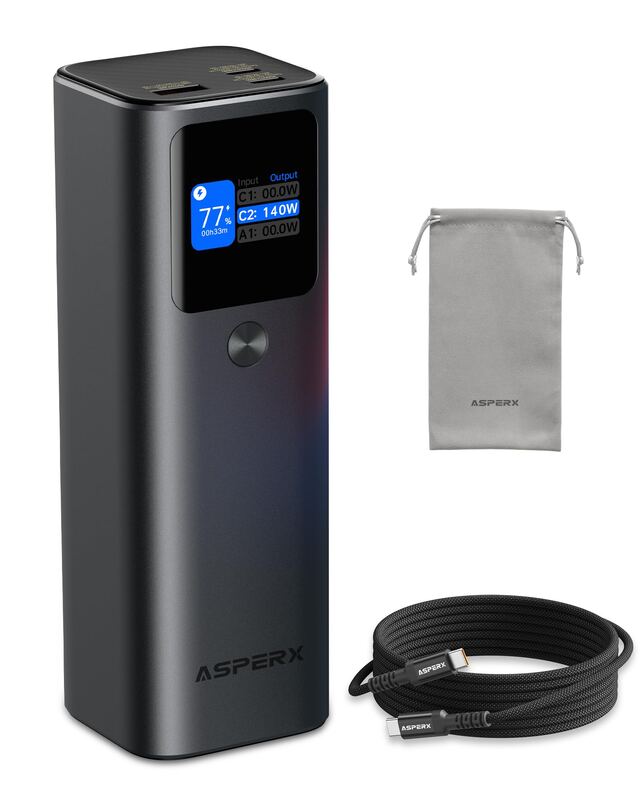
It recharges somewhat faster than the AsperX (about 1.5 hours vs nearly two hours), though it lacks pass-through charging which is available on the Shargeek.
Rating sources
“if you're looking for high wattage tons of battery capacity and fast recharging I highly recommend the anchor 87 watt power bank”
“I really love this power bank because it's very versatile whether you're using with a phone like the iPhone 15 Pro using the built-in USBC port or if you want to use it with a device like an iPad Pro or your MacBook Pro this is going to be a fantastic power bank for you”
Our 4.5 score is the average of the 2 scored reviews above; 1 more reviewed it without printing a score and is not in the average. Ratings marked * were derived from the reviewer’s written analysis or video transcript — the publisher didn’t print an explicit numeric score, so we inferred one from their own words. Click through to verify. More about methodology.