Verdict
Head-to-head · Best Compact Travel Cameras

Fujifilm X100VI vs Ricoh GR IV

Which is the better buy? Side-by-side on rating, price, strengths, and watch-outs — with the published ratings we averaged to get there.

Verdict is reader-supported. As an Amazon Associate we earn from qualifying purchases. Some links on this page are affiliate links — if you click through and buy, we may earn a small commission at no extra cost to you. Our ratings are sourced from independent publications, not sponsors.
The short answer

Ricoh GR IV comes out ahead by a narrow margin (4.0 vs 3.9). Ricoh GR IV is best for: Photographers who want a compact APS-C camera with a fixed 28mm-equivalent lens and 5-axis stabilization. Read the strengths below before deciding.

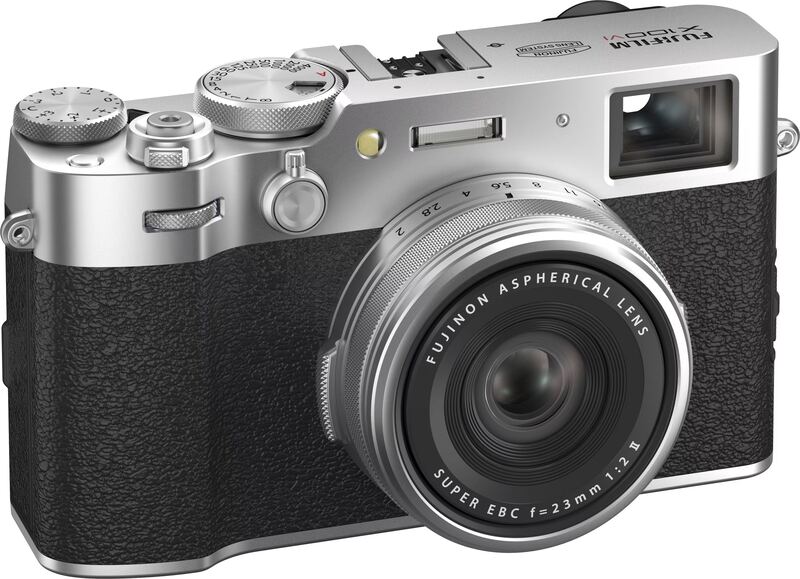
Fujifilm X100VI
Ranked #3 in Best Compact Travel Cameras
Fujifilm X100VI
2 sources$2,249as of Oct 9

The Fujifilm X100VI is a fixed-lens APS-C camera with a 40MP sensor and a 35mm equivalent F2 lens. Reviewers praised its high-resolution image capture, in-body stabilization, and the extensive film simulation options, including the new Reala ACE and Eterna Bleach Bypass modes. It adds camera-to-cloud functionality for direct uploads to Adobe Frame.io. Some users felt build quality slipped next to its predecessor, and overheating came up in warm environments. Enthusiasts who want a compact, high-quality fixed-lens camera with extensive creative controls are the fit.

Strengths
  • — 40MP BSI CMOS APS-C sensor delivers high detail capture
  • — In-body image stabilization rated at up to 6EV of correction
  • — 14 film simulations including Reala ACE, Nostalgic Neg, and Eterna Bleach Bypass
Watch-outs
  • — Build quality perceived as slightly degraded compared to X100V
  • — Overheating issues reported in warm climates
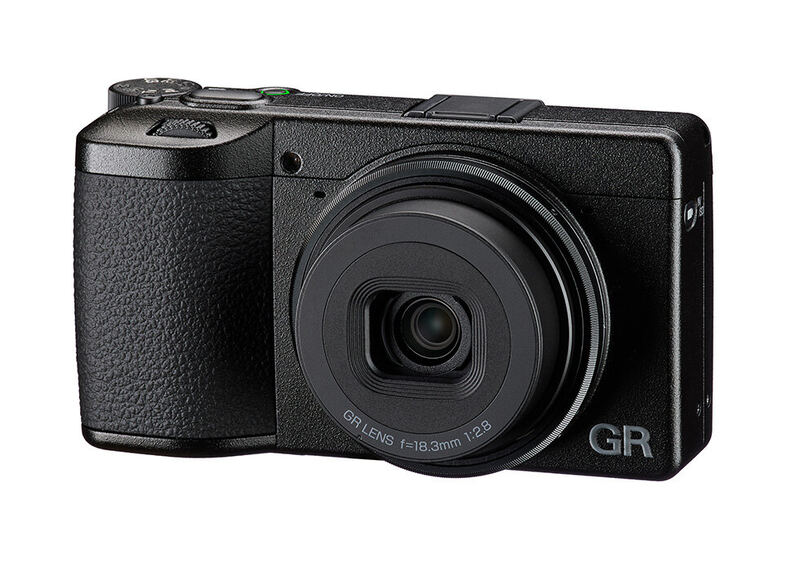
Ricoh GR IV
Higher ratedRanked #2 in Best Compact Travel Cameras
Ricoh GR IV
2 sources$1,599.95as of Oct 11

The Ricoh GR IV refines the compact camera series with a 25.74MP backside-illuminated APS-C sensor and an upgraded 18.3mm F2.8 lens that resolves more detail. DPReview praised its 5-axis stabilization system and faster lens startup time. The $1499 MSRP is a significant jump from previous models. The control layout returns to GR II design elements while keeping GR III firmware features like Snap Distance Priority mode. Image quality and portability are the strengths; the increased price and limited internal storage may deter some users.

Strengths
  • — 25.74MP backside-illuminated APS-C sensor delivers improved image quality
  • — 5-axis image stabilization with 6EV rating provides better shake reduction
  • — Redesigned 18.3mm F2.8 lens with aspherical element improves sharpness and corner detail
Watch-outs
  • — MSRP of $1499 is a substantial increase from previous GR models
  • — Internal storage of 53GB may not be sufficient for all users despite being larger than GR III's 2GB

How they stack up

Fujifilm X100VI

The Fujifilm X100VI has a 40MP APS-C sensor and a 35mm equivalent F2 lens, against the 25.74MP sensor and 28mm equivalent F2.8 lens of the Ricoh GR IV. Both list 5-axis stabilization rated to 6EV. At 521 g it is heavier than the 262g Ricoh and the 302g Sony RX100 VII, and it costs more than both.

Ricoh GR IV

The Ricoh GR IV pairs a 25.74MP APS-C sensor with a fixed 18.3mm F2.8 lens (28mm equivalent), where the Canon PowerShot G7 X Mark III and the Sony RX100 VII put zoom lenses in front of 1-inch sensors. At 262g it is about half the weight of the 521 g Fujifilm X100VI, which has a 40MP APS-C sensor. Its video tops out at Full HD 60p against the X100VI's 6.2K at 30p.

Specs side-by-side

SpecFujifilm X100VIRicoh GR IV
Sensor40MP BSI CMOS APS-C25.74MP APS-C
Resolution40.2MP25.74MP
Lens35mm equiv F218.3mm F2.8 (28mm equiv)
Video6.2K at 30pFullHD (1080) up to 60p
Display3-inch tilting touchscreen LCD3.0" 1.04M dot LCD
Burst RatePre-shot bursts (E-shutter + Cont H)—
Stabilization5-axis In-body IS (up to 6EV)5-axis 6EV
Weight521 g262g
← See the full ranking of best compact travel cameras