Verdict
Head-to-head · Best Mirrorless Cameras For Travel

Fujifilm X-T5 vs Nikon Z5II

Which is the better buy? Side-by-side on rating, price, strengths, and watch-outs — with the published ratings we averaged to get there.

The short answer

Nikon Z5II comes out ahead by a clear margin (3.4 vs 4.4). The gap is mostly about Professional full-frame buyers — read the strengths below before deciding.

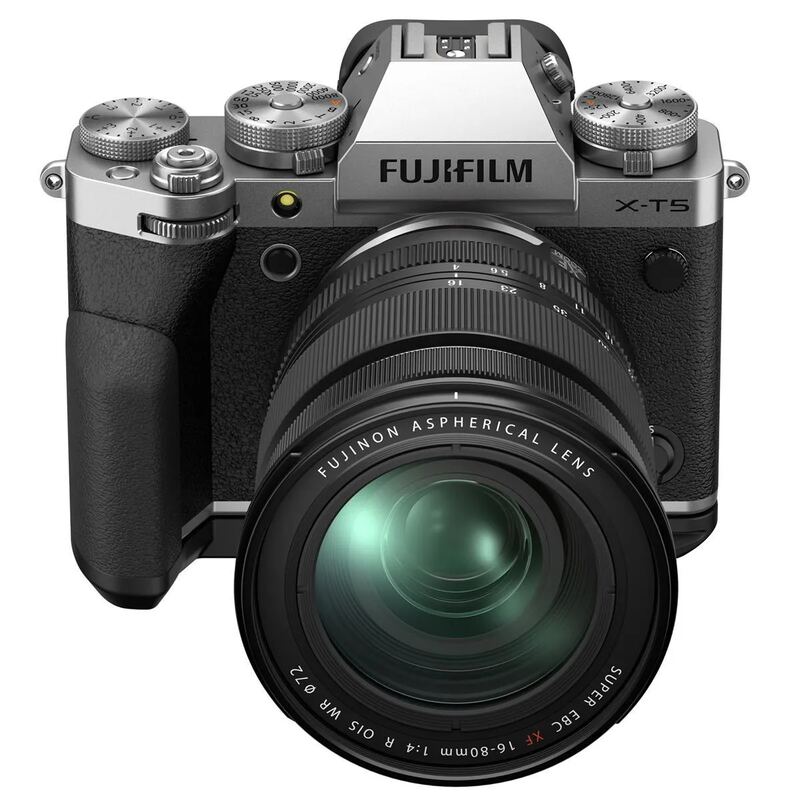
Fujifilm X-T5
Ranked #10 in Best Mirrorless Cameras For Travel
Fujifilm X-T5
$1,899as of May 29

The Fujifilm X-T5 is a photography-focused 40MP APS-C mirrorless camera that continues Fujifilm's tradition of physical control dials and traditional handling. Reviewers praised its high-resolution sensor, 15fps shooting capability, and 7.0EV in-body stabilization for handheld work. The camera's two-axis tilting screen is noted as particularly useful for off-axis compositions. However, it lacks the video ambitions of its sibling X-H2, with no 8K capture or ProRes modes, and shorter burst durations due to SD card usage. This camera suits photographers who value physical controls and high image quality over video versatility, particularly those working in documentary, wedding, and sport photography where the camera's reliability and detail retention shine.

Strengths
  • 40MP BSI CMOS sensor with X-Trans color filter array delivers high detail and cropping flexibility
  • Up to 15fps continuous shooting with mechanical shutter for fast action photography
  • In-body stabilization rated at up to 7.0EV for handheld shooting in low light
Watch-outs
  • Smaller buffer and SD card usage limits long burst shooting compared to X-H2
  • Video specs are less ambitious than X-H2 with no 8K capture or ProRes modes
Nikon Z5II
Higher ratedRanked #1 in Best Mirrorless Cameras For Travel
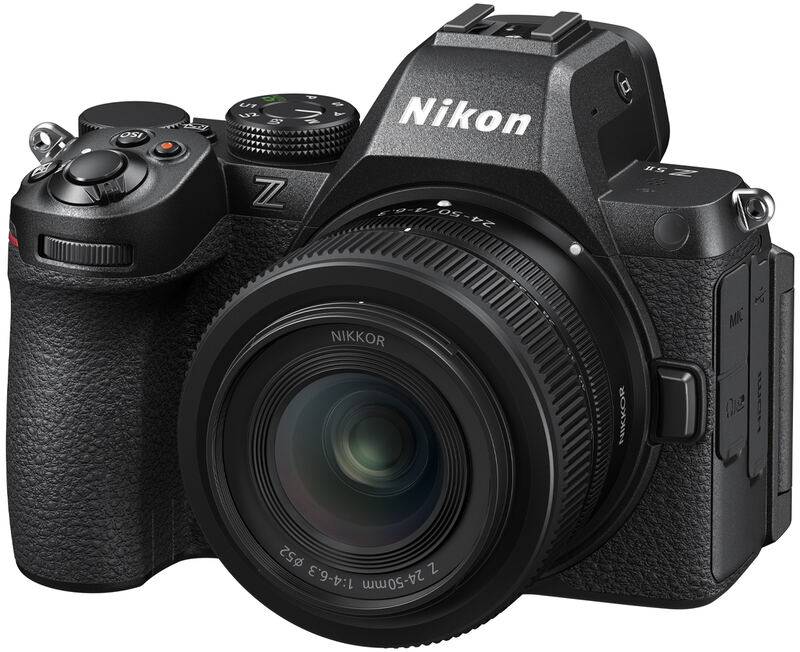
Nikon Z5II
$1,596.95as of May 29

The Nikon Z5II is a well-rounded full-frame mirrorless camera that delivers stabilized imaging, fast autofocus, and professional video features at a reasonable price point. PCMag called it 'the best value among the current slate of full-frame cameras,' while DPReview noted its improved burst rates and video capabilities over the Z5. It's ideal for photographers and videographers seeking a capable yet affordable full-frame option, though those wanting top-tier video performance may find better alternatives in higher-end models.

Strengths
  • 24MP BSI full-frame CMOS sensor with improved readout speeds
  • Up to 11 fps Raw capture with mechanical shutter
  • 3.69M dot 60Hz EVF with 3000-nit peak brightness
Watch-outs
  • Sensor readout speeds still slower than Z6III's
  • Limited video capabilities compared to higher-end models

How they stack up

Fujifilm X-T5

The Fujifilm X-T5 outperforms the Sony α6400 in burst rate and in-body stabilization, but unlike the Canon EOS R7, it lacks the higher resolution sensor and 30 fps electronic shutter capabilities. Compared to the Sony α6700, it offers a more affordable price point and better video features, though the α6700 provides more advanced processor and better video specs.

Nikon Z5II

The Nikon Z5II provides better burst rates and dual card slots compared to the Canon EOS R6 Mark II, but lacks the in-body stabilization and 4K/60p recording of the R6. Unlike the Sony α7 IV, it has a more compact design and better low-light performance, though the α7 IV offers a higher resolution EVF and better video specs.

Specs side-by-side

SpecFujifilm X-T5Nikon Z5II
Sensor40MP BSI CMOS24MP BSI CMOS
StabilizationUp to 7.0EV5-Axis IBIS, up to 7.5 stops
Video6.2K/30p, 4K/60p4K/30p full-width, 4K/60p (1.5x crop), 10-bit N-Log/N-Raw
Autofocus425-point phase-detect with subject detection9 subject types, Expeed 7, -10 EV sensitivity
Burst RateUp to 15fps11 fps Raw with mechanical shutter
Display3.0" 1.84M dot two-axis tilt3.2-inch fully articulating 2.1M dot LCD
EVF3.69M-dot OLED3.69M dot 60Hz
Weight557g (19.6oz)700g (with battery and SD card)
← See the full ranking of best mirrorless cameras for travel