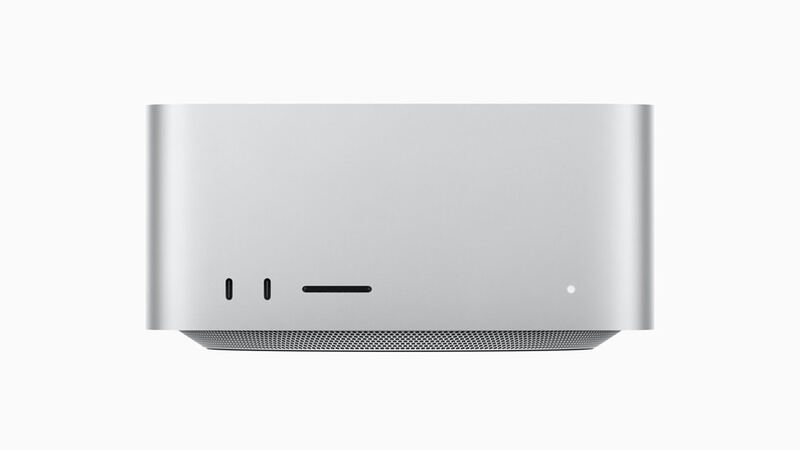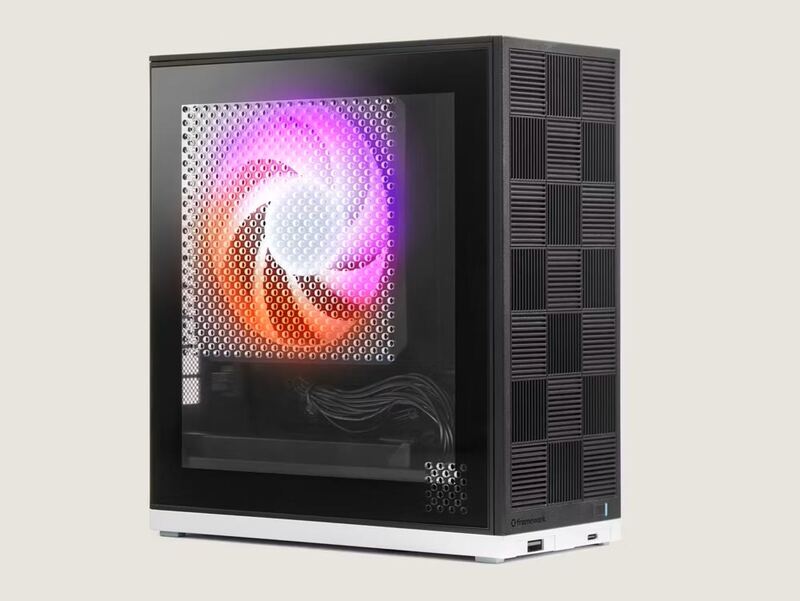
The Framework Desktop puts AMD's Strix Halo silicon into an open, repairable chassis aimed squarely at local AI. PCWorld awarded it 4.5/5 and an Editors' Choice, writing that 'it's not just for tinkering, this machine can legitimately run the latest AI models locally, something few desktops this size can do.' Of its 128 GB of LPDDR5X-8000 unified memory, AMD's driver can assign up to 96 GB as VRAM, enough to run GPT-OSS 120B, which AMD says runs about ten times faster than Llama 3 70B on this chip. ServeTheHome called it 'our third-favorite AMD Strix Halo mini PC so far,' and Tom's Hardware noted 'the mix of powerful graphics and plentiful RAM is why Framework is pushing this as an AI system.' Windows and Linux both run on it, so the full open-source AI stack is available in a way it isn't on the Mac Studio. Bandwidth and price are the limits.
- — Framework's hallmark repairability and documentation, including a customizable front tile panel
- — Runs Windows or Linux, opening up the full open-source AI toolchain the Mac Studio cannot
- — Compact 4.5-liter chassis that doubles as a capable productivity and 1080p gaming PC
- — Soldered LPDDR5X means no future memory upgrades despite Framework's repairable reputation
- — Expensive versus a gaming PC with discrete graphics if you don't use the full 128 GB
- — Requires some self-assembly, more involved than the plug-and-play mini PCs here