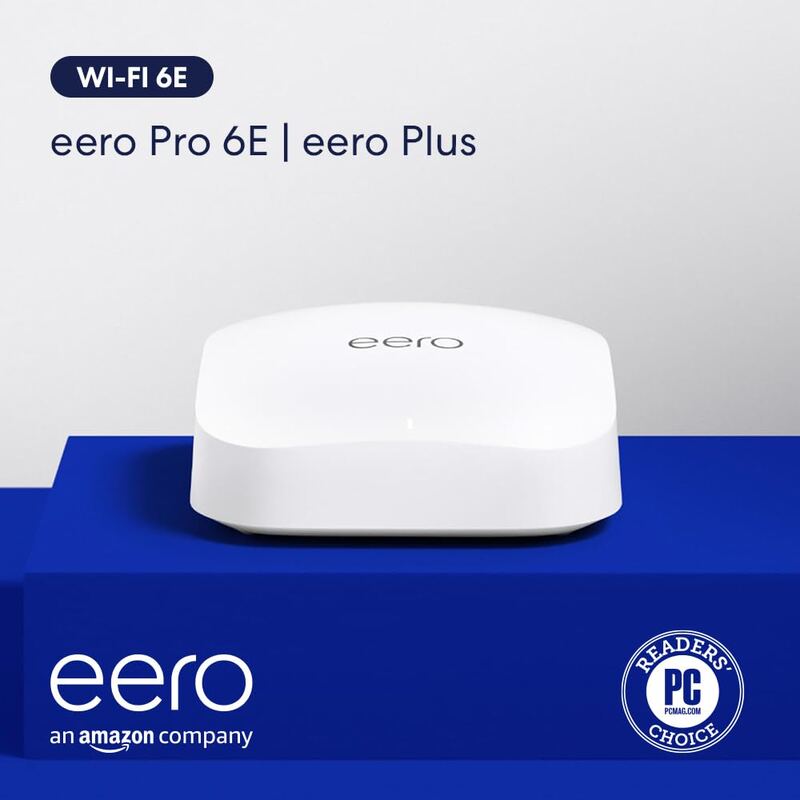
Verdict
Head-to-head · Best Mesh Wi-Fi Systems For Large Homes

Eero Pro 6E vs TP-Link Deco BE25 Mesh

Which is the better buy? Side-by-side on rating, price, strengths, and watch-outs — with the published ratings we averaged to get there.

The short answer

Eero Pro 6E comes out ahead by a clear margin (4.0 vs 3.6). The gap is mostly about users prioritizing easy setup and reliable Wi-Fi 6E coverage — read the strengths below before deciding.

Eero Pro 6E
Higher ratedRanked #2 in Best Mesh Wi-Fi Systems For Large Homes
Eero Pro 6E
$549

The Eero Pro 6E delivers Wi-Fi 6E performance with 160MHz channel support and seamless mesh networking for large homes. PCMag praised its ease of setup and strong coverage, while RTINGS.com noted its robust performance for large spaces. CNET called it a solid choice for users wanting the latest Wi-Fi standard, though it comes at a premium price. This router is best for tech-savvy homeowners with large homes needing reliable Wi-Fi 6E speeds, but those on a budget may find alternatives more appealing.

Strengths
  • Supports Wi-Fi 6E with 160MHz channels for faster speeds
  • Easy setup with Eero app and no complex configuration needed
  • Strong mesh networking performance with seamless handoffs
Watch-outs
  • Higher price point compared to standard mesh routers
  • Limited Ethernet ports (only 1 Gigabit port per unit)
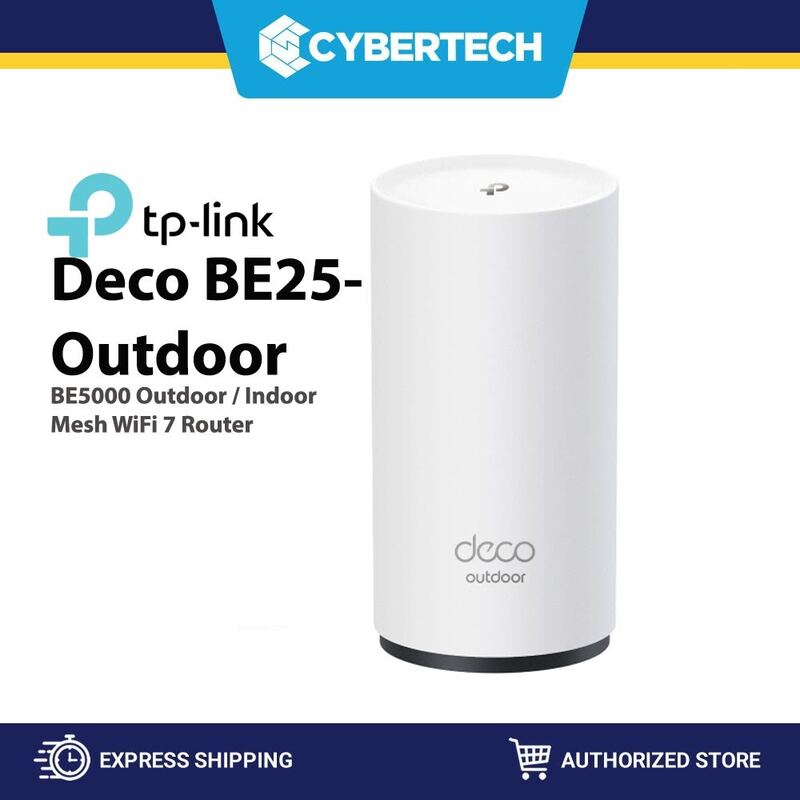
TP-Link Deco BE25 Mesh
Ranked #4 in Best Mesh Wi-Fi Systems For Large Homes
TP-Link Deco BE25 Mesh
$200

The TP-Link Deco BE25 is an entry-level Wi-Fi 7 mesh system that supports Multi-Link Operation but lacks the 6GHz band. PCMag's John R. Delaney noted its impressive 5GHz performance with Wi-Fi 7 clients, while MBReviews' Mark B highlighted its dual-band operation, 2.5GbE ports, and decent thermal management. The system features a puck-shaped design with internal antennas and a non-intuitive LED status indicator. It's suitable for users seeking Wi-Fi 7 features without the premium price tag, but those needing 6GHz coverage should consider higher-tier models.

Strengths
  • Supports Wi-Fi 7 with Multi-Link Operation (MLO)
  • Includes 2.5GbE ports for wired backhaul
  • Backward compatibility with older Wi-Fi systems
Watch-outs
  • Does not include 6GHz radio band
  • LED status indicator is not intuitive
  • Units run warm under stress

How they stack up

Eero Pro 6E

The Eero Pro 6E stands out for its exceptional ease of setup and seamless mesh handoffs, surpassing the more complex configuration often required by the Netgear Orbi 960 or TP-Link Deco BE25. It delivers strong Wi-Fi 6E performance with 160MHz channels, offering better wireless speeds than the older Amazon eero 6 or the TP-Link Deco BE25. However, it lacks the cutting-edge Wi-Fi 7 support and multi-gigabit wired ports found in the Eero Max 7 and Deco BE25, making it less future-proof for heavy wired users.

TP-Link Deco BE25 Mesh

The TP-Link Deco BE25 offers entry-level Wi-Fi 7 features like MLO at a lower price point than the Eero Max 7 or Netgear Orbi 960, making it a cost-effective upgrade for users with modern devices. However, it lacks the 6GHz band found in the Eero Pro 6E and Orbi 960, which limits its peak wireless performance compared to those tri-band competitors. While it runs warmer under stress than the compact Amazon eero 6, its 2.5GbE ports provide better wired backhaul options than the basic eero 6 or the TP-Link Deco BE25.

Specs side-by-side

SpecEero Pro 6ETP-Link Deco BE25 Mesh
Wi-Fi StandardWi-Fi 6EWi-Fi 7
CoverageUp to 6,000 sq ftUp to 6,600 sq ft
Network BandsTri-band (2.4 GHz, 5 GHz, 6 GHz)Dual-band
Max Speed2.3 Gbps5 Gbps
Ethernet Ports1x 2.5GbE, 1x GigabitWired (2.5GbE ports)
Processor1 GHz dual-core processorQualcomm IPQ5312
Pack Size3-pack3-pack
Number of Nodes33
← See the full ranking of best mesh wi-fi systems for large homes