Verdict
Head-to-head · Best Mesh Wi-Fi Systems For Large Homes

Eero Max 7 vs Eero Pro 6E

Which is the better buy? Side-by-side on rating, price, strengths, and watch-outs — with the published ratings we averaged to get there.

The short answer

Eero Pro 6E comes out ahead by a narrow margin (3.8 vs 4.0). The gap is mostly about users prioritizing easy setup and reliable Wi-Fi 6E coverage — read the strengths below before deciding.

Eero Max 7
Ranked #3 in Best Mesh Wi-Fi Systems For Large Homes
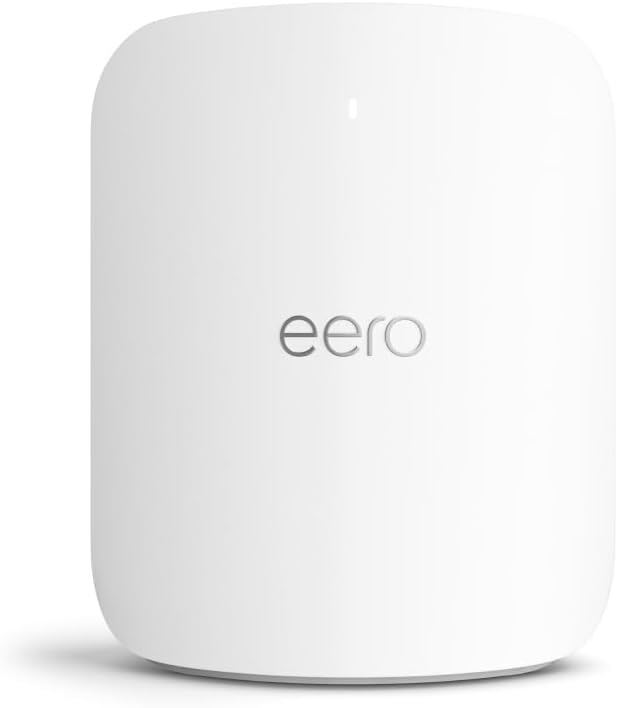
Eero Max 7
$600

The eero Max 7 represents Amazon's entry into the Wi-Fi 7 mesh market, offering Multi-Gig Ethernet support and 10GBASE-T ports. PCMag's John R. Delaney praised its wired capabilities but noted disappointing wireless performance. Dong Ngo from Dong Knows Tech criticized the device for its stripped-down free app, constant Plus upsells, and overall underperformance compared to competitors like the TP-Link Deco BE85. While it excels in wired networking, the Max 7 fails to deliver on its Wi-Fi 7 promises, making it a poor value for users seeking high-speed wireless performance.

Strengths
  • Supports Wi-Fi 7 standard
  • Features Multi-Gig Ethernet with 10GBASE-T and 2.5GBASE-T ports
  • Delivers fast wired performance with daisy-chaining capability
Watch-outs
  • Underwhelming Wi-Fi 6E performance in real-world testing
  • Firmware issues and limited customization options
  • Aggressive eero Plus subscription upsells in free app
Eero Pro 6E
Higher ratedRanked #2 in Best Mesh Wi-Fi Systems For Large Homes
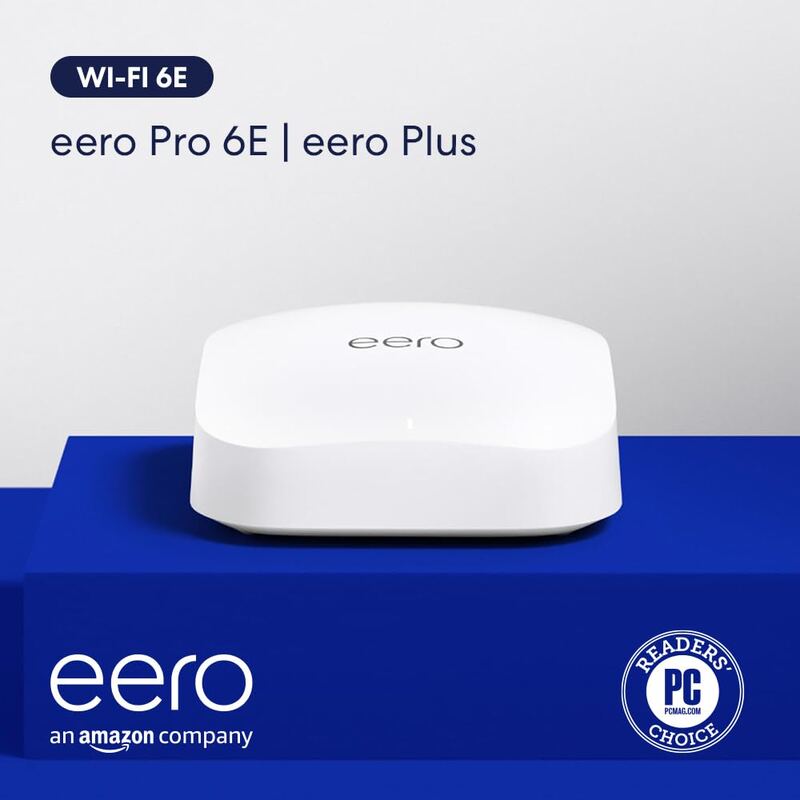
Eero Pro 6E
$549

The Eero Pro 6E delivers Wi-Fi 6E performance with 160MHz channel support and seamless mesh networking for large homes. PCMag praised its ease of setup and strong coverage, while RTINGS.com noted its robust performance for large spaces. CNET called it a solid choice for users wanting the latest Wi-Fi standard, though it comes at a premium price. This router is best for tech-savvy homeowners with large homes needing reliable Wi-Fi 6E speeds, but those on a budget may find alternatives more appealing.

Strengths
  • Supports Wi-Fi 6E with 160MHz channels for faster speeds
  • Easy setup with Eero app and no complex configuration needed
  • Strong mesh networking performance with seamless handoffs
Watch-outs
  • Higher price point compared to standard mesh routers
  • Limited Ethernet ports (only 1 Gigabit port per unit)

How they stack up

Eero Max 7

The Eero Max 7 is unique in this list for its robust Multi-Gig Ethernet support, including 10GBASE-T ports, which far exceeds the wired capabilities of the Eero Pro 6E, Amazon eero 6, and TP-Link Deco BE25. Despite its Wi-Fi 7 branding, its wireless performance is underwhelming compared to the Netgear Orbi 960 and even the entry-level TP-Link Deco BE25. Additionally, its aggressive subscription upsells and limited customization make it less appealing than the straightforward Netgear Orbi 960 for users who want a premium experience without extra costs.

Eero Pro 6E

The Eero Pro 6E stands out for its exceptional ease of setup and seamless mesh handoffs, surpassing the more complex configuration often required by the Netgear Orbi 960 or TP-Link Deco BE25. It delivers strong Wi-Fi 6E performance with 160MHz channels, offering better wireless speeds than the older Amazon eero 6 or the TP-Link Deco BE25. However, it lacks the cutting-edge Wi-Fi 7 support and multi-gigabit wired ports found in the Eero Max 7 and Deco BE25, making it less future-proof for heavy wired users.

Specs side-by-side

SpecEero Max 7Eero Pro 6E
Wi-Fi StandardWi-Fi 7Wi-Fi 6E
CoverageUp to 2,500 sq ft per unitUp to 6,000 sq ft
Number of Nodes33
Network BandsTri-Band (2.4 GHz, 5 GHz, 6 GHz)Tri-band (2.4 GHz, 5 GHz, 6 GHz)
Max SpeedUp to 10 Gbps2.3 Gbps
Ethernet Ports2x 10GBASE-T, 2x 2.5GBASE-T1x 2.5GbE, 1x Gigabit
ProcessorQuad-core A73 processor1 GHz dual-core processor
Pack Size3-Pack3-pack
← See the full ranking of best mesh wi-fi systems for large homes