Verdict
Head-to-head · Best Mirrorless Cameras For Travel

Canon EOS R7 vs Sony ZV-E10 II

Which is the better buy? Side-by-side on rating, price, strengths, and watch-outs — with the published ratings we averaged to get there.

The short answer

Canon EOS R7 comes out ahead by a clear margin (4.4 vs 4.0). The gap is mostly about Wildlife and sports shooters — read the strengths below before deciding.

Canon EOS R7
Higher ratedRanked #2 in Best Mirrorless Cameras For Travel
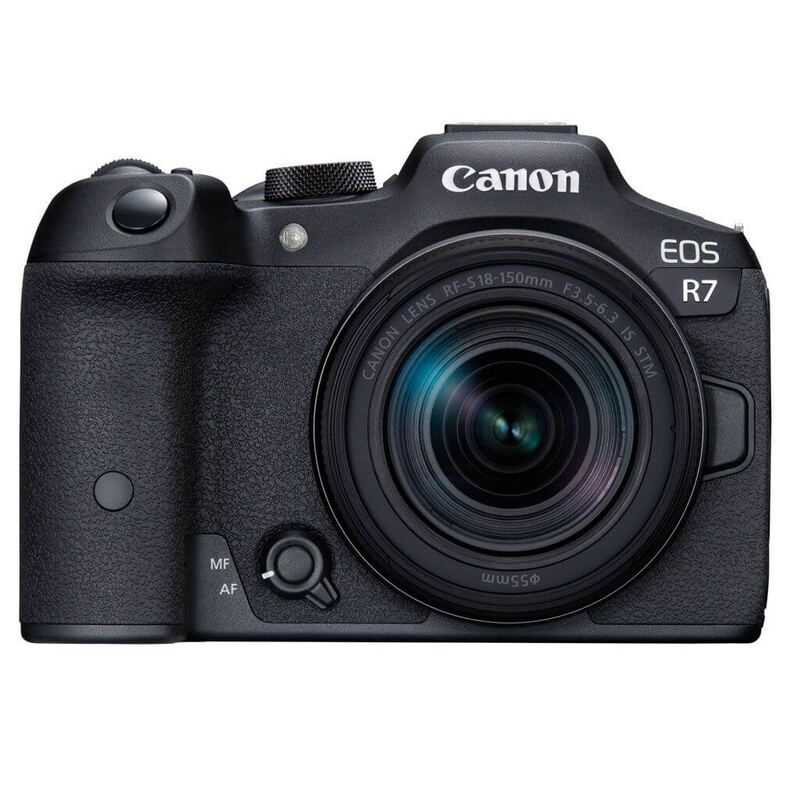
Canon EOS R7
$1,448as of May 29

The Canon EOS R7 is a 32.5MP APS-C mirrorless camera featuring Canon's latest Digic X processor and Dual Pixel AF system. DPReview praised its fast continuous shooting capabilities at up to 30 fps with electronic shutter and 15 fps with mechanical shutter, along with improved video specs including oversampled UHD 4K up to 30p and sub-sampled 4K/60p. However, the camera's video function access is described as fiddly and the EVF resolution is noted as inferior to the R5. It's positioned as a more expensive sister model to the EOS R10, targeting enthusiast photographers and wildlife shooters who value high-resolution imaging and fast burst rates.

Strengths
  • 32.5MP APS-C CMOS sensor with Dual Pixel AF and Canon's Dual Pixel Raw mode
  • Up to 30 fps shooting with electronic shutter and 15 fps with mechanical shutter
  • Oversampled UHD 4K up to 30p and sub-sampled 4K/60p capabilities
Watch-outs
  • Video function access requires moving power button one stage beyond 'On' position, which can be fiddly
  • EVF resolution is lower than that of the EOS R5, appearing pixelated at times
Sony ZV-E10 II
Ranked #6 in Best Mirrorless Cameras For Travel
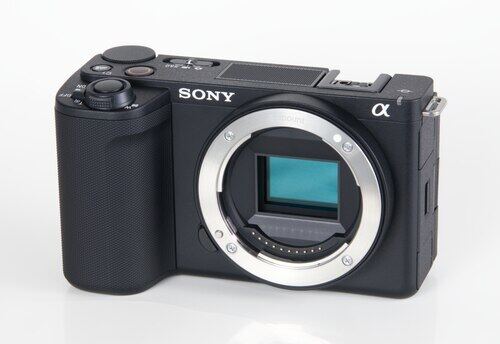
Sony ZV-E10 II
$1,198as of May 29

The Sony ZV-E10 II is positioned as an excellent entry-level camera for content creators and professionals upgrading from phones. Jon Conti of Jon Conti Visuals recommends it for businesses needing more control and polish than phone content can provide. Edward Noble's review highlights its lightweight combination with the Sirui AF 75mm f/1.2 lens, making it ideal for portrait work and wildlife photography. While lacking an EVF and battery life is modest, the camera's compact form factor and access to Sony's E-mount system make it a solid choice for those seeking a versatile, upgradeable camera system.

Strengths
  • Small and lightweight design suitable for vlogging and travel
  • Excellent video capabilities with 4K/24p recording and flip-out 3" LCD
  • Good autofocus performance with 425 phase-detection points
Watch-outs
  • No electronic viewfinder (EVF) included
  • Limited battery life with only 440 mAh capacity

How they stack up

Canon EOS R7

The Canon EOS R7 surpasses the Sony α6400 in burst rate and video capabilities, but unlike the Fujifilm X-T5, it lacks the higher frame rate and in-body stabilization. Compared to the Sony ZV-E10 II, it offers better video specs and dual card slots, though the ZV-E10 II provides better portability and vlog mode.

Sony ZV-E10 II

The Sony ZV-E10 II excels in portability and vlogging features compared to the Fujifilm X-S20, which has a larger grip and better battery life. However, it falls short of the Canon EOS R7 in terms of burst rate and video capabilities, and lacks the dual card slot and EVF found in the Nikon Z5II.

Specs side-by-side

SpecCanon EOS R7Sony ZV-E10 II
Sensor32.5MP APS-C CMOSAPS-C CMOS
Stabilization5-axis In-Body Image Stabilizer (up to 7 stops)Digital-only "active" stabilization
VideoUHD 4K up to 30p, 4K/60p4K/24p
AutofocusDual Pixel CMOS AF II with 651 AF areas759 phase-detect (photo) / 495 phase-detect (video) AF points
Burst RateUp to 30 fps electronic, 15 fps mechanical11 fps / 48 shots
Display2.36M dot OLED viewfinder3-inch, 1.03M dot articulated LCD touchscreen
EVF0.39" 2.36M dot OLED Electronic Viewfinder
Weight530 g343 g
← See the full ranking of best mirrorless cameras for travel