Verdict
Head-to-head · Best Mirrorless Cameras For Travel

Canon EOS R50 vs Fujifilm X-S20

Which is the better buy? Side-by-side on rating, price, strengths, and watch-outs — with the published ratings we averaged to get there.

Verdict is reader-supported. As an Amazon Associate we earn from qualifying purchases. Some links on this page are affiliate links — if you click through and buy, we may earn a small commission at no extra cost to you. Our ratings are sourced from independent publications, not sponsors.
The short answer

Fujifilm X-S20 comes out ahead by a clear margin (3.7 vs 4.3). The gap is mostly about Video-first hybrid creators — read the strengths below before deciding.

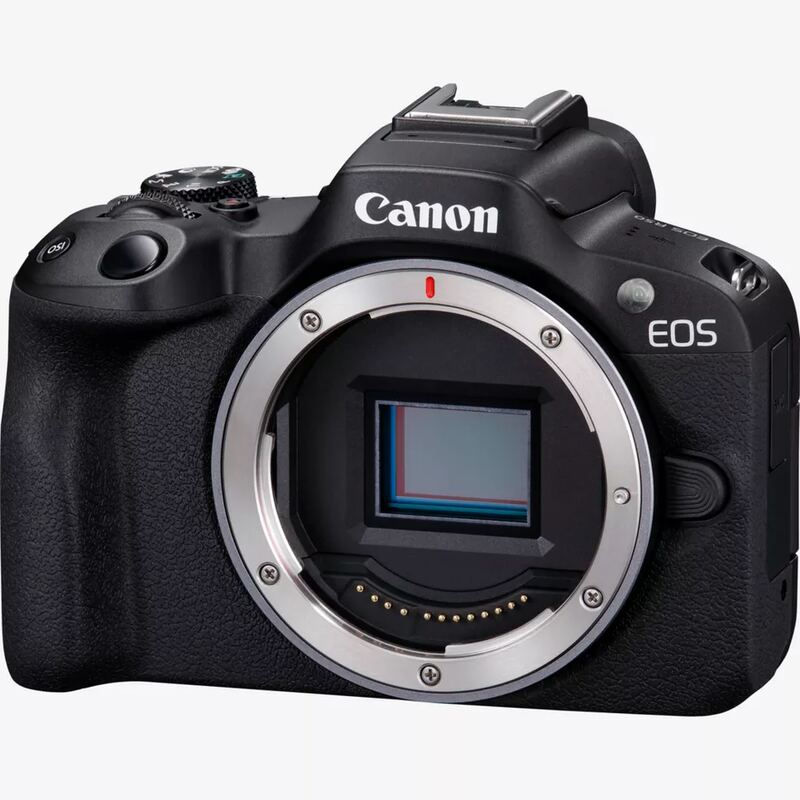
Canon EOS R50
Ranked #10 in Best Mirrorless Cameras For Travel
Canon EOS R50
4 sources1 derived$829as of Aug 1

The Canon EOS R50 is a compact APS-C mirrorless camera priced at $680 body-only, and its 24.2MP sensor and advanced autofocus system make it strong value. Reviewers praised the burst shooting and subject tracking, calling the AF system the best at this price point. Third-party lens support is limited, and there is no AV mode in video. Some reviewers also noted higher ISO penalties than expected. The R50 still holds up as a solid entry-level route into the RF mount without the premium price tag.

Strengths
  • Responsive touchscreen with good resolution
  • Very useful burst rate with either EFC or Electronic shutters
  • Autofocus system is the best out there at this price point
Watch-outs
  • Very few RF-S lenses available
  • No AV mode in video
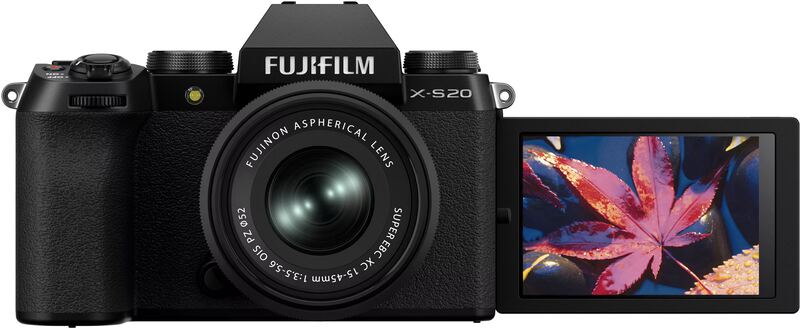
Fujifilm X-S20
Higher ratedRanked #2 in Best Mirrorless Cameras For Travel
Fujifilm X-S20
4 sources3 derived$1,499as of Aug 1

The Fujifilm X-S20 is a midrange APS-C mirrorless camera that builds on the X-S10 with better video features and friendlier handling. Reviewers noted the enhanced 5-axis stabilization, 4K video with F-Log2 support, and a dedicated vlog mode. A larger grip makes room for a bigger battery, and there is a headphone jack. Battery life caps at 750 shots, and recording time is constrained without the optional FAN-001 cooling fan. Beginners and intermediate users who want one camera for both photography and video work are the fit.

Strengths
  • 26MP X-Trans BSI-CMOS sensor delivers high-resolution images
  • 5-axis in-body image stabilization rated to 7 stops
  • Enhanced video capabilities with 4K/60 4:2:2 10-bit internal recording
Watch-outs
  • Battery life limited to 750 shots per charge
  • Video recording time is constrained without cooling fan

Derived means the reviewer published no score, so one was inferred from their written verdict. Everything else is a number the publisher printed. How we rank.

How they stack up

Canon EOS R50

The Canon EOS R50 delivers better autofocus performance than the Sony α6400, but lacks the 4K/60p recording and 10-bit color depth of the Sony α6700. Compared to the Fujifilm X-S20, it offers a more affordable price point and better lens support, though the X-S20 provides superior video capabilities and dedicated vlog mode.

Fujifilm X-S20

Unlike the Sony ZV-E10 II, which lacks an EVF and has modest battery life, the Fujifilm X-S20 offers a more robust battery and dedicated vlog mode, making it better suited for extended video work. Compared to the Canon EOS R50, it provides superior video capabilities with 4K/60 4:2:2 10-bit internal recording, though it lacks the R50's affordable price point and lens ecosystem.

Specs side-by-side

SpecCanon EOS R50Fujifilm X-S20
Sensor24.2MP APS-C CMOS26MP X-Trans BSI-CMOS
StabilizationNo IBIS, relies on lens IS5-axis in-body
Video4K 30p4K/60 4:2:2 10-bit
AutofocusDual Pixel CMOS AF II with 651 ZonesHybrid AF (117 contrast / 425 Phase Detect points)
Burst Rate15 fps electronic shutterUp to 20 fps (up to 30 fps with 1.25x crop)
Display3.0-inch fully articulating touchscreen3" 1.84M-dot fully articulating touchscreen
EVF2.36M-dot OLED0.39-in OLED EVF, 0.62x magnification, 100Hz
Weight13.2 ounces413g
← See the full ranking of best mirrorless cameras for travel