Verdict
Head-to-head · Best Stud Finders

Bosch GMS120-27 vs Zircon StudSensor A100

Which is the better buy? Side-by-side on rating, price, strengths, and watch-outs — with the published ratings we averaged to get there.

The short answer

Bosch GMS120-27 comes out ahead by a clear margin (4.3 vs 3.9). The gap is mostly about Users needing multi-material detection — read the strengths below before deciding.

Bosch GMS120-27
Higher ratedRanked #2 in Best Stud Finders
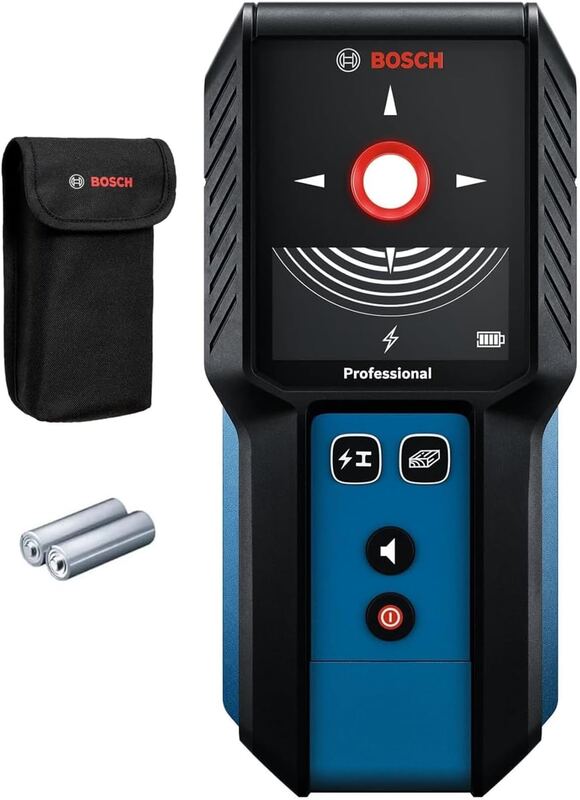
Bosch GMS120-27
$98as of Jul 6

The Bosch GMS120 Wall Scanner is a multi-detection device that finds wood studs, metal objects, rebar, copper, and live wiring. Reviewers noted its accuracy in detecting copper pipe and live wiring, with one reviewer calling it 'one of the most accurate scanners around, for its size and price.' The unit performs well in drywall and plaster environments but had difficulty detecting live wires in conduit. One reviewer found the display hard to read when the backlight was on, and another noted it was tough to pinpoint exact locations. It's recommended for users needing more than basic stud detection, though those focusing primarily on live wiring may want alternatives.

Strengths
  • Detects multiple material types including wood studs, metal objects, rebar, copper, and live wiring
  • Features large, easy-to-read display with visual, audible, and tactile alerts
  • Accurate detection of copper pipe and live wiring in testing scenarios
Watch-outs
  • Display visibility issues with backlight enabled
  • Difficult to detect live electrical wires in conduit
Zircon StudSensor A100
Ranked #4 in Best Stud Finders
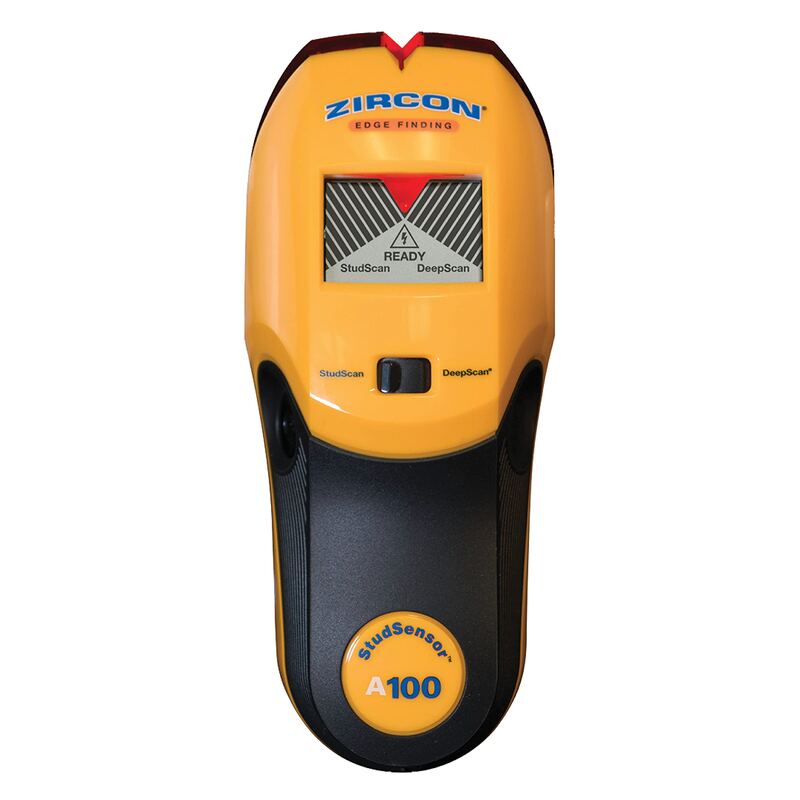
Zircon StudSensor A100
$34.6as of Jul 6

The Zircon StudSensor™ A100 is an edge-locating stud finder designed for ease of use with dual scanning modes. Reviewers noted its ability to detect both wood and metal studs up to 1½ inches deep, along with its WireWarning® feature that alerts users to live electrical wiring. The device includes a SpotLite® pointer and LCD display for clear indication of stud edges. While praised for its functionality, some users may find the need for separate 9V batteries and its limitation on lath and plaster walls as drawbacks.

Strengths
  • StudScan mode locates edges of wood and metal studs up to 3⁄4 in. (19 mm) deep
  • DeepScan® Mode doubles scanning depth to locate edges up to 11⁄2 in. (38 mm) deep
  • WireWarning® Detection indicates presence of live unshielded AC electrical wiring up to 2 in. (50 mm) deep
Watch-outs
  • Requires 9V alkaline batteries (not included)
  • Not recommended for use on lath and plaster

How they stack up

Bosch GMS120-27

The Bosch GMS120-27 excels in multi-material detection, including copper pipes and live wiring, which the Franklin Sensors ProSensor M210 and Klein Tools ESF150LL don't emphasize. While the Zircon StudSensor A100 and C.H. Hanson 03040 offer edge detection and magnetic alternatives respectively, the Bosch scanner provides the most versatile detection capabilities for complex wall environments. However, its display visibility issues and difficulty detecting live wires in conduit make it less ideal than the ProSensor M210 for deep or precise detection tasks.

Zircon StudSensor A100

The Zircon StudSensor A100's dual scanning modes and WireWarning® feature distinguish it from the Klein Tools ESF150LL and C.H. Hanson 03040, which lack such advanced detection capabilities. While the Franklin Sensors ProSensor M210 offers more sensors and the Bosch GMS120-27 detects more materials, the Zircon A100 provides a balance of depth detection and user-friendly alerts. However, it requires separate batteries and is limited on lath and plaster, unlike the battery-free C.H. Hanson 03040.

Specs side-by-side

SpecBosch GMS120-27Zircon StudSensor A100
Detection DepthUp to 2Up to ¾ in. (19 mm)
Battery Type9V9V alkaline required (not included)
Sensorspair of sensors13
Weight0.6 lbs4.80 oz. (136 g) without battery
MaterialPlasticPlastic
Features21
← See the full ranking of best stud finders