Verdict
Head-to-head · Best External SSD Enclosures

ASUS ROG Strix Arion vs Sabrent Rocket Nano V2

Which is the better buy? Side-by-side on rating, price, strengths, and watch-outs — with the published ratings we averaged to get there.

Verdict is reader-supported. As an Amazon Associate we earn from qualifying purchases. Some links on this page are affiliate links — if you click through and buy, we may earn a small commission at no extra cost to you. Our ratings are sourced from independent publications, not sponsors.
The short answer

Sabrent Rocket Nano V2 comes out ahead by a narrow margin (3.8 vs 4.0). The gap is mostly about users prioritizing portability and capacity over extended warranties — read the strengths below before deciding.

ASUS ROG Strix Arion
Ranked #6 in Best External SSD Enclosures
ASUS ROG Strix Arion
3 sourcesall derived$54.99as of Aug 1

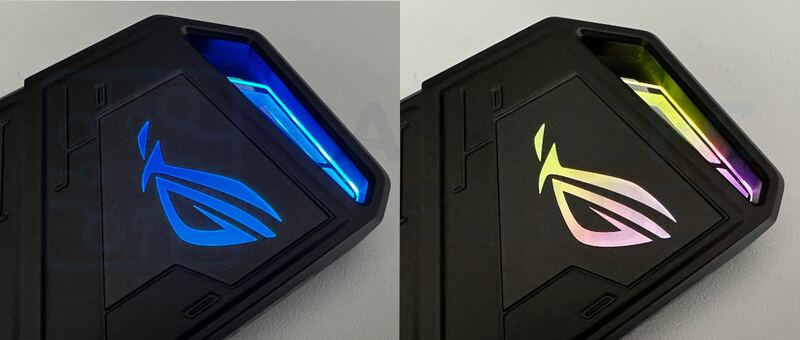
As a PCIe 3.0 x2 NVMe SSD enclosure with a 10 Gbps USB 3.2 Gen 2 interface, the ASUS ROG Strix Arion gets close to the ceiling, transferring at just over 1000 MB/s. TechPowerUp praised the rigid aluminum build and effective heat dissipation, while Reviews Inside noted the RGB lighting adds flair that won't appeal to everyone. Its tool-free design uses a SIM-pin mechanism that works but frustrates frequent SSD swaps. It costs more than competing options, so the premium materials and performance point it at gamers and content creators who value aesthetics and reliability over portability and cost savings.

Strengths
  • Rigid aluminum construction with excellent thermal management via pre-installed thermal pads
  • Supports PCIe 3.0 x2 NVMe SSDs at maximum 10 Gbps transfer speeds
  • Includes both USB-A and USB-C cables for versatile connectivity
Watch-outs
  • Requires a SIM-tray pin for access, which can be lost and is less convenient for frequent SSD swaps
  • Priced higher than similar 10 Gbps enclosures with comparable performance
  • Bulkier form factor reduces portability compared to some competitors
Sabrent Rocket Nano V2
Higher ratedRanked #4 in Best External SSD Enclosures
Sabrent Rocket Nano V2
6 sources$239.99as of Aug 1

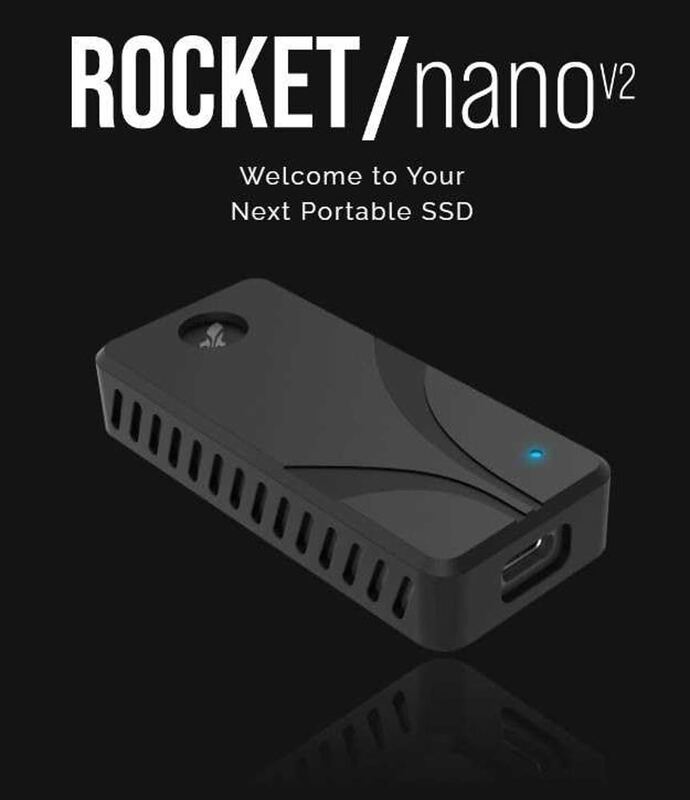
Sabrent's Rocket Nano V2 fits USB 3.2 Gen 2x2 support and up to 4TB into a pocketable body, and it performs well for the size. TechRadar found it sustains throughput well while falling short of peak Gen 2x2 speeds at 1,500MB/s. PCWorld praised the small form factor and good performance, noting it trails competitors slightly on raw speed. The drawbacks: no IP ratings, minimal software, and a 3-year warranty that runs short. It fits buyers who care about portability and capacity more than warranties and durability certifications.

Strengths
  • USB 3.2 Gen 2x2 support with quoted speeds up to 1,500MB/s read/write
  • 4TB capacity option in a very compact form factor (11.9 x 29.6 x 69.95mm)
  • No thermal throttling during sustained performance
Watch-outs
  • Only 3-year warranty compared to 5-year warranties from competitors
  • No IP rating or durability specifications provided
  • Zero software included with the device

Derived means the reviewer published no score, so one was inferred from their written verdict. Everything else is a number the publisher printed. How we rank.

How they stack up

ASUS ROG Strix Arion

Unlike the ORICO M2VG01-C3, which uses a snap-together design that can disassemble easily, the ASUS ROG Strix Arion offers a more robust aluminum build with pre-installed thermal pads for better heat dissipation. While the Sabrent Rocket Nano V2 provides a compact form factor, the Arion's premium materials and RGB lighting make it stand out for gamers and content creators who value aesthetics and reliability over portability. Compared to the ACASIS USB4 40Gbps NVMe Enclosure, the Arion lacks active cooling but compensates with its rigid construction and tool-free design, though it's priced higher and less portable.

Sabrent Rocket Nano V2

The Sabrent Rocket Nano V2 is more compact and offers a 4TB capacity option compared to the larger OWC Express 1M2, but it lacks the 5-year warranty and IP rating of its competitor. While the ASUS ROG Strix Arion provides better thermal management, the Sabrent's lack of thermal throttling during sustained performance makes it a good choice for users prioritizing portability over durability. Unlike the ACASIS USB4 40Gbps NVMe Enclosure, the Sabrent offers a more budget-friendly option with a smaller form factor but without active cooling.

Specs side-by-side

SpecASUS ROG Strix ArionSabrent Rocket Nano V2
InterfaceUSB 3.2 Gen 2 (10 Gbps)USB 3.2 Gen 2x2
SSD SupportM-Key & B-Key (PCIe/NVMe)M.2 2230 NVMe PCIe Gen 4
MaterialAluminumAluminum
CoolingDual 120mm fansPassive
Dimensions280 x 190 x 35 mm11.9 x 29.6 x 69.95mm
Weight3.09 lb0.1 lb
Bridge ChipASMedia ASM2362JMS583
Speed1,500MB/s read/write
← See the full ranking of best external ssd enclosures