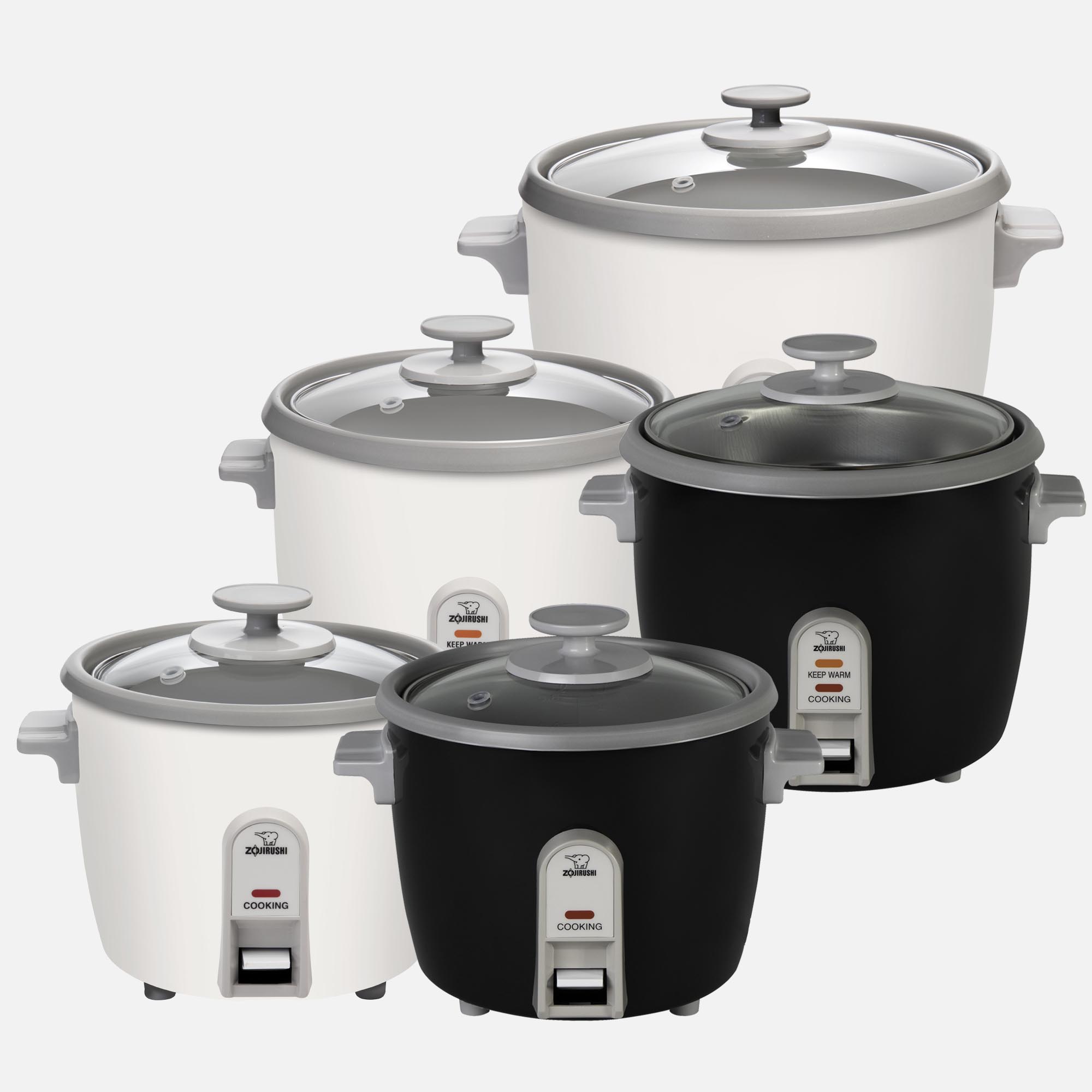
The Zojirushi NHS-06 is a no-frills 3-cup conventional rice cooker that punches far above its price on plain white rice. Reviewers across We Know Rice, Consumer Reports, and Rice Cooker Junkie consistently praise its fluffy results, durable nonstick pot, and one-button simplicity. Brown-rice devotees and large households should look elsewhere. For a single person or couple who wants reliable white rice with zero fuss, it is the value benchmark under $100.
Full review
Perfect 5 out of 5 from Consumer Reports
The NHS-06 does one thing and does it very well: plain white rice. Consumer Reports awarded it a perfect 5 out of 5 for rice cooking on its 1-to-5 scale, the same Excellent grade it reserves for cookers many times the price. We Know Rice describes the output as reliably fluffy, with grains that separate cleanly, and notes it ranked as high as #10 in Amazon's rice-cooker category on the strength of that consistency. Operation could not be simpler — you add rice and water, flip the single switch, and the cooker drops to keep-warm automatically when the moisture is gone.
Because it is a conventional thermostat-based cooker rather than a microcomputer model, the NHS-06 detects doneness by temperature: once the water boils off and the pot temperature climbs past 100 degrees Celsius, the switch trips to warm. That mechanical simplicity is why reviewers find it so consistent with white rice — there are no menus to choose wrong, and the 3-cup-uncooked batch size matches the pot geometry well so heat distributes evenly. We Know Rice notes the results genuinely beat what most home cooks get on the stovetop, where scorching and gummy bottoms are common.
Where the NHS-06 shows its conventional roots is with anything beyond white rice. Rice Cooker Junkie and Rice Cooker Advice both report that brown rice comes out undercooked or scorches at the bottom of the pot, because the cooker has no soak-and-stage logic to handle the longer absorption time whole grains need. For jasmine, basmati, and short-grain white rice it is excellent; for brown rice, quinoa, or other grains it is a compromise that often requires manual intervention.
Loose glass lid lets starchy water boil over
We Know Rice highlights the durable nonstick inner pan as the standout, saying it is easy to clean and can withstand years of frequent use — a recurring theme in Zojirushi ownership and a big reason the brand commands loyalty even at the budget end of its lineup. The cooker is genuinely compact at about 9 by 7.5 inches, so it tucks into a small kitchen, dorm, or RV without claiming permanent counter space, and at 300 watts it draws little power.
The trade-off is the glass lid. Rice Cooker Advice notes it is loose-fitting and lets starchy water bubble over and splatter during a vigorous boil, which means an occasional wipe-down around the unit and is the most common ownership gripe. Rinsing the rice thoroughly before cooking, a fix Rice Cooker Advice also suggests, reduces the foam and largely tames the boil-over. The lid is clear, which lets you watch the cook, and the whole unit is light enough to lift and store easily — design choices that favor the small-household buyer this cooker is aimed at.
Single switch, no menu to navigate
The through-line across every review is value and simplicity. Rice Cooker Junkie calls it a great investment for small households or individuals who want a simple, easy-to-use cooker, singling out the single-switch control that anyone — even someone who has never cooked rice — can master. Consumer Reports' Excellent rice-cooking score backs that up with lab data rather than impressions, which is rare for a cooker at this price.
For buyers who feel overwhelmed by 10-program fuzzy-logic machines, the NHS-06's deliberate minimalism is the selling point, not a limitation. There is no menu to navigate, no voice prompts to silence, and no manual you must study — qualities that make it a frequent recommendation as a first rice cooker or a gift. Owners also praise how predictable it is: once you dial in your preferred water ratio, every batch comes out the same, which is exactly what a daily-driver appliance should do.
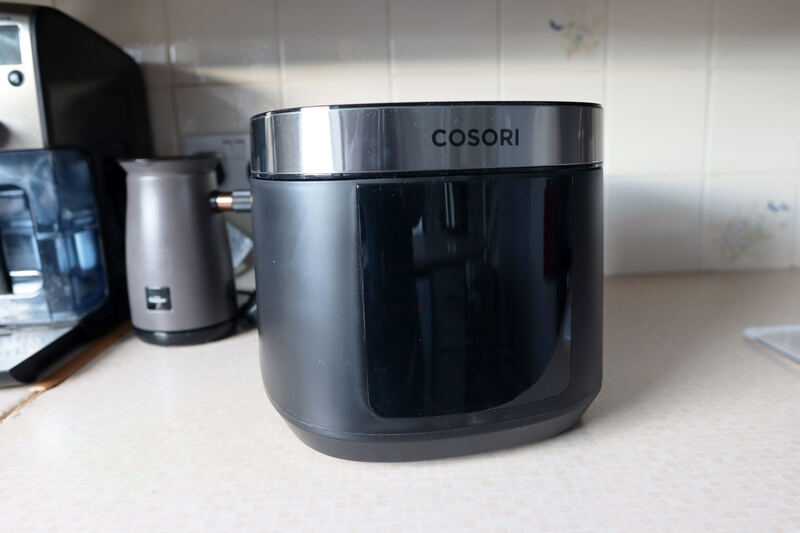
No delay timer, unlike the Cosori
Brown rice is the clear weakness: Rice Cooker Advice reports the NHS is not optimized for it, with results coming out mushy, dry, or burnt on the bottom. The keep-warm function is functional but basic, and Rice Cooker Advice notes rice can dry at the edges if held for hours. There is no delay timer, so you cannot wake up to fresh rice the way you can with the Cosori. And the 3-cup-uncooked ceiling means it tops out at roughly six cooked cups — fine for two people, tight for a family.
More durable than the Aroma or Hamilton Beach
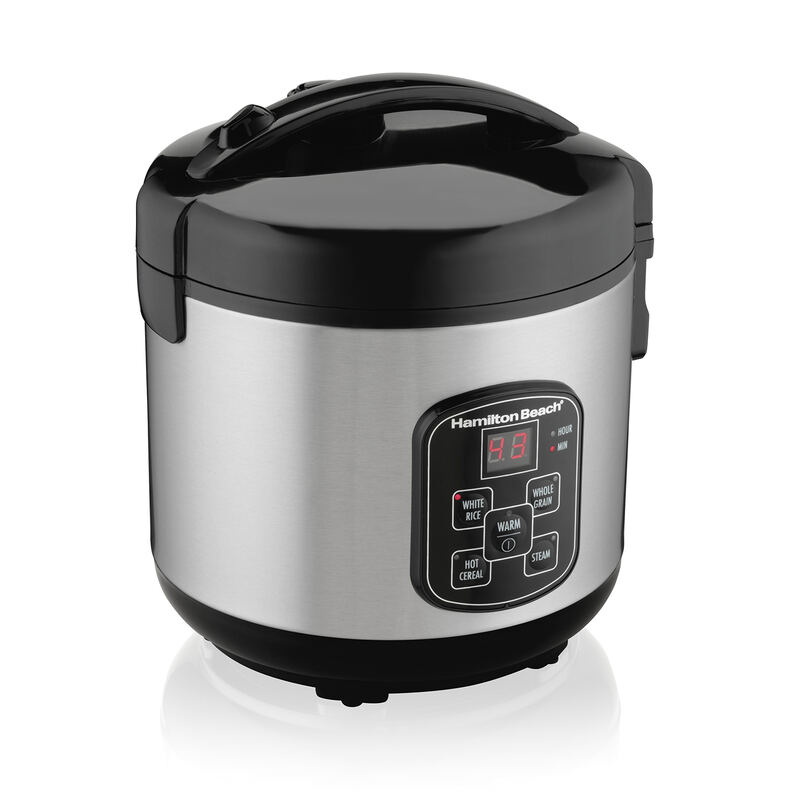
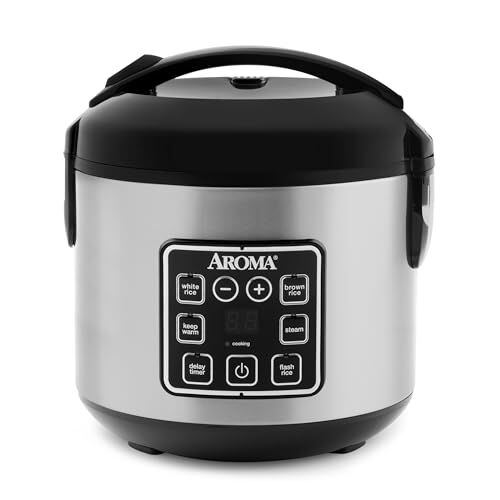
Against the Cosori Rice Cooker, the NHS-06 gives up fuzzy-logic versatility and a delay timer, and the Cosori has a dedicated brown-rice program where the Zojirushi does not. But it costs less than the Cosori, is more durable than the budget Aroma ARC-914SBD and Hamilton Beach 37518, and matches anything in the group on plain white rice. The decision comes down to whether you want one excellent thing cheaply or a more flexible machine for a bit more money.
Value and Long-Term Durability
At around $68, the NHS-06 sits in the middle of this group on price but at the top on expected lifespan. The Zojirushi reputation for longevity is the recurring justification in nearly every review: the nonstick pan holds up to years of daily use, and the mechanical simplicity means there is little to break — no circuit board of programs, no membrane panel to wear out, just a switch, a thermostat, and a heating element. We Know Rice frames this durability as the real value proposition, not the feature list.
That makes the NHS-06 a quietly economical choice over time. Where a cheaper cooker might need replacing after a year or two, the Zojirushi is the kind of appliance owners report keeping for the better part of a decade. For a buyer who eats white rice often and does not want to think about their rice cooker again, paying a little more up front for a unit that lasts is the smarter long-term spend.
Best for one or two people eating mostly white rice
Buy the NHS-06 if you are a single person or couple who eats mostly white rice and values a cooker that will last for years over one packed with menus you will never use. Skip it if brown rice or other whole grains are a staple, if you need a delay timer, or if you cook for more than two or three people regularly — in those cases the Cosori or a larger Aroma will serve you better.
Strengths
- +Durable nonstick inner pan that, per We Know Rice, survives years of frequent use
- +Dead-simple single-switch operation with nothing to learn
- +Backed by Zojirushi's reputation for long-lived appliances
Watch-outs
- −Struggles with brown rice — it can come out undercooked or burn at the bottom
- −Glass lid lets starchy water bubble over and splatter during cooking, Rice Cooker Advice warns
- −No timer, fuzzy logic, or specialty programs
How it compares
Simpler than the Cosori Rice Cooker, which adds fuzzy-logic programs and a delay timer the NHS-06 lacks, but it costs less. Like the Aroma ARC-914SBD and Hamilton Beach 37518, it is a small-household pick — but its build quality outlasts both.
Price history Price hasn't moved
12 daily reads from store.zojirushi.com since Oct 29, 2026. Lowest $60 (Nov 4), highest $60 (Nov 4), latest $60 (Nov 22).
Rating sources
Counts as 4.87/5 in our score — this publisher's 13 scores on the site average 4.35, so its scores are adjusted down to compare fairly with other publishers.
“Consumer Reports gives the non-programmable Zojirushi NHS-06 a score of 5 — Excellent — for rice cooking on its 1-to-5 scale.”
Not in the average — we derived this score from the review's words, and a publisher printed a score for this product, so the printed number counts instead.
Our 4.9 score is the average of 1 of the scored reviews above, each adjusted for how strictly its publisher scores; 1 more reviewed it without printing a score and is not in the average. 1 derived score above is not in the average because a publisher printed a score for this product. Ratings marked * were derived from the reviewer’s written analysis or video transcript — the publisher didn’t print an explicit numeric score, so we inferred one from their own words. Click through to verify. More about methodology.