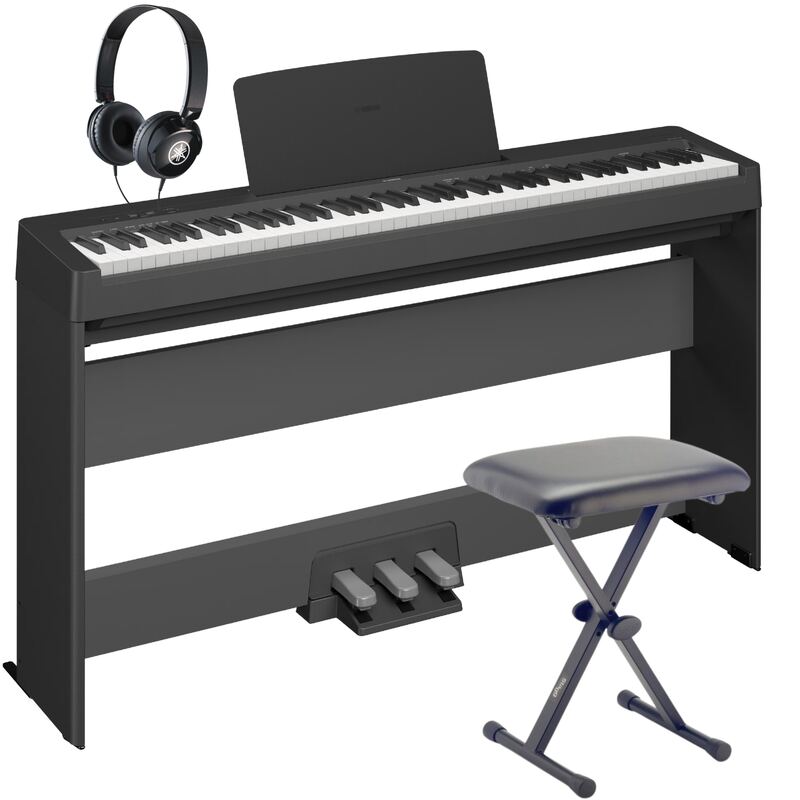
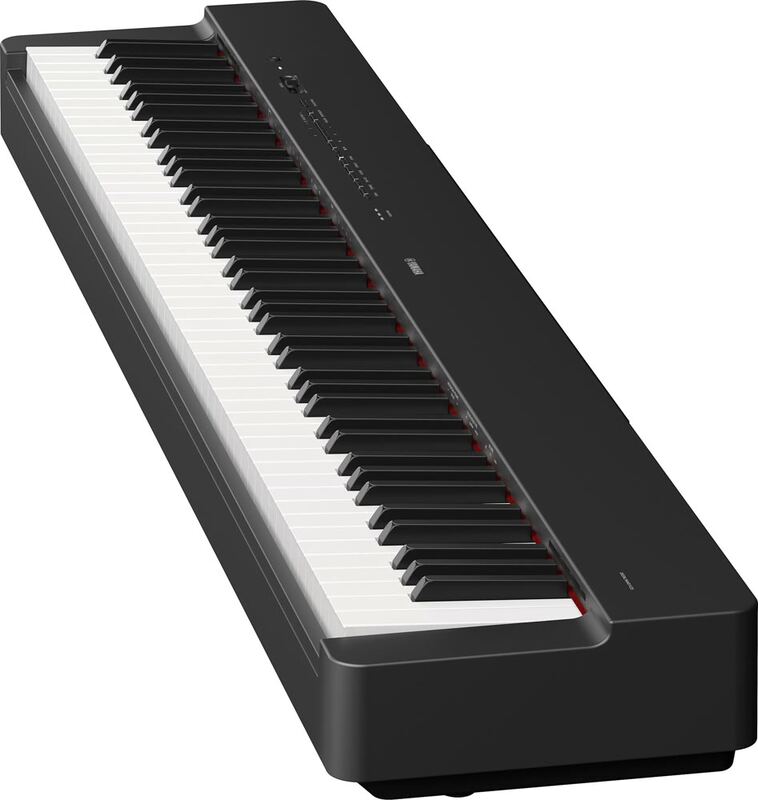
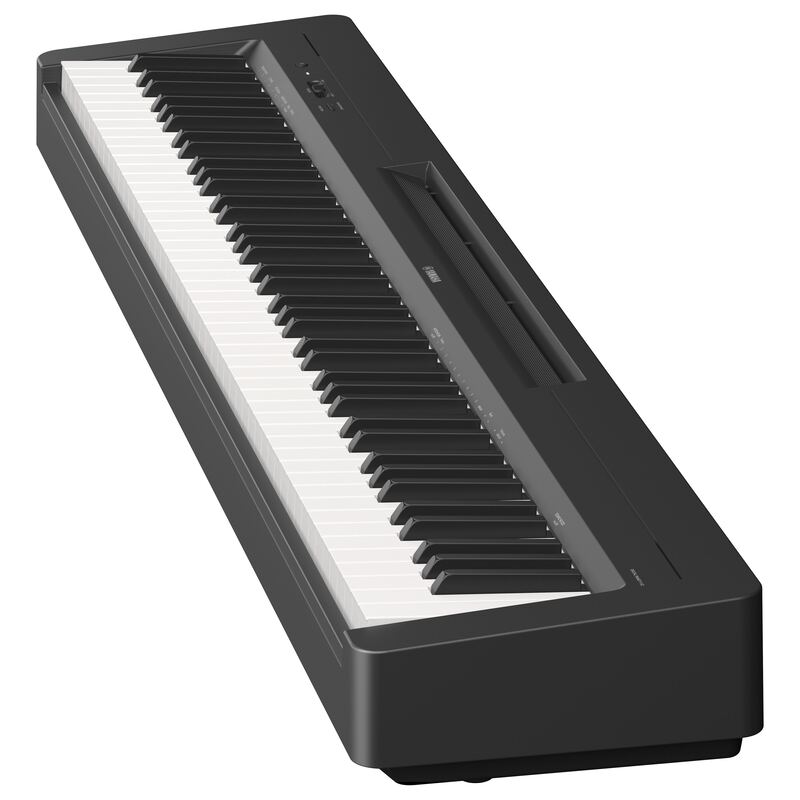
The Yamaha P-45 is an entry-level digital piano with a fully weighted graded hammer action keyboard, which is what beginners are usually after when they want acoustic piano feel. Reviewers noted the 88 keys, the graded hammer action, and 10 instrument voices covering grand and electric pianos. With 64-note polyphony and 12W of speaker power it plays responsively and gets loud enough for home use. Its function controls hide behind the piano keys instead of buttons, which some players find inconvenient. Beginners and intermediates who want a quality instrument at an affordable price should look; anyone who needs advanced features like split mode should consider alternatives.
Full review
Smoother keys than the Alesis Recital Pro
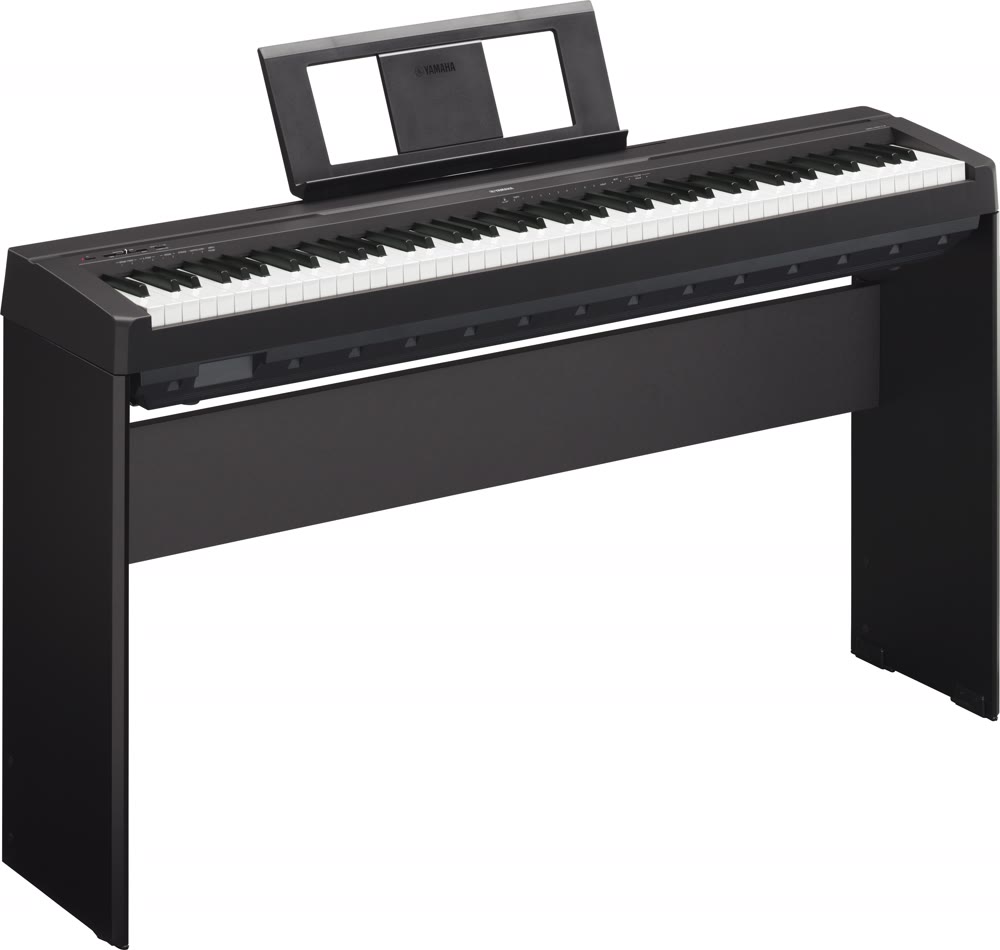
The Yamaha P-45 features a sleek, minimalist design that balances functionality with aesthetic appeal. Measuring 52.2 inches wide, 11.6 inches deep, and 6.0 inches high, it sits comfortably within the compact category of digital pianos. Weighing in at 25 pounds 6 ounces, the piano's lightweight construction makes it easy to move around, a notable advantage over many heavier models in its class. The keyboard uses Yamaha's Graded Hammer Standard (GHS) action, which provides fully weighted keys with graded resistance that mimics acoustic piano keys. According to pianotone.ca reviewer, the keys feel smoother and more consistent than those on the Alesis Recital Pro, with less left-right play, though they do not feature the matte black finish that some users expect. The piano's body is utilitarian but classically styled, with a straightforward layout that prioritizes ease of use over visual complexity.
The piano's physical build quality is solid, with a sturdy frame that supports the 88-key keyboard without flexing or instability. The keys are well-aligned and responsive, with no noticeable wobble or looseness. The sustain pedal input is a 1/4-inch jack, and an FC3A sustain pedal is recommended for half-pedaling functionality. The piano includes a power adapter, a sheet music stand, and a sustain pedal, making it ready to play right out of the box. However, the lack of a dedicated LCD screen means that users must rely on the manual or smartphone apps for parameter adjustments, which some find inconvenient. The piano's compact size and light weight make it ideal for home use, but its portability is limited compared to truly portable models, as noted by the reviewer from thrivepiano.com who emphasized its manageable dimensions for moving between rooms.
Keyboard Action and Touch Sensitivity
The Yamaha P-45's keyboard action is one of its standout features, using Yamaha's Graded Hammer Standard (GHS) system, which provides fully weighted keys with graded resistance. This action is designed to replicate the feel of an acoustic piano, with heavier keys on the left and lighter keys on the right, as noted by the pianotone.ca reviewer who compared it to the Alesis Recital Pro. The GHS system uses physical hammers that respond to pressure, similar to acoustic pianos, rather than electronic sensors, which provides a more authentic tactile experience. The piano offers four levels of touch sensitivity—Hard, Medium, Soft, and Fixed—which allows players to adjust the responsiveness of the keys to match their playing style or preference. According to the same reviewer, the default setting is slightly lighter than a real piano, but the adjustable sensitivity levels make it suitable for both beginners and intermediate players. The P-45's keyboard action is widely praised for its realism and playability, especially when compared to budget keyboards that use simpler, less responsive mechanisms.
The keyboard's keybed is designed with a smooth surface that does not feature the matte black finish found on some higher-end Yamaha models, which has been a point of confusion for some users. The keys are well-built and maintain their alignment over time, with no noticeable play or shifting during extended use. The P-45's keyboard is also praised for its quiet operation, particularly when compared to other models like the Alesis Recital Pro, which was noted to produce more keybed noise. The piano's 88-key design ensures that it can accommodate full-size piano practice and performance, making it suitable for both beginners and those transitioning from acoustic pianos. However, the lack of triple pedal support (soft, sostenuto, and damper) means that advanced pianists may find limitations in their playing experience, as noted by the jeremysee.info reviewer who pointed out that serious pianists might be restricted by this omission.
Sound Quality and Voices
The Yamaha P-45 features 10 built-in instrument voices, including two grand pianos, two electric pianos (Rhodes and Yamaha DX7-style), two pipe organs, strings, two harpsichords, and a vibraphone. These voices are generated using Yamaha's Advanced Wave Memory (AWM) stereo sampling technology, which captures high-quality recordings of acoustic instruments to provide realistic sound reproduction. According to the pianotone.ca reviewer, the voices are a noticeable upgrade over those found on budget keyboards, with the two grand piano voices being particularly well-received. One of the grand piano voices is sampled from Yamaha's Concert Grand Piano, while the other offers a brighter tone suitable for ensemble playing. The electric piano sounds are also praised, with the Rhodes-style tone being especially authentic, and the DX7-style tone offering a warm, classic sound. The P-45's sound engine is capable of delivering a rich, full tone that is suitable for both solo practice and performance, though it lacks some of the more advanced features found in higher-tier models.
The P-45's sound quality is further enhanced by its 64-note polyphony, which allows for complex playing without note drop-offs, a significant improvement over older models that had only 32 notes of polyphony. The piano's speakers, each rated at 6 watts with 12-centimeter cones, deliver a clear and balanced sound that is adequate for home practice and casual listening. However, when compared to the Casio PX-160, which offers 16 watts of amplifier power and 128 notes of polyphony, the P-45 falls short in terms of power and note capacity, as noted by the merriammusic.com reviewer. The piano also includes built-in reverb effects that are automatically applied to each voice, though these can be adjusted or disabled. The voices are accessible via the Function button in combination with piano keys, a system that some find intuitive once familiarized with the manual, though the lack of labeling on all keys can be a minor inconvenience, according to the pianotone.ca reviewer who suggested adding labels for clarity.
No aux input and no Bluetooth streaming
The Yamaha P-45 includes a range of standard connectivity options, including a 1/4-inch headphone jack, a USB MIDI output, and a 1/4-inch sustain pedal input. These features allow for integration with external devices such as computers, tablets, and MIDI controllers, making it suitable for music learning and recording applications. However, the piano lacks an auxiliary audio input, which is a common feature on more modern digital pianos and prevents users from connecting audio sources like smartphones or tablets directly to the piano's speakers for backing tracks or learning materials. The absence of Bluetooth audio connectivity is also a notable limitation, as it prevents wireless audio streaming from modern devices, a feature that is standard on many competing models, as noted by the jeremysee.info reviewer. Additionally, the piano does not include an LCD screen, which can make it difficult to monitor settings such as transposition, reverb, or velocity curve without referring to the manual or smartphone apps. The lack of an LCD screen is not a major issue for absolute beginners, but it can be frustrating for more advanced users who require quick access to settings.
The piano also lacks support for triple pedal functionality, which is standard on acoustic pianos and includes soft, sostenuto, and damper pedals. While the P-45 supports the damper (sustain) pedal, it does not include support for the other two pedals, which may limit its appeal for advanced players. However, the piano does support half-pedaling when an FC3A sustain pedal is purchased separately. The piano includes a built-in metronome, transpose capability, and layer mode, which allows users to combine multiple voices for richer soundscapes. The layer mode includes volume control and octave shifting for each voice, providing flexibility for advanced users. Despite its age, the piano's connectivity options are functional for basic needs, though they do not match the standards of newer models in terms of versatility and modern integration.
Ships with stand, pedal, and power adapter
Reviewers consistently praise the Yamaha P-45's keyboard action, particularly its Graded Hammer Standard (GHS) system, which provides a realistic and responsive feel that closely mimics acoustic piano keys. The pianotone.ca reviewer noted that the P-45's keyboard is a significant upgrade over the Alesis Recital Pro, with smoother and more consistent key operation. The piano's 88-key design, fully weighted keys, and four levels of touch sensitivity make it suitable for both beginners and intermediate players. The sound quality is also highly regarded, with the Advanced Wave Memory (AWM) engine delivering rich, detailed instrument voices that are well-suited for practice and performance. The P-45's 64-note polyphony is another strong point, allowing for complex playing without note drop-offs, which is a significant improvement over older models. The compact size and lightweight design are also appreciated, making the piano easy to move and suitable for home practice environments.
The piano's ease of setup and user-friendly interface are also frequently highlighted. The P-45 comes with all necessary accessories, including a power adapter, sheet music stand, and sustain pedal, making it ready to play right out of the box. The piano's function controls are accessed via piano keys, which, while initially confusing, become intuitive with practice. The inclusion of 10 instrument voices, including grand pianos, electric pianos, organs, strings, and harpsichords, provides a diverse range of sounds that are sufficient for most beginner and intermediate players. The P-45's ability to support layer mode and dual voices is also appreciated, allowing for creative sound design and performance flexibility. Additionally, the piano's compatibility with Yamaha's Digital Piano Controller and Smart Pianist apps, though limited, offers some digital integration for users who wish to enhance their practice experience.
64 notes is not enough for advanced players
Despite its many strengths, the Yamaha P-45 has several notable limitations that may deter certain users. One major drawback is the lack of an LCD screen, which makes it difficult to monitor settings such as transposition, reverb, or velocity curve without referring to the manual or smartphone apps. This can be particularly frustrating for users who want to make quick adjustments during practice or performance. The piano also lacks an auxiliary audio input, which prevents users from connecting audio sources like smartphones or tablets directly to the piano's speakers for backing tracks or learning materials. The absence of Bluetooth audio connectivity is another shortcoming, as it prevents wireless audio streaming from modern devices, a feature that is standard on many competing models. Additionally, the piano does not support triple pedal functionality, which limits its appeal for advanced players who require the full range of acoustic piano pedaling options.
Another limitation is the piano's 64-note polyphony, which, while an improvement over older models, is still insufficient for advanced classical pianists who may require 128 or more notes of polyphony. This can lead to note drop-offs when playing complex pieces, which may be a dealbreaker for serious players. The P-45 also lacks support for bass instrument sounds and the ability to split voices across the keyboard, features that are available on higher-tier models like the Yamaha P-125 or competing brands such as Casio and Roland. Furthermore, the piano's power options are limited to electrical outlet power, which can be a disadvantage for users who wish to practice or perform in environments without access to power outlets. The lack of dual power options, such as battery support, is a notable omission in an era where portable and flexible power solutions are increasingly expected.
Not for pianists who need triple pedal support
The Yamaha P-45 is best suited for absolute beginners and intermediate players who are looking for a quality digital piano at an affordable price point. Its fully weighted keyboard and 10 built-in instrument voices make it ideal for those transitioning from acoustic pianos or starting their musical journey. The piano's compact size and lightweight design make it suitable for home use, and its ease of setup ensures that users can begin practicing immediately. The P-45's Graded Hammer Standard (GHS) action provides a realistic playing experience that is well-suited for developing proper finger strength and technique. The piano's 64-note polyphony and 10 instrument voices are sufficient for most beginner and intermediate practice needs, though advanced players may find limitations in note capacity and feature set. The piano's compatibility with Yamaha's Digital Piano Controller and Smart Pianist apps also makes it a good choice for users who wish to enhance their practice experience with digital tools.
The P-45 is not recommended for advanced pianists or those who require full acoustic piano functionality, such as triple pedal support or bass instrument sounds. The lack of an LCD screen and auxiliary audio input may also be a drawback for users who want quick access to settings or wish to connect audio sources directly to the piano. Additionally, the piano's 64-note polyphony may be insufficient for complex classical pieces, and its lack of battery power options limits its portability in situations where electrical outlets are not available. Users who prioritize modern connectivity features like Bluetooth audio or dual power options may find the P-45 outdated in comparison to newer models. However, for those seeking a reliable, well-built digital piano that offers excellent keyboard action and sound quality at a competitive price, the P-45 remains a strong contender in the entry-level market.
Casio PX-160 offers 128 notes versus 64
When compared to the Casio PX-160, the Yamaha P-45 offers a more traditional and refined sound engine, with the Advanced Wave Memory (AWM) technology providing high-quality samples from acoustic instruments. The PX-160, however, offers 128 notes of polyphony and 16 watts of amplifier power, which surpasses the P-45's 64 notes and 12 watts. The PX-160 also includes a more extensive range of instrument voices (18 vs. 10) and supports auxiliary audio input, which the P-45 lacks. Additionally, the PX-160's Tri-Sensor Scaled Hammer Action Keyboard II provides a more advanced keyboard feel, though the P-45's GHS system is still considered superior for beginners. The P-45's lack of Bluetooth audio connectivity and LCD screen makes it less competitive with modern digital pianos, while the PX-160 offers more features and versatility for a similar price point. However, the P-45's keyboard action and sound quality remain highly regarded, particularly for those who value the Yamaha brand and its established reputation for quality.
In comparison to the Yamaha P-125, the P-45 offers a more affordable entry point while maintaining a similar keyboard action and sound quality. The P-125 includes additional features such as a more advanced sound engine, split voice capability, and support for bass instrument sounds, which are not available on the P-45. However, the P-45's keyboard action is identical to that of the P-125, making it a suitable choice for those who want a similar feel without the higher price tag. The P-45's lack of split voice capability and bass instrument sounds may be a limitation for advanced players, but for beginners and intermediate users, it provides an excellent balance of features and affordability. The P-45's 64-note polyphony is also a significant improvement over older models, though it still falls short of the 128 notes found in some competing models.
Strengths
- +88 fully weighted graded hammer action keys that approximate the feel of an acoustic piano
- +10 built-in instrument voices including 2 grand pianos and 2 electric pianos
- +64-note polyphony allowing for complex playing without sound drop-out
- +Compact design with 12W speaker power suitable for home practice
Watch-outs
- −Function controls are accessed via piano keys rather than dedicated buttons, requiring a manual reference
- −No bass guitar voice or split mode for layered playing
How it compares
The Yamaha P-45 provides a fully weighted graded hammer action that's similar to the P-145BT's GHC action, but it lacks the advanced connectivity features, USB audio interface, and Smart Pianist app support that make the P-145BT more appealing for modern users. While both are entry-level pianos, the P-145BT offers better portability and wireless capabilities, making it more suitable for those practicing in quiet environments.
Rating sources
“The Yamaha P-45 has 88 fully weighted, graded hammer action keys, so this approximates the feel of an acoustic piano.”
“Even though its a few years old, this piano continues to impress. In this Yamaha P-45 Digital Piano review Ill help you decide if its right for you.”
“The P45 also known as the P71 on Amazon is one of Yamaha's best-selling digital pianos and that's no surprise.”
Our 4.1 score is the average of these published ratings. Ratings marked * were derived from the reviewer’s written analysis or video transcript — the publisher didn’t print an explicit numeric score, so we inferred one from their own words. Click through to verify. More about methodology.