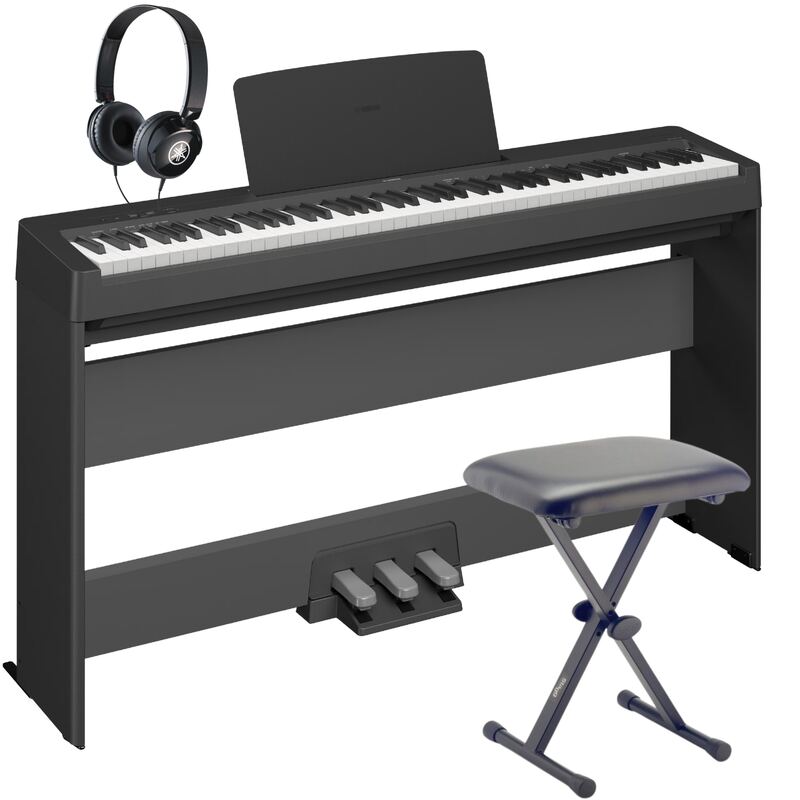
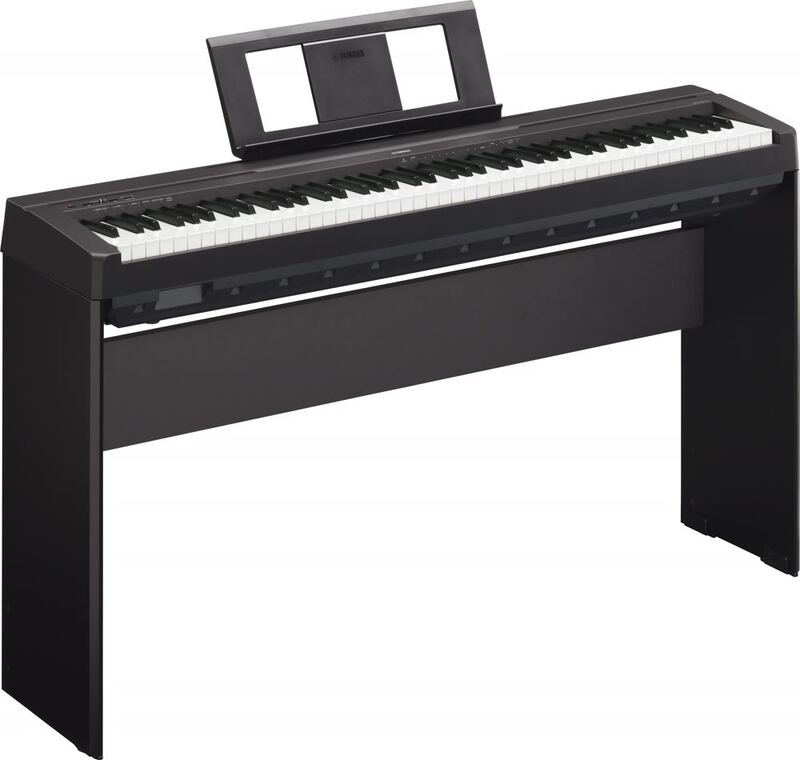
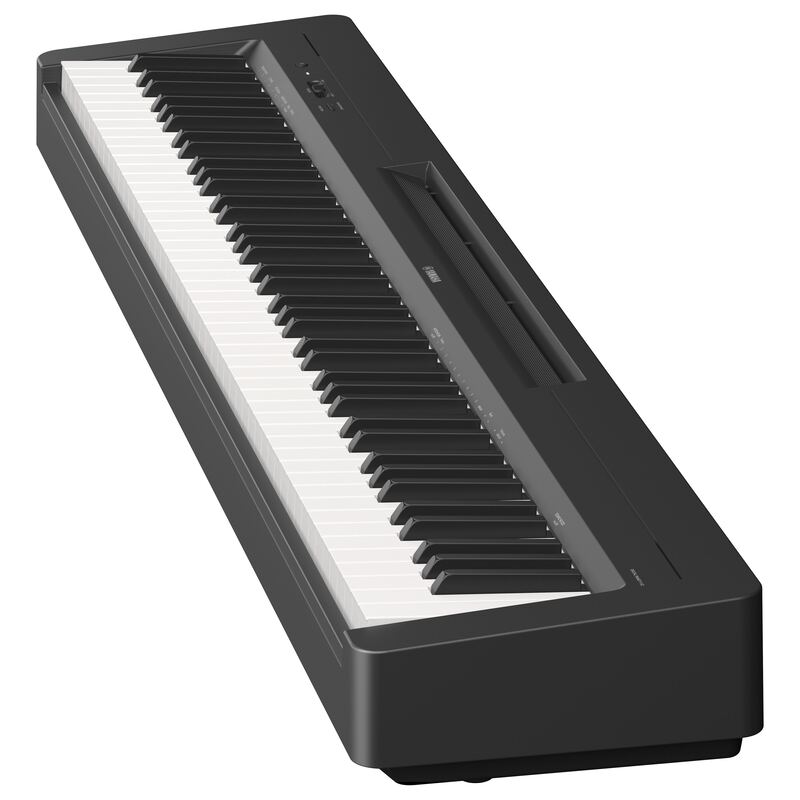
The Yamaha P-225 moves to an upgraded GHC (Graded Hammer Compact) action, more compact and slightly lighter than the GHS action in the P-125. Reviewers described it as solid and sturdy with less side-to-side play, though some found it springy and less enjoyable than the GHS. The sounds get an upgrade too, with CFX grand piano samples and VRM Lite, but the front-firing speakers give a thinner tone than competitors like the DGX-670. Portability improves. Players with arthritis or a preference for traditional action feel may not get on with the GHC.
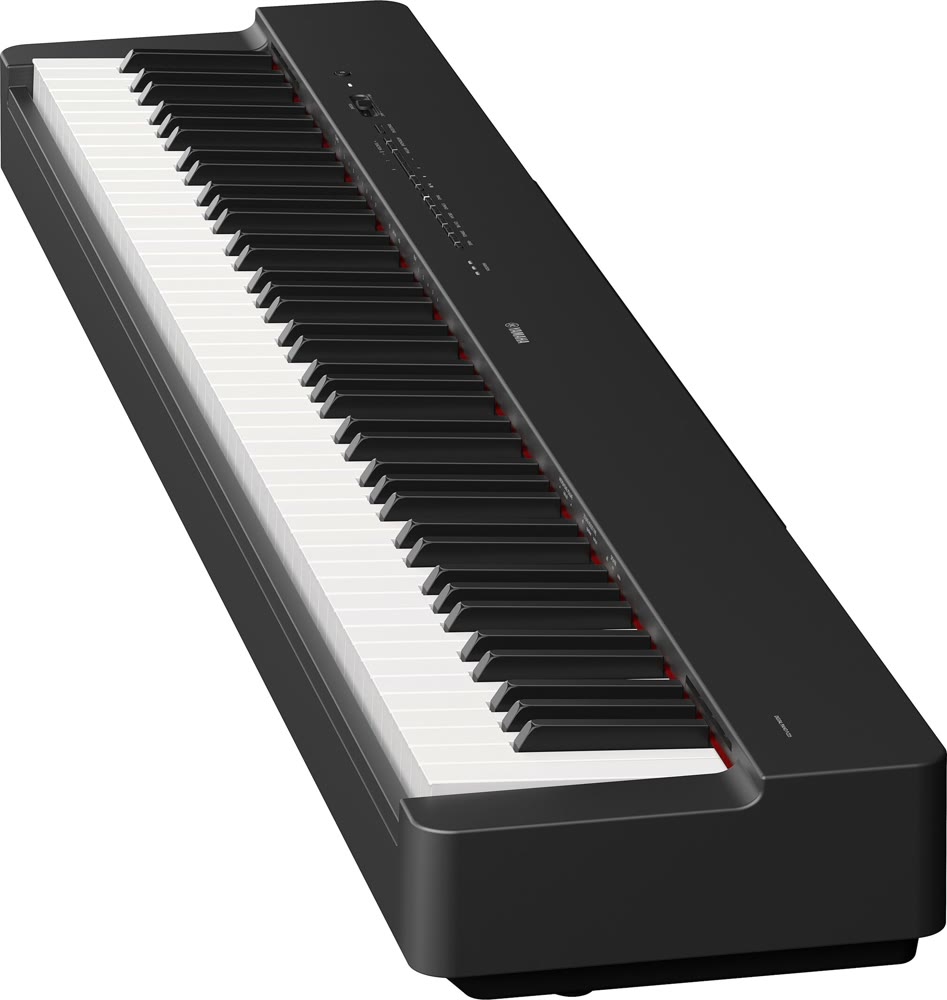
Full review
Action Innovation and Feel
The Yamaha P-225 introduces the Graded Hammer Compact (GHC) action, a significant departure from the previous Graded Hammer Standard (GHS) found in the P-125. According to Piano Tone's reviewer, this new action is "dual sensor, fully weighted and graded," maintaining the weighted key feel that digital pianists expect. However, the GHC action is notably more compact, resulting in a reduction of approximately one inch in depth compared to the P-125. This compactness, while contributing to portability, has drawn mixed reactions from reviewers. Paul J. Drongowski from Sand, software and sound noted that the GHC action feels "work" and is "springy resistance that is felt immediately," contrasting sharply with the enjoyable GHS action on the DGX-670. The reviewer's arthritis issues led to pain after just one hour of playing, indicating potential discomfort for users with physical limitations. Sweetwater's review corroborates that the GHC action is quieter than previous models, reducing key noise and mechanical rattles, which is a positive improvement for the user experience. However, the compact design results in a firmer touch when pressing towards the back of the keys, potentially causing fatigue for advanced players. The GHC action, while offering improved responsiveness and reduced noise, is not universally praised for its feel, with some users finding it less comfortable than the GHS action they are accustomed to.
Design and Portability
The P-225's design philosophy prioritizes portability, with dimensions of 52.2" x 10.7" x 5" and a weight of 25.4 lbs, making it slightly smaller and lighter than the P-125. Piano Dreamers' review highlights that the new model is "shorter, shallower from front to back, and slightly lighter," though the differences are subtle. The compact design, while beneficial for transport, has been criticized for potentially compromising the key feel. The GHC action's shorter keys and truncated pivot points contribute to a different tactile experience, particularly noticeable in the back half of the keyboard. Despite these design changes, the P-225 maintains a solid build quality, with the reviewer noting that the keys feel "really well built and sturdy" with minimal side-to-side play. The P-225's design also includes a more compact footprint, which is a welcome feature for those with limited space. However, this compactness has led to concerns about the action's feel, particularly for users who play more advanced pieces or require extended playing sessions.
Sound Quality and Features
Yamaha's P-225 boasts a rich sound palette, including 24 sounds with a notable upgrade to piano sounds from the Yamaha CFX Grand engine, utilizing VRM Lite (Virtual Resonance Modeling). The CFX sound engine is praised for its realism, with Piano Tone's reviewer noting that the Ballad Grand variation is particularly mellower and pleasing. However, the front-firing speaker system is criticized for not doing justice to the CFX sound, resulting in a thinner tone compared to the DGX-670, which features upward-firing woofer and tweeter for richer audio. The P-225's speaker system is described as lacking the depth and warmth of higher-end models, leading to a recommendation for external monitors for optimal sound quality. Additionally, the P-225 includes 20 rhythms with optional piano player-friendly bass player accompaniment, and a built-in audio interface for USB connections. The Smart Pianist app compatibility is also a standout feature, offering enhanced functionality for users who want to explore additional learning tools and performance options.
Connectivity and Integration
The P-225 offers comprehensive connectivity options, including LR line outs, Bluetooth audio in for streaming, a generic sustain pedal port, a triple pedal port, and an audio interface built into the USB to host port. These features make it a versatile instrument for both home and studio use. The built-in audio interface is a significant upgrade, allowing direct connection to a computer for recording and playback without additional hardware. The Smart Pianist app integration is another highlight, providing users with access to a range of learning tools and performance features. However, some users have noted that the app's functionality is limited compared to the extensive secondary voices available on higher-end models like the DGX-670. The P-225's connectivity options are robust, but the overall sound system may not fully support the advanced features users might expect from a premium digital piano. The integration of these features is seamless, though the audio quality remains a point of contention among reviewers.
Performance and User Experience
The P-225's performance is mixed, with some reviewers praising its portability and sound quality while others criticize its key action and speaker system. Piano Tone's reviewer found the GHC action to be "great" and "solid," noting that it doesn't have any significant side-to-side play, which is a positive aspect for advanced players. However, the action's compact design results in a firmer touch towards the back of the keys, which can cause fatigue during extended playing sessions. The P-225's 192 notes of polyphony and 24 sounds provide a rich musical experience, but the limited secondary voices compared to the DGX-670 are a drawback. The Smart Pianist app adds value for users who want to explore additional learning tools and performance features. The P-225's performance is adequate for casual players and beginners, but advanced users may find the key action and sound system lacking compared to higher-end models. The instrument's portability is a significant advantage, but the overall user experience is compromised by the limitations in sound quality and key feel.
Described as springy resistance felt immediately
Several reviewers have pointed out significant drawbacks of the P-225, particularly concerning the key action and sound system. Paul J. Drongowski from Sand, software and sound explicitly states that the GHC action is "not" enjoyable to play, describing it as "work" and "springy resistance that is felt immediately," which contrasts sharply with the GHS action on the DGX-670. The front-firing speaker system is criticized for not doing justice to the CFX sound, resulting in a thinner tone compared to the DGX-670, which features upward-firing woofer and tweeter for richer audio. The limited secondary voices compared to the DGX-670 are another significant drawback, with the P-225's secondary sounds being described as "very limited in comparison." The P-225's performance is adequate for casual players and beginners, but advanced users may find the key action and sound system lacking compared to higher-end models. Additionally, the compact design, while beneficial for portability, has led to concerns about the action's feel, particularly for users who play more advanced pieces or require extended playing sessions.
P-125 and DGX-670 offer more authentic feel
The Yamaha P-225 is best suited for casual players and beginners who prioritize portability and ease of use over advanced performance features. The compact design and lightweight build make it ideal for users who frequently travel or have limited space. The GHC action, while not universally praised, is sufficient for those who are just starting their piano journey or who play simpler pieces. The Smart Pianist app integration and comprehensive connectivity options are valuable for users who want to explore additional learning tools and performance features. However, advanced players and those seeking a rich, authentic piano experience will find the P-225 lacking in key areas such as sound quality and key feel. Users who are willing to compromise on sound quality and key feel for the sake of portability and basic functionality may find the P-225 a suitable choice. For those who require a more authentic piano experience, the P-125 or higher-end models like the DGX-670 would be more appropriate.
DGX-670's upward-firing speakers add richer audio
When compared to the Yamaha P-125, the P-225 offers a more compact design and a new key action, but the trade-off is a potentially less satisfying playing experience. The P-125's GHS action is widely praised for its feel and is considered by many to be one of the best digital piano actions available. The P-225's GHC action, while quieter and more responsive, is criticized for its firmer touch and potential for causing fatigue. In comparison to the Yamaha DGX-670, the P-225 falls short in terms of sound quality and secondary voices. The DGX-670's upward-firing speaker system provides richer audio, and its extensive secondary voices are more varied and appealing. The P-225's sound system is described as lacking the depth and warmth of higher-end models, leading to a recommendation for external monitors for optimal sound quality. While the P-225 offers portability and basic functionality, it does not match the performance and sound quality of its competitors.
Strengths
- +Upgraded piano sounds from the Yamaha CFX Grand engine with VRM Lite
- +Fully weighted and graded dual sensor hammer action (GHC)
- +Built-in audio interface via USB to host port
- +Compact design with reduced dimensions and weight compared to P-125
Watch-outs
- −GHC action feels different and less enjoyable than GHS action for some players
- −Front-firing speaker system produces thinner sound compared to DGX-670
How it compares
Compared to the Yamaha P-145BT, the P-225 offers a more compact design and upgraded CFX grand piano sounds with VRM Lite, but it falls short in terms of action feel and speaker quality. While the P-145BT provides a quieter and smoother GHC action with Bluetooth support, the P-225's front-firing speakers produce a thinner tone and lacks the wireless connectivity features that make the P-145BT more versatile for modern users.
Rating sources
Our 4.5 score is the average of the 1 scored review above; 1 more reviewed it without printing a score and is not in the average. More about methodology.