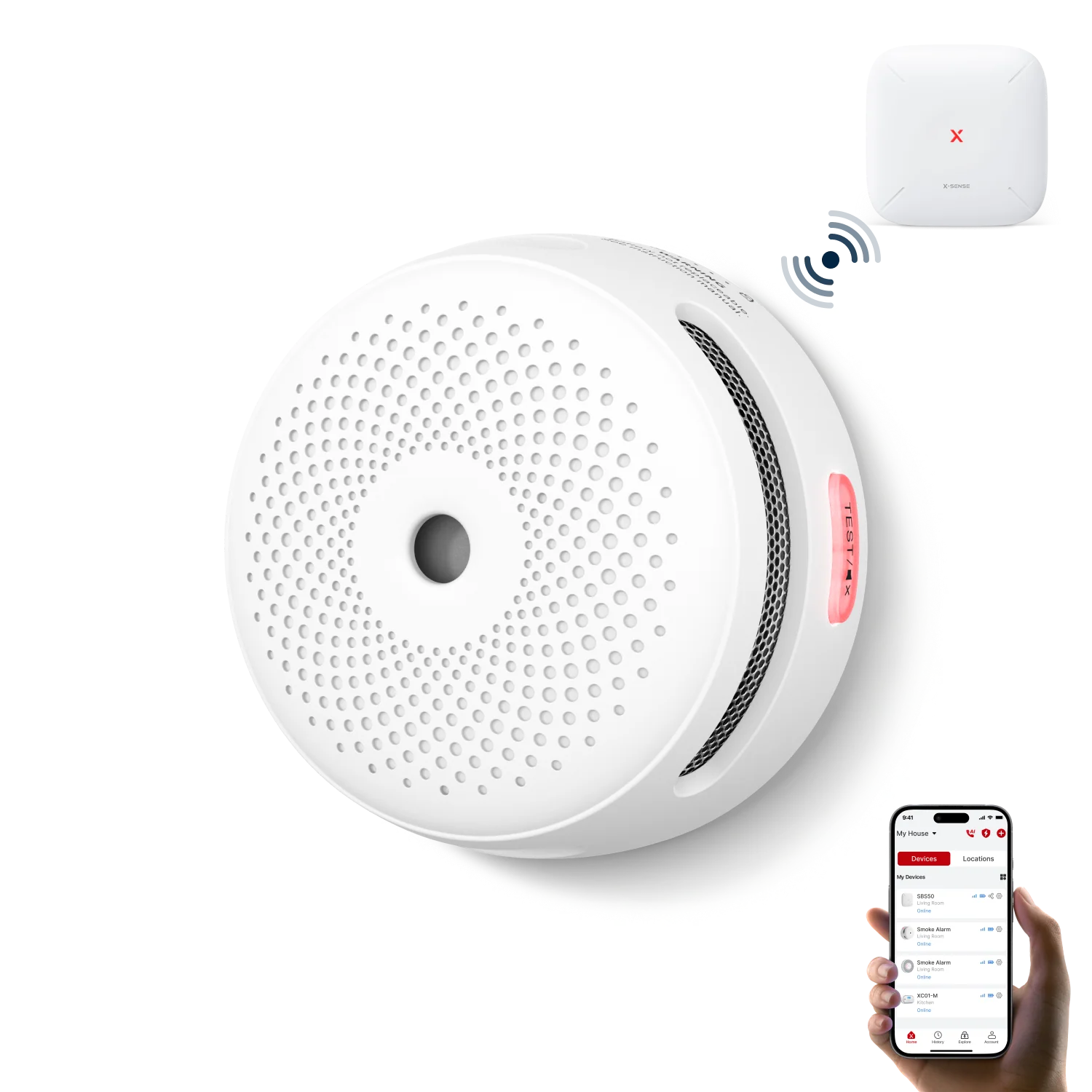
The X-Sense FS31 kit is three battery-powered XS01-M smoke alarms linked by radio to a small Wi-Fi base station that relays alerts to the X-Sense app. PCWorld rated it 4 out of 5: in its testing a test alarm set off all three units from the far corners of a house, simulated smoke triggered them quickly, and push and email notifications arrived in seconds. PCWorld's criticisms are that the alarms do not detect carbon monoxide, the base station has no battery backup so phone alerts stop in a power outage, and one alarm dropped offline during testing and would not reconnect.
Full review
Three alarms and a base station
PCWorld reviewed the kit X-Sense sells as model FS31: a base station and three XS01-M smoke alarms. Each alarm has a 915MHz radio for talking to the others, and the base station joins a 2.4GHz Wi-Fi network to pass alerts to the X-Sense app. PCWorld gives the base station's size as 3.5 inches square and notes one network can hold up to 24 alarms.
The alarms run on an included, replaceable 3V lithium cell that X-Sense says lasts five years, and the alarm itself has a 10-year operating life. PCWorld is explicit that these alarms will not detect carbon monoxide.
Interconnect held up across a whole house
PCWorld placed the three alarms in the furthest corners of the reviewer's house and used the app's test feature; all of them sounded despite walls, floors, wiring and plumbing in between. It calls the sirens very loud and piercing, with three siren styles to choose from.
Exposed to simulated smoke, the alarms alerted quickly and stopped promptly once the smoke cleared, and push and email notifications went out in seconds. With the base station disconnected, the alarms still set one another off, but no notifications were sent.
Where PCWorld found fault
The base station is powered over USB-C and has no battery backup, so mobile notifications stop if the power goes out; PCWorld suggests plugging it into an uninterruptible power supply and calls the omission a missed opportunity.
During testing one alarm dropped off the network without warning and stayed offline even a few feet from the base station, after the app was force-quit and both devices were power-cycled. PCWorld also found setup less than obvious: the QR code the app pointed to did not work, and the base station has to be added before any alarm.
Optional monitoring plans
In the US X-Sense sells a Protect+ Premium plan at $5 a month or $50 a year that dispatches first responders through the monitoring company Noonlight after a message and a phone call go unanswered, and a $3 a month Basic plan that requires pressing a button in the app. PCWorld's reviewer says neither is a plan he would invest in.
Strengths
- +In PCWorld's test all three alarms sounded together from the far corners of a house, through walls and floors
- +Alerted quickly to simulated smoke, with push and email notifications sent in seconds, per PCWorld
- +Alarms kept triggering one another with the base station unplugged in PCWorld's testing
- +Battery powered, so no wiring is needed; one network supports up to 24 alarms
- +Petite, unobtrusive hardware, per PCWorld
Watch-outs
- −Does not detect carbon monoxide
- −Base station has no battery backup, so a power outage stops push notifications, per PCWorld
- −Base station connects to 2.4GHz Wi-Fi only
- −PCWorld found setup in the app not immediately obvious
- −One alarm dropped offline during PCWorld's testing and would not reconnect
How it compares
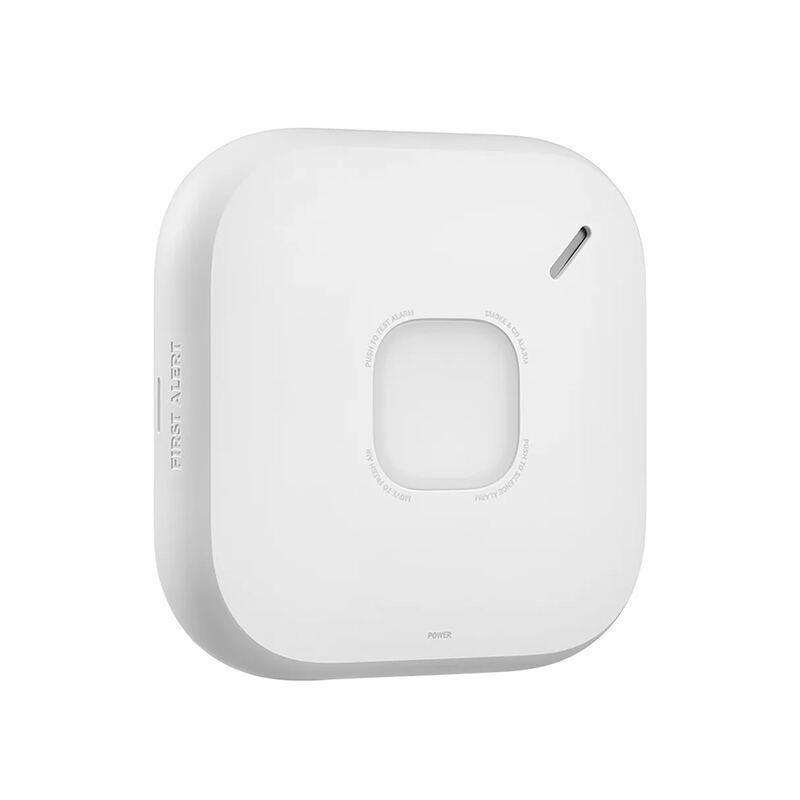
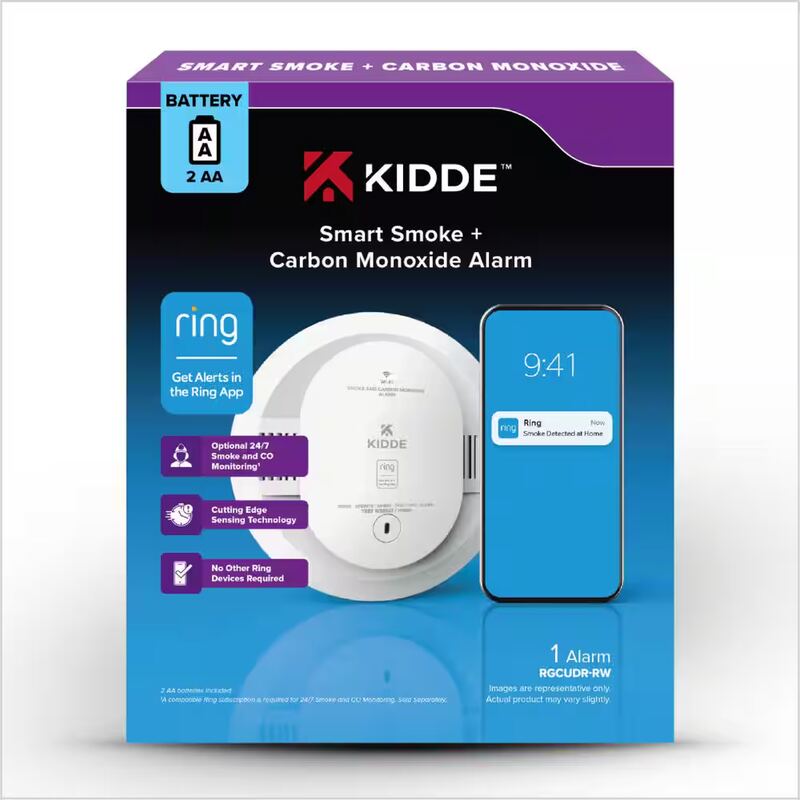
Unlike the X-Sense SC07, the Kidde Ring-Enabled detector and the First Alert SC5 on this page, which all combine smoke and carbon monoxide detection, PCWorld notes the XS01-M alarms detect smoke only. They run on batteries, where the Kidde and First Alert SC5 are hardwired, and they depend on a plugged-in base station for app alerts.
Rating sources
Our 4.1 score is the average of these published ratings, each adjusted for how strictly its publisher scores. More about methodology.