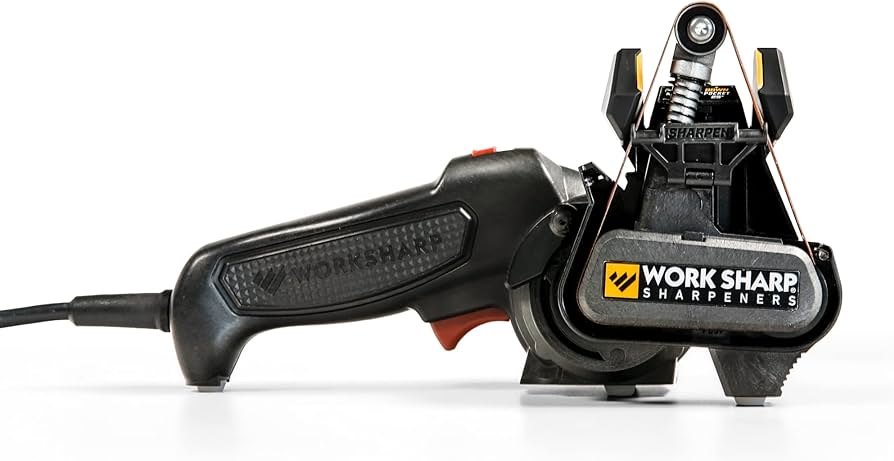
The Work Sharp Knife & Tool Sharpener MK.2 features a two-speed motor that balances precision knife sharpening at low RPMs with rapid material removal on tools using high speed, as noted by knifeinformer and Work Sharp Tools. A unified angle guide simplifies switching between 20-degree and 25-degree settings, while a front edge guide stabilizes the blade to preserve factory profiles during pull-through strokes. However, Last Frontier Outdoors warns that strict user discipline is required regarding belt speed selection to avoid overheating softer steel or removing too much material. The flexible abrasive belts are thin and can be flimsy, making them slightly difficult to install on the pulleys compared to rigid stones. This sharpener fits users who need a single unit for both delicate cutlery and rugged workshop maintenance but may frustrate those unwilling to learn specific operational protocols.
Full review
Two-speed motor balances knife precision and tool aggression
The Work Sharp Knife & Tool Sharpener MK.2 introduces a significant hardware upgrade over its predecessor by incorporating a dual-speed electric motor, allowing users to tailor the belt velocity to the specific demands of the task at hand. According to knifeinformer, this two-speed system is critical for maintaining blade integrity; the low speed setting is strictly intended for knives to prevent overheating softer steels and preserving the heat temper of the metal. Running a kitchen or pocket knife against the abrasive belt on high power can generate enough friction heat to compromise the steel's hardness, making the ability to dial back the RPMs an essential safety feature rather than just a convenience.
Conversely, the high-speed setting transforms the unit into a capable material removal tool for shop use. Work Sharp Tools describes this mode as ideal for grinding larger tools where speed is prioritized over delicate edge preservation. This duality means the sharpener can handle everything from fine kitchen cutlery to heavy-duty axes and lawn mower blades without requiring separate dedicated machines. The toggle between these speeds allows a single unit to serve both precision culinary needs and rugged outdoor or workshop maintenance, effectively consolidating two different sharpening workflows into one compact footprint.
Unified angle guide simplifies 20-degree and 25-degree selection
Previous iterations of the Work Sharp sharpener required users to swap out distinct physical guides for different edge angles, a process that introduced friction into the workflow. The MK.2 addresses this by combining the former separate guides into a single unit featuring a simple up-down toggle switch. This mechanism allows users to instantly select between 20 degrees per side, which is optimized for kitchen knives and fine cutting tools, and 25 degrees per side, designed for more durable outdoor and hunting blades. knifeinformer notes that this consolidation reduces the chance of losing small parts while streamlining the transition between sharpening a delicate chef's knife and a robust survival tool.
Beyond the mechanical toggle, the angle guide face has been lined with leather to provide a soft touch against the blade during the pull-through process. This lining helps protect the finish on more expensive or polished blades from unnecessary scratches while ensuring consistent contact between the steel and the abrasive belt. The integration of these features means that users no longer need to fumble with interchangeable plastic components, making the sharpening setup faster and less prone to user error when switching between different types of cutlery.
Front edge guide stabilizes tip geometry during pull-through strokes
A pivotal addition in the MK.2 design is the front edge guide, a feature that significantly enhances control when sharpening the forward portion of the blade. This component supports the knife from tip to heel throughout the entire stroke, preventing the common mistake of lifting the spine as the blade exits the guide. Without this support, users often inadvertently round off the tip or alter the factory profile by changing the angle mid-stroke. The front edge guide ensures that the belt contacts the steel at a consistent trajectory, preserving the original geometry of the knife from heel to point.
This stabilization is particularly important for drop-point and recurve blade shapes where maintaining a precise angle near the tip can be challenging with freehand techniques. By locking in the correct path, the guide helps users raise a uniform burr along the entire length of the edge before moving on to the honing stage. This mechanical assistance reduces the learning curve for beginners who might otherwise struggle to maintain consistent pressure and angle alignment during the final stages of the sharpening stroke.
Flexible abrasive belts require careful handling during installation
The sharpener utilizes a system of flexible abrasive belts rather than rigid stones or wheels, offering versatility in shaping but introducing specific handling requirements. The kit includes coarse P80 grit for reprofiling damaged edges, medium P220 grit for standard sharpening, and a 6000-grit fine belt for honing and polishing the edge to a razor finish. While these belts are effective at removing material quickly, they are notably thin compared to traditional sharpening media. This flimsiness can make them slightly difficult to install onto the three-pulley cassette system, requiring users to carefully align the belt before tensioning it.
According to Knife Informer, the installation process involves flipping down a tensioner plate, twisting it clockwise to lock in place, and ensuring the thin belt sits evenly across all rollers. Users may need to adjust the tracking mechanism located on the back of the unit if the belt does not centerline perfectly upon initial setup. Despite this minor friction during maintenance, the belts provide a consistent cutting action that mimics professional grinding equipment, allowing for rapid material removal when used with the appropriate grit and speed setting.
User discipline prevents swelling and tip rounding errors
The MK.2 demands strict adherence to specific operational protocols to avoid damaging knives, a reality highlighted by Last Frontier Outdoors in their detailed breakdown of common mistakes. One critical error is placing the knife into the guide before powering on the machine; dropping a blade onto a moving belt causes excessive material removal that creates a visible swell or bulge near the edge rather than a clean sharpening. The correct procedure requires positioning the knife in the stationary guide first, activating the motor, and then pulling through smoothly.
Another frequent pitfall involves stopping the pull-through stroke too early. If the user lifts the knife before the tip has fully cleared the belt, the abrasive can wrap around the point of the blade, causing it to round off or lose its sharpness entirely. To prevent this, users must ensure the tip remains in contact with the belt until the very end of the stroke. Additionally, Last Frontier Outdoors warns that thumb studs and bolsters are vulnerable to damage if they come into contact with the spinning abrasive; careful positioning is required to keep these features clear of the cutting zone.
Specialized techniques accommodate serrations and complex blade shapes
The versatility of the flexible belt system extends beyond standard straight edges, allowing for the maintenance of serrated knives and unconventional profiles. For serrated blades, users can remove the angle guide and fold down the front edge support to expose a section of the belt. By positioning the sharpened side of the serrations away from the abrasive and raising the spine slightly, only the tips of the points contact the belt. This targeted approach polishes the existing bevels without altering the overall geometry or removing excessive material from the valleys between the teeth.
Complex shapes like tanto blades require a segmented sharpening approach, treating each flat section as an independent edge to maintain the distinct angular transitions. Similarly, fillet knives benefit from the 20-degree setting and the support of the front guide to maintain flexibility without compromising sharpness. These specialized techniques demonstrate that while the machine automates much of the angle control, user knowledge of blade geometry remains essential for achieving professional results across diverse cutting tools.
Strengths
- +Two-speed motor allows low speed for precision knife sharpening and high speed for rapid material removal on tools.
- +Single switchable angle guide combines 20-degree and 25-degree settings with a convenient toggle switch, per Knife Informer.
- +Front edge guide supports the blade from tip to heel, maintaining factory profiles and preventing rounding.
- +Leather-lined face on the angle guide provides a soft touch for knife blades during sharpening.
Watch-outs
- −Requires strict user discipline regarding belt speed selection to avoid overheating softer steel or removing too much material.
- −Flexible abrasive belts are thin and can be flimsy, per Last Frontier Outdoors, making them slightly difficult to install on the pulleys compared to rigid stones.
How it compares
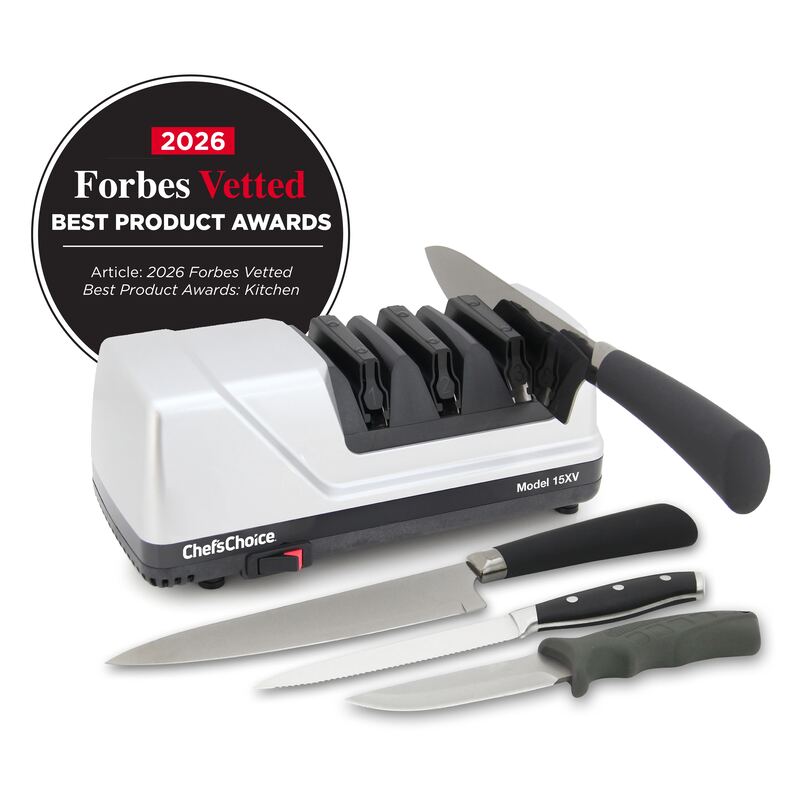
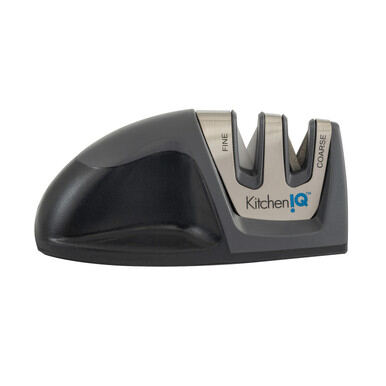
The Work Sharp Knife & Tool Sharpener MK.2 features a two-speed motor for both precision knife work and rapid tool material removal, distinguishing it from the single-purpose Chef's Choice Model XV electric sharpener. Its switchable 20/25-degree angle guide offers versatility that exceeds the fixed-angle KitchenIQ Edge Grip, though it requires more user discipline regarding belt speed to avoid overheating.
Rating sources
“The knife and tool sharpener Mark M2 is an awesome tool. It's fast, it's versatile, it can sharpen just about any knife out there”
“it just works great and it's super quick and easy to use so if you're looking to get something to sharpen your knives that is super easy it takes a guesswork out of it”
Our 4.5 score is the average of the 1 scored review above; 3 more reviewed it without printing a score and are not in the average. Ratings marked * were derived from the reviewer’s written analysis or video transcript — the publisher didn’t print an explicit numeric score, so we inferred one from their own words. Click through to verify. More about methodology.