The Chef's Choice Model XV is a three-stage electric sharpener that converts blades to 15 degrees and refines them using diamond abrasives. Consumer Reports found this system creates a durable Trizor XV edge, while Helen Rennie noted the process takes about five minutes for an 8-inch knife but requires careful reading of instructions to manage burr detection correctly. Although cosmetic scratches may appear on blade surfaces during use, they do not impact cutting performance or structural integrity. This unit suits cooks seeking speed and precision without manual skill, though those unwilling to follow detailed procedural steps should look elsewhere.
Full review
Three-stage system converts and sharpens knives
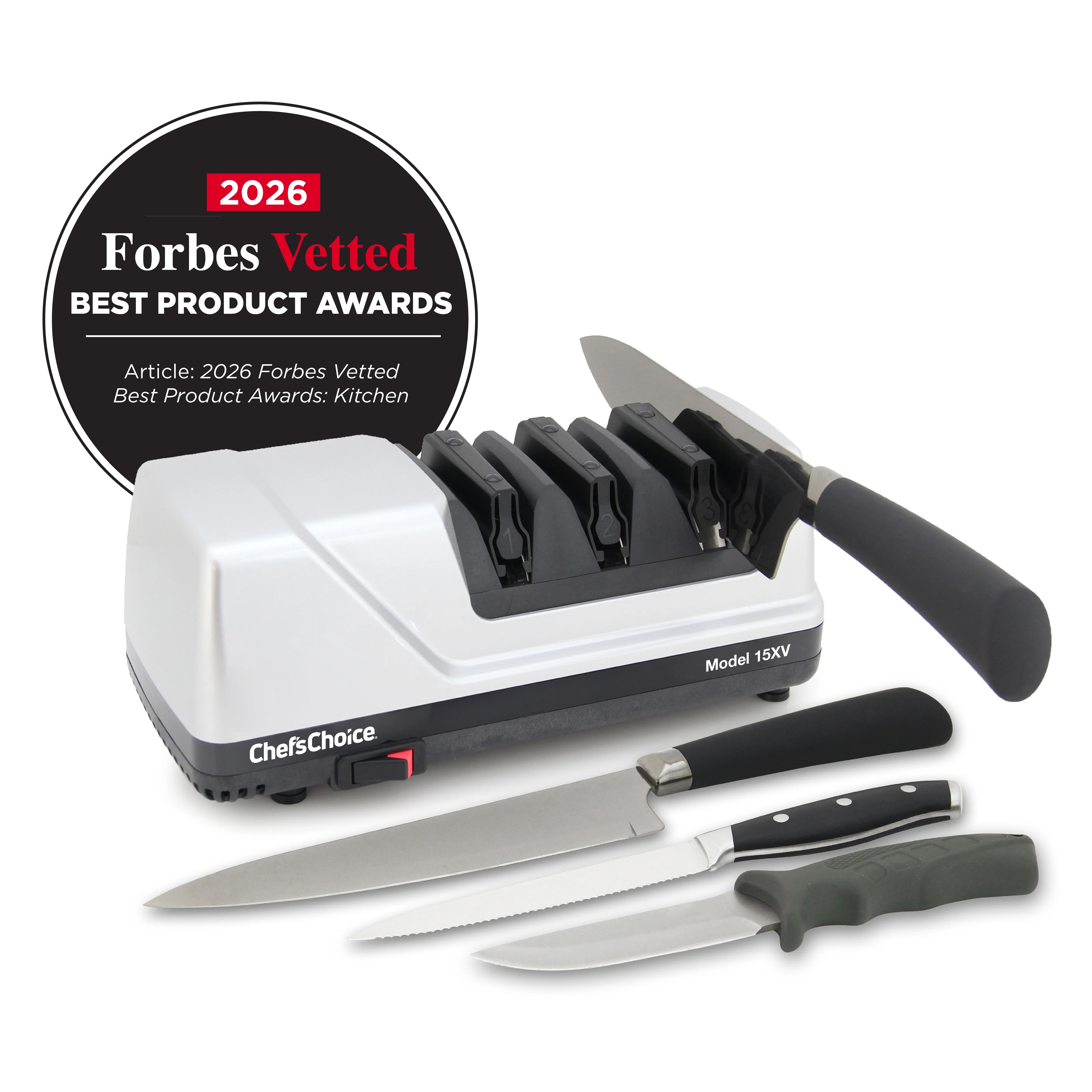
The Chef's Choice Model XV operates as a dedicated three-stage electric unit designed to handle the full lifecycle of blade maintenance for most kitchen cutlery. This stage is particularly useful for older knives or those from European manufacturers that typically utilize a wider 20-degree bevel. Once the edge has been converted to the narrower 15-degree profile, users can proceed to the second slot for actual sharpening and the third slot for honing.
Consumer Reports found this three-stage architecture creates what they term the Trizor XV edge, a unique triple-bevel design intended to deliver strength alongside long-lasting sharpness. The conversion process requires multiple passes through the first stage—roughly 20 pulls—to fully establish the new angle on stubborn or significantly worn blades. Afterward, fewer passes are needed in the subsequent stages to refine and polish that newly formed edge, ensuring the knife is ready for immediate use without requiring a separate stropping step.
Five-minute sharpening speed replaces manual stones
Helen Rennie clocked the total time required to restore an 8-inch chef's knife using this machine at approximately five minutes. This duration stands in stark contrast to the hours of practice and consistent effort demanded by wet stone sharpening, a method that requires significant manual dexterity to maintain a steady angle without removing excessive metal or creating uneven bevels. The electric nature of the Chef's Choice Model XV eliminates the physical skill barrier, allowing even novice cooks to achieve professional-grade results with minimal training.
The speed advantage extends beyond just the sharpening time itself. Professional knife sharpening services typically charge around $20 per chef's knife and require dropping off the tool for pickup a week later, effectively removing the user from their kitchen routine for at least two hours of travel and waiting time. By contrast, owning this unit allows users to perform maintenance on demand. The rapid execution means that dull knives can be restored during a brief pause in meal preparation rather than requiring a dedicated block of time or a trip to a local shop.
Controlled angle prevents user error
The primary mechanical advantage of the Chef's Choice Model XV is its fixed-angle guide system, which physically constrains how the blade enters and exits the abrasive slots. This controlled geometry means users cannot accidentally skew the angle or apply uneven pressure that would result in a wavy, inconsistent edge—a common pitfall when using manual sharpening stones. The machine dictates the precise 15-degree intersection between the diamond abrasives and the steel, ensuring uniformity across the entire length of the blade regardless of the user's experience level.
Burr detection requires careful stage monitoring
Despite the controlled angles, the process is not entirely passive; it demands active attention to the formation of a burr along the blade's edge. Users must pull the knife through Stage 1 slowly and check for this metal fold after every pair of passes on both sides of the slot. A dull knife might require up to 20 pulls before a consistent burr forms across the entire length, while a moderately dull knife will show it much sooner. Failing to detect this burr correctly can lead to over-sharpening or leaving an incomplete edge.
Cosmetic scratches appear on blade surfaces
The aggressive diamond abrasives used in the sharpening stages inevitably leave visible marks on the flat faces of the knife blades. These cosmetic scratches are a direct result of the metal removal process and can be unsettling for users who view their knives as pristine tools or heirloom items. However, these surface marring does not compromise the structural integrity or cutting performance of the blade. The scratches are purely aesthetic and do not interfere with the sharpness achieved by the triple-bevel edge.
Instructions must be read before first use
The complexity of the three-stage process means that skipping the manual is a recipe for poor results. The initial setup requires users to understand the specific sequence of pulls and the importance of checking for burrs at each stage. Helen Rennie noted that reading the instructions was the most difficult part of the entire sharpening experience, taking up to 10 minutes on the first attempt. Once understood, the process becomes routine, but the initial learning curve requires patience and a willingness to follow detailed procedural steps rather than simply plunging blades into the slots.
Strengths
- +Three-stage system allows conversion of knives to a 15-degree angle, sharpening, and honing in slots one through three.
- +Produces a sharp edge quickly; an 8-inch chef's knife takes approximately five minutes total for the process.
- +Controlled-angle design minimizes user error regarding blade angles compared to manual stone sharpening.
Watch-outs
- −Initial setup requires reading instructions carefully to understand the specific pull-and-check technique for each stage.
- −Cosmetic scratches may appear on the blade surface during use, though they do not impact sharpness or function.
How it compares
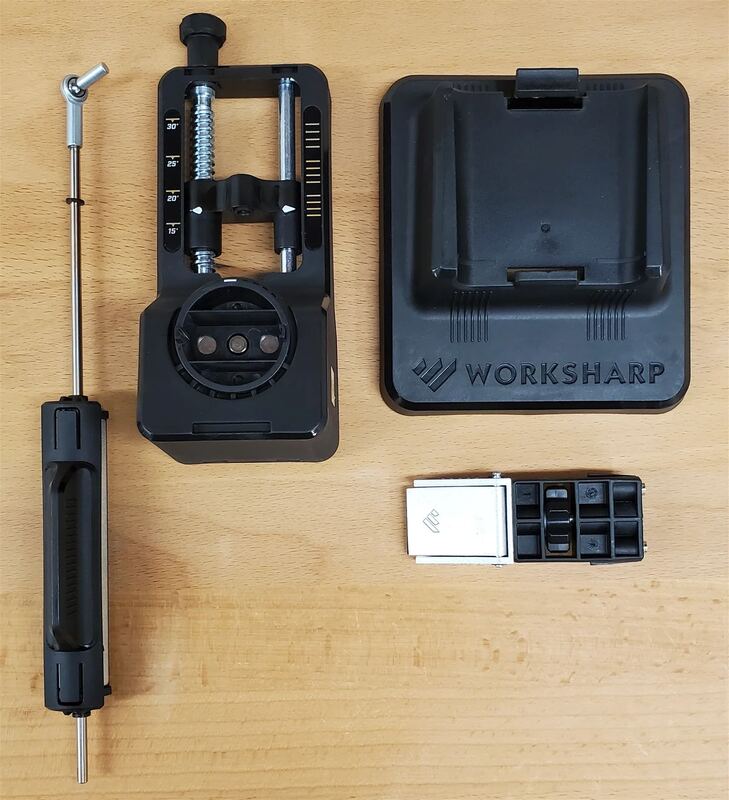
The Chef's Choice Model XV uses a three-stage electric system to produce a durable Trizor edge, offering greater speed and precision than the manual Work Sharp Precision Adjust Knife Sharpener.
Rating sources
“I have to say, I was very pleasantly surprised. And I kind of wish I made this purchase sooner.”
Our 4.5 score is the average of the 1 scored review above; 3 more reviewed it without printing a score and are not in the average. Ratings marked * were derived from the reviewer’s written analysis or video transcript — the publisher didn’t print an explicit numeric score, so we inferred one from their own words. Click through to verify. More about methodology.