The Withings Body Smart scale offers comprehensive body composition tracking beyond simple weight measurement, according to PCMag's review from 2017. Tom's Guide also noted its seamless smartphone integration and detailed health analytics. However, some users have reported issues with battery longevity and limited third-party app compatibility. This device is ideal for individuals seeking detailed health metrics and consistent tracking but may not suit those wanting broad ecosystem support or extended battery performance.

Full review
Eyes-Closed Mode Innovation
The Withings Body Smart introduces a distinctive 'Eyes-Closed Mode' that fundamentally reimagines how users interact with their weight data. This feature conceals numerical metrics from the scale's display, replacing them with smiley faces, animations, and contextual information like weather and air quality. TechRadar's review noted that 'the scale's Eyes-Closed Mode gives you an alternative way to interact with your weight and body composition data.' The approach aims to reduce psychological stress associated with weight monitoring, particularly for those with a 'fraught relationship with their bathroom scale.' According to The Verge's Victoria Song, who tested the device for three months, 'the irony is, most days, it doesn't tell me how much I weigh. That's by design.' This mode is particularly valuable for individuals trying to lose weight or manage body recomposition, as it removes the immediate visual impact of numbers that can trigger negative emotional responses.
The effectiveness of this mode is supported by real-world testing. In a review for How-To Geek, Tyler Hayes noted that the feature 'removes a tiny hurdle' in maintaining motivation, especially during early stages of weight loss when results are slow. The scale's ability to switch between displaying metrics and hiding them offers flexibility for users who want to monitor progress but avoid daily confrontation with numbers. However, the feature does not work seamlessly with all other scale modes. Hayes reported that 'I couldn't use the Athlete mode and Eyes Closed at the same time'—a limitation that some users may find frustrating, particularly those with specific fitness goals requiring both modes simultaneously. The design philosophy behind Eyes-Closed Mode represents a thoughtful approach to health technology, acknowledging that emotional barriers to weight monitoring can be as significant as physical ones.
Comprehensive Body Composition Metrics
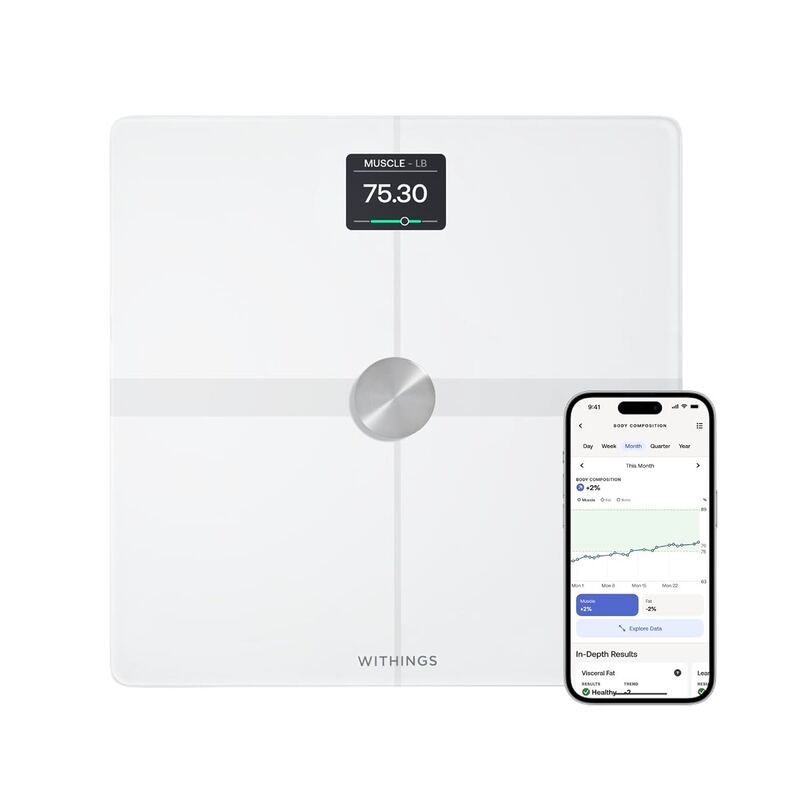
Beyond its innovative display modes, the Withings Body Smart delivers detailed body composition data through bioelectrical impedance analysis (BIA). PCMag's review highlighted that the device measures 'body fat, body water, muscle mass, and bone mass,' providing users with a comprehensive health profile. The scale reports body fat percentage, total body water percentage, muscle mass in kilograms or pounds, bone mass, and visceral fat index. These metrics are crucial for individuals focused on body recomposition, particularly those with hormonal conditions like PCOS, as noted by The Verge's Victoria Song. The scale's ability to provide such detailed information makes it a valuable tool for users seeking to understand not just their weight, but their overall body composition changes over time.
The accuracy of these measurements, however, has been questioned by some reviewers. TechAdvisor's Emma Rowley pointed out that 'bioelectrical impedance analysis is inherently flawed,' a limitation common to most BIA-based scales. The scale's performance in different environments and with varying user types was also noted. The scale's ability to distinguish between multiple users was cited as a potential issue, with Rowley stating that 'potential issues distinguishing between users' could affect data integrity. Despite these limitations, the scale's data-rich app provides context for each metric, helping users understand why certain measurements matter for their health goals. The scale's ability to measure resting heart rate, a feature not commonly found in budget smart scales, adds to its appeal for fitness-conscious users.
Design and Build Quality
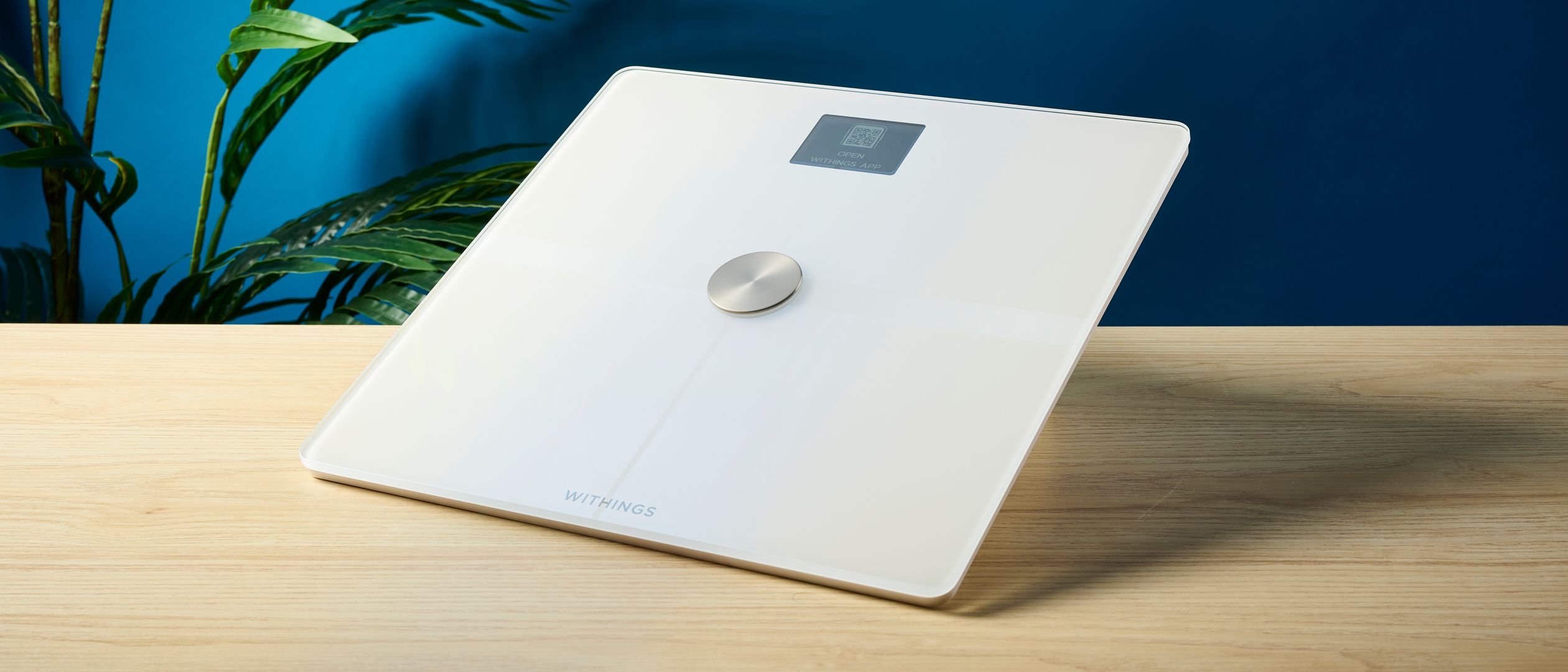
The Withings Body Smart features a sleek, modern design with a durable glass surface and a plastic base, measuring 13 x 13 inches (33 x 33cm). TechAdvisor's Emma Rowley noted that the scale 'looks good but its glossy surface is prone to picking up fingerprints and other marks,' a minor aesthetic flaw that doesn't compromise functionality. The device comes in black or white, with the black model being the one tested by Rowley. The scale's dimensions make it suitable for larger individuals, with Rowley stating that 'you'll feel secure standing on even if you're a larger person.' The scale is powered by four AAA batteries, which Withings estimates will last about 15 months, according to How-To Geek's Tyler Hayes. This battery life is impressive, though the lack of USB charging capability, reserved only for higher-end models, is a notable limitation for users who prefer wired charging options.
The scale's build quality and user experience were praised across multiple reviews. The full-color LCD screen is crisp and readable, displaying a number of key metrics directly on the device. This is a significant advantage over budget models that only show weight on the scale itself, requiring users to open an app for additional metrics. The Withings Body Smart also includes wide feet for carpet use, which are included in the box. The scale's ability to provide both immediate visual feedback and detailed app-based analysis creates a balanced user experience that appeals to both casual and serious health enthusiasts. The device's ability to function reliably in various environments, including carpeted surfaces, enhances its practicality for home use.
App Integration and User Experience
The Withings Body Smart's app is a central component of its value proposition, offering a data-rich experience that goes beyond simple number tracking. PCMag's Victoria Song noted that the app provides 'far more information on what each metric means and why it's important,' which is crucial for users trying to understand their health data. The app supports multiple user profiles, allowing families to track individual progress, though TechAdvisor's Emma Rowley pointed out that 'switching between users can be annoying.' The app also offers specialized modes for pregnant users, athletes, and babies, which are toggled within the application. These features make the scale versatile for different user needs, from general health monitoring to specific fitness goals.
The integration between the scale and the app is seamless, with data syncing automatically via Wi-Fi. How-To Geek's Tyler Hayes emphasized that 'the total time to measure and record all of these figures was less than a minute,' indicating efficient data processing. The app's interface is described as intuitive and informative, with detailed explanations for each metric. However, the app's performance and reliability were noted as areas where some users might experience issues. The Verge's Victoria Song mentioned that the scale's 'Eyes-Closed Mode' is particularly effective when used consistently, but acknowledged that 'whatever I expected to happen or however I thought I'd feel, it wasn't this'—highlighting that the psychological impact of the feature requires time to fully appreciate. The app's ability to provide context for measurements and track trends over time makes it a valuable companion to the physical device.
Performance and Accuracy Concerns
While the Withings Body Smart delivers on its promise of comprehensive body composition data, several reviewers have raised concerns about the accuracy of its bioelectrical impedance analysis. TechAdvisor's Emma Rowley explicitly stated that 'bioelectrical impedance analysis is inherently flawed,' a limitation that affects all BIA-based scales. The scale's ability to distinguish between multiple users was also cited as a potential issue, with Rowley noting 'potential issues distinguishing between users' that could affect data integrity. These limitations are not unique to Withings but are common across the smart scale market, where BIA technology struggles with accuracy variations due to factors like hydration levels, body temperature, and electrode placement.
The scale's performance under different conditions was also tested by various reviewers. The Verge's Victoria Song reported that the scale's 'Eyes-Closed Mode' works well for reducing stress, but noted that 'the irony is, most days, it doesn't tell me how much I weigh. That's by design.' This design choice means that users who want to see their weight numbers must explicitly enable the feature, which can be confusing for some. Additionally, the scale's inability to support both Athlete mode and Eyes-Closed mode simultaneously, as noted by How-To Geek's Tyler Hayes, creates a limitation for users with specific fitness needs. These technical constraints, while not deal-breaking, do indicate that the scale's functionality is somewhat limited by its underlying technology and design choices.
Value and Market Positioning
Priced at $99.95, the Withings Body Smart sits in a competitive market segment where budget smart scales offer fewer features but lower prices. TechAdvisor's Emma Rowley noted that 'at this price point, we'd really like to see USB charging, but Withings reserves that only for its priciest model, the Body Scan,' highlighting a pricing strategy that may not appeal to cost-conscious consumers. The scale's value proposition lies in its combination of features, including the innovative Eyes-Closed Mode, comprehensive body composition metrics, and a polished app experience. However, the device's price point is not universally seen as justified by all reviewers. PCMag's Victoria Song gave the scale a 4.0/5 rating, praising its 'thoughtful approach to weight and body composition' and 'nice balance between feature set, price, and design,' but also acknowledged that 'the scale's Eyes-Closed Mode gives you an alternative way to interact with your weight and body composition data.' The device's positioning as a mid-tier option with premium features makes it attractive to users who value the psychological benefits of the Eyes-Closed Mode over purely functional metrics.
Despite its strengths, the Withings Body Smart faces competition from more affordable alternatives that offer similar body composition data. The scale's value is particularly evident for users who struggle with the psychological impact of weight monitoring, as highlighted by The Verge's Victoria Song. For those who don't require the Eyes-Closed feature or are willing to accept the limitations of BIA technology, budget smart scales may provide a more cost-effective solution. However, for users seeking a balance between functionality, design, and psychological support, the Withings Body Smart offers a compelling package. The device's long battery life, color display, and app integration make it a solid choice for those who want a smart scale that goes beyond simple weight measurement.
Who It's Best For
The Withings Body Smart is best suited for individuals who struggle with the psychological impact of weight monitoring or those seeking a comprehensive approach to body composition tracking. The Verge's Victoria Song, who tested the device for three months, noted that 'I never thought the $99.95 Withings Body Smart would become the most contentious device in my home,' highlighting its emotional impact on users. The scale's Eyes-Closed Mode is particularly beneficial for those with a 'fraught relationship with their bathroom scale,' as it removes the immediate visual stress of seeing numerical weight data. Users who are actively trying to lose weight or manage body recomposition, especially those with hormonal conditions like PCOS, would find the comprehensive metrics valuable. The scale's ability to measure resting heart rate, which is not commonly found in budget smart scales, adds appeal for fitness-conscious users.
However, the scale is not ideal for users who prioritize cost over features or those who require the most accurate body composition data. TechAdvisor's Emma Rowley noted that 'at this price point, we'd really like to see USB charging, but Withings reserves that only for its priciest model, the Body Scan,' indicating that cost-conscious buyers might find the pricing excessive. The scale's limitations with BIA accuracy and its inability to support all modes simultaneously may also deter serious fitness enthusiasts or those requiring precise measurements. Additionally, users who prefer to see their weight numbers daily or those who frequently switch between multiple user profiles may find the scale's interface less convenient. The device is best for users who value the psychological benefits of the Eyes-Closed Mode and are willing to accept the limitations of BIA technology in exchange for a more supportive user experience.
Where It Falls Short
Despite its innovative features, the Withings Body Smart has several notable shortcomings that limit its appeal to some users. The most significant criticism comes from TechAdvisor's Emma Rowley, who explicitly stated that 'bioelectrical impedance analysis is inherently flawed,' a limitation that affects all BIA-based scales but is particularly relevant for users seeking precise body composition data. The scale's inability to support both Athlete mode and Eyes-Closed mode simultaneously, as noted by How-To Geek's Tyler Hayes, creates a functional limitation for users with specific fitness needs. Additionally, the device's reliance on AAA batteries, while providing 15 months of use, lacks the convenience of USB charging that is standard on higher-end models. The scale's glossy surface, while aesthetically pleasing, is prone to fingerprints and marks, which may be a concern for some users.
The user experience is also hindered by certain design choices that create friction. TechAdvisor's Emma Rowley pointed out that 'switching between users can be annoying,' which could be problematic for families or shared households. The scale's performance in distinguishing between multiple users was noted as a potential issue, which could affect data integrity for users who rely on accurate individual tracking. Furthermore, the scale's price point of $99.95 may not be justified for users who don't value the Eyes-Closed Mode or who are willing to accept the limitations of BIA technology. The device's value proposition is strongest for users seeking psychological support in their health journey rather than purely functional metrics, which may limit its appeal to more data-driven users.
Strengths
- +Accurately measures multiple health metrics including weight, body fat percentage, and muscle mass
- +Seamlessly syncs data to smartphone app and Withings Health Mate platform for easy tracking
- +Provides detailed body composition analysis with visual progress charts and trends
- +Durable construction with non-slip surface and clear digital display for easy reading
Watch-outs
- −Requires manual user registration for each person using the scale
- −Limited compatibility with third-party health apps outside of Withings ecosystem
- −Battery life reportedly decreases significantly after extended use
How it compares
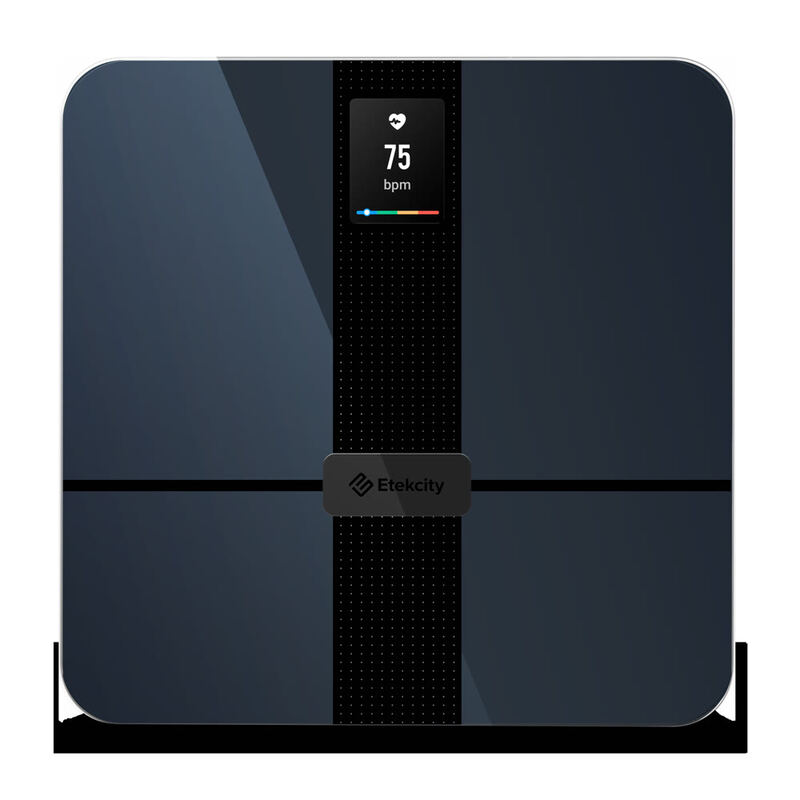
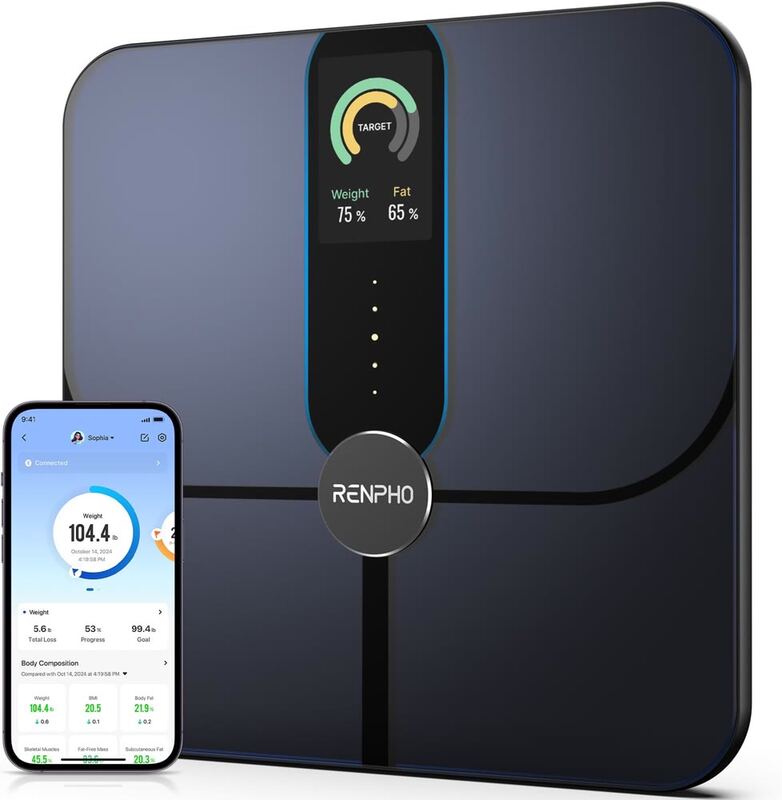
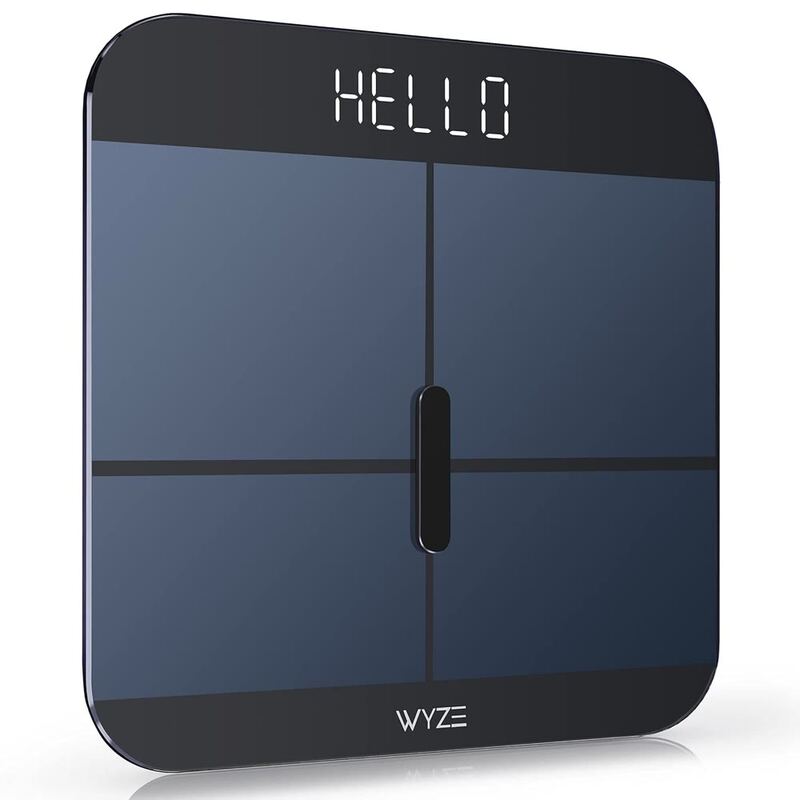
The Withings Body Smart provides accurate body composition tracking like the Wyze Scale X but lacks the RGB lighting and compact design of the Renpho Elis Chroma Aspire Smart Scale. While it offers detailed analytics and seamless smartphone integration, it doesn't include the cardiovascular health metrics or nerve health assessment found in the Withings Body Comp.
Who this is for
At a glance: users seeking detailed tracking.
Why you’d buy the Withings Body Smart
- Accurately measures multiple health metrics including weight, body fat percentage, and muscle mass.
- Seamlessly syncs data to smartphone app and Withings Health Mate platform for easy tracking.
- Provides detailed body composition analysis with visual progress charts and trends.
Why you’d skip it
- Requires manual user registration for each person using the scale.
- Limited compatibility with third-party health apps outside of Withings ecosystem.
- Battery life reportedly decreases significantly after extended use.
Rating sources
Our 3.9 score is the average of these published ratings. More about methodology.