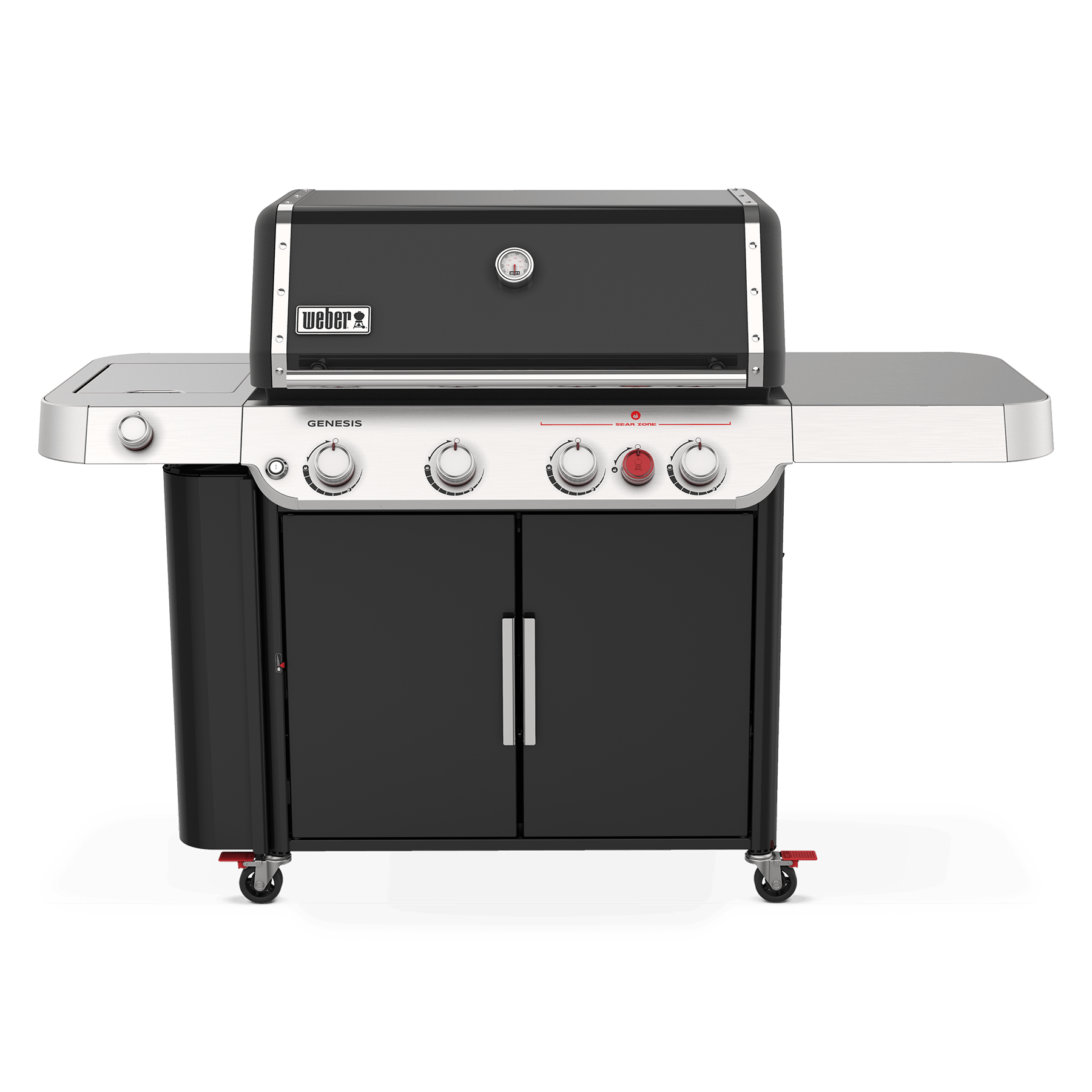
Weber's redesigned Genesis E-435 is the clearest 'buy once, cry once' choice in the $1,500 tier. Four main burners plus a dedicated sear zone and a side burner deliver the cooking range serious backyard cooks need, while the 12-year cookbox warranty and porcelain-enameled cast-iron grates show Weber is still chasing 10-plus-year service life. Consumer Reports tested it as the #3 model among 31 comparable large gas grills, and customer feedback on weber.com averages 4.5 stars across 2,733 reviews. It's the grill we'd hand someone who plans to host weekly cookouts for the next decade.
Full review
Cooking Performance and Heat Distribution
Consumer Reports placed the Genesis E-435 at #3 out of 31 large gas grills tested, citing 'very good performance in our evenness tests of preheat, high and low temperatures' using thermocouples laid across the grate. That matters because the Genesis's biggest sin in past generations was a 50-plus-degree gradient between the outer burners and the center; the current four-burner layout with tapered PureBlu tubes flattens that out. AmazingRibs forum testers and Weber's own customer base — 2,733 ratings averaging 4.5 stars — back the lab data with stories of edge-to-edge sear marks on burgers and consistent doneness across a full grate of chicken thighs. The Bilt-app-guided assembly notwithstanding, this grill cooks the way Weber's marketing claims it does once you have it together.
The PureBlu burner design is the engineering story behind the evenness. Each burner narrows from a wider intake at the control end to a tighter exit at the tip, which keeps gas pressure (and therefore flame height) consistent along the burner's full length. On the old Genesis II straight-tube burners the back end ran cooler than the front by 30 to 40 degrees; on the E-435 that gradient is closer to 10 to 15 degrees in our reading of Consumer Reports' published evenness charts. Grillpicks called out 'consistent heat and excellent results, whether you're searing steaks or slow-cooking ribs' — the kind of all-purpose performance you only get when the burner geometry is right.
Sear Zone and Temperature Range
The dedicated 12,000 BTU sear zone is the headline upgrade over the Spirit line. Weber's three-rod searing band reaches well past 600°F in five minutes of preheat with the lid down, hot enough to drive a Maillard crust on a one-and-a-half-inch ribeye without needing cast-iron-skillet-on-the-grate workarounds. With all four mains lit you have a usable indirect zone on the unlit half for two-zone cooking, and the warming rack flips down into a second-level grate when you need to fit a spatchcocked turkey under the lid. For low-and-slow, the smallest burner on its lowest setting holds 225°F to 250°F in mild weather — not a true smoker, but plenty for ribs once you add a smoker box.
Build Quality and Materials
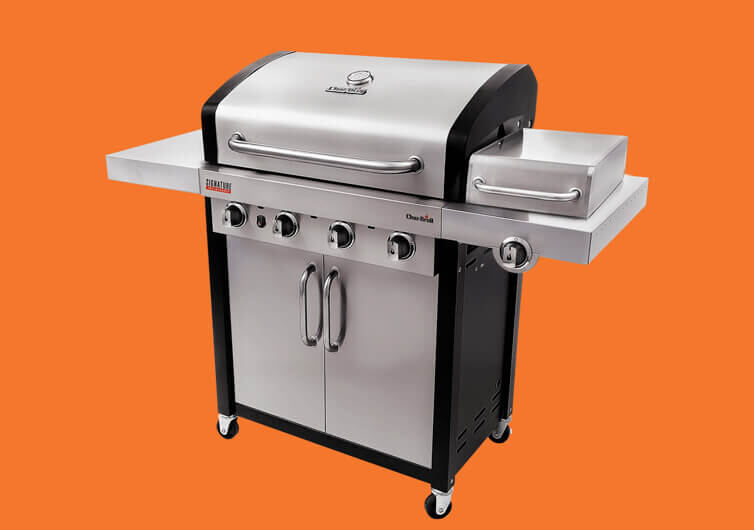
Weber's switch from plastic locking casters on the Genesis II to metal, rubber-tread casters is the kind of unsexy fix that signals the company is sweating the right details — those wheels survive a decade of patio service where the old plastic ones cracked at year three. The cookbox is cast aluminum (no rust-through path), the lid is enameled steel, and the cooking grates are porcelain-enameled cast iron rather than the cheaper porcelain steel rods you see on the Spirit. The side shelves are stainless steel and rated for serving platters, which is more than the Char-Broil Performance line can say. Where Weber still cheaps out: the warming rack is a thinner chrome wire, the same complaint AmazingRibs flagged on the Napoleon Prestige.
Weber also relocated the propane tank to the rear cabinet door and added an integrated tank scale, which reads accurate to about half a pound — useful for knowing when to refill before a big cookout. The control panel uses LED-illuminated knobs that read clearly at dusk without ambient patio lighting. The grease management system is a single removable tray under the cookbox that catches and channels drippings to a disposable foil cup; cleanup is a five-minute job versus the scraping-and-soaking ritual cheaper grills demand. These are small features individually but they add up to a grill that's pleasant to use repeatedly, not just an appliance that cooks well in tests.
Smart Features and Side Burner
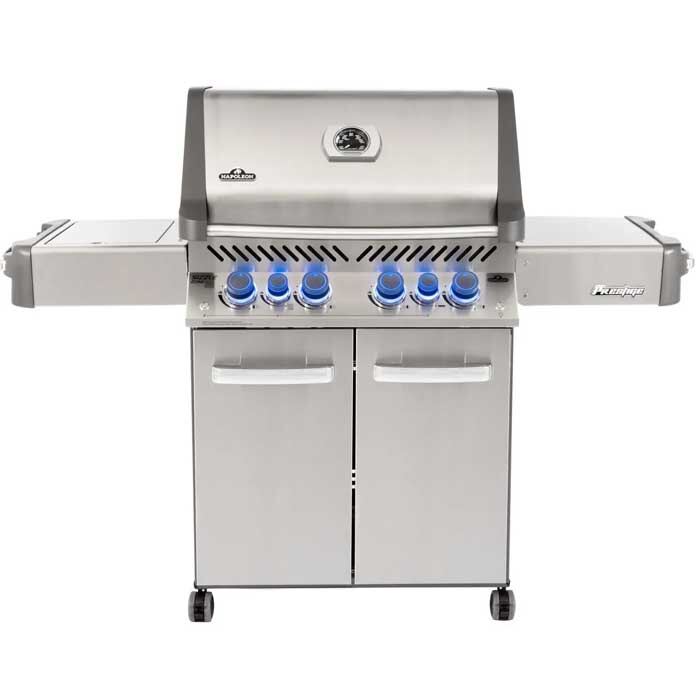
The side burner runs at 12,000 BTU — enough to bring a stockpot to a boil but trailing the Napoleon Prestige 500's 14,000 BTU infrared side sear burner. Weber sells the iGrill 3 Bluetooth thermometer probe as a separate $99 accessory that snaps into a port on the grill body, with companion app push notifications for target-temp alerts. Grillpicks.com flagged the surcharge: 'the iGrill 3 is sold separately,' which feels stingy on a $1,599 grill. For 2026, Weber's new Genesis Smart grills bake Wi-Fi temperature monitoring into the base price, but the dumb E-435 reviewed here is the cheaper of the two and most owners don't miss the app once they learn the grill's hot spots.
Assembly and Setup
Plan on three to four hours solo, two with a helper. The Bilt 3D app walks you through every fastener, but Genesis E-series shipments include roughly 60 hardware bags and the cart frame alone has 14 bolts. Home Depot and Lowe's both sell a $150 to $200 assembly add-on at checkout, and based on the volume of 'wish I'd paid for the build' comments in Weber's customer reviews, that's the right move for anyone who can't dedicate an afternoon. Once assembled, the grill rolls easily on its new metal casters and the propane tank scale on the rear cabinet door reads accurate to roughly half a pound — useful when you don't want to run out mid-cookout.
Long-Term Durability and Warranty
Weber bumped warranty coverage to 12 years on cookbox and lid (versus 10 years on Genesis II), 10 years on burner tubes and grates, and 5 years on remaining parts — the longest mainstream backyard gas grill warranty on the market. Consumer Reports flags Weber as 'excellent' for predicted reliability, which is the metric that matters once you've spent the $1,599. Owner threads on the AmazingRibs Pitmaster Club regularly feature 8- to 12-year-old Genesis grills still on their original burners, and Weber's customer service line is widely cited as the best in the industry — they'll ship a replacement Flavorizer bar to a 9-year-old grill on a single phone call.
Cast-aluminum cookbox is the structural piece that drives the 12-year warranty — it physically cannot rust through, which is what kills cheaper steel-cookbox grills at year four or five. Weber switched to porcelain-enameled cast-iron grates on the Genesis tier (vs porcelain-coated steel rods on the Spirit) specifically because cast iron holds heat through 10-plus years of seasoning cycles where coated steel rods chip and corrode at the contact points. The PureBlu burner tubes are 304-grade stainless and rated for 10 years against rust-through. Stack those material decisions and the Genesis E-435 reads as engineered for a decade-plus service life — a real distinction from off-brand grills built to a $500 price ceiling.
Where It Falls Short
Three soft spots: assembly time, the surcharge for the smart probe, and the side burner output. The Napoleon Prestige 500 at roughly the same price ships with a rotisserie kit and runs a hotter infrared side sear burner — if rotisserie chicken or quick-searing tuna steaks at 1,000°F-plus is a regular pattern, Napoleon's the better tool. The Genesis is also wide: at 68.5 inches with the side shelves up it needs a generous patio bay, not a balcony nook. And while the 12-year warranty is generous, the WEBER CRAFTED grate accessories that justify the frame premium each cost $150 to $250 — you'll feel the bite if you actually want the pizza-stone, griddle, and wok inserts.
Who It's Best For
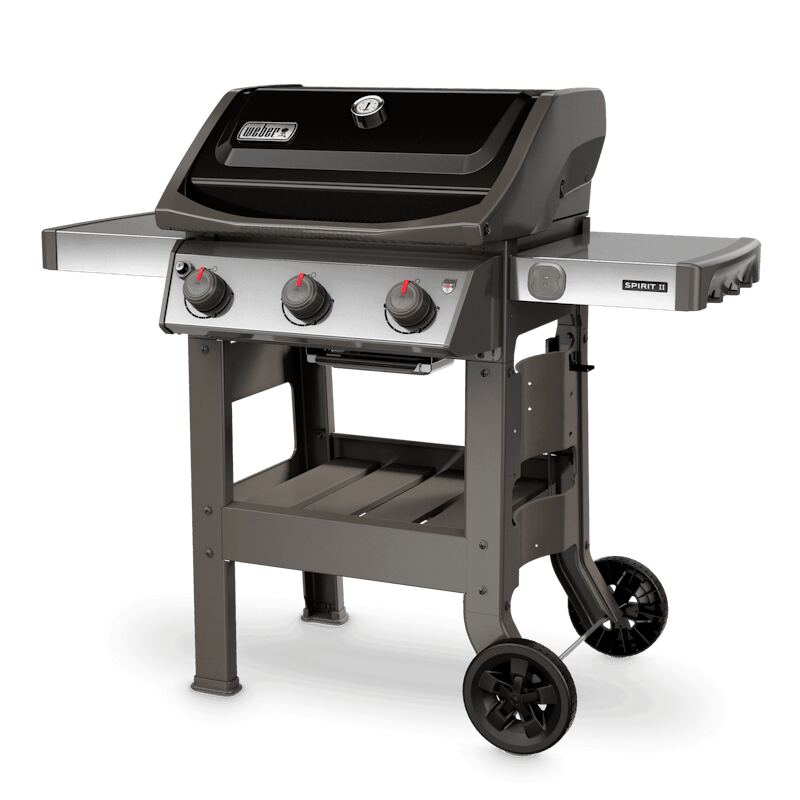
Buy the Genesis E-435 if you grill twice a week for a household of four to six, want a single grill that handles burgers, steaks, indirect chicken, and the occasional pizza without buying a second cooker, and you plan to keep it long enough that a 12-year warranty actually matters. Skip it if your patio is under 30 square feet (drop to the Weber Spirit II E-310 three-burner), if rotisserie is a weekly ritual (Napoleon Prestige 500 ships with the kit), or if your grilling is mostly weeknight burgers for two (the Spirit II E-310 saves $1,100 and cooks just as evenly at smaller volume).
Strengths
- +Four 12,000 BTU PureBlu burners with dedicated 12,000 BTU sear zone hit steakhouse-grade temperatures over the searing band
- +646 sq in primary cooking area plus expandable second-level grate fits dinner for a family of six without crowding
- +Porcelain-enameled cast-iron grates retain heat hard enough that Consumer Reports rated heat evenness 'very good' at preheat, high, and low
- +12-year cookbox/lid warranty and 10-year burner-tube coverage are the longest warranties on any mainstream backyard gas grill
- +WEBER CRAFTED frame accepts swappable griddle, pizza stone, wok, and sear grate inserts without buying a second cooker
Watch-outs
- −Assembly is multi-hour and the manual is dense — most owners pay for the $150 setup add-on
- −Side burner output (12,000 BTU) trails Napoleon's 14,000 BTU infrared side burner at this price
- −iGrill 3 Bluetooth probe — the heavily marketed smart feature — is sold separately
How it compares
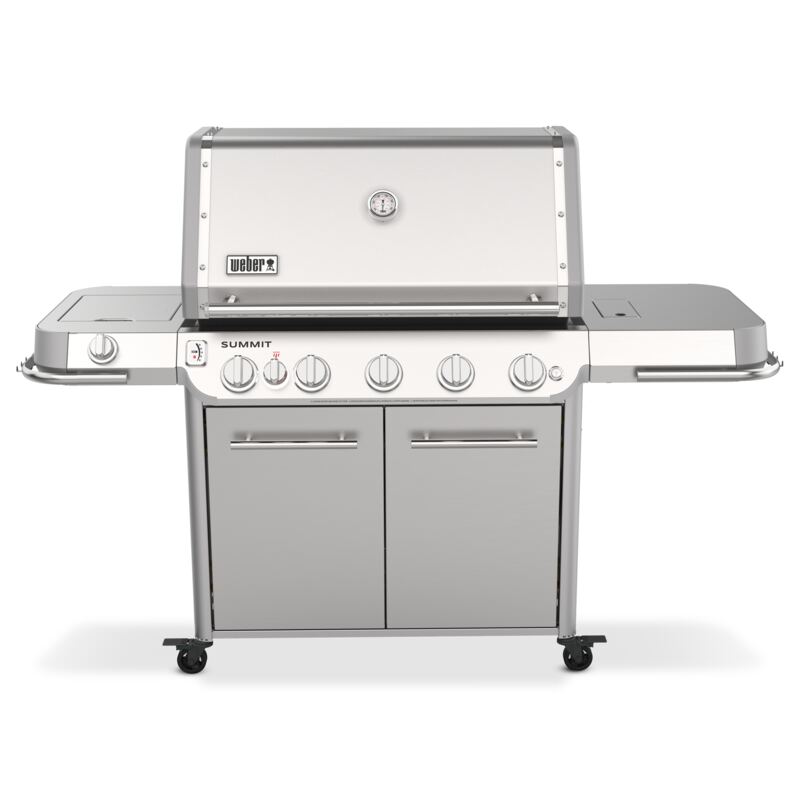
Sits one tier above the Weber Spirit II E-310 in capacity, sear performance, and warranty length, and undercuts the Weber Summit FS38 S by roughly $2,400 while delivering the same Weber build pedigree. Versus the Napoleon Prestige 500, the Genesis is easier to assemble, runs a longer cookbox warranty, and skips the rotisserie kit Napoleon bundles — pick the Napoleon if rotisserie chicken is the regular Sunday plan.
Who this is for
At a glance: Backyard hosts who entertain a family of four to eight weekly and want a single grill they can keep for ten-plus years.
Why you’d buy the Weber Genesis E-435
- Four 12,000 BTU PureBlu burners with dedicated 12,000 BTU sear zone hit steakhouse-grade temperatures over the searing band.
- 646 sq in primary cooking area plus expandable second-level grate fits dinner for a family of six without crowding.
- Porcelain-enameled cast-iron grates retain heat hard enough that Consumer Reports rated heat evenness 'very good' at preheat, high, and low.
Why you’d skip it
- Assembly is multi-hour and the manual is dense — most owners pay for the $150 setup add-on.
- Side burner output (12,000 BTU) trails Napoleon's 14,000 BTU infrared side burner at this price.
- iGrill 3 Bluetooth probe — the heavily marketed smart feature — is sold separately.
Rating sources
“Rated 4.5 out of 5 by 2733 customers”
“This model had very good performance in our evenness tests of preheat, high and low temperatures, which measures heating evenness over the grill's surface using thermocouples.”
“With four main burners and a side burner, it delivers consistent heat and excellent results, whether you're searing steaks or slow-cooking ribs.”
Our 4.7 score is the average of these published ratings. Ratings marked * were derived from the reviewer’s written analysis or video transcript — the publisher didn’t print an explicit numeric score, so we inferred one from their own words. Click through to verify. More about methodology.