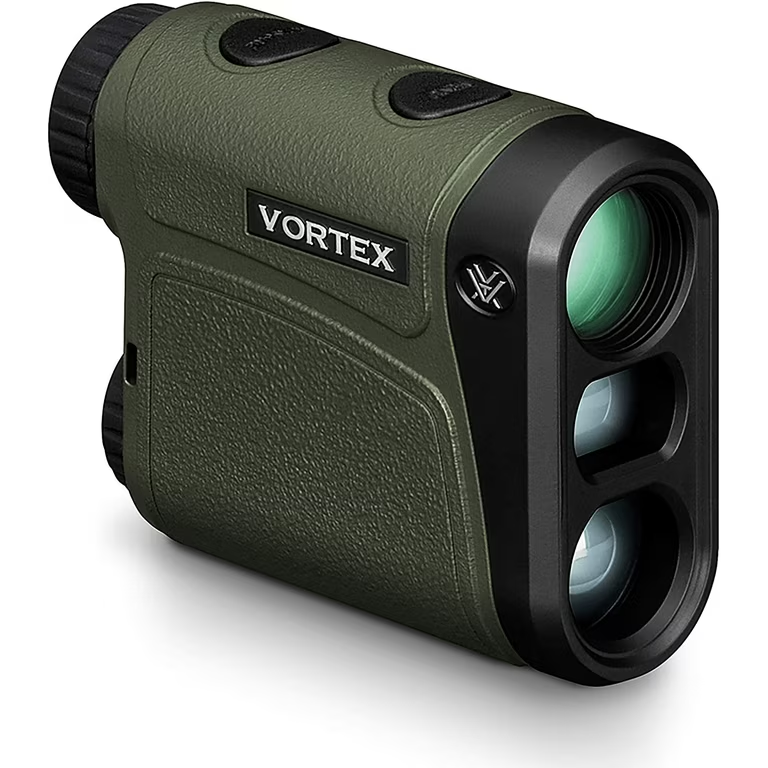
The Vortex Optics Impact 1000 offers a compact, lightweight design with intuitive two-button controls that remain operable while wearing gloves. targettamers found its Horizontal Component Distance mode provides accurate ballistic calculations on slopes up to thirty degrees, making it useful for mountainous terrain. However, the device suffers from significant low-light performance issues due to budget-grade lens coatings and a non-illuminated black LCD display that becomes unreadable in shadows. This optical limitation restricts effective use primarily to daylight conditions, as fading light quickly degrades clarity and color perception. While Vortex backs the unit with its fully transferable VIP warranty, the lack of tripod mounting threads further limits versatility for precision applications. The Impact 1000 fits casual hunters seeking a simple, durable tool for close-to-mid range shots but is unsuitable for those requiring reliable twilight performance or long-range stability.
Full review
6x magnification and optical clarity limits
The Vortex Impact 1000 utilizes a 6x magnification system paired with a small objective lens, which wildgamecook.net identifies as either 24mm or 20mm depending on the specific batch. While this configuration provides a standard field of view for close-to-mid range hunting, the optical performance is heavily constrained by budget-grade anti-reflective coatings. wildgamecook.net recorded that these are the lowest grade of Vortex’s advertised lens finishes, resulting in noticeable color and clarity degradation as ambient light fades. When transitioning into deep shadows or heavy timber, the image quality drops significantly compared to the naked eye, making it difficult to isolate specific target details.
gearjunkie noted that this optical limitation is most apparent during low-light hunting windows. The reviewer found that even with thirty minutes of legal shooting light remaining, the glass dimmed enough to make ranging specific objects a struggle on heavy overcast days. Furthermore, facing toward the sun casts significant glare onto the lens, further obscuring the view. This lack of premium glass means the Impact 1000 is strictly a daylight and early evening tool; hunters relying on twilight shots will find the visual acquisition process frustratingly slow.
The combination of dimming glass and a non-illuminated black LCD display creates a compounding visibility issue in low light. wildgamecook.net observed that when peering into deep shadows, the black digits on the screen become indistinguishable from the dark background. This forces users to pre-range landmarks before sunset if they plan to hunt during fading conditions. The optical design simply cannot gather enough light to compensate for the unlit display, cementing its role as a sun-up device rather than a versatile all-day rangefinder.
Ranging performance on deer versus reflective targets
However, the practical effective range for organic targets is much lower. The same reviewer recorded consistent readings on deer and sheep up to 400 meters, but struggled to get any reading beyond 900 meters even on favorable conditions. This discrepancy highlights a common industry reality where marketing specs assume ideal reflective surfaces rather than real-world biological targets.
GearJunkie tested the device extensively during bowhunting seasons and found it highly capable within typical treestand distances of forty yards or less, delivering precise readings within one yard in that close range. The reviewer also validated deer-sized target ranging out to 400 yards at a rifle range with zero accuracy issues. For archers who rarely engage targets beyond fifty yards, the Impact 1000 provides more than adequate distance data without the need for premium long-range laser technology.
Conversely, user feedback from nzhuntingandshooting.co.nz reveals significant variance in field performance. One forum member reported that their unit would not range past 500 meters even on large trees, while another described the ranging ability as having a lot to be desired and claimed the actual range was half of what is stated. While professional reviewers found reliable performance up to 400-500 yards for game animals, these user reports suggest that environmental factors like light scrub or rain can severely degrade signal return, making long-range organic ranging unreliable compared to top-tier models.
Horizontal Component Distance slope compensation
The Impact 1000 includes Horizontal Component Distance (HCD) mode, which calculates the true ballistic distance by accounting for bullet drop on slopes. For steeper terrain between 15 and 30 degrees, the HCD mode remains accurate out to 400 yards. This feature is critical for rifle hunters in mountainous regions where line-of-sight distance can be misleading.
wildgamecook.net explained that failing to account for slope angle can result in significant miss distances due to gravity acting on the projectile differently than on flat ground. The reviewer noted that at a 45-degree angle, the difference between line of sight and true ballistic distance equates to approximately 30 percent deviation. For a typical .308 load shooting at 500 meters down a steep slope, this math results in over 45 centimeters less bullet drop than expected, which is enough to cause a complete miss if the hunter relies on raw line-of-sight data.
The device displays the angle of incline or decline even when in Line of Sight (LOS) mode, allowing users to manually calculate adjustments using ballistic software or the included field card. This dual functionality makes the unit useful for both casual shooters who want an instant HCD reading and precision marksmen who prefer to input the raw angle data into external ballistics calculators. The simplicity of toggling between LOS and HCD modes ensures that hunters do not lose valuable time fumbling through menus when a target appears.
Physical dimensions and glove-friendly controls
Weighing just 5.5 ounces, the Impact 1000 is exceptionally light for a rangefinder of its class. wildgamecook.net measured the unit at just under 160 grams with the battery and lanyard installed, noting that it fits easily into an average-sized adult hand. This compact form factor allows it to be carried on a neck lanyard or tucked into a pack without adding noticeable weight during long treks. The small footprint is a major advantage for bowhunters who need to draw their weapon quickly while keeping the rangefinder accessible.
The control interface consists of only two buttons: one for measuring and one for accessing the menu. targettamers highlighted that these buttons are large, slightly recessed, and positioned for easy navigation even when wearing thick hunting gloves. This tactile design prevents accidental presses while allowing users to toggle between yards/meters and LOS/HCD modes without looking down at their hands. The minimalist interface ensures that operation remains intuitive and fast, which is vital during brief encounters with game.
Despite its small size, the device lacks a tripod mounting thread. targettamers pointed out that this omission is surprising given how compact the unit is, as users might expect to mount it on a stable platform for long-range target shooting or precision observation. The absence of a tripod mount limits the Impact 1000 strictly to handheld use, which can introduce minor aiming jitter when trying to range small objects at maximum distance.
Battery life and warranty coverage
Powering the device is a single CR2 battery, which gearjunkie reported lasted through an entire year of regular bowhunting use without needing replacement. The LCD display includes a battery gauge indicator located just below the reticle, allowing hunters to monitor power levels before heading into the field. Vortex advertises that one CR2 cell should last for approximately 5000 activations of the laser, providing ample endurance for most hunting seasons.
The unit automatically shuts off after ten seconds of inactivity to conserve battery life, a feature gearjunkie confirmed works reliably. This auto-power-down function ensures that hunters do not accidentally drain the battery while carrying the device in their pack or pocket. The combination of efficient power management and long advertised battery life makes the Impact 1000 a dependable tool for extended trips where recharging or spare batteries are not readily available.
Perhaps the strongest selling point is Vortex’s VIP Warranty, which wildgamecook.net described as fully transferable with no receipt or registration required. This unlimited lifetime warranty covers accidental damage such as drops into water or crushing in packs, excluding only loss and deliberate misuse. For a budget rangefinder that sees rough handling in the field, this coverage provides significant peace of mind, effectively insuring the device against the inevitable accidents that occur during hunting expeditions.
Strengths
- +Includes Horizontal Component Distance (HCD) mode to calculate true ballistic distance on slopes up to 30 degrees.
- +Compact and lightweight design weighing just 5.5 ounces, fitting easily in an adult hand or pack.
- +Backed by Vortex's fully transferable VIP warranty that covers damage without requiring a receipt.
- +Simple two-button interface allows for fast operation with gloves on.
Watch-outs
- −Black LCD display lacks illumination, making it difficult to read in low-light or deep shadow conditions.
- −Budget-grade lens coatings result in reduced clarity and color perception during fading light.
- −Not tripod mountable despite its compact size.
How it compares
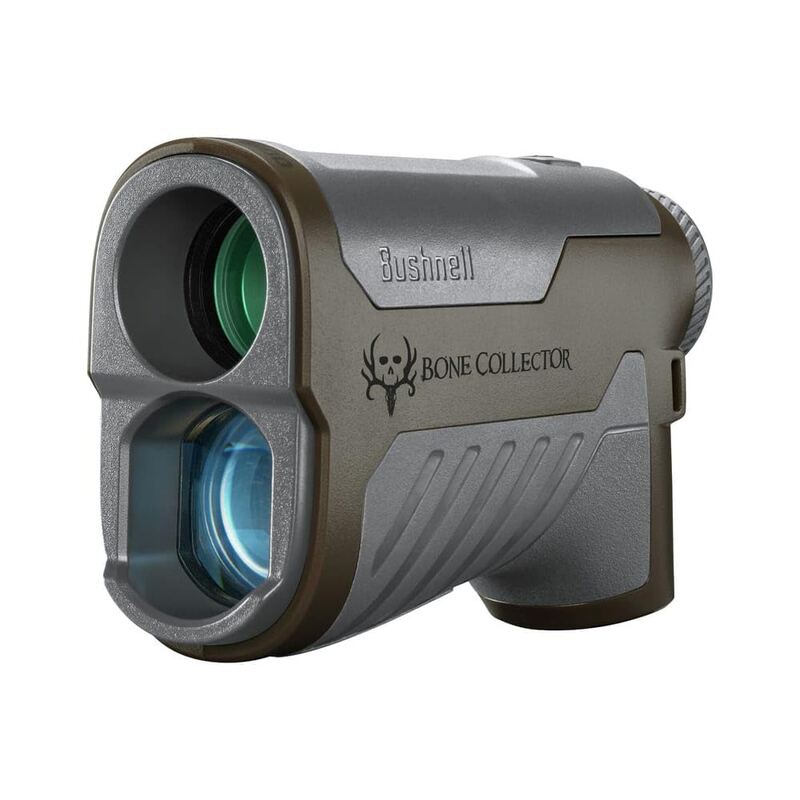
While it offers a Horizontal Component Distance mode similar to the Bushnell Bone Collector 1800, it lacks the latter's ballistic computing engine and suffers from poorer low-light performance due to non-illuminated displays.
Rating sources
“In short: The Vortex Impact 1000 has everything you need for bowhunting and nothing that you don't.”
“On cost alone, the Impact 1000 is an excellent buy. On quality and performance, it’s a steal of a deal.”
Our 4.3 score is the average of the 2 scored reviews above; 3 more reviewed it without printing a score and are not in the average. Ratings marked * were derived from the reviewer’s written analysis or video transcript — the publisher didn’t print an explicit numeric score, so we inferred one from their own words. Click through to verify. More about methodology.