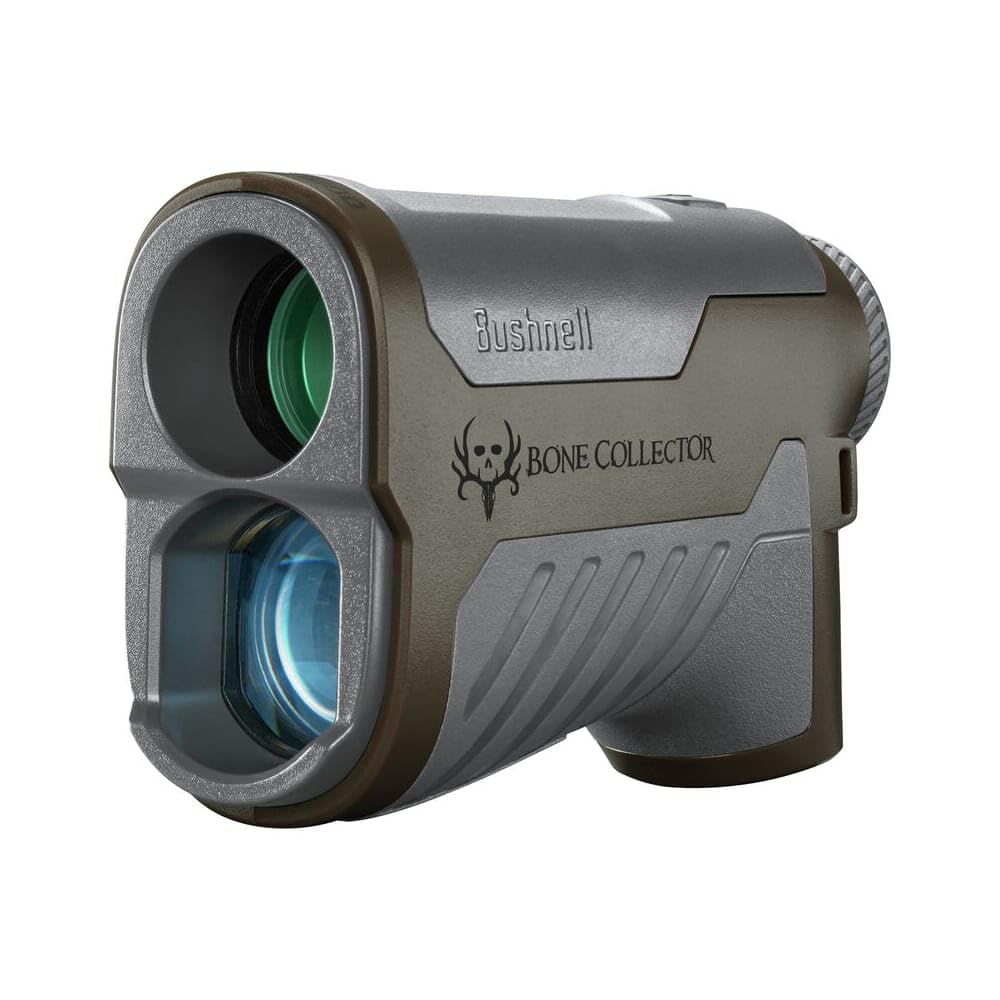
The Bushnell Bone Collector 1800 integrates an onboard Applied Ballistics Ultralite engine that delivers shooting solutions out to 800 yards via Bluetooth connectivity, as all4shooters found. It combines this with Angle-Range Compensation for true horizontal distance and +/- 1-yard accuracy up to its maximum range of 1,800 yards on high-reflective targets. However, the device lacks golf mode functionality, leading to buyer confusion regarding its dual-purpose capabilities, according to scheels. This rangefinder fits serious hunters needing specialized ballistic data but is unsuitable for those seeking a versatile tool that includes golf features.
Full review
Onboard Applied Ballistics Ultralite engine
The defining characteristic of the Bushnell Bone Collector 1800 is its integration of an onboard Applied Ballistics Ultralite engine, a feature that places it in a distinct category compared to standard rangefinders. According to all4shooters, this system provides full precision shooting solutions out to 800 yards by utilizing Bluetooth connectivity to sync with compatible devices. Users must input specific load data, muzzle velocity, rifle specifications, and riflescope details into the free Bushnell Ballistic app to generate these firing solutions. The rangefinder then displays instant adjustments without requiring a phone connection during actual use, though keeping the device paired allows for live local weather data integration from the app to refine accuracy further.
This ballistic capability transforms the device from a simple distance measurer into a comprehensive long-range shooting tool. Targettamers notes that the Applied Ballistics software is powered by an ultralite ranging engine and can provide real-time ballistics out to 875 yards, offering both distance and necessary adjustment data directly on the display in either MIL or MOA formats. This setup requires significant pre-season preparation; users need to experiment with the AB program well before their hunting season begins to ensure they are comfortable navigating the menu and understanding how the ballistic solutions integrate with their specific ammunition profiles.
1800 yard max range and 1-yard accuracy
Bushnell rates the Bone Collector 1800 for a maximum ranging distance of 1,800 yards on high-reflective targets, with an advertised accuracy of plus or minus one yard across its entire operational range. This precision allows hunters and shooters to trust their measurements whether they are engaging close-range brush shots or attempting long-distance evaluations in open terrain. The device achieves this performance through a potent laser system paired with sensitive receivers that detect light reflection and calculate distance rapidly, ensuring that the user receives immediate feedback on target location.
While the 1,800-yard figure represents the absolute limit against ideal targets, real-world application involves ranging objects like trees or animals which reflect significantly less laser energy. In practical field scenarios, this means users will likely encounter a shorter effective range for biological targets compared to reflective stakes. Despite this physical limitation of laser physics, the +/- 1-yard accuracy claim ensures that within its effective envelope, the device delivers consistent and reliable data crucial for making ethical shot placements at extended distances.
Angle-Range Compensation technology
Shooting on steep inclines or declines requires calculating the true horizontal distance to a target, as gravity affects bullet drop differently than it does on flat ground. The Bone Collector 1800 addresses this with Angle-Range Compensation (ARC) technology, which calculates the true horizontal distance based on the angle to the target. According to all4shooters, this system operates with one-degree angle accuracy, allowing for precise shot placement regardless of whether the hunter is positioned high in a tree stand or low in a canyon looking up at game.
This feature eliminates the guesswork often associated with angled shots by automatically adjusting the displayed range to reflect the actual ballistic trajectory distance. For bow hunters and rifle shooters alike, relying on straight-line line-of-sight distance on steep slopes can result in significant misses due to gravity acting over a shorter horizontal path than the laser measures. The ARC integration ensures that the rangefinder provides the corrected data necessary for accurate holdover or dialing adjustments.
Optical brightness and low-light performance
The optical system of the Bone Collector 1800 is built around a fully multi-coated, all-glass design that Bushnell claims delivers an image up to two times brighter than other laser rangefinders. This increased light transmission is particularly beneficial during critical hunting windows at dawn and dusk when visibility is naturally compromised. The larger objective lens paired with advanced coatings brings more light to the user's eye, adding crucial time to a hunt by maintaining clarity in dim conditions.
Backwoodspursuit tested similar Bushnell optics and noted that while exact comparative brightness claims can be difficult to quantify independently, the resulting image quality is excellent. They observed a crisp view with a slightly softer hue that tones down harshness on bright days, suggesting that the optical tuning prioritizes comfortable viewing over raw contrast alone. The fully multi-coated lenses work in tandem with these coatings to provide bright, true-to-life colors without introducing color tints that could obscure targets in low-light environments.
One-button control and scan modes
Operation of the Bone Collector 1800 is streamlined through a single-button interface, allowing users to power on, range targets, and activate scanning modes without navigating complex menus. When the user holds down this button, the device enters an ultra-fast scan mode that updates the range four times per second. This rapid updating capability enables quick surveying of an area, helping hunters identify specific targets hidden among obstacles or track moving game with minimal delay.
The rangefinder offers multiple ranging modes to suit different shooting disciplines and environmental challenges. Standard mode provides straight-up line-of-sight distances for general use. For more complex scenarios, users can switch to Brush Mode, which prioritizes the last target detected to filter out foreground vegetation, or Bullseye Mode, which locks onto the first target to ignore background distractions. This flexibility ensures that the device remains effective whether scanning a dense thicket or ranging across an open field.
Golf mode absence and buyer expectations
A recurring point of contention among users is the complete lack of golf mode functionality on the Bone Collector 1800. Because many rangefinders serve dual purposes for hunting and recreation, some buyers purchase this unit expecting it to flag slopes or provide distance-to-pin features suitable for a golf course. One reviewer at scheels explicitly noted that the device was not a golf rangefinder and felt misadvertised when they discovered this limitation after purchase.
This absence of golf-specific features means the Bone Collector 1800 is strictly a hunting and long-range shooting tool. Shoppers looking for a versatile optic that transitions seamlessly between the fairway and the field will find this device unsuitable. The design choices, including its rugged build and ballistic focus, cater entirely to outdoor enthusiasts who require specialized performance in the woods or on the range rather than casual recreational use.
Bluetooth pairing and app dependency
Accessing the full potential of the Bone Collector 1800 requires establishing a Bluetooth connection with a smartphone running the Bushnell Ballistic app. While the rangefinder can function as a standard distance measurer without this setup, utilizing the Applied Ballistics Ultralite engine demands initial configuration through the mobile application. Users must input their specific ballistic data, including muzzle velocity and environmental conditions, to generate accurate firing solutions.
This dependency on external technology introduces a layer of complexity that some users may find cumbersome. One scheels reviewer advised against using the Bluetooth app for settings adjustments, suggesting potential friction in the setup process or connectivity reliability issues. Once paired, however, the system allows for live weather data integration and easy menu navigation via phone, providing a comprehensive shooting solution that does not require carrying separate ballistic calculators.
Strengths
- +Includes onboard Applied Ballistics Ultralite engine with Bluetooth connectivity to provide shooting solutions out to 800 yards.
- +Features Angle-Range Compensation (ARC) technology that calculates true horizontal distance for uphill or downhill shots with 1-degree accuracy.
- +Delivers +/- 1-yard accuracy throughout its entire ranging range of up to 1,800 yards on high-reflective targets.
- +Utilizes a fully multi-coated all-glass optical system that is claimed to be 2x brighter than other laser rangefinders for improved low-light visibility.
Watch-outs
- −Lacks golf mode functionality, which has led to confusion among buyers expecting a dual-purpose device.
- −Requires the use of the Bushnell Ballistic App and Bluetooth pairing to access its primary ballistic computing features.
How it compares
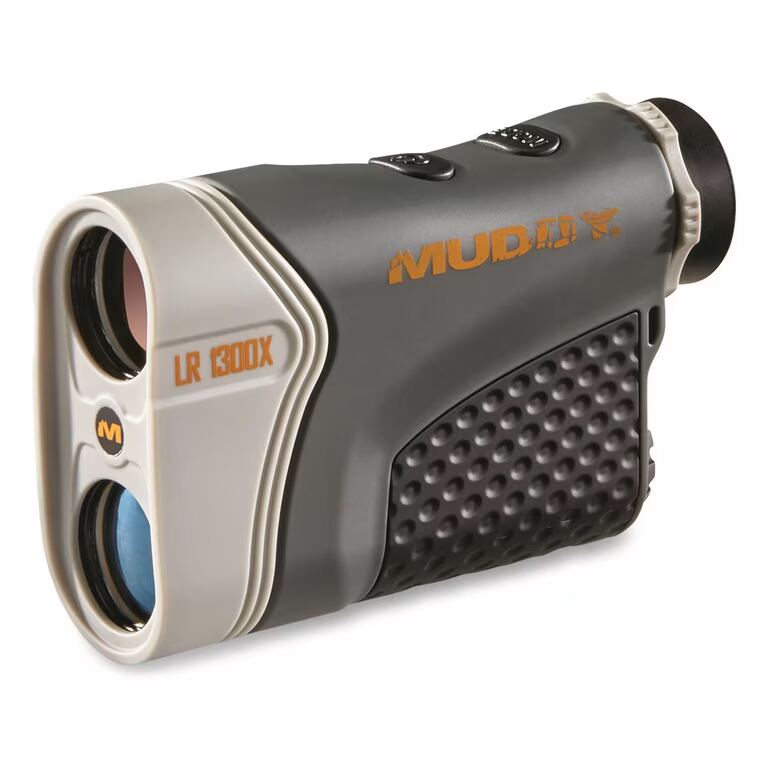
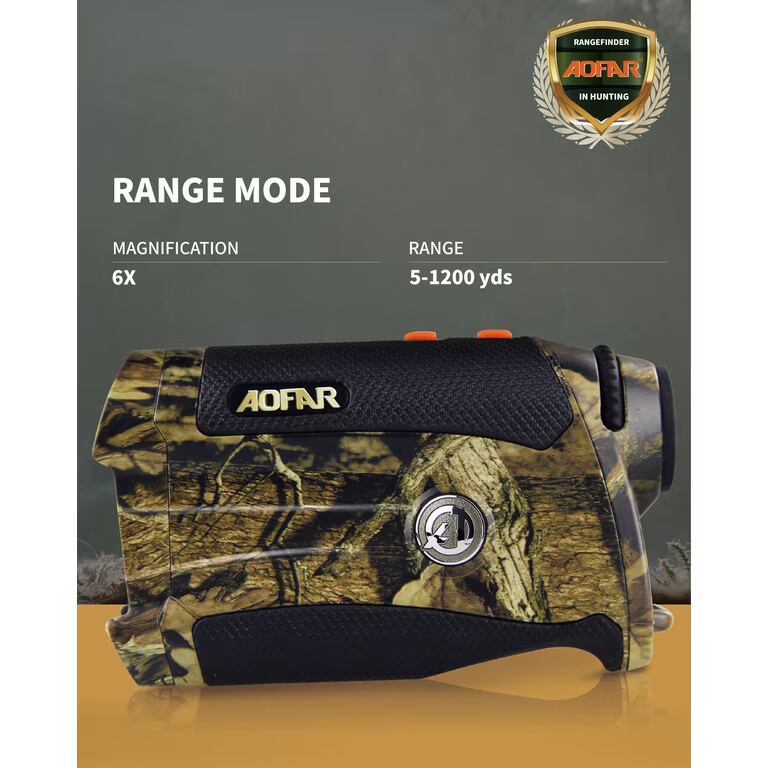
The Bushnell Bone Collector 1800 offers advanced ballistic computing via its onboard Applied Ballastics engine, whereas the AOFAR HX-1200T provides only basic angle compensation and bow mode. It extends its max range to 1,800 yards compared to the Muddy LR 1300X's 1,300-yard limit, though it lacks the golf functionality that some competitors might offer.
Rating sources
“When comparing only capability and cost, the Bushnell Nitro 1800 comes out ahead. It offers more than any other smart LRF at the same price point.”
Our 4.5 score is the average of the 1 scored review above; 3 more reviewed it without printing a score and are not in the average. Ratings marked * were derived from the reviewer’s written analysis or video transcript — the publisher didn’t print an explicit numeric score, so we inferred one from their own words. Click through to verify. More about methodology.